Pages

Labels

Showing posts with label pirates. Show all posts

Saturday, January 19, 2013

Maybe it was named after the buccaneer Peter Wallace.

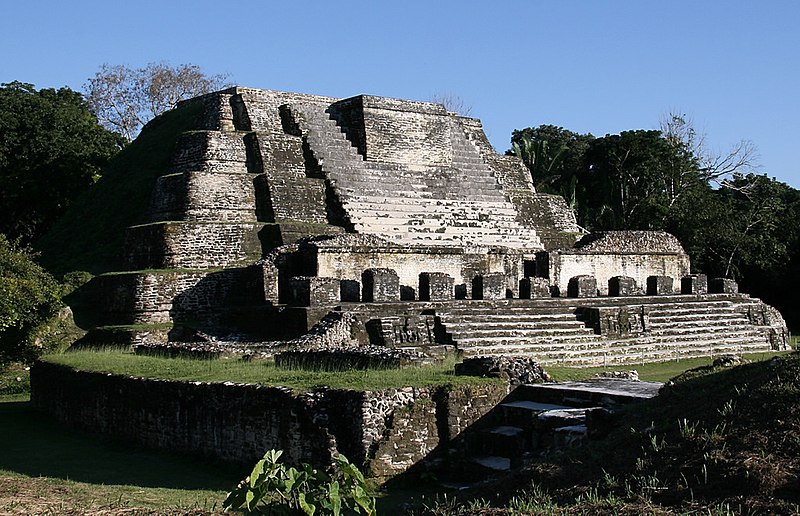
Belize — our "History of" country today. It's a legend, that the Spanish pronunciation of "Wallace" was Ballis and hence Belize. Belize. Do you know where it is? It's crammed in between Mexico and Guatamala.

In places that today look like this...


... the Mayans flourished and then they were gone. We don't really know why. You can blame the Spanish. (Why not? They deserve it.) But Mayan civilization had collapsed by the time the Spanish got there. Then the English arrived, by shipwreck, in 1638. Squabbling between the Spanish and the English went on for a long time, and there was a lot of piracy and "indiscriminate logging."

Friday, January 4, 2013

"I don’t know whether this world has a meaning that transcends it."

"But I know that I cannot know that meaning and that it is impossible for me just now to know it."

Roman arch, Tebessa, Algeria.

Today, the "History of" project brings us to...

Algeria, where human beings have lived for at least 1.8 million years. There are prehistoric rock paintings in the Tassili n'Ajjer range. Like this:


The indigenous people have been called Berbers since 4000 BC, and they have been joined over the years by invaders of the Phoenician, Roman, Vandal, Byzantine, Arab, Turkish, and French kind.
Berber territory was annexed by the Roman Empire in AD 24. Increases in urbanization and in the area under cultivation during Roman rule caused wholesale dislocations of Berber society, and Berber opposition to the Roman presence was nearly constant....

Christianity arrived in the 2nd century AD. By the end of the 4th century, the settled areas had become Christianized, and some Berber tribes had converted en masse....

The 8th and 11th centuries AD, brought Islam and the Arabic language....

In the central Maghrib, the Abdalwadid founded a dynasty at Tlemcen in Algeria. For more than 300 years, until the region came under Ottoman suzerainty in the 16th century, the Zayanids kept a tenuous hold in the central Maghrib. Many coastal cities asserted their autonomy as municipal republics governed by merchant oligarchies, tribal chieftains from the surrounding countryside, or the privateers who operated out of their ports. Nonetheless, Tlemcen, the “pearl of the Maghrib,” prospered as a commercial center.

The final triumph of the 700-year Christian reconquest of Spain was marked by the fall of Granada in 1492. Christian Spain imposed its influence on the Maghrib coast by constructing fortified outposts and collecting tribute. But Spain never sought to extend its North African conquests much beyond a few modest enclaves. Privateering was an age-old practice in the Mediterranean, and North African rulers engaged in it increasingly in the late 16th and early 17th centuries because it was so lucrative. Algeria became the privateering city-state par excellence.....

Algeria and surrounding areas, collectively known as the Barbary States, were responsible for piracy in the Mediterranean Sea, as well as the enslaving of Christians, actions which brought them into the First and Second Barbary War with the United States of America.
Colonization by the French began in 1830.
Viewed by the Europeans with condescension at best and contempt at worst, the Algerians endured 132 years of colonial subjugation. From 1856, native Muslims and Jews were viewed as French subjects, but not French citizens.

However, in 1865, Napoleon III allowed them to apply for full French citizenship, a measure that few took, since it involved renouncing the right to be governed by sharia law in personal matters, and was considered a kind of apostasy; in 1870, French citizenship was made automatic for Jewish natives, a move which largely angered the Muslims, who began to consider the Jews as the accomplices of the colonial power. Nonetheless, this period saw progress in health, some infrastructures, and the overall expansion of the economy of Algeria, as well as the formation of new social classes, which, after exposure to ideas of equality and political liberty, would help propel the country to independence. During the years of French domination, the struggles to survive, to co-exist, to gain equality, and to achieve independence shaped a large part of the Algerian national identity....

A new generation of Islamic leadership emerged in Algeria at the time of World War I and grew to maturity during the 1920s and 1930s. Various groups were formed in opposition to French rule....

The Algerian War of Independence (1954–1962), brutal and long, was the most recent major turning point in the country's history. Although often fratricidal, it ultimately united Algerians and seared the value of independence and the philosophy of anticolonialism into the national consciousness....

Between 350,000 and 1 million Algerians are estimated to have died during the war, and more than 2 million, out of a total Muslim population of 9 or 10 million, were made into refugees or forcibly relocated into government-controlled camps. Much of the countryside and agriculture was devastated, along with the modern economy, which had been dominated by urban European settlers (the pied-noirs). French sources estimated that at least 70,000 Muslim civilians were killed or abducted and presumed killed, by the [Front de Libération Nationale] during the Algerian War. Citizens of European ethnicity... and Jews were also subjected to ethnic cleansing. These nearly one million people of mostly French descent were forced to flee the country at independence due to the unbridgeable rifts opened by the civil war and threats from units of the victorious FLN; along with them fled Algerians of Jewish descent and those Muslim Algerians who had supported a French Algeria (harkis). 30-150,000 pro-French Muslims were also allegedly killed in Algeria by FLN in post-war reprisals....

On 19 June 1965, Houari Boumédienne deposed Ahmed Ben Bella in a military coup d'état that was both swift and bloodless....

Boumédienne’s death on December 27, 1978 set off a struggle within the FLN to choose a successor....

After the violent 1988 October Riots, a new constitution was adopted in 1989 that allowed the formation of political associations other than the FLN....

Among the scores of parties that sprang up under the new constitution, the militant Islamic Salvation Front (FIS) was the most successful....

In 1996 a referendum introduced changes to the constitution, enhancing presidential powers and banning Islamist parties. 
Abdelaziz Bouteflika became president in 1999 and "concentrated on restoring security and stability." He remains president to this day.

Monday, August 27, 2012

"The good thing is that this is so insipidly solipsistic that I think she's going to have ruined the Vagina book like Cutthroat Island destroyed the pirate film."

"Might be 15 years before someone gambles with Vaginas of the Caribbean."

Also at that link: "My Vagina is Large; It Contains Multitudes. Who knew the female sex-organ was so chatty?"

***
The passage...
Do I contradict myself?
Very well then I contradict myself,
(I am large, I contain multitudes.)
... has 19 highlighters in my Kindle version of "Leaves of Grass."

Hey, remember the role of "Leaves of Grass" in the Clinton/Lewinsky scandal?
Feb. 28: After she attended the taping of Clinton's radio show, she had her picture taken with him. He told her to see his secretary Betty Currie because he had something for her. Currie accompanied Lewinsky into the study next to the Oval Office. Then Currie walked into the nearby pantry, where she waited for about 15 minutes while Lewinsky and the president had a sexual encounter -- their first in 11 months. Then he gave her a hat pin and Walt Whitman's "Leaves of Grass." Lewinsky later discovered that the blue dress she had worn that day was stained with his semen.
Speaking of containing multitudes!

Wednesday, January 25, 2012

"American commandos raced into Somalia early Wednesday and rescued two aid workers..."

"... an American woman and a Danish man, after a shootout with Somali pirates who had been holding them captive for months."
One American official said an assault team of Special Operations troops parachuted in from fixed wing aircraft, not helicopters, under cloak of darkness to a landing area about a mile’s walk from the actual target. The paratroopers landed, then walked to an encampment where the kidnappers where holding the two hostages.

Within minutes, shots rang out. The hostages were located and secured. Nine Somalis were killed and an unknown number wounded in the ensuing firefight with the commandos. No Somali prisoners were taken....

Monday, February 28, 2011

"Well, it's pretty embarrassing when you can't even handle pirates."

Instapunditry on the reason for the "muted outcry in Washington" after pirates kill 4 Americans:
President Obama did not issue a statement on the tragedy. White House spokesman Jay Carney said that the administration was "obviously outraged by the actions of the pirates."

"And the president, as you know, I believe, has expressed his sincere condolences to the families of the victims," Carney said at a press briefing. "But beyond that, I don't want to get into details."
Obviously... What counts as "obvious" these days? Apparently nothing more that the assumption that he must feel bad about it, even when he says nothing.

Saturday, November 13, 2010

"How do you like to go up in a swing/Up in the air so blue?"

How do you like to go up in a swing,
Up in the air so blue?
Oh, I do think it the pleasantest thing
Ever a child can do!

Up in the air and over the wall,
Till I can see so wide,
River and trees and cattle and all
Over the countryside--

Till I look down on the garden green,
Down on the roof so brown--
Up in the air I go flying again,
Up in the air and down!
"The Swing," by Robert Louis Stevenson...


... from "A Child's Garden of Verses." I've known that poem by heart as long as I've known... anything.

Stevenson was born 160 years ago today, something I learned after noticing the Google-doodle, which is completely pirate- and not swing-oriented.

Bonus Stevenson material:

Tuesday, June 8, 2010

"The film begins moments after the sinking of the Titanic."

"All who have drowned are brought back to life by a futuristic race of mermaids, called the Mantocks, who welcome the humans to their underwater paradise. Soon after, JACK DAWSON is elected king of the underwater humans. DAWSON requests that all humans be returned above water, a request that is denied by KING MANTROCK. The humans are slowly brainwashed into worshiping their mermaid saviors. Meanwhile, the sunken TITANIC has become a haunted underwater wasteland inhabited by RAGGARO and his band of mermaid pirates. Will the humans ever free themselves from their mermaid slavery? Will the mermaid pirates wage war on Mantock?"

(Via Cinematical, via NY Mag.)

Friday, May 21, 2010

Nick Gillespie gets soooo intellectual about the basis for judging Reason Magazine's "Everybody Draw Mohammed" contest...

... that I was forced to look up his educational background. Turns out he has a PhD in English literature. Ah, it makes too much sense to me.

Now, they got 190 entries in the contest. (I disapprove of the "Draw Mohammed" day, you should know.) I would love to see what the whole pile of drawings looked like. How many were stick figures or crude scratchings on the level of the "Draw Me" pirate? How many were loaded with embarrassingly violent or racial fantasy? I wish someone had had the foresight to film a documentary of these Reason guys cooking up their contest and then opening the various envelopes? I wonder if there was a point — one particular drawing? — when they felt bad about what they were doing.  And then something pushed them in the direction of getting super-elitist intellectual about picking the winners.
In coming to a consensus, we discussed standard concerns such as originality of vision, playfulness, a sense of proportion (both in terms of craftmanship and message), and relevance to the goals of the contest.
See? Read between the lines! What were they looking at when they reached that consensus? How many pieces of paper went into the discard pile over "craftsmanship"? How much did they laugh as they did a first cut over craftsmanship, and what did they say as they tossed these things aside? I would love to have been a fly on the wall... or a vole in the corner. "Sense of proportion"... what were the drawings that made them frame that standard? "Originality"? What percent of the artists drew Muhammad as a dog or as a guy with a turban-bomb? "Playfulness"... throw all the gruesome, gory things over there. "Relevance to the goals of the contest"... ha ha... so many of you scribblers did not get it. You thought it was about telling Muslims their prophet is evil, and not that free expression is precious. You fools! Did you think Nick Gillespie went to grad school for this?! 

Okay, I'm picturing approximately 90% of the drawings eliminated over these standards.

So Gillespie reveals the true test of a proper "Draw Mohammed" drawing.
The single most important element...
It's one thing.
.... and the thing that ties these selections together–is that each image forces the viewer to do two things.
I mean... it's 2 things!
First, they consciously call into question the nature of representation, no small matter in fights over whether it is allowed under Islamic law to depict Mohammed (for the historical record, there is no question that the idea that is always wrong is only of recent vintage; there is a long history of sacred and superficial images of the Prophet). The homage to Rene Magritte below states "This is not a pipe. This is Muhammed"...
He's translating the French for us. (And respelling "Muhammad" as "Muhammed," splitting the difference between the contest-name spelling — "Mohammed"— and the artist's use of the presumably politically correct spelling — "Muhammad.")
... playing with the surrealist's famous statement about the necessary disjuncture between a picture and the thing it seeks to represent. 
An insight that somehow fascinated people who studied post-modernism circa 1990. (Gillespie received his English PhD in 1996. I'd love to know more about what he studied. Can we see his dissertation?)
Just as the drawing is not a pipe (it's a drawing of a pipe), it cannot be Mohammed even as it insists it is. Even more, it is plainly not even a drawing of Mohammed or of any human figure.

Similarly, the invocation of the popular Where's Waldo? series forces the viewer to ask Where's Mohammed?, and to begin a hunt for a figure in the midst of an overstuffed scene. One assumes the black-robed character in the upper right-hand quadrant of the image is our quarry, but then what does it mean to confer on a small dot any significance whatsoever?

Second, each of the images forces the viewer to actively participate not simply in the creation of meaning but of actually constructing the image itself. This is clearest in our grand prize winner, the image below, which pushes iman and infidel alike to do the work that would condemn them to death under the most extreme reading of injunctions against representing Mohammed.
I like the way the winner — with a connect-the-dots puzzle — avoided drawing Muhammad altogether. Man, if I entered a "draw Mohammed" contest and the winner didn't even draw Mohammed, I'd be kind of pissed... and reading Gillespie's revelation of the highly intellectual but previously secret standards would not calm me down. "Reason"?! Bah!

Sunday, April 18, 2010

The 1960s look.

I was enjoying this selection of photos of women who exemplified 1960s style. Lots of iconic prettiness. But then I hit this one:


Ha ha.

And here's a bonus 60s style video — fashions by Elizabeth Taylor, with Patti Boyd modeling, and George Harrison, John Lennon, and Richard Burton gawking.

Wednesday, July 1, 2009

Hunter was hired to make videos of Edwards, "but this one is said to have shown him taking positions that weren’t on his official platform."

The Daily News gossip column quipped about the report that there's a John Edwards/Rielle Hunter sex tape.

This sets Popehat off, riffing wildly on sexual wordplay, for example, here:
This brings us, of course, to pirates. How did it come to pass that “to take one’s foot” became an idiom for orgasm? Prior to the Revolution, and therefore prior to the metric system, the French used measurements akin to the imperial system. When corsairs went to divide their spoils after a stint of rapine, each would naturally demand his portion of the whole. The allotted part, by convention, was a foot-high mound of booty. No, really.

Taking his foot of gold was the pirate’s pleasure. Since not everything that happens in Tortuga stays in Tortuga, taking the foot gradually became anyone’s pleasure in anything... And just as a noble, sexy, piraty bit of bawd has by now been stripped bare by its broad overuse in French, so too has the vitality of allusiveness in English suffered under the weight of too popular a press. We’ve seen enough; it’s time to close your eyes and think of English.
Maybe you'd better go over there and see how this all fits together.

Tuesday, April 21, 2009

Monday, April 13, 2009

Obama's military victory.

Small, but nice.
[A] dramatic and successful rescue operation by U.S. Special Operations forces... left Obama with an early victory that could help build confidence in his ability to direct military actions abroad.

Throughout the past four days, White House officials played down Obama's role in the hostage drama. Until yesterday, he made no public statements about the pirates.

In fact, aides said yesterday, Obama had been briefed 17 times since he returned from his trip abroad, including several times from the White House Situation Room. And without giving too many details, senior White House officials made it clear that Obama had provided the authority for the rescue.

"The president's focus was on saving and protecting the life of the captain," one adviser said. Friday evening, after a National Security Council telephone update, Obama granted U.S. forces what aides called "the authority to use appropriate force to save the life of the captain." On Saturday at 9:20 a.m., Obama went further, giving authority to an "additional set of U.S. forces to engage in potential emergency actions."
Thanks to President Obama for the military victory and for giving us and himself confidence in his ability and willingness to use the military.
The operation pales in scope and complexity to the wars underway in Iraq and Afghanistan. And Obama's adversaries are unlikely to be mollified by his performance in a four-day hostage drama.
Hey, I'm mollified. (Or does that make me not an Obama adversary? I did vote for him, but I'm always dogging him for one thing or another.) Mollify me some more, Obama. Build on this victory.
Nonetheless, it may help to quell criticism leveled at Obama that he came to office as a Democratic antiwar candidate who could prove unwilling or unable to harness military might when necessary.
I'm quelled. I'm quelled. I'm mollified and I'm quelled. Now, more of the same, please.

Thursday, April 9, 2009

"Our special operations people have been itching to clean them up."

"Them" = the pirates.
Retired U.S. Ambassador Robert Oakley, who was special envoy to Somalia in the 1990s, said U.S. special operations forces have drawn up detailed plans to attack piracy groups where they live on land, but are awaiting orders from the Obama national security team....

The veteran diplomat, who also was ambassador to Pakistan, said teams of Army Delta Force or Navy SEALs "could take care of the pirates in 72 hours" if given the order to strike.

"They have plans on the table but are waiting for the green light," Oakley said.
Should Obama turn them loose?

Green light?
Yes.
No.
  
pollcode.com free polls

Wednesday, April 8, 2009

Somali pirates, U.S. crew, Rush Limbaugh, and Barack Obama.

I was listening to the beginning of the Rush Limbaugh show as I was cooking lunch this morning, and he was going on about the U.S. crew that was taken hostage by pirates off the cost of Somalia today. He'd slotted the story into his Obama-doesn't-know-what-to-do template and was riffing away about Obama's indecision and what he must be fretting about and how he'd probably want to apologize to the pirates and so forth. The big show was steaming along. (I thought a good ending would be: hostage crisis... it's Jimmy Carter all over again.)

And then he was slipped the news that the U.S. crew had taken their ship back, defeated the pirates. And Rush should have turned that big show around instantly. It should have been: Yay, America! Americans don't lie back and wait to be rescued. We're ready to fight. We're self-reliant. The government isn't the answer to everything. There were lots of great alternate Rush Limbaugh templates to mobilize right then. This is why we need to have our own guns. This is why the bitching about Bush after Katrina was all wrong. Etc. etc.

But Rush couldn't turn that big show — that big container ship — around. He couldn't let go of Obama doesn't know what to do, and I felt a little sad about my radio hero.

Come on, Rush, be agile! I thought you knew how to do that. Eh, enough about Rush, I want to celebrate the American crew. Go America. And to the rest of the world: Look on and admire. Learn something.