In the previous post, we're talking about what Jesus wrote in the sand and what he said out loud, in the New Testament story where the scribes and Pharisees present Jesus with the question of what to do with a woman who was caught in the act of adultery. In the Gospel text, we're told Jesus that wrote on the ground, but not what he wrote, and we're told that he subsequently spoke and said "Let him who is without sin among you be the first to throw a stone at her."
I'm putting up a separate post because I found the scene that sydney said he loved in the movie "The King of Kings." Made in 1927, it's a silent movie, so no one is saying anything out loud. We see what Jesus says written out on the intertitles, and we also see what he writes in the sand.
Beautiful filmmaking, particularly as the sand-words, not written in Roman letters, transform into our English words, naming the sins that the men in the crowd realize they've committed, and that's why they all turn and walk away.
That's not an accurate depiction of what happens in the biblical text though. The movie shows a mob on the verge of stoning the woman and Jesus intervenes and announces his rule about casting the first stone. Only thereafter, does he write the names of the sins in the sand. But in the Bible story, there is no angry mob with stones in hand. There are scribes and Pharisees demanding that Jesus deliver a legal opinion. Jesus bends down and writes on the ground instead of answering the question. Only after they persist does he stand up and pronounce his new rule, which causes the scribes and Pharisees to walk away — "beginning with the older ones." The movie would have you see the members of the mob acknowledging their sins and their consequent lack of qualification to cast the first stone. But the text has intellectuals trying to box Jesus in on a question of law, and Jesus getting the better of a conversation he didn't want to have in the first place.
It's not surprising that a movie plays up the visible drama, and it's also not surprising that when I — a law professor — read the text, I see something akin to a law school class. The professors try to stump the student and the student transcends their tricky game. To me, the part where Jesus bends over and writes in the sand is like what happens in a law school class when the lawprof poses a difficult hypothetical and the students bend their heads down and go through motions of writing. They don't want to answer. It's not that they're writing something magically revelatory and startling. But if the lawprof keeps pushing and calls on someone, an answer will be spoken out loud.
I guess the law-professorly interpretation of the text isn't terribly cinematic. It's no wonder the movies present an angry mob with stones in hand and Jesus miraculously knowing and changing the hearts of the sinners. (And the adulteress is an actress evincing exactly the form of sexiness that was fashionable in the year the movie was made. I love the eyeliner!)
But to me the lawprof interpretation is thrilling and dramatic. The professors think they've got the upper hand. They know the legal text and it's tough. And then the brilliant student who will soon be the greatest professor of all gets on top of the dialogue and says something they must accept as correct: If you're going to have strict rules and severe mechanisms of enforcement, you must apply them equally to everyone. This is the structural safeguard of equal protection of the laws that is the necessary component of a democratic system. If there can't be exceptions and special treatment for preferred people, legislatures will resist imposing harsh rules and painful punishments.
In this context, let me give you my favorite Justice Scalia quote, which happens to include one of the key words of Christianity: "Our salvation is the Equal Protection Clause, which requires the democratic majority to accept for themselves and their loved ones what they impose on you and me."
Showing posts with label law school. Show all posts
Showing posts with label law school. Show all posts
Saturday, February 23, 2013

Tuesday, February 19, 2013
"I loved the D.C. Circuit... and I could've stayed there. But I think I got maneuvered into this job. And then I had a really bad interview."
Said Clarence Thomas in this wonderful hour-long conversation with Harvard Law School Dean Martha Minow. The Harvard law students give him a standing ovation as he arrives in the room, and he jokes "I should quit while I'm ahead."
In fact, he goes on to be warm, interesting, deep, smart, and there's just way too much good stuff in here for me to quote everything that jumps out, because, really, everything jumps out. If you skip over the long introduction and get to the first question, he talks about growing up among illiterate but good and loving people and then discovering reading at a segregated library in Savannah. The librarians introduced him to Dr. Seuss.
Minow and Thomas talk about their mutual love for a book about introversion called "Quiet," and Thomas characterizes himself as very introverted. He talks about working in all 3 branches of government and greatly preferring the judiciary because in the EEOC and in the legislature, though he loved the people, it was too political. "I don't understand politics.... It made my head hurt.... It was like new math."
ADDED: He says Ruth Bader Ginsburg and Elena Kagan are delightful. When Kagan arrived, he said to her: "You know, it's going to be a joy disagreeing with you for years to come."
AND: At oral arguments, Justice Breyer doodles stick figures. The 2 of them sit together at oral argument and share jokes and laugh. "You know, he's very smart, but he's sort of a moving around smart," he says, making a gesture as if he were moving Breyer's little stick figures around. "And I tend to be someone, I lock into something, I want to think it through for a long time, and he likes to move around, and I sort of rein him in. Every so often, what I'll is I'll say, 'What about this, Steve?' and he'll pop up and ask and a question." So that's how Clarence Thomas asks questions at oral argument. Thomas laughs because it's "just something I'm throwing out," and Breyer makes it into a question.
In fact, he goes on to be warm, interesting, deep, smart, and there's just way too much good stuff in here for me to quote everything that jumps out, because, really, everything jumps out. If you skip over the long introduction and get to the first question, he talks about growing up among illiterate but good and loving people and then discovering reading at a segregated library in Savannah. The librarians introduced him to Dr. Seuss.
Minow and Thomas talk about their mutual love for a book about introversion called "Quiet," and Thomas characterizes himself as very introverted. He talks about working in all 3 branches of government and greatly preferring the judiciary because in the EEOC and in the legislature, though he loved the people, it was too political. "I don't understand politics.... It made my head hurt.... It was like new math."
ADDED: He says Ruth Bader Ginsburg and Elena Kagan are delightful. When Kagan arrived, he said to her: "You know, it's going to be a joy disagreeing with you for years to come."
AND: At oral arguments, Justice Breyer doodles stick figures. The 2 of them sit together at oral argument and share jokes and laugh. "You know, he's very smart, but he's sort of a moving around smart," he says, making a gesture as if he were moving Breyer's little stick figures around. "And I tend to be someone, I lock into something, I want to think it through for a long time, and he likes to move around, and I sort of rein him in. Every so often, what I'll is I'll say, 'What about this, Steve?' and he'll pop up and ask and a question." So that's how Clarence Thomas asks questions at oral argument. Thomas laughs because it's "just something I'm throwing out," and Breyer makes it into a question.
Tuesday, February 12, 2013
"The National Jurist contains a law school ranking alternative to U.S. News & World Report..."
"... using the following methodology:"
Post-Graduate Success: 50%Some of those factors are incredibly lame/immensely manipulable, but I suppose I should like it because my school does well on it.
Employment Rate: 22.5%
Super Lawyers: 12.5%
Partners in NLJ 200: 10%
Bar Passage: 5%
Student Satisfaction: 35%
RateMyProfessors.com: 20%
Princeton Review: 15%
Affordability and Diversity: 15%
Debt: 10%
Diversity: 5%
Thursday, January 31, 2013
Sunday, December 23, 2012
Did President Obama violate the precepts of etiquette and display raging narcissism at the funeral of Daniel Inouye?
It's pretty much what everyone is saying, notably Emily Yoffe at Slate (where one ordinarily expects support for the Prez). When I encounter a controversy at this late stage of one-sidedness, my instinct is to develop the other side. Law school class is like that, you know. If there's a case that everyone just somehow knows is rightly decided, the way to have a discussion about it isn't to remark upon its obviousness, but to figure out how someone — someone intelligent, educated, and sane — could think it wasn't right. That's what I do.
Read Yoffe's description of Obama's eulogy, which dwells on Obama's own life, growing up in Hawaii, the state Inouye represented in the Senate. Obama talks about his family vacations, where they stayed in motels, and the motel rooms had TVs, and — "as the people must have been twitching in the pews wondering where this was all going" — the Watergate hearings were on TV, and so he saw Inouye, and because Inouye did not have that typical white person look, the young mixed-race Obama was inspired to imagine "what might be possible in my own life."
A funeral for a very old person — Inouye was 88 — is not an occasion for deep mourning or soothing profound shock. It can be an occasion to look back on the era, to indulge one's own personal connections to the time and the man who has passed on. And if the President of the United States speaks at the funeral, that in itself is a phenomenal honor for the deceased. The President should not read a typical eulogy, a conventional account of the dead man's achievements and wonderful personal traits. This is something different. And when the President is specifically noted for his oratory, something special is anticipated.
No one — I submit — was "twitching in the pews wondering where this was all going." They were rapt, experiencing the gift of a unique presentation, The Story of a Boy — that boy! — and how his individual history merged with The Story of America — A Story of Race. They knew, as they surrendered themselves into the hands of our storyteller-in-chief, that they would be cared for and rewarded. The threads would come together, the yarns would be knitted into a beautiful eulogy blanket, under which Daniel Inouye could be laid to rest and all would be comforted.
How dare you snatch that comfort away by counting the "I"s and "me"s in that speech?!
Read Yoffe's description of Obama's eulogy, which dwells on Obama's own life, growing up in Hawaii, the state Inouye represented in the Senate. Obama talks about his family vacations, where they stayed in motels, and the motel rooms had TVs, and — "as the people must have been twitching in the pews wondering where this was all going" — the Watergate hearings were on TV, and so he saw Inouye, and because Inouye did not have that typical white person look, the young mixed-race Obama was inspired to imagine "what might be possible in my own life."
A funeral for a very old person — Inouye was 88 — is not an occasion for deep mourning or soothing profound shock. It can be an occasion to look back on the era, to indulge one's own personal connections to the time and the man who has passed on. And if the President of the United States speaks at the funeral, that in itself is a phenomenal honor for the deceased. The President should not read a typical eulogy, a conventional account of the dead man's achievements and wonderful personal traits. This is something different. And when the President is specifically noted for his oratory, something special is anticipated.
No one — I submit — was "twitching in the pews wondering where this was all going." They were rapt, experiencing the gift of a unique presentation, The Story of a Boy — that boy! — and how his individual history merged with The Story of America — A Story of Race. They knew, as they surrendered themselves into the hands of our storyteller-in-chief, that they would be cared for and rewarded. The threads would come together, the yarns would be knitted into a beautiful eulogy blanket, under which Daniel Inouye could be laid to rest and all would be comforted.
How dare you snatch that comfort away by counting the "I"s and "me"s in that speech?!
Tuesday, December 18, 2012
"Understanding Obama," the law school course.
Understanding... presumably from a legal perspective.
Ah, here: The professor — who was one of Obama's lawprofs — describes the course this way:
Ah, here: The professor — who was one of Obama's lawprofs — describes the course this way:
This reading group will focus on the way in which race, religion, and politics have impacted the development of President Obama as a leader... We will explore his views as a biracial child, his time as a student at Harvard Law School, the successes and failures of his political campaigns, and the way religion and his views on faith nearly derailed his campaign. Finally, time will be spent analyzing the challenges he faces as president of the United States in establishing both his domestic and global policies.
Thursday, December 13, 2012
Why not eliminate faculty meetings — or most of them — and conduct business via email?
Lawprof Jacqueline Lipton asks. The first comment nails the reason:
Isn't there some concern about having a paper trail?... I assume live faculty meetings can help maintain confidentiality better than sending emails on a controversial topic....Even on noncontroversial topics, most lawprofs don't want the risk and pressure of putting it in writing. A few reckless graphomaniacs would dominate the discussion. Squelched passive aggressives may take revenge.
At my law school [Orin Kerr comments] an "all faculty" e-mail exchange was recently forwarded to and published by Above the Law. That was suboptimal.Of course, he just put that in writing, and whatever was up at Above the Law is still there to be searched for. Was it this? ("You mistake me for someone who is actually intimidated by you Dick...")
Monday, December 3, 2012
Prof. Bainbridge rails against the "a left-liberal political agenda" of law school clinics.
He's on the appointments committee at his school and says "most of the clinical professors whose work we have reviewed this semester have pursued a model of inculcating left-liberal political values in students and deploying those students to advance left-liberal political causes."
Only most? Not all? Who were the ones who didn't? What are the forces that cause the applicants for this type of legal academic work to lean left? The "regular" professors tend to lean left as well, so it's only a question of degree, but clinical lawprof work tends to pay a lot less and to involve less pleasurable tasks than classic lawprof work.
Bainbridge's law school is UCLA. Here's a list of their clinics, including some that don't seem too lefty, like the Business Deals Clinic and Mergers & Acquisitions. But, realistically, you can see why someone with expertise practicing law in business deals mergers & acquisitions — the kind that would impress a law school appointments committee — has an incentive to stay in practice and not to shift into clinical teaching. The standard lawprof job has its obvious rewards, but why clinical teaching?
The system is founded on the reward the accrues to those with the left-liberal political agenda that Bainbridge rails against. It's baked into the cake.
Only most? Not all? Who were the ones who didn't? What are the forces that cause the applicants for this type of legal academic work to lean left? The "regular" professors tend to lean left as well, so it's only a question of degree, but clinical lawprof work tends to pay a lot less and to involve less pleasurable tasks than classic lawprof work.
Bainbridge's law school is UCLA. Here's a list of their clinics, including some that don't seem too lefty, like the Business Deals Clinic and Mergers & Acquisitions. But, realistically, you can see why someone with expertise practicing law in business deals mergers & acquisitions — the kind that would impress a law school appointments committee — has an incentive to stay in practice and not to shift into clinical teaching. The standard lawprof job has its obvious rewards, but why clinical teaching?
The system is founded on the reward the accrues to those with the left-liberal political agenda that Bainbridge rails against. It's baked into the cake.
Sunday, December 2, 2012
"In the name of equality, the French government has proposed doing away with homework in elementary and junior high school."
"French President Francois Hollande argues that homework penalizes children with difficult home situations, but even the people whom the proposal is supposed to help disagree."
ADDED: Emmanuel Davidenkoff, editor-in-chief of L'Etudiant, is one of the critics:
Let the kids out to play as long as there is daylight. Isn't that better than holding them inside until they have their homework done? And we wonder why there's so much obesity! They're incarcerated during school hours, then worked through lessons when they get home. And we wonder why there's such a problem with hyperactivity. After dark, how bad is it not to have homework? Let them choose their own books and read if you think they should have more cultural enrichment. That has so much more potential that more lessons from school (which is already appropriating too much of their youthful souls).
By the way, Hollande's equality theory coincides with my own rejection of take-home exams in law school. Students have different life situations, and one can go home to a solo environment and work late into the night. The other has a husband or wife and a couple of children making reasonable/unreasonable demands and nowhere to find quiet and concentration. So my exam is an intense 3-hour session that's the same for everyone. And when it's over, it's over.
ADDED: Emmanuel Davidenkoff, editor-in-chief of L'Etudiant, is one of the critics:
"Poor people want homework because they know that school is very important, and the only chance — the only possibility — they have to give their children a better life is if their children succeed at school.... Mostly, wealthy people don't want homework because when the kids are at home, they make sports or dance or music. They go to the museums, to the theater. So they have this access to culture, which is very important.... In poor families, they don't have that, so the only link they have with culture and school is homework."What?! Everyone — rich or poor — can make sports or dance or music. You don't even need as much as a ball or a jump rope to have sports. You don't even need as much as a cheap radio or a harmonica to do music and dance. The best American music, dance, and sports have come from the poorest people. Leave the kids alone, let them go out and play, and the forces of nature should do more than wealthy parents taking them to lessons. The only link they have with culture and school is homework... that's so insulting!
Let the kids out to play as long as there is daylight. Isn't that better than holding them inside until they have their homework done? And we wonder why there's so much obesity! They're incarcerated during school hours, then worked through lessons when they get home. And we wonder why there's such a problem with hyperactivity. After dark, how bad is it not to have homework? Let them choose their own books and read if you think they should have more cultural enrichment. That has so much more potential that more lessons from school (which is already appropriating too much of their youthful souls).
By the way, Hollande's equality theory coincides with my own rejection of take-home exams in law school. Students have different life situations, and one can go home to a solo environment and work late into the night. The other has a husband or wife and a couple of children making reasonable/unreasonable demands and nowhere to find quiet and concentration. So my exam is an intense 3-hour session that's the same for everyone. And when it's over, it's over.
Saturday, December 1, 2012
"A touchy subject!"

That's a "Calvin & Hobbes" strip from 9/11/92, pointed out by a student in my "Religion & the Constitution" class.
Here's a great tool for finding vaguely remembered "Calvin & Hobbes" strips (if you have a key word). Here are a couple other separation-of-religion-and-education strips, focusing on the Pledge of Allegiance.
Gift idea: "The Complete Calvin and Hobbes." (Generic gift-buying portal for making no-cost-to-you contributions to the Althouse blog: here.)
And thanks to Rusty, commenting in "What sort of man walks the streets of Madison with a camera strapped to his head?": "Meade looks like Hobbes. In Calvin and Hobbes."
Thursday, November 29, 2012
"What else will these thousands of students who have been discouraged from attending law school do?"
"Where will they find a more fulfilling career? They’re not all going to be doctors or investment bankers, nor should they. Looking purely at the economics, in 2011, the median starting salary for practicing lawyers was $61,500; the mean salary for all practicing lawyers was $130,490, compared with $176,550 for corporate chief executives, $189,210 for internists and $79,300 for architects. This average includes many lawyers who graduated into really bad job markets. And the United States Bureau of Labor Statistics reports projected growth in lawyers’ jobs from 2010 to 2020 at 10 percent, 'about as fast as the average for all occupations.'"
A law dean — Lawrence E. Mitchell of Case Western — argues that "Law School Is Worth the Money"... because what else are you going to do withthe money you don't have your life?
A law dean — Lawrence E. Mitchell of Case Western — argues that "Law School Is Worth the Money"... because what else are you going to do with
Thursday, October 18, 2012
"NYU Responds To Attacks That The Third Year Of Law School Is Utterly Useless."
Is the response: We get 50% more tuition with 3 years? No. It's: We're going to make 3d year different and special.
NOTE: I fixed the math in the first sentence. I'd had "30% more." Shamefully typical innumeracy. Thanks to Panachronic in the comments for correcting me, a law professor.
The school is expected to announce vast changes in its third-year curriculum, including the option of studying abroad—Shanghai or Buenos Aires—or working for the Environmental Protection Agency or Federal Trade Commission....Including study abroad and internships? That's vast? Let's get see what else is included. Here's one more:
[Give] students the chance to build a specialty. Called “professional pathways,” the program will offer eight focused areas of instruction, including criminal law and academia.I love the idea of "academia" as a specialty. Somehow that seems to underline the complaint that the 3d year isn't there for the students but for the law academy itself and those odd lawyers/not lawyers who find their way into the comfortable cul de sac that is lawprofdom.
There has been much debate in the legal academy over the necessity of a third year.... While classes like “Nietzsche and the Law” and “Voting, Game Theory and the Law” might be intellectually broadening, law schools and their students are beginning to question whether, at $51,150 a year, a hodgepodge of electives provides sufficient value.Step into my seminar and experience the life of the mind... the life of my mind.
NOTE: I fixed the math in the first sentence. I'd had "30% more." Shamefully typical innumeracy. Thanks to Panachronic in the comments for correcting me, a law professor.
Saturday, October 13, 2012
"Two men who say they’re Berkeley, Calif., law school students have been arrested after police say they killed and decapitated an exotic bird..."
"... that was part of a Las Vegas resort attraction."
... Police say the two men were seen Friday laughing and throwing around the body of a dead, 14-year-old helmeted guineafowl at the Flamingo resort-casino. The large bird was part of the Flamingo’s Wildlife Habitat, a garden area with ponds and streams that houses many types of birds.Really? These were Berkeley law students? Quite aside from the evil of animal cruelty, this is unfathomably stupid career suicide.
Wednesday, October 3, 2012
Prepping the University of Wisconsin campus for President Obama's visit.
Bascom Mall was a crazy construction site:

Somewhere in the background there you might be able to see the Law School
Apparently, Obama will make an entrance through the Education School:

"Please DO NOT Climb Trees."
At the top of the hill, workers — perhaps student volunteers — were assembling into groups under hand-held signs, like this one, which says "Perimeter":

And this one says "Inside Water":

Perhaps that has to do with handing out water to the audience members who are not permitted to bring water (or food).
And here we see a white sheet draped over the windows of Chadbourne Hall (a dorm), which presumably has a view of the place where the President will stand:

Somewhere in the background there you might be able to see the Law School
Apparently, Obama will make an entrance through the Education School:
"Please DO NOT Climb Trees."
At the top of the hill, workers — perhaps student volunteers — were assembling into groups under hand-held signs, like this one, which says "Perimeter":
And this one says "Inside Water":
Perhaps that has to do with handing out water to the audience members who are not permitted to bring water (or food).
And here we see a white sheet draped over the windows of Chadbourne Hall (a dorm), which presumably has a view of the place where the President will stand:
Tuesday, October 2, 2012
What I can do to deal with the Obama rally that will shut down central campus here at the University of Wisconsin?
From a missive I just received from Paul M. DeLuca, Jr., Provost and Vice Chancellor for Academic Affairs, who thanks me for my "efforts and forbearance to accommodate this extraordinary event":
For that, they pay tuition? I could email my notes for the whole semester, but these are students who pay $40,040 tuition per year! ($21,350 if they are Wisconsin residents, a break they get because their parents pay the exorbitant Wisconsin taxes that help keep this stellar university going.)
ADDED: There was distracting construction outside my classroom even today:
Work with a departmental curricular representative to identify an alternative class location for that day, and communicate this change to your students as soon as possible,Of course, I am attempting the first of those options. Even though I can perceive the potential for doing new media reporting from the fringes of the event, I care — to the exclusion of any other concern — about making my class happen as scheduled. But — on the advice of the higher UW authorities — I could simply cancel the class and "adjust" my syllabus, somehow merge the planned material into whatever else I was thinking of covering this semester. And... what is that third option? Fulfill instructional responsibilities... by... what?? Emailing them my notes? Or to put it professorily: delivering the instruction asynchronously.
Cancel class and adjust syllabus to cover content in future class session, or
Think about ways that will allow you to both fulfill instructional responsibilities to students, and to enable students to participate in the events on campus (e.g., assignment options to replace the day’s class instruction, utilizing academic technologies (e.g., Learn@UW, Moodle, email, or other tools) to deliver instruction for the day asynchronously, or through other approaches).
For that, they pay tuition? I could email my notes for the whole semester, but these are students who pay $40,040 tuition per year! ($21,350 if they are Wisconsin residents, a break they get because their parents pay the exorbitant Wisconsin taxes that help keep this stellar university going.)
ADDED: There was distracting construction outside my classroom even today:
If I stand in my office window Thursday, I can expect to be contacted by police personnel.
Here's the University of Wisconsin's latest information about the various intrusions to be experienced when the President of the United States has his big political rally historical oration on Bascom Mall. I noticed this:
By the way, the University is still linking to the Obama campaign website, where you have to go to get a ticket. You cannot attend unless you give the campaign your telephone number.
Blinds in buildings facing the event area need to be closed on Thursday. Anyone standing in a window facing the event area Thursday can expect to be contacted by police personnel.But it turns out, I can't be in my office anyway:
Academic and administrative buildings: Between the hours of 7 a.m. – 6 p.m. the following buildings will be closed to classes, employees and all other activities: Science Hall, Education, North Hall, South Hall, Law School and Music Hall. Students should await details from their instructors on alternative arrangements.The law school building will be inaccessible for 11 hours. And my students are told to "await details" from me.
By the way, the University is still linking to the Obama campaign website, where you have to go to get a ticket. You cannot attend unless you give the campaign your telephone number.
"I’m not a student in your classroom," said Scott Brown to his lady lawprof opponent.
That happened at last night's debate.
After Warren listed the instances in which Brown voted against Democratic-backed bills, a back-and-forth ensued, as the senator tried to respond with a defense of his record. His line brought him some boos. Brown is pitching himself as the likable candidate in this race. Lines like this one could cut against that image he has carefully crafted.That's WaPo's Sean Sullivan, spinning Brown's effective quip. Boos? I heard cheering. [ADDED: That is, a kind of "ooh!" that sounds to me like appreciation.] The worst thing to me about the clip, which you should watch for yourself, is that Brown lets it show that he's pleased that he got off the funny, telling alternative to "Let me finish" or "I didn't interrupt you, now, please don't interrupt me."
But let's talk about likeability. (Note: I prefer the spelling "likeable" to "likable," even when the candidate seems lickable.) Brown found a memorable, amusing way to cut off an interruption, which made him look good, at least to some people. The key is to look good specifically to those people who are not already strongly against him or for him. Now, the subtlety here is that the man cut off the woman, and he did it in a way that called attention to her position as a teacher, and that's a bit like calling her a schoolmarm, except that we know she's a Harvard law professor, and thus a powerful, elite sort of professor who exercises power in a setting that is traditionally male. She wields masculine power and presumes to control and channel the speech of less powerful males. That's the image of the law school classroom, as depicted — talk about memorable! — in the movie "The Paper Chase."
Now, nearly everyone watching that iconic scene — just linked — in "The Paper Chase," identifies with "Mr. Hart," the student, who resists the control of the imperious lawprof Prof. Kingsfield. And that's how Scott Brown positioned himself, making him a man of the people and her a member of the entitled elite.
Friday, September 28, 2012
"If you don't think becoming a lawyer is the correct life choice for anyone ever, you have probably snorted, laughed..."
"... and said the following things to a lawyer-in-training: that I will become a professional liar, that I will have to sleep my way into a partnership or a good job or a higher salary because I am a woman, that I will have to wear suits 24/7, that my life won't really be like the show Suits even though I pray to the Jew god for that daily (but who doesn't want to work with Harvey Specter?!!), that I will hate my life and become an alcoholic and/or kill myself one day, and that I will make six-figures or be forced to work as volunteer in public interest law."
Some scribbling I read at XOJane because Above the Law said: "A tipster writes: 'PLEASE address this trash pile of an article… I’m begging you.' Well, here you go."
Some scribbling I read at XOJane because Above the Law said: "A tipster writes: 'PLEASE address this trash pile of an article… I’m begging you.' Well, here you go."
Thursday, September 27, 2012
More debate — at the University of Wisconsin — about affirmative action.
You might remember last September, there was a huge crowd for a debate about affirmative action...
Tonight's debate, focusing on the pending Supreme Court case Texas v. Fisher, should be a more modest event — at the law school at 6:15. My colleague Larry Church will once again take the pro side on affirmative action, but he's got a different sparring partner, lawprof Rick Esenberg. Last year, the anti-affirmative action side was taken by Roger Clegg, president of the Center for Equal Opportunity, which was mounting an attack on the admissions policies at the University of Wisconsin. Fisher is about undergraduate admissions at the University of Texas.

As Meade and I walked home, I called the students "admirable" for not getting out of hand and shouting down the speakers, and Meade made fun of my low standard. I said, "It's Wisconsin. Kudos for not rioting."Earlier in the day, there was an outbreak of something that either was or was not violence, and students — mostly undergrad, not law students — were passionate but reasonably controlled at the debate later on. (Here's video I shot and edited.)
Tonight's debate, focusing on the pending Supreme Court case Texas v. Fisher, should be a more modest event — at the law school at 6:15. My colleague Larry Church will once again take the pro side on affirmative action, but he's got a different sparring partner, lawprof Rick Esenberg. Last year, the anti-affirmative action side was taken by Roger Clegg, president of the Center for Equal Opportunity, which was mounting an attack on the admissions policies at the University of Wisconsin. Fisher is about undergraduate admissions at the University of Texas.

Sunday, September 9, 2012
"Jeff Bezos And The End of PowerPoint As We Know It."
"Bezos told the story behind the new products in images and text. I’ve discussed this technique before in more detail but in short, it’s called Picture Superiority."
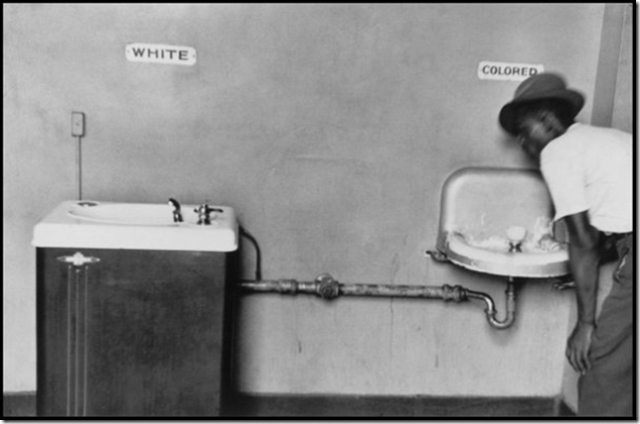
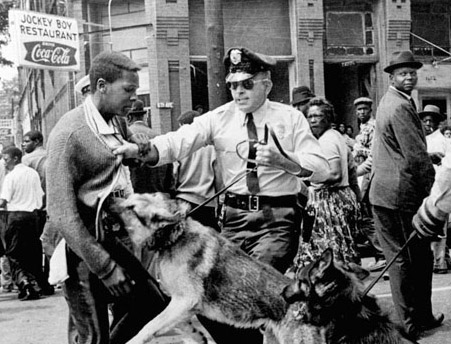
But what could they be? I waste a couple minutes dreaming of a website put together by law professors with useful images for law school classes, and then I realize that all you have to do is a Google image search on the name of a case. I tried "Brown v. Board of Education" and got a fabulous array of images — classrooms of children, the winning lawyers, newspaper frontpages, a "separate-but-equal" drinking fountain, police-dog ugliness.
And now I worry that pictures are too powerful to be used in a situation that isn't supposed to be about manipulative persuasion.
And in case you'd like to buy that product Jeff Bezos was promoting: Here's the new Kindle Fire. And here's the fancier one.
It simply means that the brain processes information more effectively when the information is presented in pictures and words instead of words alone. Neuroscientists have also found that when a slide (or advertisement) contains pictures and words, it’s best to have the picture on the left side of the page or slide and words on the right. This is exactly what Bezos did for a majority of his slides....I'm trying to picture — yes, picture — doing that in a law school class. I've never used PowerPoint or projected any kind of slide in any presentation I've ever done, but I do write words on the black/white board pretty often. These are never wordy, because when you write as you speak, you aren't going to take the time to write much. But I'm intrigued by the idea of having pictures and the notion that it would improve understanding somehow if the profuse spoken words and minimal written words were reinforced with pictures.
In no way am I advocating that you ditch PowerPoint. I am recommending that you ditch PowerPoint as we know it — dull, wordy, and overloaded with bullet points. Image-rich presentations work effectively because pictures appeal to the right hemisphere of the brain—the emotional side. You can have great ideas backed up by data and logic, but if you don’t connect with people emotionally, it doesn’t matter.
But what could they be? I waste a couple minutes dreaming of a website put together by law professors with useful images for law school classes, and then I realize that all you have to do is a Google image search on the name of a case. I tried "Brown v. Board of Education" and got a fabulous array of images — classrooms of children, the winning lawyers, newspaper frontpages, a "separate-but-equal" drinking fountain, police-dog ugliness.
And now I worry that pictures are too powerful to be used in a situation that isn't supposed to be about manipulative persuasion.
***
And in case you'd like to buy that product Jeff Bezos was promoting: Here's the new Kindle Fire. And here's the fancier one.
Subscribe to:
Posts (Atom)
 :.
:.