Pages

Labels

Showing posts with label David Sedaris. Show all posts

Monday, March 19, 2012

"Making people care" — Mike Daisey's justification for folding fake drama into a more or less true story.

David Carr analyzes the theater/journalism borderline, looking at Daisey's "The Agony and the Ecstasy of Steve Jobs" (the subject of this week's "Retraction" on "This American Life") and "Kony 2012" (the viral video whose producer, Jason Russell, was found, last Friday, naked and ranting on the streets of San Diego). Daisey says he "was terrified" that if he "untied" the fake parts of his theater monologue (to meet the standards of "This American Life") that "the work, that I know is really good, and tells a story, that does these really great things for making people care... would come apart in a way where, where it would ruin everything."

I listened to the "Retraction" episode of "This American Life," and was captivated and repulsed by the replays of the "The Agony and the Ecstasy," with Daisey's heavy-handed phrasing and gulping passionate voice. He injects Apple is eeeevvvilll directly into the theatergoer's brain. You hear the audience reaction and feel them in his manipulative hands. This is art! But it's journalism too. All you have to do is say it has fictionalized elements, and you're in the powerful realm of "Uncle Tom's Cabin" and "The Jungle."

Carr says:
I am a longtime fan of “This American Life,” but I have never assumed that every story I heard was literally true. The writer and monologist David Sedaris frequently tells wonderful personal yarns on the show that may not be precisely true in every detail....
Yes, what exactly is the difference between Sedaris and what Daisey did? One is humor and the other drama? But both humor and drama employ exaggerations, composites, and invention. One is only trying to entertain and the other is trying to incite political action? That's more like it. One is an author telling stories on himself (and his friends and family) and the other has identified a target and intends a vicious attack that will cause real harm. That matters.

Now, Daisey stresses the victims of his victim: the workers in China, the people he made the audience care about by making up dramatic scenes that, it turns out, never happened, like the man with a hand that was mangled making an iPad who gets to touch, with that mangled hand, a finished iPad, and he strokes it and calls it "magical." This is a version of what is the classic melodramatic encapsulation of the plight of the factory worker: He labors over the creation of a product that he can never own.

Carr — writing in the NYT — turns to the NYT journalists who published a series of articles "investigating Apple’s suppliers... that may have contained a bit less drama, but landed hard." I presume these articles are accurate, but how do I know? Carr anticipates the reader's skepticism about the trustworthiness of professional journalists (who can't make the I'm-an-artist defense when they are caught faking). He ends his article with a coy reference to "an e-mail to someone I know who is an expert on journalistic malfeasance [askins] if, in a complicated informational age, there was a way to make sure that someone telling an important story had the actual goods." We get a quote from this character, a quote that's only worth quoting to get to the revelation that it's Jayson Blair. Somehow the NYT expects you to remember who Blair is... or they're hoping we've forgotten.

I put that link on Blair's name. It's not in Carr's article — and it's even a link to the NYT. Blair's articles seemed so good because they included vivid details that extracted empathy from the reader:
Some of Mr. Blair's articles in recent months provide vivid descriptions of scenes that often occurred in the privacy of people's homes but that, travel records and interviews show, Mr. Blair could not have witnessed.

On March 24, for example, he filed an article with the dateline Hunt Valley, Md., in which he described an anxious mother and father, Martha and Michael Gardner, awaiting word on their son, Michael Gardner II, a Marine scout then in Iraq.

Mr. Blair described Mrs. Gardner ''turning swiftly in her chair to listen to an anchor report of a Marine unit''; he also wrote about the red, white and blue pansies in her front yard. In an interview last week, Mrs. Gardner said Mr. Blair had spoken to her only by phone.
Why lie about pansies? Red, white and blue pansies. To make you care. You can't be relied upon to care based on journalistic facts alone. Those who would manipulate your political opinions know they need to pull at your heart. They give you flowers. They give you an old man with a shaking, mangled hand.

From the "This American Life" transcript (boldface added):
Mike Daisey: And everything I have done in making this monologue for the theater has been toward that end – to make people care. I’m not going to say that I didn’t take a few shortcuts in my passion to be heard. But I stand behind the work. My mistake, the mistake that I truly regret is that I had it on your show as journalism and it’s not journalism. It’s theater. I use the tools of theater and memoir to achieve its dramatic arc and of that arc and of that work I am very proud because I think it made you care, Ira, and I think it made you want to delve. And my hope is that it makes – has made — other people delve....

And I stand by it as a theatrical work. I stand by how it makes people see and care about the situation that’s happening there. I stand by it in the theater. And I regret, deeply, that it was put into this context on your show.
Make people care. This is the what we are exposed to when we encounter text. An author is trying to make you care. And maybe you feel that upwelling of caring — empathy... ah, the twinges of humanity. Aren't you a good person to surrender to the injection of caring about the thing you've been manipulated into caring about?

Make people care. May I suggest that you shift your focus from "care" to "make"? Someone is trying to make you feel/think what they want you to feel/think. They'd like you to directly internalize the viewpoint they have chosen and do not want to try to prove on facts and reason alone. Resist!

There. Was that dramatic enough to make you care about resisting the writers who are out to make you care?

Wednesday, December 28, 2011

Politico's Ben Smith calls some Gingrich video "Possibly the weirdest video of the cycle."

But the video is down now, so I have no idea what that was about. Other than Christmas.

A little more info, at HuffPo:
The video, posted December 23, features the Republican presidential hopeful's New Hampshire staffers decked out in Santa hats, singing to the tune of "Deck the Halls." While the group sings of Newt's solutions stopping Obama's "trauma," one staffer dons an elf outfit and runs around Gingrich's New Hampshire office.
So... maybe the problem was the implication that an "elf outfit" is "gay apparel." (Paging David Sedaris.)

In other news... a teacher in a Michigan elementary school changed the "Deck the Halls" lyrics after the kids laughed at "Don we now our gay apparel." She made it "bright apparel" and then got publicly criticized for not turning it into a "teachable moment." Video at the link of the principal telling the reporter: "We have an anti-discrimination and bullying policy that includes sexual orientation, and so, going forward, the teacher will be addressing: this is how we're supposed to be reacting, this is how to be respectful about this."

"Gay" is not a bad word... I agree. But can you really teach people not to laugh at the silly line "Don we now our gay apparel"? Nothing makes you want to laugh more than being forbidden to laugh. And "gay" is supposed to mean mirthful. Where's the mirth? If mirth is forbidden because we must be respectful and ever on the alert for incipient bullying, then I think you need to pick another song. But "Deck the Halls" is one of the best secular Christmas songs.

What are you going to do? Maybe we need to recognize that music is not compatible with the highest values of the public schools of the United States:
It's better that our dear youth spend their valuable time in learning respect for all minority groups and essential and useful bullying resisting skills and fill their time with teachable moments and healthy recreations instead of music.
ADDED: My son Chris tells me about the time, years ago, when he was in a public school chorus that had to sing the song "Scarlet Ribbons" and the kids were forbidden to laugh about the line "I peeked in and on her bed/In gay profusion lying there..." Chris IM's:
we had to practice a lot to get to the point where we wouldn't laugh on that line, and we had been able to do it in the last rehearsals, but then in the performance someone laughed, that made everyone laugh, and it made you laugh and you had to cover your face and sort of put your head down
It almost seems like bullying to put the kids through that! [LATER: I just realized that the "you" in his description referred to me! It still makes me laugh right now.]

Saturday, November 6, 2010

In the middle of writing about pessimism, David Rakoff finds out that the burning pain in his shoulder, that pinched nerve...

... is a tumor. Here he is — bald and hilarious — talking about his book. Watch for the reference to the Roberts Court...

The Daily Show With Jon StewartMon - Thurs 11p / 10c
David Rakoff
www.thedailyshow.com
Daily Show Full EpisodesPolitical HumorRally to Restore Sanity

You can buy the book — "Half Empty" — here. I highly recommend the audio version. His reading style is very funny — and also easy to sleep to (which is 2/3 of the reason why I buy audiobooks).

I discovered that book after watching David Sedaris on "The Daily Show" and going off to buy "Squirrel Seeks Chipmunk" — which you can buy here. Again, the audiobook is highly recommended — but "Squirrel Seeks Chipmunk" isn't easy to sleep to because it's tricked up with a lot of music... and also actors read some of the stories and actors try so hard. It's wakefulness-provoking.

Sunday, June 8, 2008

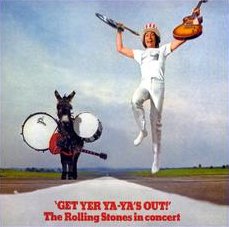
"Get your ya-yas out."


Says Barack Obama:


"That's an old 60s expression."

Yeah, it is:


ADDED: You can debate about what ya-yas are. (Everyone who's read the David Sedaris book "Naked" should know Greeks use it to refer to grandma.) But in rock and roll history, there's something that pre-dates the Rolling Stones album. It's Lee Dorsey's song "Ya Ya" ("Oh, well, I'm sitting here la la, waiting for my ya ya"). I think it's just pure serendipity that Lee Dorsey also has this — a song called "Yes We Can," with surprisingly Obama-appropriate lyrics.

IN THE COMMENTS: Kirk Parker asks:
Do we also get to Kick Out The Jams?
If you do, please do it this way — not this way. And it's NSFW to do it this way or this way.

Thursday, April 12, 2007

Aw, come on, you didn't believe all those things really happened to David Sedaris?

Can't we just accept the convention that "humor" gets classified as "non-fiction"? No one is tricked into thinking the author is asserting that these things really happened.

Monday, April 9, 2007

"Some of what we've been hearing is that women would like to have a place where they can connect with other women..."

Says American Airlines in an email, directing me to their special women's page:
This web page is about you – our valued customer. We've listened to women like you and recognized the need to provide additional information tailored to your business and pleasure travel needs and lifestyle.

It's so Oprah-esque, there are even book recommendations:
We asked travelers what books they enjoyed reading on their last flight, and came up with a list of interesting, inspiring, and sometimes surprising suggestions. Here are our top five picks –

Eat, Pray, Love by Elizabeth Gilbert
Dress Your Family In Corduroy And Denim by David Sedaris
Snow by Orhan Pamuk
Nickel and Dimed by Barbara Ehrenreich
Absolute Friends by John Le Carre
Oh, yeah, of course, we want inspiring. Got to have things for my soul. "Eat, Pray, Love." Or should that be Eat Airline Food, Pray, Love?

And butter me up for more travel by telling me about the charities you support.
As women, we naturally want to assist where we can....
Unlike those selfish men!

Let me guess which charity you support? Breast cancer research!
American Airlines is a proud sponsor of the Susan G. Komen Breast Cancer Foundation. Lean more about our sponsorship of the Komen Foundation and how you can get involved...
How did I get that? ("Lean more"? Where are my diet tips?)

I'm sorry, but I'm in a big rush to get to a meeting or I would mock this website more systematically.

You know how we women are so busy! And anyway, leave it to the guys to be systematic!

Tuesday, October 31, 2006

Which Supreme Court Justice went on a nude cruise?

The Chief Justice has launched an investigation to get to the... uh... to figure out exactly which Justice that San Francisco Chronicle travel article was referring to.
[Spuds Hilton, the author of the article] said in an interview that while he has no clue as to the identity of the alleged nude judge, "the whole idea of sailing the seven seas naked makes the mind race. When you hear that a member of the highest court in a country the size of Canada may be lounging by the pool buck-naked, daiquiri in hand, you know that people will be interested.

"The owner of the travel company said that nudity is the great equalizer," Mr. Hilton added. "I guess that makes sense -- no power suits, no uniforms, no $600 pumps and, apparently, no judge's robes."
Here in the U.S., the justices are always blabbing about "judicial modesty," but who know what kinds of vacations they take?

Anyway, a naked cruise? It's just so perfectly awful, combining the horrors described in two of my favorite essays, "Naked," by David Sedaris and "A Supposedly Fun Thing I'll Never Do Again," by David Foster Wallace. And then add Supreme Court Justices for a truly dreadful, nightmare vacation.

Saturday, October 15, 2005

New ways to get lost in Amazon.

Have you noticed the new features in Amazon? I haven't seen any announcements on their main page, but if you go to an individual book, now, you can find all kinds of new, cool things. I'm not finding it for every book, and it seems as though it wouldn't be possible for books that are not open to the "search inside" function. But take, for example, "Dress Your Family in Corduroy and Denim." Let's look at the SIPs -- or "statistically improbable phrases":
Amazon.com's Statistically Improbable Phrases, or "SIPs", are the most distinctive phrases in the text of books in the Search Inside!™ program. To identify SIPs, our computers scan the text of all books in the Search Inside! program. If they find a phrase that occurs a large number of times in a particular book relative to all Search Inside! books, that phrase is a SIP in that book.

SIPs are not necessarily improbable within a particular book, but they are improbable relative to all books in Search Inside!. For example, most SIPs for a book on taxes are tax related. But because we display SIPs in order of their improbability score, the first SIPs will be on tax topics that this book mentions more often than other tax books. For works of fiction, SIPs tend to be distinctive word combinations that often hint at important plot elements.
For "Dress Your Family," they've only come up with: "eight black men." If you've read the book, you know what that refers to. If you click on the phrase, you get all the other books with that phrase: here. Useful? Possibly not in this case, though still interesting, in a rather random way.

Then there are the CAPs (capitalized phrases):
Aunt Monie, Monie Changes Everything, Baby Einstein, The Girl Next Door, The Ship Shape, Full House, Nuit of the Living Dead, Blood Work, North Carolina, Slumus Lordicus, Kwik Pik, Great Dane, Puta Lid, Saint Nicholas, Anne Frank, The End of the Affair, Royal Pavilion, Who's the Chef, Apple Pan, The Empire
Each is clickable. You can then see other books that frequently use that capitalized phrase. Well, no one else is using Slumus Lordicus yet, but here are the Anne Frank references.

Then there's the concordance:
Concordance is an alphabetized list of the most frequently occurring words in a book, excluding common words such as "of" and "it." The font size of a word is proportional to the number of times it occurs in the book. Hover your mouse over a word to see how many times it occurs, or click on a word to see a list of book excerpts containing that word.
There are also "text stats," showing you how easy or hard the book is to read. Sedaris, it turns out, is awfully easy to read -- 7th grade level. Doesn't say how funny he is, though.

Let me check another, similarly funny, but much darker book I like, "Running With Scissors." Hey, that's even easier to read! Let's try "The Curious Incident of the Dog in the Night-Time." Oh, that's easy too. Hmmmm.... that's got a SIP of "bloody dog," so who else is SIP-ing "bloody dog"?

James Joyce! All right, then. Let's get the text stats for "Ulysses." I see that's easy to read too, so they say. According to the Flesch-Kinkaid analysis, it's written at less than a 7th grade level, so if you're not ready to tackle "Dress Your Family in Corduroy and Denim"...

UPDATE: You can check text stats for blogs at this website. In case you're wondering, this blog has the following numbers:
Gunning Fog Index 10.31
Flesch Reading Ease 66.29 (higher is easier, with 100 being the easiest)
Flesch-Kincaid Grade 7.13
The numbers for "Ulysses" are: 9.0, 68.1, 6.8. Do you find this confusing? Generally, I think it's a good sign if your ease-of-reading stats seem low for the difficulty of the material.

Wednesday, June 2, 2004

A new David Sedaris book!

There's only one person who writes books that I pick up the first time I see them and buy without even looking inside to see if it's good. That's David Sedaris, whose new book Dress Your Family in Corduroy and Denim appeared yesterday in lots of nice big stacks at Borders. They weren't there the day before. They sprang up overnight. I picked one up immediately and set about to do the shopping that led me into the store in the first place.


I walked up the big central staircase. We have an amazingly large and nice Borders on the west side of Madison, a city that has plenty of people who carp lengthily about businesses that aren't locally owned. My answer re Borders, if I ever engage with this sort of carping, is that I lived and shopped in Ann Arbor back in the days when Borders was the local bookstore. Am I supposed to punish it now for being so good and successful? Let the local business be better and I'll go there. The local University Bookstore has filled up its first floor with T-shirts and sweatpants: they are the ones I chose to punish. On the other hand, I get my coffee on State Street at the locally owned Espresso Royale or (if I want a sandwich) Fair Trade. I walk past Starbucks, not because it's a chain, but because their coffee isn't as good. (They are remodelling it, making it more comfortable somehow, so I'll probably check it out.)


So, as I was saying, I walked upstairs at Borders, and one of the store employees saw I had the new David Sedaris book and said, "He's really funny." I said, "Yeah, I know. He's the one author whose books I buy right away without even looking inside." She said, "That's what everyone says."

Monday, February 16, 2004

Some idiosyncratic arrangements. It's a nice cold morning in Wisconsin. The phone rang at 11:30 last night, after I was asleep, so I ended up having the opportunity to read a few pieces in the new New Yorker last night. I read Peter Schjeldahl's article on the Barnes Foundation:
Thousands of wonderful objects fill a graceful château that was finished in 1925. Among them, hundreds of School of Paris modern paintings and a smattering of Old Masters and American moderns are massed on walls covered in warm tan burlap, labelled only with the artists’ names. The pictures are interspersed with items of skilled metalwork (hinges, lock plates, utensils). Antique furniture, African sculpture, Pennsylvania folk art, Egyptian and Greek antiquities, and Southwest Indian rugs and ceramics and jewelry cluster throughout.

The question is whether this place can be kept intact, in its idiosyncratic form, according to the terms of the donor's will or whether a court will see the financial difficulties as sufficient to justify breaking it up. Schjeldahl begs for it to be kept as it is:
The Barnes is a work of art in itself, more than the sum of its fabulous parts. The same may be said for other institutionalized private collections—New York’s Frick, Boston’s Gardner—but without equal justice. None so engages visitors in an adventure of sensibility. As you test the virtues of the collection, they test you, probing the depths and exposing the limits of your perceptive powers. You don’t view the installation so much as live it, undergoing an experience that will persist in your memory like a love affair that taught you some thrilling, and some dismaying, things about your character. If there were other places like the Barnes, dispensing with it would not be tragic. But one minus one is zero.

You'll have to buy the paper copy to see the beautiful photograph of one orange-burlapped wall, a case of African sculptures, assorted paintings by Matisse and Picasso, and other items in an arrangement constituting one sector of the grand work of art by "the strange Dr. Albert Barnes."

The paper copy of this issue is also needed to read the David Sedaris story, "The Living Dead," which I also read last night. Serious mouse lovers should beware. Driving into work this morning, I was listening to slot 4 in the CD player which was also David Sedaris, the part where his sister Lisa is expressing her excessive concern about dogs and the story of the exotic turtles and the racoon that chewed two legs off each of them leaving them looking like half-stripped Volkswagens.

I pulled my nonstripped turtle-morphic green Volkswagen into the garage at Grainger Hall and came into my office where post-Impressionist reproductions (Matisse, Gaugin, Denis, Bonnard) are idiosyncratically arrayed on taxi-yellow walls.