In Cuba, today's "History of" country.
Showing posts with label Cuba. Show all posts
Friday, February 22, 2013
"In 1511, Diego Velázquez de Cuéllar set out from Hispaniola to form the first Spanish settlement in Cuba..."
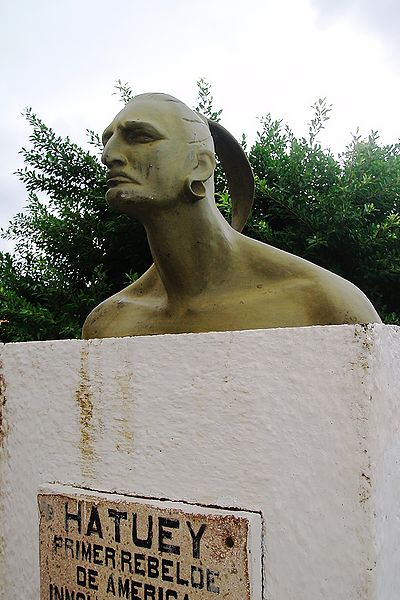
"... with orders from Spain to conquer the island. The settlement was at Baracoa, but the new settlers were to be greeted with stiff resistance from the local Taíno population. The Taínos were initially organized by cacique (chieftain) Hatuey, who had himself relocated from Hispaniola to escape the brutalities of Spanish rule on that island. After a prolonged guerrilla campaign, Hatuey and successive chieftains were captured and burnt alive, and within three years the Spanish had gained control of the island. In 1514, a settlement was founded in what was to become Havana."
In Cuba, today's "History of" country.
Labels:
Cuba,
Native Americans,
Spain,
the History of
Saturday, December 18, 2010
Saturday, November 21, 2009
"They always understood that they might someday be called to account for that conduct and always have been prepared to accept full responsibility for it."
"They have done so today."
Walter K. Myers, 72, and Gwendolyn Steingraber Myers, 71, step up and take responsibility for 30 years of spying for Cuba, motivated by "conscience and personal commitment."
By the way, Walter Myers is the great grandson of Alexander Graham Bell.
Walter K. Myers, 72, and Gwendolyn Steingraber Myers, 71, step up and take responsibility for 30 years of spying for Cuba, motivated by "conscience and personal commitment."
By the way, Walter Myers is the great grandson of Alexander Graham Bell.
Sunday, March 8, 2009
Obama reaching out to the Taliban.
"He cited an argument he attributed to Gen. David H. Petraeus that 'part of the success in Iraq involved reaching out to people that we would consider to be Islamic fundamentalists, but who were willing to work with us.' Mr. Obama added that 'there may be some comparable opportunities in Afghanistan and in the Pakistani region, but the situation in Afghanistan is, if anything, more complex.'"
This idea makes sense to me, but I lack confidence that Obama and his people know how to do these things properly. He didn't get how to host a visit with Gordon Brown in the White House! And then there was Hillary and the reset button....
AND: More here.
Next: Cuba.
This idea makes sense to me, but I lack confidence that Obama and his people know how to do these things properly. He didn't get how to host a visit with Gordon Brown in the White House! And then there was Hillary and the reset button....
AND: More here.
Next: Cuba.
Labels:
Afghanistan,
Cuba,
Hillary,
Iraq,
Obama's war on terror,
Petraeus,
push buttons
Friday, October 3, 2008
It's up to 882.
Come on! We can hit 1000!
Thanks to all the many commenters who hung out with me for the VP debate live-blog, some of whom are still hanging out there, trying to drive the comments into the 4 figures for the first time. There's some great stuff inside -- I front-paged some of it -- on-topic and off-... off-topic and off-color. There's the funny, and there's the search for a better, more Cuban, recipe for creole shrimp... and I'm sure we'll all find what we're looking for.
IN THE COMMENTS: Ruth Anne Adams said...
I'll do a vlog when it hits 1000, so give me some more ideas here. I don't really see why it should involve abasing myself however!
UPDATE: Whoa! We hit 1000!
Thanks to all the many commenters who hung out with me for the VP debate live-blog, some of whom are still hanging out there, trying to drive the comments into the 4 figures for the first time. There's some great stuff inside -- I front-paged some of it -- on-topic and off-... off-topic and off-color. There's the funny, and there's the search for a better, more Cuban, recipe for creole shrimp... and I'm sure we'll all find what we're looking for.
IN THE COMMENTS: Ruth Anne Adams said...
Why don't you sweeten the pot? Why don't you promise to vlog an egg salad sandwich or burned pasta or creole shrimp or something when we hit 1000?
I know! A pork-and-crap sandwich!
I'll do a vlog when it hits 1000, so give me some more ideas here. I don't really see why it should involve abasing myself however!
UPDATE: Whoa! We hit 1000!
Tuesday, February 19, 2008
"I am not saying goodbye to you. I only wish to fight as a soldier of ideas."
Fidel Castro steps down as president of Cuba.
President Bush reacts: "The United States will help the people of Cuba realize the blessings of liberty."
Monday, February 18, 2008
Why I'm voting for Obama in the Wisconsin primary.
I said I was going to write this post, so I'd better do it. As I said, I want to do an archaeology of the archive and trace my response to Barack Obama as I did to John Kerry in an old 2004 post called "How Kerry lost me." I've already said that Obama made a good impression on me when I first encountered him (when he spoke at the 2004 Democratic convention), but that I condemned all the Democrats who voted against John Roberts (and that included Obama).
Then I commented on a story about Michelle Obama, who was asked why there isn't more support for her husband among black voters. She said: "What we're dealing with in the black community is just the natural fear of possibility... I think that it's one of the legacies of racism and discrimination and oppression."
Obama just seemed bland to me around this time, and I was needling him to attack.
Then came Oprah Winfrey:
I think I was hanging back, observing, commenting, but also slowly bonding with Obama. Then, he won the Iowa caucuses, and it suddenly seemed that he was going to win the nomination. With the real possibility at hand — and the prospect of finally being done with Hillary — I got a little excited about the idea of Obama winning. But I had my distance.
I was reading Carl Bernstein's "A Woman in Charge," and I identified with something Camille Paglia wrote:
I was impressed by the characterization of Barack Obama as a "once-in-a-generation" possibility, and by the fact that it sounded like quite an understatement to me.
Now, I've read through the posts and caught up to the present. Have I traced a journey? There is no clear narrative arc as there was in "How Kerry lost me." It's just a slow warming. And we're only at the primary, so there is much still to happen.
There is also the corresponding arc of my reaction to Hillary Clinton, which you can see some of here. As I said above, I haven't liked her, but I pictured myself voting for her anyway — back when she was inevitable. But Obama's growing power allowed me to cast off my resignation. And along with his growing power — after that win in Iowa — came her phony emotional ploys, the garish emergence of Bill Clinton, and the racial insinuations from the Clinton campaign. That drove a wedge into my neutrality, and my opinion broke for Obama.
Let's continue. This will have to be very selective, because there are over 200 posts tagged "Obama," and a blog post can't be too long.
On December 11, 2006, I quoted Obama saying: "I think to some degree I’ve become a shorthand or symbol or stand-in for a spirit...." I liked him for saying that. It was honest. I thought he'd have become something specific, and I'm amused to see that I added: "Wouldn't it be funny if he didn't?"
By April 2006, I was sick of hearing people marvel at what a good speaker he was and called him a "gasbag":
In the beginning of August, I was annoyed by Andrew Sullivan's effusive support of Obama as the candidate who would rid the young of the older "traumatized" generation:
In November, I was traipsing around San Francisco, and I just happened to stop to take a photo of a photo of Obama in the window of a hat shop. The proprietor, an older black woman, came out and engaged me in conversation:
Of course, I didn't like Hillary. Anyone who reads this blog knows that. But I still could easily picture myself voting for her. I don't like politicians and I don't need to like them. I just try to pick someone who can do the job well enough. I keep my distance.On December 11, 2006, I quoted Obama saying: "I think to some degree I’ve become a shorthand or symbol or stand-in for a spirit...." I liked him for saying that. It was honest. I thought he'd have become something specific, and I'm amused to see that I added: "Wouldn't it be funny if he didn't?"
By April 2006, I was sick of hearing people marvel at what a good speaker he was and called him a "gasbag":
I hear a tired-sounding man, who rambles on and on.... [I]f I didn't know who he was and that there was a crowd there, I would picture an old man slumped in an armchair, expatiating for the benefit of anyone unlucky enough to be within earshot. It's formless stream of consciousness. Oh, there is that theme of hope. The stream swirls back there at predictable intervals.By July 25, 2007, I was saying that it had become clear that Hillary Clinton was the best Democratic candidate. That was right after the debate where Obama answered "I would" to the question: "[W]ould you be willing to meet separately, without precondition, during the first year of your administration, in Washington or anywhere else, with the leaders of Iran, Syria, Venezuela, Cuba and North Korea, in order to bridge the gap that divides our countries?"
In the beginning of August, I was annoyed by Andrew Sullivan's effusive support of Obama as the candidate who would rid the young of the older "traumatized" generation:
This isn't an argument that Obama would make a better President than Clinton, but it's not a mere outburst of emotion either. He's saying that Obama will make a better candidate than Clinton, because he will -- by his faith -- inspire belief. That sounds rather dangerous, evocative of the worst things that can happen in politics. We need analysis and reason too, and I think Obama can only go so far exciting people with "the audacity of hope." The debate the other night showed how he can fall short, going for the hopeful, inspiring idea when Clinton comes forward with the more seasoned, mature, realistic analysis.So I was leaning strongly toward Hillary last summer. But I wasn't agonizing over the Democratic race. I favored Rudy Giuliani.
And which approach, in fact, betrays more fear that Americans are "know-nothing" "rubes"? I think the simplistic talk of hope, playing on the emotions of the listener, shows less respect for the intelligence and sophistication of the voters than a more complex, realistic presentation of the issues.
In November, I was traipsing around San Francisco, and I just happened to stop to take a photo of a photo of Obama in the window of a hat shop. The proprietor, an older black woman, came out and engaged me in conversation:
[S]he wanted to talk about Barack Obama. Do I like him? Yes! I think he's a good man, and that he would be able to do a lot of good. I added, "But I kind of like Giuliani." That was okay with her, it seemed — so long as I don't like Hillary.
Then I commented on a story about Michelle Obama, who was asked why there isn't more support for her husband among black voters. She said: "What we're dealing with in the black community is just the natural fear of possibility... I think that it's one of the legacies of racism and discrimination and oppression."
Obama just seemed bland to me around this time, and I was needling him to attack.
Then came Oprah Winfrey:
[S]he presents Obama as an embodiment of our political, religious, and psychological needs. I'm saying "our," even though the presentation is strongly aimed at black people, because I don't lose the sense that she is speaking to the country as a whole....Did Oprah get to me?!
She tells us some people think that Barack Obama ought to wait. She equates that with the old message that black people ought to have waited for equality. In this rhetoric, to tell him he should wait feels racist. But Oprah never accuses anyone of racism. She never even mentions the name of the rival who wants us to think that she is ahead of him in line. Oprah keeps the positive message in front. This is inspirational. Barack Obama is The One, so allow him to emerge into his rightful place, and we will all be fulfilled, saved... and — why not? — well governed.
I think I was hanging back, observing, commenting, but also slowly bonding with Obama. Then, he won the Iowa caucuses, and it suddenly seemed that he was going to win the nomination. With the real possibility at hand — and the prospect of finally being done with Hillary — I got a little excited about the idea of Obama winning. But I had my distance.
I was reading Carl Bernstein's "A Woman in Charge," and I identified with something Camille Paglia wrote:
Paglia supports Barack Obama "because he is a rational, centered personality who speaks the language of idealism and national unity." This is similar to what Andrew Sullivan said — and, frankly, similar to some things I find myself thinking from time to time... when I'm not talking back to myself about what a disastrous delusion that might be.Shortly thereafter, that video provided emotional massage.
I was impressed by the characterization of Barack Obama as a "once-in-a-generation" possibility, and by the fact that it sounded like quite an understatement to me.
Now, I've read through the posts and caught up to the present. Have I traced a journey? There is no clear narrative arc as there was in "How Kerry lost me." It's just a slow warming. And we're only at the primary, so there is much still to happen.
There is also the corresponding arc of my reaction to Hillary Clinton, which you can see some of here. As I said above, I haven't liked her, but I pictured myself voting for her anyway — back when she was inevitable. But Obama's growing power allowed me to cast off my resignation. And along with his growing power — after that win in Iowa — came her phony emotional ploys, the garish emergence of Bill Clinton, and the racial insinuations from the Clinton campaign. That drove a wedge into my neutrality, and my opinion broke for Obama.
Labels:
Bill Clinton,
Cuba,
Giuliani,
Hillary,
Kerry,
Michelle O,
Obama,
Oprah,
political spouse,
racial politics,
San Francisco
Sunday, August 5, 2007
"He's gone from Jane Fonda to Dr. Strangelove in one week."
Mitt Romney takes a fine jab at Obama at today's debate:
Sen. Barack Obama of Illinois... said recently he would be willing to meet with the leaders of Cuba, North Korea and Iran in his first year in office, and declared in a speech he would order military action to capture terrorists in Pakistan if that nation's president did not.Giuliani had a good quote too:
"I mean, in one week he went from saying he's going to sit down, you know, for tea, with our enemies, but then he's going to bomb our allies," said Romney. "I mean, he's gone from Jane Fonda to Dr. Strangelove in one week."
"In four debates, not a single Democrat said the word, 'Islamic terrorists.' Now that is taking political correctness to extreme."(And I'm totally surprised to read that there was another debate. I am constantly paying attention to the news and want to watch all the debates, yet I knew nothing of this one. How do they expect normal people to notice?)
Friday, July 27, 2007
Obama calls Hillary "Bush-Cheney lite."
One more thing that tips me toward Clinton! Bush-Cheney lite sounds like just about what we need. Clinton declares the epithet "silly," but I think that secretly she knows the comparison helps her in some quarters.
And Obama came out with that in the context of trying to justify what was in fact a major gaffe at the debate:
Clinton's retort:
And Obama came out with that in the context of trying to justify what was in fact a major gaffe at the debate:
In South Carolina and during a visit to New Hampshire earlier in the day, Obama compared Clinton to Bush because, he said, she has said she will not have unconditional meetings with foreign enemies."Stubbornness"? As opposed to what? Giddy impetuousness?
He told the College Democrats that her approach showed "stubbornness" and in New Hampshire he referred to her as "Bush-Cheney lite."
Clinton's retort:
"I've been called a lot of things in my life but I've never been called George Bush or Dick Cheney certainly," she said. "We have to ask what's ever happened to the politics of hope?"Oh, come on. He's overflowing with hope! Hope that Venezuela, Cuba, Syria and Iran will play nice. Hope that saying Clinton is like Bush will cause voters to recoil in horror...
Labels:
2008 campaign,
Bush,
Cheney,
Cuba,
Hillary,
Obama,
stubbornness,
Venezuela
Wednesday, July 25, 2007
Clinton, best in the debate, and best in the after-debate.
I think in these last two days it's become clear that Hillary Clinton is the Democrats' best candidate. In the most significant moment of the debate, the candidates were asked "[W]ould you be willing to meet separately, without precondition, during the first year of your administration, in Washington or anywhere else, with the leaders of Iran, Syria, Venezuela, Cuba and North Korea, in order to bridge the gap that divides our countries?"
Obama immediately says "I would," not really noticing the detail to the question. He'd meet "without preconditions"? He goes on to plug in some material, which he will use in the after-debate period about how wrong Bush has been to think that "not talking to countries is punishment to them."
Clinton gets a lucky break when the questioner, who's in the audience, is given a chance at a follow up and throws the question to Clinton. I think Clinton had seen her opportunity the instant Obama said "I would," and here, with the chance to speak next, she deftly takes full advantage:
Listen to him struggle through this interview with Iowa's Quad-City Times. Now, let's look at the coverage in today's newspapers.
The Boston Globe:
And his attempt to catch Clinton in a contradiction could only work if we lacked the most basic powers of discernment. So Clinton said it's "a terrible mistake for our president to say he will not talk with bad people"? It can be wrong both to say "I won't talk" and to say "I will talk." The position Clinton took at the debate was that talks had to be planned and developed through a diplomatic process. She's rejecting both hardcore positions: promises to talk "without preconditions" and intransigent refusals to talk.
The Daily News:
Lynn Sweet in the Chicago-Sun Times:
The Obama rhetoric is getting stale and repetitious -- just as Hillary is trouncing him in the after-debate!
He barely shows up for the showdown.
UPDATE: What about the second day after the debate?
Obama immediately says "I would," not really noticing the detail to the question. He'd meet "without preconditions"? He goes on to plug in some material, which he will use in the after-debate period about how wrong Bush has been to think that "not talking to countries is punishment to them."
Clinton gets a lucky break when the questioner, who's in the audience, is given a chance at a follow up and throws the question to Clinton. I think Clinton had seen her opportunity the instant Obama said "I would," and here, with the chance to speak next, she deftly takes full advantage:
Well...A disarming "well," as if this isn't going to be word-for-word perfect...
I will not promise to meet with the leaders of these countries during my first year. I will promise a very vigorous diplomatic effort because I think it is not that you promise a meeting at that high a level before you know what the intentions are.Live-blogging, I say "this is the precise point in the debate where I conclude... that Clinton is the superior candidate." But as impressive as this is, her campaign also deserves credit for forefronting this interchange the day after the debate, and Obama must take a second downgrade for the way he handled the after-debate.
I don't want to be used for propaganda purposes. I don't want to make a situation even worse. But I certainly agree that we need to get back to diplomacy, which has been turned into a bad word by this administration.
And I will pursue very vigorous diplomacy.
And I will use a lot of high-level presidential envoys to test the waters, to feel the way. But certainly, we're not going to just have our president meet with Fidel Castro and Hugo Chavez and, you know, the president of North Korea, Iran and Syria until we know better what the way forward would be.
Listen to him struggle through this interview with Iowa's Quad-City Times. Now, let's look at the coverage in today's newspapers.
The Boston Globe:
Yesterday, Obama's campaign tried to clarify his remarks by saying that he wouldn't agree to meet with such leaders before lower-level diplomatic work was done. But Clinton's campaign seized on their divergent answers, arguing that it exposes both her command of world affairs and Obama's greenness. "Senator Clinton is committed to vigorous diplomacy but understands that it is a mistake to commit the power and prestige of America's presidency years ahead of time by making such a blanket commitment," her campaign wrote in a memo.So Obama falls back on his mantra "change," showing his dreadful tendency to rely on abstractions and generic hope messages. He's gotten on a long way with such material, when speaking to admiring crowds of people who are just getting to know him. But it's horribly inadequate to fight off a formidable opponent on a specific issue.
Obama's campaign put out its own memo yesterday saying his is the approach that would keep America safe.
"Obama's tough but smart approach to America's diplomacy is exactly the kind of change and new thinking that excites voters about an Obama presidency," the memo said. His campaign also pointed to a remark Clinton made this spring in which she said, "I think it is a terrible mistake for our president to say he will not talk with bad people."
Clinton's campaign yesterday also employed former secretary of state Madeleine Albright to speak to reporters about Clinton's knowledge of diplomacy and the appropriate use of American power. "When all is said and done she knows that being president is about protecting the country and advancing national security interests," Albright said, adding that Clinton shows "a very sophisticated understanding of the whole process."
And his attempt to catch Clinton in a contradiction could only work if we lacked the most basic powers of discernment. So Clinton said it's "a terrible mistake for our president to say he will not talk with bad people"? It can be wrong both to say "I won't talk" and to say "I will talk." The position Clinton took at the debate was that talks had to be planned and developed through a diplomatic process. She's rejecting both hardcore positions: promises to talk "without preconditions" and intransigent refusals to talk.
The Daily News:
Political observers said they expected Clinton to waste no time using Obama's comment to shore up her standing among key voter blocs, such as Cuban-Americans in bellwether Florida and Jewish voters who may find the idea of a sitdown with the Holocaust-denying president of Iran disturbing.So, Lake pretends Obama said what he should have said -- that is, what Clinton said.
Team Clinton plans "to use these issues in outreach in the states [and nationally] with Jewish leadership and Jewish grass-roots voters," a Democratic operative familiar with the Clinton campaign told the Daily News.
Obama's camp said that approach wouldn't impress anybody. "There is a smallness to such misleading attacks that voters reject," said Obama spokesman Bill Burton....
In a race where Obama has presented himself as the fresher face, the exchange handed Clinton the perfect opening to "prove she's more experienced and would provide a steadier hand at the helm of the ship of state," said Democratic consultant Hank Sheinkopf.
To push that message, the Clinton campaign swiftly arranged a morning press call with former Secretary of State Madeleine Albright, who didn't attack Obama directly but called the New York senator "a person who understands how the American presidency works."
The Obama campaign quickly trotted out its own stable of surrogates, including former Clinton administration national security adviser Anthony Lake, who argued, "A great nation and its President should never fear negotiating with anyone and Sen. Obama rightly said he would be willing to do so."
Lynn Sweet in the Chicago-Sun Times:
During the day Tuesday, the Clinton and Obama campaigns issued dueling critical memos while advisers sparred over who appeared more presidential. The candidates each gave interviews to the Quad City Times in Iowa, the state with the crucial lead-off presidential vote, where they escalated the rhetoric.Yes, she's not just demonstrating that she's right on the issue, she's demonstrating how to be a strong candidate, which is actually more important as the Democrats decide who they want to be the candidate.
"I thought that was irresponsible and frankly naive," Clinton told the paper. Obama, she said, gave an answer "I think he is regretting today."
Obama told the paper that Clinton's camp was trying to score "political points."
He stood by his response and that Clinton's position was not that different from the Bush administration policy, so she "can't claim the mantle of change.""The mantle of change." I wonder what people picture when they hear the word "mantle." Really, think about it for a while: The Mantle of Change, The Mantle of Change, The Mantle of Change. Doesn't it sound like something you win at a stage of a video game?
The Obama rhetoric is getting stale and repetitious -- just as Hillary is trouncing him in the after-debate!
Obama's campaign was trying to regain its footing after walking into a potential political minefield. The debate story in the Miami Herald, another early primary state where Cuban Americans make up a voting bloc, said Obama and Edwards "suggested Monday that they would meet with two leaders who top South Florida's most-hated list: Fidel Castro and Hugo Chavez."That coffee line tries to brush off the controversy as lightweight and meaningless, but it is his biggest showdown with Clinton thus far.
If he met with Chavez, Obama told the Iowa paper, it would be to tell him "what I don't like" while finding areas to "potentially work together."
"I didn't say these guys were going to come over for a cup of coffee some afternoon," Obama said.
He barely shows up for the showdown.
UPDATE: What about the second day after the debate?
"The notion that I was somehow going to be inviting them over for tea next week without having initial envoys meet is ridiculous," he said...So from "coffee some afternoon" to "tea next week"...
Labels:
2008 campaign,
Castro,
Cuba,
Edwards,
foreign affairs,
grass,
Hillary,
Holocaust,
Hugo Chavez,
Iowa,
Korea,
Newsweek,
Obama,
propaganda,
rhetoric,
tea,
Venezuela,
water
Monday, July 23, 2007
Live-blogging the Democratic debate.
1. Just waiting for this thing to kick off. I'll add to this post, numbering the paragraphs as I go.
2. Intro, from some YouTube clip. Richardson looks terrified. Clinton, resolute. But now, it's Anderson Cooper, in the flesh. Couldn't someone have Tubed him? Biden glistens. Cooper blabs about how the questions were "heartfelt" so they had trouble choosing. Now, he's showing some cute clips that aren't chosen. Cooper cruelly slams some 5-year-old girl for being a puppet of her parents. And he hilariously slams the Biden campaign for its trick getting a lot of YouTubers to ask the same question.
3. Question 1: Politicians always make promises, but then they don't do anything. How will you be different? A good meta question. Unfortunately, we're getting an answer from Dodd. He got the job done in the Senate. Fine, but who cares about Dodd? Ah, now Obama. We need to "change how business is done in Washington." He brings "perspective" -- the perspective that we need to change.
4. Question 2, for Kucinich. How would we be better off with him? Why'd CNN pick this question? I think we know. They're packaging up li'l Dennis to set him aside for the rest of the night.
5. Kucinich is wearing a checked shirt. The hell? What male wears a checked shirt?! Hillary was "involved in the question," so Cooper throws it over to her. Wow! She's wearing an orange jacket textured with curving, scalloped lines. It reminds me of a chair we had in the 1950s, but it actually looks rather pretty and definitely sets her apart from the guys who absolutely are not free to wear orange suits. She speaks in a solid, stern voice that has nothing to do with wavy orange patterns. She speaks in a straight, navy blue line. Obama gets included here too, and he's elegant in a gray suit and a blue tie. His gestures look flowing as I scroll through them in slo-mo, looking for the perfect frame to post here. Just wait a few minutes.

6. Hillary is asked to define "liberal" and to say if she is one. She doesn't like what other people have done to the good old word, so she prefers "progressive." The problem with "liberal" is that people think it means government will do everything for you, but "progressive" seems to be about giving people "tools" to better themselves. Cooper throws it to Gravel. Is he a liberal? He lights into Obama for taking money from lobbyists.
7. The next question gets applause: What if they had to pick a Republican running mate? Who would it be? Biden fails to answer the question. He just lists his accomplishments. Edwards says Chuck Hagel, then brushes the question aside and runs through his issues. No one else gets the question! Blah! Cool question. Crap nonanswers. [ADDED, reading the transcript: Biden did blurt out "Chuck Hagel" before going on about his accomplishments. The Edwards just copied him.]
8. Should African-Americans get reparations for slavery? Edwards: no (but blah, blah, blah other stuff about African-Americans). Obama cleverly says the reparations should be "investment in our schools." Cooper asks the whole group. Kucinich comes forward, and his answer begins "The Bible says...." Yeesh! Imagine if a Republican started an answer that way.
9. Richardson's first chance to speak is about Hurricane Katrina. Unfortunately, he seems robotic and looks awful -- afraid to spend money on makeup? -- and I feel like I'm watching the man -- whom I respect -- slip into oblivion.
10. "Not my question!" Cooper proclaims as he repeats a question from a black man to Obama: What about the way they're saying you're not "authentically black"? Obama refers to trying to catch a cab, that is, he reminds us he's been subjected to bias because of the way he looks to people who don't know anything about his ancestry and upbringing. He then segues to talking about how he's concerned about race issues. Clinton is then asked about being a woman. "I may be able to break that hardest of glass ceilings." For some reason, this line touches me, and I've been steely toward Clinton as she's played the sex card in the past. She's running not as a woman, she says (now!), but because she thinks she's the "best person." But she ends saying her taking office would send a nice message to "a lot of little girls and boys around the world."
11. Cooper asks Edwards about the way his wife says he's better for women than Hillary is. He talks about poverty, wages, and health care.
12. Two lesbians ask if they should be allowed to marry. Kucinich, of course, says yes. Dodd blathers about how one ought to treat people who happen to have a different sexual orientation but then says "civil unions" and denies marriage. Richardson would do "what is achievable" -- and that is civil unions. He volunteers that he'd reject "Don't ask, don't tell."
13. A reverend asks about the way religion is used to deny rights to gay persons. Edwards goes first and says he feels "enormous conflict" about the issue and he's been on a "journey" about it. His wife supports gay marriage though. I'm really skeptical about this notion that a candidate's spouse can represent positions for him, so that he gets to seem somehow sympathetic to it when he's not for it. What if President Bush tried to appease people who don't like the war in Iraq by telling us that Laura was actually opposed to it? We'd just laugh at him! The reverend turns out to be in the audience, and Cooper asks him how he liked the answer. Edwards now admits that it's wrong to use religion as the basis for denying gay people their rights.
14. What are they thinking?

Clinton: I've got the nomination in my clutches.
Obama: I'm in this!
Richardson: I'm doomed. Either that or he's catching up on his reading and doesn't know he's doomed.
15. How do we pull out of Iraq now? Even if you opposed the war to start. It's like leaving a newborn baby to take care of itself. Obama says we should "be careful" getting out but also that we need to make it clear that "there is no military solution."
16. A mother of a soldier asks why the Congress hasn't stopped the war yet. Are the Democrats holding back for fear of getting blamed for losing the war? This question gets applause. Clinton goes first. No real answer. Kucinich lights on fire: All we need to do is cut off the funds. We can do it! Then Dodd flares up. Iraq is keeping us from saving Darfur. Sure. Richardson says he's different. Bring all the troops home by the end of the year. The war is a "quagmire." "It's endless." "Get it done."
17. Gravel yells that all the soldiers who died in Vietnam died in vain, because "you can now go to Hanoi and get a Baskin-Robbins ice cream cone." And now, in Iraq, they are all dying in vain! Cooper throws it to Obama: Have all the soldiers in Iraq died in vain? Obama switches to the issue of going into Iraq. Cooper refocuses him, and he says no. Soldiers never die in vain (somehow). Edwards gets the question, and he too realizes he's got to deny that the soldiers die in vain.
18. Should women have to register for the military at age 18 the way men do? Yes: Dodd, Clinton, Edwards, Gravel.
19. Nice question for Clinton: How will you be effective with the Arab states when they are so biased against women? Oh, they'll take her seriously, she tells us. In fact, just having a woman President will be an effective statement. I like that. And I'd kind of like to see that.
20. They go to extreme closeup for Edwards for some reason:

21. Would you meet -- "without precondition" -- with the leaders of Iran, Venezuela, Syria, Cuba, North Korea? Obama: "I would!" Hillary: "I will not promise..." You don't make promises like that without knowing more about how it will be used. She's got the more responsible answer, clearly. Edwards: "Yes," but Clinton is right. A little fence-straddling. And this is the precise point in the debate where I conclude -- I'd been toying with the conclusion -- that Clinton is the superior candidate.
22. "How many family members do you have serving in uniform?" asks a man with many military deaths in his family. The answers devolve into more talk about the plan to withdraw troops.
23. "Who was your favorite teacher and why?" Gravel claims some brother recognized his "dyslexia." Come on! Who talked about "dyslexia" back when Gravel was a kid? Obama had a teacher who made him feel special for having lived outside of the country. Biden talks about a priest who taught him something about the greatest sin... and his microphone malfunctions, so we don't really hear it. Edwards had a teacher who taught him that a guy could have a daddy who worked in a mill and .... blah blah blah... teacher wants li'l Johnny to be President.
24. A question about No Child Left Behind is written on a series of placards, "Subterranean Homesick Blues"-style. Richardson would scrap it -- and give teachers a $40,000 a year minimum wage, emphasize math and science, and have a "major federal program" for "music, dancing, sculpture, and the arts." Finally! A President who cares about sculpture. Biden: No Child Left Behind -- which he voted for -- was "a mistake." "Ya need better teachers." No kidding!
25. Would you send your kids to private school? Edwards: His kids all went to public school. Hillary: Chelsea went to public school "until we moved to Washington." "The press would never leave her alone." Obama: His kids went to a private school because it was near their house. Most in-your-face answer of the night, from Biden: "My kids did go to private school. It's because right after I got elected my wife and daughter were killed. I had two sons who survived." His sister helped him with those sons and sent them to Catholic school. He looks a little pissed off at having to talk about this. The poor man. Did you remember his terrible tragedy? Kucinich: Public school! Gravel: Both. Competition is good! Dodd: Veers off topic and lectures us about whatever. [ADDED, on reading the transcript: Biden's sister brought the sons to the Friends school, and later, he sent them to Catholic school.]
26. Sex education. Obama gets a chance to respond to Romney, who recently criticized him for saying he supported age-appropriate education for young schoolkids. He gives the right answer: Kids need to know if someone is "encroaching on their privacy."
27. They get really YouTubish with two Tennessee guys who ask whether all the press about Al Gore running hurts y'all's feelins. This gives all the candidates a chance to display their best, big, toothy smiles. No actual answers, just another video, a snowman talking -- in the style of Mr. Bill -- about Gore's big issue, global warming. Then, there's a cute video about energy conservation. Gravel says tax people on what they spend, not what they earn. Dodd wants to take us down to a 55 mile an hour speed limit, Jimmy Carter-style.
28. Nuclear power. Edwards: No. He's for "bio" fuel. He's against liquefied coal, because it's a "carbon-based" fuel. Like his "bio" fuel isn't. Obama: We should "explore nuclear power." Clinton: She's "agnostic" about nuclear power. "It can be a win-win if we do it right."
29. Would you work -- as President -- for the minimum wage? Edwards and Clinton -- totally rich -- both say sure. Obama is nicely set up to point out they're rich... even though "We don't have Mitt Romney money."
30. Why not make everyone pay Social Security taxes on all of their income? Dodd says yes. Obama won't answer. No one else speaks.
31. Damned Baby Boomers... raise taxes or cut benefits? Richardson talks about diabetes. No one else speaks.
32. A Virginia guy strums a guitar and sings about taxes. He doesn't like them. Only Biden answers, and he deserves credit for admitting that the government needs your money, but then he does the standard Democratic thing of saying he'd just take away the tax benefits the rich folks have.
33. Another question about Democrats and taxes. Only Kucinich answers.
34. Cooper prepares us for a barrage of questions about health care. Edwards shows his trial lawyer stuff wringing sympathy out of us with the story of a man who couldn't speak because he couldn't afford surgery that would restore his speech. Hillary wants "decency and respect" for everyone.
35. God and guns. One guy shows a quarter and recites the motto "In God We Trust." Biden's okay with it. Another guy says he doesn't believe in God and worries about Democrats pandering to religion the way the Republicans do. Blah blah blah... what do you expect them to say?
36. The end. The end of my TiVo anyway. I did get a little "off-live" tonight. It's hard to resist the power of the remote controller. If it persisted beyond 2 hours, I missed it. I guess there was something about guns. Anyway, that's it for me. So, okay, what do I think of the YouTube experiment and the way CNN filtered the raw questioning? I think they did pretty well. And, frankly, all the candidates did reasonably well. But, it's clear too that the top 3 that we knew coming in were the top 3 really are the top 3. I think John Edwards did a nice job of pulling himself up even with Barack Obama. And, likewise, Hillary Clinton let us know she's #1. Bill Richardson failed to distinguish himself from the rest of the pack. And so, we have a top 3, with a clear frontrunner. Now, can we see a debate with those 3? Please, before it's rammed down our throats that Hillary is inevitable? I'm not against Hillary. I found her appealing tonight. But I would like to see her tested against Edwards and Obama, without the pointless excess of Gravel and Kucinich... and... Dodd... and, sorry... Biden and Richardson.
37. Writing the next morning, with the transcript, I can see the last part, about guns. Biden calls the guy in the video crazy: "I don't know that he is mentally qualified to own that gun. I'm being serious.... Look, we should be working with law enforcement, right now, to make sure that we protect people against people who don't -- are not capable of knowing what to do with a gun because they're either mentally imbalanced and/or because they have a criminal record, and I hope he doesn't come looking for me." I didn't see the video, so maybe the guy did look crazy -- he was holding his gun and calling it his "baby" -- but Biden seems awfully interested in taking away guns.
38. Finally, they are asked to look at the person to their left and say one thing they don't like about them. Most of them won't say anything bad, but Edwards snarks about Hillary's jacket: "I'm not sure about that coat." Which might seem cute, but might piss women off. Hillary comes back with: "Yes, John, it's a good thing we're ending soon." Which sounds like a wife telling her husband he's had too much to drink. But she's supposed to talk about Obama, so she says: "I admire and like very much Barack." I find it hard to believe a sentence that sounds like it was translated from a foreign language. But then, why should she like very much Barack? She'd like very much less Barack. Then Obama one-ups Edwards with "I actually like Hillary's jacket. I don't know what's wrong with it." Which could be read as a double insult. First, it puts down Edwards for knocking the lady's clothes. And second, it subtly implies that Edwards is feminine: Obama can't tell what is wrong with the jacket, because he's a man and doesn't know about fashion, not like some other men, who aren't manly enough.
39. Cooper ends with a pitch for YouTube and the Republican debates. So they're using this format again. Now that people have seen the videos -- and which videos CNN chooses -- it should have an effect on the quality of the next set of videos. What are the lessons? You can do humor and you can speak through animation or puppetry as long as you ask a dead serious question, like that snowman did. It helps to personify the question, like those lesbians or the man with dead soldiers in his his family. And it seems to work to sound a little inept or too casual in the first second and a half, but then quickly get out a clear question. They also obviously want questions in the same basic areas they'd hit if they were writing their own questions, so you might choose something boring -- like Social Security -- that not too many other people will do but that CNN will think has to get in. Good luck.
2. Intro, from some YouTube clip. Richardson looks terrified. Clinton, resolute. But now, it's Anderson Cooper, in the flesh. Couldn't someone have Tubed him? Biden glistens. Cooper blabs about how the questions were "heartfelt" so they had trouble choosing. Now, he's showing some cute clips that aren't chosen. Cooper cruelly slams some 5-year-old girl for being a puppet of her parents. And he hilariously slams the Biden campaign for its trick getting a lot of YouTubers to ask the same question.
3. Question 1: Politicians always make promises, but then they don't do anything. How will you be different? A good meta question. Unfortunately, we're getting an answer from Dodd. He got the job done in the Senate. Fine, but who cares about Dodd? Ah, now Obama. We need to "change how business is done in Washington." He brings "perspective" -- the perspective that we need to change.
4. Question 2, for Kucinich. How would we be better off with him? Why'd CNN pick this question? I think we know. They're packaging up li'l Dennis to set him aside for the rest of the night.
5. Kucinich is wearing a checked shirt. The hell? What male wears a checked shirt?! Hillary was "involved in the question," so Cooper throws it over to her. Wow! She's wearing an orange jacket textured with curving, scalloped lines. It reminds me of a chair we had in the 1950s, but it actually looks rather pretty and definitely sets her apart from the guys who absolutely are not free to wear orange suits. She speaks in a solid, stern voice that has nothing to do with wavy orange patterns. She speaks in a straight, navy blue line. Obama gets included here too, and he's elegant in a gray suit and a blue tie. His gestures look flowing as I scroll through them in slo-mo, looking for the perfect frame to post here. Just wait a few minutes.
6. Hillary is asked to define "liberal" and to say if she is one. She doesn't like what other people have done to the good old word, so she prefers "progressive." The problem with "liberal" is that people think it means government will do everything for you, but "progressive" seems to be about giving people "tools" to better themselves. Cooper throws it to Gravel. Is he a liberal? He lights into Obama for taking money from lobbyists.
7. The next question gets applause: What if they had to pick a Republican running mate? Who would it be? Biden fails to answer the question. He just lists his accomplishments. Edwards says Chuck Hagel, then brushes the question aside and runs through his issues. No one else gets the question! Blah! Cool question. Crap nonanswers. [ADDED, reading the transcript: Biden did blurt out "Chuck Hagel" before going on about his accomplishments. The Edwards just copied him.]
8. Should African-Americans get reparations for slavery? Edwards: no (but blah, blah, blah other stuff about African-Americans). Obama cleverly says the reparations should be "investment in our schools." Cooper asks the whole group. Kucinich comes forward, and his answer begins "The Bible says...." Yeesh! Imagine if a Republican started an answer that way.
9. Richardson's first chance to speak is about Hurricane Katrina. Unfortunately, he seems robotic and looks awful -- afraid to spend money on makeup? -- and I feel like I'm watching the man -- whom I respect -- slip into oblivion.
10. "Not my question!" Cooper proclaims as he repeats a question from a black man to Obama: What about the way they're saying you're not "authentically black"? Obama refers to trying to catch a cab, that is, he reminds us he's been subjected to bias because of the way he looks to people who don't know anything about his ancestry and upbringing. He then segues to talking about how he's concerned about race issues. Clinton is then asked about being a woman. "I may be able to break that hardest of glass ceilings." For some reason, this line touches me, and I've been steely toward Clinton as she's played the sex card in the past. She's running not as a woman, she says (now!), but because she thinks she's the "best person." But she ends saying her taking office would send a nice message to "a lot of little girls and boys around the world."
11. Cooper asks Edwards about the way his wife says he's better for women than Hillary is. He talks about poverty, wages, and health care.
12. Two lesbians ask if they should be allowed to marry. Kucinich, of course, says yes. Dodd blathers about how one ought to treat people who happen to have a different sexual orientation but then says "civil unions" and denies marriage. Richardson would do "what is achievable" -- and that is civil unions. He volunteers that he'd reject "Don't ask, don't tell."
13. A reverend asks about the way religion is used to deny rights to gay persons. Edwards goes first and says he feels "enormous conflict" about the issue and he's been on a "journey" about it. His wife supports gay marriage though. I'm really skeptical about this notion that a candidate's spouse can represent positions for him, so that he gets to seem somehow sympathetic to it when he's not for it. What if President Bush tried to appease people who don't like the war in Iraq by telling us that Laura was actually opposed to it? We'd just laugh at him! The reverend turns out to be in the audience, and Cooper asks him how he liked the answer. Edwards now admits that it's wrong to use religion as the basis for denying gay people their rights.
14. What are they thinking?
Clinton: I've got the nomination in my clutches.
Obama: I'm in this!
Richardson: I'm doomed. Either that or he's catching up on his reading and doesn't know he's doomed.
15. How do we pull out of Iraq now? Even if you opposed the war to start. It's like leaving a newborn baby to take care of itself. Obama says we should "be careful" getting out but also that we need to make it clear that "there is no military solution."
16. A mother of a soldier asks why the Congress hasn't stopped the war yet. Are the Democrats holding back for fear of getting blamed for losing the war? This question gets applause. Clinton goes first. No real answer. Kucinich lights on fire: All we need to do is cut off the funds. We can do it! Then Dodd flares up. Iraq is keeping us from saving Darfur. Sure. Richardson says he's different. Bring all the troops home by the end of the year. The war is a "quagmire." "It's endless." "Get it done."
17. Gravel yells that all the soldiers who died in Vietnam died in vain, because "you can now go to Hanoi and get a Baskin-Robbins ice cream cone." And now, in Iraq, they are all dying in vain! Cooper throws it to Obama: Have all the soldiers in Iraq died in vain? Obama switches to the issue of going into Iraq. Cooper refocuses him, and he says no. Soldiers never die in vain (somehow). Edwards gets the question, and he too realizes he's got to deny that the soldiers die in vain.
18. Should women have to register for the military at age 18 the way men do? Yes: Dodd, Clinton, Edwards, Gravel.
19. Nice question for Clinton: How will you be effective with the Arab states when they are so biased against women? Oh, they'll take her seriously, she tells us. In fact, just having a woman President will be an effective statement. I like that. And I'd kind of like to see that.
20. They go to extreme closeup for Edwards for some reason:
21. Would you meet -- "without precondition" -- with the leaders of Iran, Venezuela, Syria, Cuba, North Korea? Obama: "I would!" Hillary: "I will not promise..." You don't make promises like that without knowing more about how it will be used. She's got the more responsible answer, clearly. Edwards: "Yes," but Clinton is right. A little fence-straddling. And this is the precise point in the debate where I conclude -- I'd been toying with the conclusion -- that Clinton is the superior candidate.
22. "How many family members do you have serving in uniform?" asks a man with many military deaths in his family. The answers devolve into more talk about the plan to withdraw troops.
23. "Who was your favorite teacher and why?" Gravel claims some brother recognized his "dyslexia." Come on! Who talked about "dyslexia" back when Gravel was a kid? Obama had a teacher who made him feel special for having lived outside of the country. Biden talks about a priest who taught him something about the greatest sin... and his microphone malfunctions, so we don't really hear it. Edwards had a teacher who taught him that a guy could have a daddy who worked in a mill and .... blah blah blah... teacher wants li'l Johnny to be President.
24. A question about No Child Left Behind is written on a series of placards, "Subterranean Homesick Blues"-style. Richardson would scrap it -- and give teachers a $40,000 a year minimum wage, emphasize math and science, and have a "major federal program" for "music, dancing, sculpture, and the arts." Finally! A President who cares about sculpture. Biden: No Child Left Behind -- which he voted for -- was "a mistake." "Ya need better teachers." No kidding!
25. Would you send your kids to private school? Edwards: His kids all went to public school. Hillary: Chelsea went to public school "until we moved to Washington." "The press would never leave her alone." Obama: His kids went to a private school because it was near their house. Most in-your-face answer of the night, from Biden: "My kids did go to private school. It's because right after I got elected my wife and daughter were killed. I had two sons who survived." His sister helped him with those sons and sent them to Catholic school. He looks a little pissed off at having to talk about this. The poor man. Did you remember his terrible tragedy? Kucinich: Public school! Gravel: Both. Competition is good! Dodd: Veers off topic and lectures us about whatever. [ADDED, on reading the transcript: Biden's sister brought the sons to the Friends school, and later, he sent them to Catholic school.]
26. Sex education. Obama gets a chance to respond to Romney, who recently criticized him for saying he supported age-appropriate education for young schoolkids. He gives the right answer: Kids need to know if someone is "encroaching on their privacy."
27. They get really YouTubish with two Tennessee guys who ask whether all the press about Al Gore running hurts y'all's feelins. This gives all the candidates a chance to display their best, big, toothy smiles. No actual answers, just another video, a snowman talking -- in the style of Mr. Bill -- about Gore's big issue, global warming. Then, there's a cute video about energy conservation. Gravel says tax people on what they spend, not what they earn. Dodd wants to take us down to a 55 mile an hour speed limit, Jimmy Carter-style.
28. Nuclear power. Edwards: No. He's for "bio" fuel. He's against liquefied coal, because it's a "carbon-based" fuel. Like his "bio" fuel isn't. Obama: We should "explore nuclear power." Clinton: She's "agnostic" about nuclear power. "It can be a win-win if we do it right."
29. Would you work -- as President -- for the minimum wage? Edwards and Clinton -- totally rich -- both say sure. Obama is nicely set up to point out they're rich... even though "We don't have Mitt Romney money."
30. Why not make everyone pay Social Security taxes on all of their income? Dodd says yes. Obama won't answer. No one else speaks.
31. Damned Baby Boomers... raise taxes or cut benefits? Richardson talks about diabetes. No one else speaks.
32. A Virginia guy strums a guitar and sings about taxes. He doesn't like them. Only Biden answers, and he deserves credit for admitting that the government needs your money, but then he does the standard Democratic thing of saying he'd just take away the tax benefits the rich folks have.
33. Another question about Democrats and taxes. Only Kucinich answers.
34. Cooper prepares us for a barrage of questions about health care. Edwards shows his trial lawyer stuff wringing sympathy out of us with the story of a man who couldn't speak because he couldn't afford surgery that would restore his speech. Hillary wants "decency and respect" for everyone.
35. God and guns. One guy shows a quarter and recites the motto "In God We Trust." Biden's okay with it. Another guy says he doesn't believe in God and worries about Democrats pandering to religion the way the Republicans do. Blah blah blah... what do you expect them to say?
36. The end. The end of my TiVo anyway. I did get a little "off-live" tonight. It's hard to resist the power of the remote controller. If it persisted beyond 2 hours, I missed it. I guess there was something about guns. Anyway, that's it for me. So, okay, what do I think of the YouTube experiment and the way CNN filtered the raw questioning? I think they did pretty well. And, frankly, all the candidates did reasonably well. But, it's clear too that the top 3 that we knew coming in were the top 3 really are the top 3. I think John Edwards did a nice job of pulling himself up even with Barack Obama. And, likewise, Hillary Clinton let us know she's #1. Bill Richardson failed to distinguish himself from the rest of the pack. And so, we have a top 3, with a clear frontrunner. Now, can we see a debate with those 3? Please, before it's rammed down our throats that Hillary is inevitable? I'm not against Hillary. I found her appealing tonight. But I would like to see her tested against Edwards and Obama, without the pointless excess of Gravel and Kucinich... and... Dodd... and, sorry... Biden and Richardson.
37. Writing the next morning, with the transcript, I can see the last part, about guns. Biden calls the guy in the video crazy: "I don't know that he is mentally qualified to own that gun. I'm being serious.... Look, we should be working with law enforcement, right now, to make sure that we protect people against people who don't -- are not capable of knowing what to do with a gun because they're either mentally imbalanced and/or because they have a criminal record, and I hope he doesn't come looking for me." I didn't see the video, so maybe the guy did look crazy -- he was holding his gun and calling it his "baby" -- but Biden seems awfully interested in taking away guns.
38. Finally, they are asked to look at the person to their left and say one thing they don't like about them. Most of them won't say anything bad, but Edwards snarks about Hillary's jacket: "I'm not sure about that coat." Which might seem cute, but might piss women off. Hillary comes back with: "Yes, John, it's a good thing we're ending soon." Which sounds like a wife telling her husband he's had too much to drink. But she's supposed to talk about Obama, so she says: "I admire and like very much Barack." I find it hard to believe a sentence that sounds like it was translated from a foreign language. But then, why should she like very much Barack? She'd like very much less Barack. Then Obama one-ups Edwards with "I actually like Hillary's jacket. I don't know what's wrong with it." Which could be read as a double insult. First, it puts down Edwards for knocking the lady's clothes. And second, it subtly implies that Edwards is feminine: Obama can't tell what is wrong with the jacket, because he's a man and doesn't know about fashion, not like some other men, who aren't manly enough.
39. Cooper ends with a pitch for YouTube and the Republican debates. So they're using this format again. Now that people have seen the videos -- and which videos CNN chooses -- it should have an effect on the quality of the next set of videos. What are the lessons? You can do humor and you can speak through animation or puppetry as long as you ask a dead serious question, like that snowman did. It helps to personify the question, like those lesbians or the man with dead soldiers in his his family. And it seems to work to sound a little inept or too casual in the first second and a half, but then quickly get out a clear question. They also obviously want questions in the same basic areas they'd hit if they were writing their own questions, so you might choose something boring -- like Social Security -- that not too many other people will do but that CNN will think has to get in. Good luck.
Labels:
2008 campaign,
baby boomers,
biden,
Cuba,
debate,
Edwards,
God,
Hillary,
Hurricane Katrina,
Jimmy Carter,
Korea,
nuclear war,
Obama,
Richardson,
sculpture,
slavery,
snowman,
Social Security,
Tennessee,
Venezuela
Monday, June 11, 2007
"An alien captured and detained within the United States... has a right to habeas corpus protected by the Constitution's Suspension Clause."
A divided panel of the Fourth Circuit interprets the Military Commissions Act not to apply to civilians who are seized within the United States. SCOTUSblog reports:
Under MCA, Judge Motz wrote, ... enemy combatant status must either be determined by a Combatant Status Review Tribunal -- the military administrative panels set up by the Pentagon -- or by some other "Executive tribunal." Neither has made such a ruling as to [Ali Saleh Kahlah] al-Marri, the decision said. (The CSRT panels are operating only for foreign nationals being held at the U.S. military prison camp at Guantanamo Bay, Cuba.)...Orin Kerr has more:
The Circuit Court found the government's claim of "inherent" presidential authority to order military detention of civilians to be "breathtaking," and was broad enough even to allow detention of U.S. citizens.
The court takes a very narrow view of the category "enemy combatant"; if I read the court correctly, it sees the category as basically limited to the catgeory of military opponent in battle rather than Al-Qaeda terrorist....Kerr predicts the court will be reversed, either by the Fourth Circuit en banc or by the Supreme Court.
According to the Fourth Circuit, this left Al-Marri as a "civilian," and thus entitled to the Due Process protections of anyone lawfully in the United States. In other words, the AUMF just doesn't reach so far as to permit the military to detain a civilian terrorist suspect in the U.S. like Al-Marri.
Friday, April 27, 2007
Finishing the debate in transcript form, I give the win to Richardson.
I think I got about two thirds of the way through the debate last night. Here's what I managed to write. I was just about to watch the end of the debate this morning to finish up, but I found this handy transcript. I like a nice transcript. It's quicker to read than to watch, you don't have to type out the quotes, and evading the question is so obvious that what's irritating seen on TV becomes almost amusing.
Let me start reading where I left off last night and pick out what interests me.
Obama is asked "what are America's three most important allies around the world?" He throws in so much extra material that he gets around to naming two: the European Union and Japan. A follow-up question is asked: "I didn't hear you mention Israel, and I ask because there is a quote attributed to your name. You said recently, 'No one is suffering more than the Palestinian people.' Do you stand by that remark?" Answer:
But in his next sentence, he takes ownership of the remark:
Hillary Clinton is asked about Giuliani's statement that "the Democrats do not understand the full nature and scope of the terrorist war against us," and "America will be safer with a Republican president." She responds with what looks like her favorite debate move: say the current President is a failure.
There's a "show of hands" question: "Do you believe there is such a thing as a global war on terror?" Kucinich doesn't raise his. I don't bother to read his explanation.
Let's read something important. Obama is asked "how would you change the U.S. military stance overseas" if there were another attack on two American cities and we knew "beyond a shadow of a doubt" that al Qaida did it:
Edwards is supremely fortunate to get a shot right now at the same question:
Now, Clinton gets her shot. Come on, Hillary, show you can do it! Your two biggest opponents have set this up perfectly.
No one else is given a turn at this, the key question of the night. But the next time Richardson is called on -- with the special Hispanic question "How do you feel about normalizing relations with Castro's Cuba?" -- he insists on going back to the "two cities" question. Good for him! And he must have been pissed to have been excluded from the A group.
But wait.
Taking a cue from Richardson, when Obama is asked a question about lightbulbs -- yeah, really, what kind of lightbulbs! -- he goes back to the terrorism question. Now, that he's heard the others answer, he knows he's screwed it up.
Kucinich is spurred to challenge Obama.
Obama's all: "I'm not planning to nuke anybody right now, Mike, I promise."
Well, now I do want to watch the video. It seems as though Obama comes to life at the end, that he does best when he's reacting to the other candidates, rather than answering the question cold. This is a good sign that he may be an engaging candidate. I'll say more when I've seen the video.
From the transcript, I like Richardson best. Hillary didn't do anything wrong. Obama worries me. Edwards did not impress me. The others... I don't have to have an opinion on them. But what a nut that Gravel is.
UPDATE: Mere Rhetoric notes a discrepancy in some transcripts and questions whether Obama said "Israel has been one of our most important allies" as I have it quoted or "Israel is one of our most important allies" as the quote appears elsewhere. Since I have the debate TiVo'd, I checked. My quote is correct. I am certain.
Let me start reading where I left off last night and pick out what interests me.
Obama is asked "what are America's three most important allies around the world?" He throws in so much extra material that he gets around to naming two: the European Union and Japan. A follow-up question is asked: "I didn't hear you mention Israel, and I ask because there is a quote attributed to your name. You said recently, 'No one is suffering more than the Palestinian people.' Do you stand by that remark?" Answer:
Well, keep in mind what the remark actually, if you had the whole thing, said.What the remark said. There's that remark, talking away, and I'm over here, so I guess you can say I'm standing by it. Standing by, watching with amazement, wondering what that darned remark will come out with next.
But in his next sentence, he takes ownership of the remark:
And what I said is nobody has suffered more than the Palestinian people from the failure of the Palestinian leadership to recognize Israel, to renounce violence, and to get serious about negotiating peace and security for the region.And:
Israel has been one of our most important allies around the world. It's the only established democracy in the Middle East. It's the linchpin of much of our efforts in the Middle East.Has been? So it "has been" an important ally, but it "is" a "linchpin" of our "efforts."
Hillary Clinton is asked about Giuliani's statement that "the Democrats do not understand the full nature and scope of the terrorist war against us," and "America will be safer with a Republican president." She responds with what looks like her favorite debate move: say the current President is a failure.
We haven't secured our borders, our ports, our mass transit systems. You can go across this country and see so much that has not been done. The resources haven't gotten to the front lines where decisions are made in local government the way that they need to. And I think that this administration has consistently tried to hype the fear without delivering on the promise of making America safer. And its foreign policy around the world, as you've heard from all of my colleagues here, has also made the world less stable, which, of course, has a ripple effect with respect to what we're going to face in the future. So I hope that we can put that myth to rest. It is certainly something I will try to do during the campaign.There is absolutely nothing there about why she would do a better job as the next President, and we were just reminded of Giuliani. Who do you want to trust, Clinton or Giuliani? That's the question. She gives not one shred of a reason here to go with her. Is there some way she would secure our borders and ports better than he would? Picture her standing at a debate next to Giuliani a year and a half from now. That's what you ought to do if you're trying to pick the best Democratic candidate. Is she the one you Democrats want standing there?
There's a "show of hands" question: "Do you believe there is such a thing as a global war on terror?" Kucinich doesn't raise his. I don't bother to read his explanation.
Let's read something important. Obama is asked "how would you change the U.S. military stance overseas" if there were another attack on two American cities and we knew "beyond a shadow of a doubt" that al Qaida did it:
Well, the first thing we'd have to do is make sure that we've got an effective emergency response, something that this administration failed to do when we had a hurricane in New Orleans.The first thing he thinks of is Katrina. Bush failed there, don't you know. Think fast, Senator. It's another 9/11! What is the military response? Show us you can think like a Commander in Chief:
And I think that we have to review how we operate in the event of not only a natural disaster, but also a terrorist attack.So the military response is: think and talk.
The second thing is to make sure that we've got good intelligence, a., to find out that we don't have other threats and attacks potentially out there, and b., to find out, do we have any intelligence on who might have carried it out so that we can take potentially some action to dismantle that network.
But what we can't do is then alienate the world community based on faulty intelligence, based on bluster and bombast. Instead, the next thing we would have to do, in addition to talking to the American people, is making sure that we are talking to the international community.
Because as already been stated, we're not going to defeat terrorists on our own. We've got to strengthen our intelligence relationships with them, and they've got to feel a stake in our security by recognizing that we have mutual security interests at stake.
Edwards is supremely fortunate to get a shot right now at the same question:
Well, the first thing I would do is be certain I knew who was responsible, and I would act swiftly and strongly to hold them responsible for that.So, be strong. But mainly just try very hard to figure out how they did it and how we can defend against the next attack. His idea seems to be about winning the hearts of the next generation. How do you fight the terrorists? Why not make them love us so they won't want to be terrorists anymore? Surely, if they see the Democrats have brought their new tools into the White House, they'll feel the love.
The second thing I would do -- and, of course, some of these have been mentioned already -- is find out how did this happen without our intelligence operations finding out that it was in a planning stage; how did they get through what we all recognize is a fairly porous homeland security system that we have in this country that has not been built the way it needed to be built?
You know, did the weapons that created these two simultaneous strikes come through our ports? Were they in one of the containers that have not been checked? How did these weapons get here, and how do we stop it from happening again?
I believe -- and this goes to the question you asked earlier, just a few minutes ago -- global war on terror. I think there are dangerous people and dangerous leaders in the world that America must deal with and deal with strongly.
But we have more tools available to us than bombs.
And America needs to use the tools that are available to them, so that these people who are sitting on the fence, the terrorists are trying to recruit the next generation get pushed to our side, not to the other side. We've had no long-term strategy. We need one and I will provide one as president.
Now, Clinton gets her shot. Come on, Hillary, show you can do it! Your two biggest opponents have set this up perfectly.
Well, again, having been a senator during 9/11, I understand very well the extraordinary horror of that kind of an attack and the impact that it has, far beyond those that are directly affected.Boring. Non-responsive.
I think a president must move as swiftly as is prudent to retaliate.Yes! Retaliate!
If we are attacked, and we can determine who is behind that attack, and if there are nations that supported or gave material aid to those who attacked us, I believe we should quickly respond.Attack! Destroy! Thank God, one of them is willing to say it. Hillary wins.
Now, that doesn't mean we go looking for other fights. You know, I supported President Bush when he went after Al Qaida and the Taliban in Afghanistan.
And then when he decided to divert attention to Iraq, it was not a decision that I would have made, had I been president, because we still haven't found bin Laden. So let's focus on those who have attacked us and do everything we can to destroy them.
No one else is given a turn at this, the key question of the night. But the next time Richardson is called on -- with the special Hispanic question "How do you feel about normalizing relations with Castro's Cuba?" -- he insists on going back to the "two cities" question. Good for him! And he must have been pissed to have been excluded from the A group.
I would respond militarily, aggressively. I'll build international support for our goals. I'd improve our intelligence, but that would be a direct threat on the United States, and I would make it clear that that would be an important, decisive, military response, surgical strike, whatever it takes.That beats Hillary. Richardson is my favorite of the Democrats. And Obama and Edwards are unacceptable.
But wait.
Taking a cue from Richardson, when Obama is asked a question about lightbulbs -- yeah, really, what kind of lightbulbs! -- he goes back to the terrorism question. Now, that he's heard the others answer, he knows he's screwed it up.
But one thing that I do have to go back on, on this issue of terrorism: We have genuine enemies out there that have to be hunted down, networks have to be dismantled.Am I going to let him off the hook for this? "In some cases, lethal force"?
There is no contradiction between us intelligently using our military and, in some cases, lethal force to take out terrorists and, at the same time, building the sort of alliances and trust around the world that has been so lacking over the last six years.
And that, I think, is going to be one of the most important issues that the next president is going to have to do, is to repair the kinds of challenges that we face.
Kucinich is spurred to challenge Obama.
My good friend, Senator Obama, that's a very provocative statement. You previously said that all options are on the table with respect to Iran. And I think that it's important for people to reflect on the real meaning of that, that you're setting the stage for another war.Oh, no. Kucinich is pushing him back into the peace corner.
I think it's important that we move away from global warming and global warring. And the connection is oil. We're in Iraq for oil. We're looking at attacking Iran for oil.Oh, no.
And until we change our international policies, which quit using war as an instrument of policy ... and change our energy policies ... we will continue to repeat this sorry cycle.Obama responds (with Kuchinich interrupting him throughout):
I think it would be a profound mistake for us to initiate a war with Iran. But, have no doubt, Iran possessing nuclear weapons will be a major threat to us and to the region.... And I don't think that's disputed by any expert. They are the largest state sponsor of terrorism... Hezbollah and Hamas.... There is no contradiction between us taking seriously the need, as you do, to want to strengthen our alliances around the world -- but I think it is important for us to also recognize that if we have nuclear proliferators around the world that potentially can place a nuclear weapon into the hands of terrorists, that is a profound security threat for America and one that we have to take seriously.Gravel goes wild here and says, among other things: "Who the hell are we going to nuke? Tell me, Barack. Barack, who do you want to nuke?"
Obama's all: "I'm not planning to nuke anybody right now, Mike, I promise."
Well, now I do want to watch the video. It seems as though Obama comes to life at the end, that he does best when he's reacting to the other candidates, rather than answering the question cold. This is a good sign that he may be an engaging candidate. I'll say more when I've seen the video.
From the transcript, I like Richardson best. Hillary didn't do anything wrong. Obama worries me. Edwards did not impress me. The others... I don't have to have an opinion on them. But what a nut that Gravel is.
UPDATE: Mere Rhetoric notes a discrepancy in some transcripts and questions whether Obama said "Israel has been one of our most important allies" as I have it quoted or "Israel is one of our most important allies" as the quote appears elsewhere. Since I have the debate TiVo'd, I checked. My quote is correct. I am certain.
Labels:
2008 campaign,
bin Laden,
Cuba,
Edwards,
Giuliani,
God,
Hillary,
Hurricane Katrina,
Iraq,
Israel,
Japan,
New Orleans,
nuclear war,
Obama,
Richardson,
terrorism
Saturday, December 30, 2006
Should judges accept amicus briefs from former judges?
Here's a conspicuous rejection:
Let's assume, though, that this was an actual legal opinion and not an abuse of power or a fit of spite. Isn't this a serious issue? Two legal experts take two sides:
If it is an established practice and since the motion to submit the brief was unopposed, it does seem "more than petty" and "unnecessary and insulting" to reject the brief. I might be willing to accept the idea that there is something deeply wrong with former judges submitting what are nothing more than judicial opinions to sitting judges, but with no substantial opinion explaining this position, Sentelle and Randolph have nothing.
ADDED: To stave off confusion and needless corrections, let me say that the usage of "interviews" above is Television Without Pity style slang. And you can consider me to be doing Courts Without Pity. And don't steal Courts Without Pity™ as name for your blog.
MORE: Three Volokh Conspirartors weigh in.
Eugene Volokh says:
Jonathan Adler writes to reject Mikva's charge that Sentelle and Randolph had a personal grudge: "I think it clear that Judges Sentelle and Randolph believed that Mikva and the other judges on the brief were inappropriately using their status as former judges in an effort to influence the case."
A divided panel of the United States Court of Appeals for the District of Columbia Circuit, which will soon decide an important case concerning detainees at Guantánamo Bay, Cuba, rejected a friend-of-the-court brief submitted in the case by [seven retired federal] judges. Two former chief judges of the court were among those rebuffed....Mikva interviews that it's not political, it's personal: the judges are just mad at him for opposing those free vacations people like to give them.
“It certainly tells you,” Mr. Rivkin said, “how at least some of the D.C. Circuit judges feel about the anti-Bush-administration judicial activism by their former colleagues.”...
The two former chief judges on the brief, Abner J. Mikva and Patricia M. Wald, were appointed by President Jimmy Carter.
Let's assume, though, that this was an actual legal opinion and not an abuse of power or a fit of spite. Isn't this a serious issue? Two legal experts take two sides:
Ronald D. Rotunda, a law professor at George Mason University, said it was an unexceptional application of a sensible policy.The court's opinion -- for Judges David B. Sentelle and A. Raymond Randolph -- is very short, little more than an invocation of a sentence in Advisory Opinion No. 72 of the U.S. Judicial Conference Committee on Codes of Conduct:
“There is no particular reason why former judges should be able to leverage their titles in litigation,” Professor Rotunda said.
Stephen Gillers, a law professor at New York University, disagreed. “It’s more than petty,” Professor Gillers said of the brief’s rejection. “It’s unnecessary and insulting.”
Judges should insure that the title 'judge' is not used in the courtroom or in papers involved in litigation before them to designate a former judge, unless the designation is necessary to describe accurately a person's status at a time pertinent to the lawsuit.That opinion appears in full in Judge Judith W. Rogers's dissenting opinion, and you can see there that the concern was the appearance of partiality where a judge calls one lawyer "Mr." and the other lawyer "Judge," not any larger question about whether judges have a sufficient interest in the litigation to justify filing an amicus brief. In this case, here's how they phrased their interest:
Amici are retired federal judges who have dedicated their professional careers to our judicial system. The issue presented by these consolidated cases challenges the integrity of that system: may this Court sanction life-long detention in the face of credible allegations that the evidence upon which the detention is based was secured by torture?Basically, the judges offer their judicial opinion. As the dissenting judge notes, the U.S. Supreme Court accepts briefs from former federal judges whose interest is solely a judicial perspective. In Hamdan v. Rumsfeld, there was a brief from former federal judges whose stated interest was only that they were former federal judges and had an opinion on the issues in the case.
If it is an established practice and since the motion to submit the brief was unopposed, it does seem "more than petty" and "unnecessary and insulting" to reject the brief. I might be willing to accept the idea that there is something deeply wrong with former judges submitting what are nothing more than judicial opinions to sitting judges, but with no substantial opinion explaining this position, Sentelle and Randolph have nothing.
ADDED: To stave off confusion and needless corrections, let me say that the usage of "interviews" above is Television Without Pity style slang. And you can consider me to be doing Courts Without Pity. And don't steal Courts Without Pity™ as name for your blog.
MORE: Three Volokh Conspirartors weigh in.
Eugene Volokh says:
[T]he reason that they are filing the brief is that they are hoping that their experience and past accomplishments will impress the judges and Justices who may consider the case, and will move those active judges to pay special attention to the arguments in the brief. (They may also hope that the public and the bar will pay such special attention as well.) But there seems to be nothing nefarious in that -- the whole point of having amicus briefs be signed rather than anonymous is so that the court may consider, for whatever it's worth, the identity of those making the argument as well as the contents of the argument.Orin Kerr suspects that the retired judges are probably just allowing their names to be used on briefs they didn't work on and know little about. Maybe this should be discouraged, but it wasn't worth rejecting the brief.
Jonathan Adler writes to reject Mikva's charge that Sentelle and Randolph had a personal grudge: "I think it clear that Judges Sentelle and Randolph believed that Mikva and the other judges on the brief were inappropriately using their status as former judges in an effort to influence the case."
Labels:
activist judges,
Cuba,
detainees,
Jimmy Carter,
judicial restraint,
law,
Orin Kerr,
Rumsfeld,
Supreme Court,
Volokh
Tuesday, August 1, 2006
"This is freedom for us... The tyrant is gone! We can see our country free at last!"
Fidel Castro isn't dead yet -- as far as I can tell -- but the exiles are already celebrating:
In South Florida, which with Castro's rise became in many ways the capital of the Cuban exile, thousands of people spilled into the streets for an impromptu euphoric celebration. People in the crowd shouted "Cuba Libre!"
Cars lined up for miles on Calle Ocho in Miami, as well as in Hialeah and Westchester, with drivers blaring horns, screaming, banging pots and pans and waving Cuban flags.
Thursday, June 29, 2006
Supreme Court invalidates Guantanamo military commissions.
SCOTUSblog reports:
I don't have the text of the opinions yet. I'll have more soon.
UPDATE: Here's the opinion. Here's a good summary in the Washington Post. I found this especially interesting:
IN THE COMMENTS: Simon says Thomas had read dissents from the bench before. He cites Stenberg v. Carhart, the "partial birth" abortion case. I looked up news reports of the time and found this in the Washington Post, June 29, 2000, Pg. 9A ("Abortion debate will continue to rage," by Joan Biskupic):
AFTERTHOUGHT: It will be interesting to see how Hamdan plays out in the political arena. The case invites more legislation, and members of both parties have got to be furiously cooking up proposals. I suspect that those who are most disappointed by the outcome of the case have the most political advantage looking toward the next few months.
The Supreme Court ruled on Thursday that Congress did not take away the Court's authority to rule on the military commissions' validity, and then went ahead to rule that President Bush did not have authority to set up the tribunals at Guantanamo Bay, Cuba, and found the "military commissions" illegal under both military justice law and the Geneva Convention. The vote was 5-3, with the Chief Justice not taking part.
I don't have the text of the opinions yet. I'll have more soon.
UPDATE: Here's the opinion. Here's a good summary in the Washington Post. I found this especially interesting:
For the first time in his 15-year tenure on the court, Thomas took the unusual step of reading part of his dissenting opinion from the bench. The court's willingness "to second-guess the determination of the political branches that these conspirators must be brought to justice is both unprecedented and dangerous," he said.And let me just say something about the interpretation of the jurisdiction statute. I know a lot of readers are finding Justice Scalia's interpretation persuasive:
In a dissenting opinion, Scalia pointed to congressional enactment on Dec. 30, 2005, of the Detainee Treatment Act, which provides that as of that date, "no court, justice or judge" shall have jurisdiction to consider an application by a Guantanamo detainee for habeas corpus, challenging his detention.But the majority's straining to read the DTA to preserve jurisdiction does not at all surprise me (a federal jurisdiction scholar). It is standard practice for the Court to read statutes that purport to cut back jurisdiction in a way that is defensive of the role of the judiciary. Justice Stevens's opinion discusses some of those cases. He doesn't even reach the question of whether the Constitution permits the cut back. This is an issue that he avoids -- in the style of many other cases.
In a concurring opinion, Breyer strongly disputed the dissenters' assertion that today's ruling would, as Thomas wrote, "sorely hamper the president's ability to defeat a new and deadly enemy."And he'd better get crashingly clear statutory language.
"The Court's conclusion ultimately rests upon a single ground: Congress has not issued the Executive a 'blank check,' Breyer wrote. "Indeed, Congress has denied the president the legislative authority to create military commissions of the kind at issue here. Nothing prevents the president from returning to Congress to seek the authority he believes necessary."
IN THE COMMENTS: Simon says Thomas had read dissents from the bench before. He cites Stenberg v. Carhart, the "partial birth" abortion case. I looked up news reports of the time and found this in the Washington Post, June 29, 2000, Pg. 9A ("Abortion debate will continue to rage," by Joan Biskupic):
The sensitivity of the abortion issue was evident in the court's outpouring of opinions in the Nebraska case, Stenberg vs. Carhart. Of the nine justices, only David Souter did not write an opinion. Antonin Scalia, Anthony Kennedy and Clarence Thomas were moved to read portions of their angry dissents in the Nebraska and Colorado cases from the mahogany bench.It's strange for the WaPo to have made that mistake today. You'd think you'd definitely check before saying something happened "[f]or the first time."
AFTERTHOUGHT: It will be interesting to see how Hamdan plays out in the political arena. The case invites more legislation, and members of both parties have got to be furiously cooking up proposals. I suspect that those who are most disappointed by the outcome of the case have the most political advantage looking toward the next few months.
Monday, April 3, 2006
The Supreme Court turns Padilla away.
Gina Holland reports:
Some commentary:
Orin Kerr: "Some will try to look for significant signs in the fact that both Stevens and Chief Justice Roberts joined Kennedy’s opinion, but I don’t know if that is justified."
Steve Vladek: "Justice Stevens?? It was his dissenting opinion two years ago that concluded that Padilla's case implicated 'nothing less than the essence of a free society.'"
Marty Lederman: "[E]vidently Justice Kennedy was not prepared to give either side of the Court the necessary assurance of his views on the merits; this might explain, for example, Justice Stevens's decision not to provide the fourth vote..."
Tung Yin delves into the technical question of whether the case is moot, because Padilla originally asked to be brought to trial and the government has proceeded to do exactly that.
I agree with Justice Ginsburg that the case falls within the "voluntary cessation" exception to the mootness doctrine. The exception is designed to prevent a party from creating mootness by changing its behavior, when it would be able to return to its old ways after it has extricated itself from the litigation. But the question in Padilla was whether to grant cert, and the Court has discretion.
As Kennedy writes: "Whatever the ultimate merits of the parties' mootness arguments, there are strong prudential considerations disfavoring the exercise of the Court's certiorari power." That is, we don't need to say whether we could hear the case if we wanted to, because we don't want to.
Under the circumstances in this case, the government is unlikely to go back to its old behavior. Kennedy makes a point at the end of saying that the courts will be monitoring the government and should act quickly if Padilla's status is changed again.
But why isn't he interested in judicial review of the government's treatment of Padilla in the past?
"In light of the previous changes in his custody status and the fact that nearly four years have passed since he first was detained, Padilla, it must be acknowledged, has a continuing concern that his status might be altered again," Kennedy wrote... "That concern, however, can be addressed if the necessity arises."I'd like to see some more explanation of Pearlstein's theory. Is it just based on last week's argument, or is it an inference from today's vote? If the latter, I don't see it. Three justices wanted to hear the case: Souter, Ginsburg and Breyer. Stevens could have provided the fourth vote needed to grant certiorari, but he joined the Kennedy opinion. Gina Holland called that a "surprising... unusual alliance." Isn't the simplest explanation that Stevens is predicting what the Court would do with Padilla's case, perhaps based on what he already knows about the outcome of the Guantanamo case (Hamdan)?
Deborah Pearlstein, director of law and national security at Human Rights First, said: "This is a warning shot for the administration. It would be hard for the administration not to see it that way."
Pearlstein said the court may have given away the outcome of a second case arising from its strategy in the war on terror. Justices heard arguments last week in an appeal by a foreign terrorist suspect facing a military commission on war crimes charges at Guantanamo Bay, Cuba. Justices seemed skeptical of the government's arguments.
Some commentary:
Orin Kerr: "Some will try to look for significant signs in the fact that both Stevens and Chief Justice Roberts joined Kennedy’s opinion, but I don’t know if that is justified."
Steve Vladek: "Justice Stevens?? It was his dissenting opinion two years ago that concluded that Padilla's case implicated 'nothing less than the essence of a free society.'"
Marty Lederman: "[E]vidently Justice Kennedy was not prepared to give either side of the Court the necessary assurance of his views on the merits; this might explain, for example, Justice Stevens's decision not to provide the fourth vote..."
Tung Yin delves into the technical question of whether the case is moot, because Padilla originally asked to be brought to trial and the government has proceeded to do exactly that.
I agree with Justice Ginsburg that the case falls within the "voluntary cessation" exception to the mootness doctrine. The exception is designed to prevent a party from creating mootness by changing its behavior, when it would be able to return to its old ways after it has extricated itself from the litigation. But the question in Padilla was whether to grant cert, and the Court has discretion.
As Kennedy writes: "Whatever the ultimate merits of the parties' mootness arguments, there are strong prudential considerations disfavoring the exercise of the Court's certiorari power." That is, we don't need to say whether we could hear the case if we wanted to, because we don't want to.
Under the circumstances in this case, the government is unlikely to go back to its old behavior. Kennedy makes a point at the end of saying that the courts will be monitoring the government and should act quickly if Padilla's status is changed again.
But why isn't he interested in judicial review of the government's treatment of Padilla in the past?
That Padilla's claims raise fundamental issues respecting the separation of powers, including consideration of the role and function of the courts, also counsels against addressing those claims when the course of legal proceedings has made them, at least for now, hypothetical.This is the standard reason judges give for requiring a real controversy. It's what you say after you've decided to avoid the case when you've got discretion to hear it. Compare Ginsburg's opinion:
This case, here for the second time, raises a question "of profound importance to the Nation," Rumsfeld v. Padilla, 542 U.S. 426, 455 (2004) (STEVENS, J., dissenting): Does the President have authority to imprison indefinitely a United States citizen arrested on United States soil distant from a zone of combat, based on an Executive declaration that the citizen was, at the time of his arrest, an "enemy combatant"? It is a question the Court heard, and should have decided, two years ago. Ibid. Nothing the Government has yet done purports to retract the assertion of Executive power Padilla protests.So take your pick: It's a very important question, so we should answer it; or it's a very important question, so we shouldn't answer it.
Tuesday, March 28, 2006
The argument in Hamdan.
SCOTUSblog describes today's oral argument in the Hamdan case:
Here's Gina Holland's description of the argument (for AP):
For the most part, the session was subdued and understated, especially given the historic dimensions of the dispute before the Court -- a major test of Executive power in the midst of vigorous presidential responses to a proclaimed "war on terrorism." But there was definitely an emotional high point, and that came when Breyer, then Souter, focused on the law that Congress passed late last year that threatened to scuttle the Hamdan case, and all other pending court cases filed by foreign nationals now being detained at Guantanamo Bay, Cuba. That law, the Detainee Treatment Act, is a court-stripping measure that raises serious questions about whether President Bush's orders dealing with captured foreign detainees will ever be fully tested in court.Much more at the link.
Here's Gina Holland's description of the argument (for AP):
Justice Anthony M. Kennedy questioned Solicitor General Paul Clement about the legal safeguards for the trials. Justice Stephen Breyer also asked what would stop the president from holding the same type of trial in Toledo, Ohio, not just at the military prison in Guantanamo Bay, Cuba.UPDATE: Here's Linda Greenhouse:
Hamdan claims the military commissions established by the Pentagon on Bush's orders are flawed because they violate basic military justice protections.
"This is a military commission that is literally unburdened by the laws, Constitution and treaties of the United States," [Hamdan's lawyer, Neal] Katyal told justices.
Justice Souter interrupted [Solicitor General Paul Clement]. "Isn't there a pretty good argument that suspension of the writ of habeas corpus is just about the most stupendously significant act that the Congress of the United States can take," he asked, "and therefore we ought to be at least a little slow to accept your argument that it can be done from pure inadvertence?"
When Mr. Clement began to answer, Justice Souter persisted: "You are leaving us with the position of the United States that the Congress may validly suspend it inadvertently. Is that really your position?"
The solicitor general replied: "I think at least if you're talking about the extension of the writ to enemy combatants held outside the territory of the United States —"
"Now wait a minute!" Justice Souter interrupted, waving a finger. "The writ is the writ. There are not two writs of habeas corpus, for some case and for other cases. The rights that may be asserted, the rights that may be vindicated, will vary with the circumstances, but jurisdiction over habeas corpus is jurisdiction over habeas corpus."
Labels:
Anthony Kennedy,
Breyer,
Cuba,
detainees,
executive power,
habeas,
jurisdiction,
law,
Linda Greenhouse,
Ohio,
Souter,
Supreme Court,
terrorism
Monday, March 27, 2006
Hamdan and the arcana of jurisdiction stripping.
Linda Greenhouse writes about the Hamdan case, to be argued in the Supreme Court Tuesday:
If there is jurisdiction, then the Hamdan case will deal with the validity of using military tribunals for the Guantanamo detainees.
More on Hamdan after the oral argument.
ADDED: SCOTUSblog has a good preview, including details about a possible 4-4 split vote and what it would mean. (John Roberts has recused himself, because he participated in the case at the Court of Appeals level. There's also a controversy about whether Antonin Scalia should recuse himself, given some remarks he made about the issue recently.)
MORE: Captain Ed is pretty hard on Scalia. You know, what bothers me the most about Scalia's statement is: "I had a son on that battlefield and they were shooting at my son, and I'm not about to give this man who was captured in a war a full jury trial." Much as I respect the son's service and the father's pride in it, the interests or activities of your friends and family should have absolutely no effect on how you decide a case. Are we to think that if the enemy were only shooting at someone else's sons, he'd take a different view of the issue?
CORRECTION: I've corrected the original text to show that the argument is on Tuesday, not Monday.
In the face of a measure that Congress passed and President Bush signed into law in late December to strip the federal courts of jurisdiction over cases brought by detainees at the United States naval base at Guantánamo Bay, Cuba, where Mr. Hamdan has been held since 2002, the court must decide whether it retains the right to proceed with this case at all.In my modern "Dictionary of Received Ideas," the entry for "Federal Jurisdiction" is: call it arcane. Being arcane, it's can be a good way to dispose of pesky problems. If you want to do a little sleight of hand, jurisdiction is a good move. We Federal Jurisdiction lawprofs make it our business to detect the fakery. But it's not all fakery, and the Constitution gives Congress some powers to check the courts, including the power to cut back their jurisdiction. The questions here are whether this statute cuts even pending cases, like Hamdan's, and whether that cut back goes beyond the scope of the power.
For a court that has been highly protective of its own prerogatives, but at the same time notably attentive to the often arcane limits on federal court jurisdiction, the question is one of great delicacy, infused with historical resonance.
If there is jurisdiction, then the Hamdan case will deal with the validity of using military tribunals for the Guantanamo detainees.
More on Hamdan after the oral argument.
ADDED: SCOTUSblog has a good preview, including details about a possible 4-4 split vote and what it would mean. (John Roberts has recused himself, because he participated in the case at the Court of Appeals level. There's also a controversy about whether Antonin Scalia should recuse himself, given some remarks he made about the issue recently.)
MORE: Captain Ed is pretty hard on Scalia. You know, what bothers me the most about Scalia's statement is: "I had a son on that battlefield and they were shooting at my son, and I'm not about to give this man who was captured in a war a full jury trial." Much as I respect the son's service and the father's pride in it, the interests or activities of your friends and family should have absolutely no effect on how you decide a case. Are we to think that if the enemy were only shooting at someone else's sons, he'd take a different view of the issue?
CORRECTION: I've corrected the original text to show that the argument is on Tuesday, not Monday.
Sunday, February 26, 2006
Listening to Supreme Court arguments.
A reader emails:
To answer that question at the end: It's possible to be a law professor without going to law school, but I should think that any law professor that went to law school would have also taken the step of passing the bar, though perhaps not. In any case, I went to NYU School of Law and was admitted to the bar in New York, where I practiced law for two years (at Sullivan and Cromwell). I've been officially "retired from the practice of law" for many years.
ADDED: The reader is John R. Henry.
A few weeks back you mentioned in passing that audio of Supreme Court arguments are available at www.oyez.org In the context you seemed to imply that they would be of interest mainly to lawyers.Great points. I think all sorts of people can benefit from listening to these arguments. People tend to react to the outcomes of cases, following their political preferences, and tend to assume that the Justices must just be voting politically. That's pretty much the way the press presents it. The arguments nicely demonstrate the legal dimension of the cases and can, as you say, make you appreciate the reasons that a case you don't like came out the way it did. And it is inspiring to hear a group of smart, intensely concentrating human beings discussing a difficult problem in such a precise and calm way.
I went and downloaded one anyway. I picked one pretty much at random and listened to the pros and cons of whether executing a 17 years old was cruel and unusual.
I was hooked.
I have since listened to 10-12 cases including Kelo, the cases involving detainees in Cuba and SC, Grokster, Lessig on copyright, Barnett on medical marijuana and a few more. They are fascinating. I thought that they would be full of Latin and complex legal stuff but for the most part they are not. Even a layman like me can understand most of them.
For example, I was rabidly against the decision in Kelo (expropriation in New London) and still am. But now at least I understand the other side of the argument which I did not before. I can even see why it was decided the way it was.
I like the strict 30 minute per side format with each side having to give their best shot with no bloviating. I like the justices questioning each side and seeing what they are thinking. I've probably learned more about how the Supremes work than all the civics courses and books have taught me. It is so much more alive than just reading the transcripts.
The purpose of this note is twofold. First, to thank you for bringing this to my attention. Second, I think you should blog about it. There are probably others out there who might enjoy and profit from this.
If this question is too nosy please just ignore it. I have wondered whether you are a lawyer (in the sense of actually being admitted to the bar). I know that you are a law professor but does one need to be a lawyer to be a law professor? For example, I teach engineering but am not an engineer. I do not mean anything by the question, you certainly come across as knowlegable on the law. Just curiosity.
To answer that question at the end: It's possible to be a law professor without going to law school, but I should think that any law professor that went to law school would have also taken the step of passing the bar, though perhaps not. In any case, I went to NYU School of Law and was admitted to the bar in New York, where I practiced law for two years (at Sullivan and Cromwell). I've been officially "retired from the practice of law" for many years.
ADDED: The reader is John R. Henry.
Labels:
copyright,
Cuba,
detainees,
drugs,
law,
law school,
Supreme Court
Subscribe to:
Posts (Atom)