Pages

Labels

Showing posts with label Rome. Show all posts

Wednesday, January 23, 2013

"Bosnia has been inhabited at least since Neolithic times."

"In the late Bronze Age, the Neolithic population was replaced by more warlike Indo-European tribes known as the Illyrians. Celtic migrations in the 4th and 3rd century BCE displaced many Illyrian tribes from their former lands, but some Celtic and Illyrian tribes mixed.... Conflict between the Illyrians and Romans started in 229 BCE, but Rome wouldn't complete its annexation of the region until 9 CE. In the Roman period, Latin-speaking settlers from all over the Roman empire settled among the Illyrians and Roman soldiers were encouraged to retire in the region."

In what is now called Bosnia and Herzegovina, today's "History of" county.

Roman Empire-era stones, long thought to be gaming pieces, turn out to be ass-wipers.

Or that's the new theory in the British Medical Journal. It's not as if there's ancient poop on them. They've just decided to present them differently. Instead of hey, kids, the Romans played checkers, it's hey, kids, can you imagine wiping yourself with a rock. And the kids all go EEEWWW!!! which the adults take as a sign of gratitude for the trip to the Fishbourne Roman Palace museum in West Sussex, England.

The museum curator,  Dr. Rob Symmons, said: "I love the idea we've had these in the museum for 50 years being largely ignored and now they are suddenly engaging items you can relate to."

I wonder what other museum labels could be tweaked to pique the imagination of the younger generation.
"They would have probably been quite scratchy to use and I doubt they would be as comfortable as using toilet (paper)," Symmons said. "But in the Roman era it was that or very little else."
Like the Romans were cavemen! From Bill Bryson's wonderful book "At Home: A Short History of Private Life":
The Romans were particularly attached to the combining of evacuation and conversation. Their public latrines generally had twenty seats or more in intimate proximity, and people used them as unselfconsciously as modern people ride a bus. (To answer an inevitable question, a channel of water ran across the floor in front of each row of seats; users dipped sponges attached to sticks into the water for purposes of wiping.) 
Maybe the stones were for taking a first pass, and the sponging followed. But let's not picture this dry scraping. The Romans had water galore. They were up to their asses in water. Bryson writes:
The Romans loved water altogether—one house at Pompeii had thirty taps—and their network of aqueducts provided their principal cities with a superabundance of fresh water. The delivery rate to Rome worked out at an intensely lavish three hundred gallons per head per day, seven or eight times more than the average Roman needs today.
I'm going to posit that the Romans would find our reliance on paper pathetic and Symmons's sniffing untoward.

Tuesday, January 1, 2013

The History of Abkhazia.

"According to The Georgian Chronicles, the first inhabitants of what is now Abkhazia and the whole western Georgia were Egrosians, the descedants of Egros son of Togarmah, grandson of Japhet, son of Noah, who came from the land known as Arian-Kartli."


"... Abkhazia was conquered by Mithridates VI Eupator of Pontus between c. 110 and 63 BC, and then taken by the Roman commander Pompey."

"[T]he kingdoms of Abkhazia and Georgia [were united] into a single Georgian feudal state... reach[ing] the apex of its strength and prestige under the queen Tamar (1184–1213)."

"Towards the end of the 17th century, the principality of Abkhazia broke up into several fiefdoms, depriving many areas of any centralized authority. The region became a theatre of widespread slave trade and piracy. "

"In the Russian revolution of 1905, most Abkhaz remained largely loyal to the Russian rule, while Georgians tended to oppose it. As a reward for their allegiance, tsar Nicholas II officially forgave the Abkhaz for their opposition in the 19th century and removed their status of a 'guilty people' in 1907."

"On 24 October 2008 the railroad bridge of Shamgon-Tagiloni, connecting the city of Zugdidi in Georgia with the Abkhazian Gali district (populated mainly by Georgians) was destroyed. According to Georgian and French sources it was done by Russian army; Abkhazian sources maintained it was a Georgian diversion."

***

And so begins the new year project on this blog, which is to proceed, alphabetically, through the 206 countries of the world, and to read the "History of" page in Wikipedia. The idea is to have had it go through our head, at least once, something of what happened in each place. It is fitting that we start with Abkhazia, which may be an unfamiliar name. Much has happened there! It's touching to see that, to confront one's own persistent, nagging ignorance. But we are all fortunate to have woken up again this morning, still a human being on Planet Earth, and I want to perform a ritual — for the next 206 days — of adding a slight glimmer of awareness of those other human beings who live or who have lived over the long expanses of time and place.

***

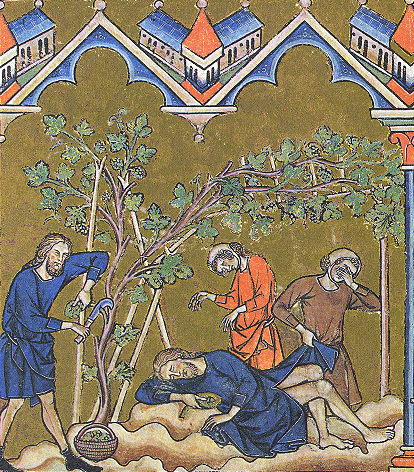
It's apt that we encounter Noah on New Year's Day, Noah being our earliest example of an individual overindulging in alcohol.


ADDED: I found a nice Flicker stream of photos from Abkhazia. I recommend beginning here — at Stalin's bathroom — and then clicking to the "newer"/"older" button to see more.

Wednesday, June 1, 2011

"Sunday's travel theme here in Rome was death."

"OK, for an anthropologist you have to imagine this is more cheerful than it sounds...."
It is not the distance of time that touches me about these people. I study bones that are tens or hundreds of thousands of years old, distances so vast as to be unimaginable in human terms. Yet the bone persists. The individual is marked in it, and touching her bones creates an immediacy of connection, like traveling through time.

Tuesday, October 5, 2010