CLINTON: He said, "You know, we've gotta do something to convince these young people to quit smoking, and there's just been a new study saying that it impacts virility." And he said, "You know, this Viagra is a big deal." This letter is hilarious. He said, "Now, politicians don't like to talk about this, especially among young people, but young people are way more sophisticated than older people and they get this, and it doesn't work to tell people they're gonna get cancer or respiratory diseases, go after the virility argument."
Showing posts with label Viagra. Show all posts
Showing posts with label Viagra. Show all posts
Monday, February 4, 2013
"So Clinton basically was eulogizing Koch by saying, 'Hey, he supported my agenda, and that's why I'm here.'"
"And he wasn't through. Somehow Clinton worked Viagra into the routine."

Saturday, February 2, 2013
"Perhaps we could design 'love drugs,' pharmaceutical cocktails that could boost affection between partners..."
"... whisking them back to the exquisite set of pleasures that colored their first years together. The ability to do this kind of fine-tuned emotional engineering is beyond the power of current science, but there is a growing field of research devoted to it. Some have even suggested developing 'anti-love drugs' that could dissolve abusive relationships, or reduce someone's attachment to a charismatic cult leader. Others just want a pill to ease the pain of a wrenching breakup."
What's to prevent your abusive-relationship person from committing further abuse by slipping the drug to his/her victim Oberon-style?
What's to prevent your abusive-relationship person from committing further abuse by slipping the drug to his/her victim Oberon-style?
What thou seest when thou dost wake,IN THE COMMENTS: furious_a said:
Do it for thy true-love take,
Love and languish for his sake:
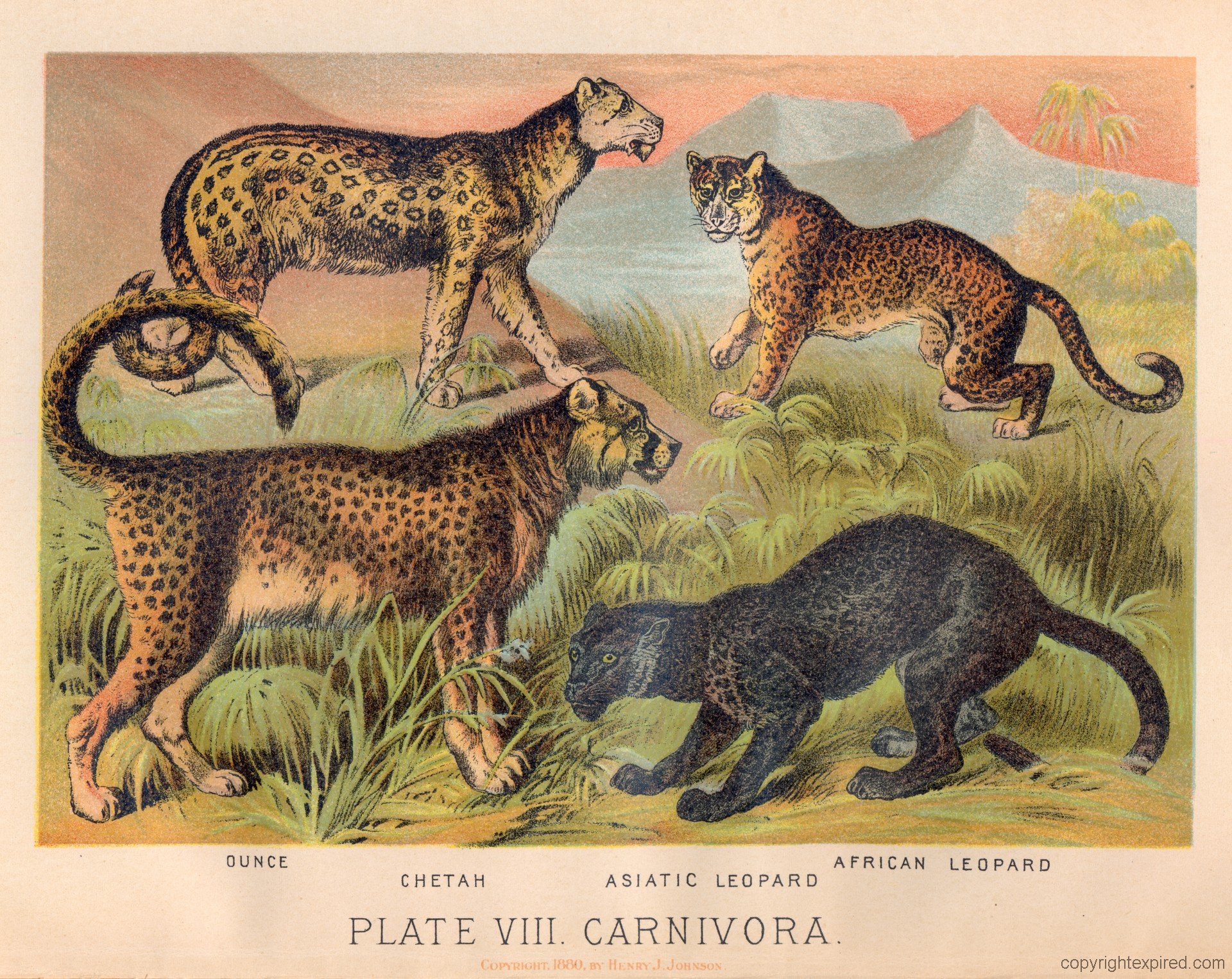
Be it ounce, or cat, or bear,
Pard, or boar with bristled hair,
In thy eye that shall appear
When thou wakest, it is thy dear:
Wake when some vile thing is near.
Artificially aroused men pursuing artificially enhanced women under the influence of artificially induced emotions.Kevin said:
Who says "Romance is dead"?
I wonder if they watched Eternal Sunshine of the Spotless Mind and are going forward in spite of, or are going forward because of.
Thursday, July 19, 2012
"Composite?"/"Compost heap's more like it."
We were watching "A Face in the Crowd" last night. TMC was making a night of Andy Griffith films, and I settled in to watch the Elia Kazan movie that I'd heard about but never seen. I've only watched the first half, partly because I usually watch movies in 2 parts — I have a 1-hour attention span — and partly because it started annoying me — too many absurd leaps forward in the story as our forgotten man "Lonesome" Rhodes becomes a media sensation by cutting through the bullshit and sexing up the ladies. That is, he rejects the bullshit of the sexless men who surround him and spins out his own sort of bullshit, e.g., promoting the inert pill "Vitajex" as some proto-Viagra.
Anyway, I wrote down something that reminded me of Obama. No, not his special appeal for women. It was this passage of dialogue:
Obama's use of "composites" is well-discussed in the David Maraniss biography:
Anyway, I wrote down something that reminded me of Obama. No, not his special appeal for women. It was this passage of dialogue:
Marcia Jeffries: You always drink like that?Composite! Marcia Jeffries, the woman who discovers him for her radio show called "A Face in the Crowd" offers him the word "composite" to dignify his bullshit, and he does a little word play that rejects euphemism.
Lonesome Rhodes: Not always. Back in Riddle they was pretty strict. Didn't allow us to touch hard liquor till we was 10 or 11.
Marcia Jeffries: Now is there really a town called Riddle?
Lonesome Rhodes: Well, tell you the flat truth, it's just a sort of a whatchacallit, a...
Marcia Jeffries: ... Composite?
Lonesome Rhodes: Compost heap's more like it.
Obama's use of "composites" is well-discussed in the David Maraniss biography:
In his introduction [to Dreams from My Father] Obama states, “For the sake of compression, some of the characters that appear are composites of people I’ve known, and some events appear out of precise chronology.” There is more to it than that. The character creations and rearrangements of the book are not merely a matter of style, devices of compression, but are also substantive. The themes of the book control character and chronology. Time and again the narrative accentuates characters drawn from black acquaintances who played lesser roles in his real life but could be used to advance a line of thought, while leaving out or distorting the actions of friends who happened to be white. Sometimes the composites are even more complex; there are a few instances where black figures in the book have characteristics and histories that Obama took from white friends. The racial scene in his family history that is most familiar to the public, the time when he overheard his grandparents in Hawaii argue because his grandmother was afraid of a black man at the bus stop, also happens to be among those he pulled out of its real chronology and fit into a place where it might have more literary resonance. Like many other riffs in the book, it explored the parameters and frustrations of his blackness....Composite/compost heap?
For a few years, in ninth and tenth grade, he shared his frustrations with a student two grades ahead of him named Keith Kakugawa. 178 In his memoir, he reinvented Kakugawa as a character called Ray who served a literary function as a symbol of young blackness, a mix of hot anger and cool detachment, the provocateur of hip, vulgar, get-real dialogues. In fact, Kakugawa was another hapa student, with a black and Native American mother and a Japanese father. Somewhere between pseudonymous and fictitious, Ray was the first of several distorted or composite characters employed in Dreams from My Father for similar purposes. Kakugawa was never in Barry’s closest gang of friends, but they did hang out now and then for those two years, and Barry felt freer to let down his guard around him, enjoying “his warmth and brash humor.” In the memoir Barry and Ray could be heard complaining about how rich white haole girls would never date them. In fact, neither had much trouble in that regard; Kakugawa dated an admiral’s daughter from the officers’ housing near Pearl Harbor and had the keys to her car, which he often drove around with “the Kid,” as he called Barry. In the book, Ray complained about “white folks this or white folks that,” a phrase that Barry found “uncomfortable” in his mouth because he unavoidably thought of his mother’s smile. But the Kid could grouse about his mother nonetheless. “If anyone heard a word from him when he was upset, I did,” Kakugawa recalled. “If I was mad at something he was mad at something. What was upsetting him— that his mother took off again. Seems like she never has time for him anymore— that kind of thing.”
In a less visceral and more lighthearted intellectual fashion, Barry also shared some of his inner thoughts with Tony Peterson, a graduating senior during Barry’s freshman year. 179 Peterson, who came from a military family at Schofield Barracks, was the only black student in his 1976 class and one of a handful at Punahou, counting the hapa students like Kakugawa, Obama, and Rik Smith, whose mother was Indian. (Joella Edwards, who was in Barry’s class, left Punahou in ninth grade.) When Peterson first heard that the black Ray in Obama’s memoir was Kakugawa, he was surprised. “When I think of the black kids at Punahou, I don’t think of Keith because he was half Japanese,” he said later. By his real name or any other, Peterson did not make Obama’s book, although some characteristics of a composite character in the college section fit him. He first met Barry on the basketball court before school, and soon started a regular session with him and Rik Smith that they jokingly called Ethnic Corner....
In his memoir Obama would tell a different story about one of the key moments in his gradual transformation from Barry to Barack. He wrote that he was talking to friends named Marcus and Regina. Marcus, portrayed as Afrocentric, had ridiculed him for reading Joseph Conrad’s Heart of Darkness, and Obama had defended himself by saying that he was reading it to understand “just what it is that makes white people so afraid.” After Marcus left, Regina— rendered in the memoir as astute and comfortable in her black identity— asked Obama what Marcus had called him, some African name. Barack, he told her. She said she thought his name was Barry. Barack was his given name, he explained. His father’s name. His father was Kenyan. Barack meant “blessed” in Arabic. His grandfather was Muslim. “It’s beautiful,” Regina responded, according to the memoir. “Mind if I call you Barack?” Not as long as she pronounced it right, he said.
Eric Moore was not in Dreams from My Father, nor could he recognize precisely who Marcus and Regina were. Hasan Chandoo, who was portrayed in the book (and, in a rare instance, was given his real name), was not sure either. He himself was accurately depicted, but to him the other composites, he said good-naturedly, seemed like “mumbo-jumbo.” At some places in the memoir, the characters were taken from real life but given pseudonyms. At other times they were composites. Marcus and Regina were composites, inspired in part by two upperclassmen, Earl Chew and Sarah Etta-Harris, but displaying characteristics from many other people as well as from the searching, divided soul of Obama himself. Like Regina in the book, Etta-Harris had studied abroad, winning a Thomas Watson fellowship to spend a year in Andalusia in Spain. But in his memoir Obama gave Regina a family history in Chicago, and that did not fit her. Rather, that aspect of Regina was an early iteration of someone Obama had not met at Oxy and would not know for another ten years, Michelle Robinson, to whom he was married by the time he wrote the memoir in the early 1990s. It was not precisely Michelle’s story, but close in many respects, as Obama had Regina telling him about her South Side memories: people so hot in the summer they went out by Lake Michigan to sleep; a vibrant community of taverns, pool halls, churches, kitchen nights with cousins, uncles, grandparents. “A vision,” he wrote, “that filled me with longing— a longing for place, and a fixed and definite history.” When he told Regina that he envied her, she scoffed. “For what?” she asked. “Memories,” he said. That response, Obama wrote, made her laugh and say she wished she had grown up in Hawaii.
This was one of the more telling paragraphs in the book, revealing what Obama thought he had missed out on in his young life and what he so dearly longed for. Though he was writing it in retrospect, long after his Oxy days and after he had finally made his way to Chicago, the early Regina, who existed mostly in his mind, helped trace what would become the arc of his life toward family and home.
Along with Etta-Harris and Michelle Robinson, the Regina character also incorporated a third real-life model. Some of Obama’s scenes of Regina reflected incidents that involved Caroline Boss, who was white. The name Regina itself likely came out of Obama’s discussions with Boss. Regina was the name of her Swiss grandmother, who came up in their discussions about class, race, and gender. Boss was a formidable figure at Oxy, queen of the Cooler rats, star pupil of the school’s noted political science professor, Roger Boesche. As leader of the Democratic Socialist Alliance on campus, she viewed politics from a class-conscious socialist perspective. Boss told Obama that her grandmother Regina spent her life scrubbing floors and doing laundry for the banking community in the small Swiss town of Interlaken. “So when we talked about race and class,” Boss said of her discussions with Obama, “I of course took the position that class was a significant feature.… The class thing really affects the entire population, regardless of race and gender.” Obama incorporated this idea into his memoir. His Regina was black, not white, yet he wrote about “Regina’s grandmother somewhere, her back bent, the flesh of her arms shaking as she scrubbed an endless floor. Slowly, the old woman lifted her head to look straight at me, and in her sagging face I saw that what bound us together went beyond anger or despair or pity.” He went on to link Regina’s grandmother to all women who struggle against the power structure, from the Mexican maids who cleaned up the mess created by the boys at the Haines Hall Annex to his own grandmother, Tut, who rose before dawn every morning to ride the bus to work. “My identity might begin with the fact of my race, but it didn’t, couldn’t, end there,” he wrote.
Tuesday, March 13, 2012
Have you heard about the health insurance plan that covers your fresh, organic fruits and vegetables?
It's real!
Yes, you have to legalize prostitution first, but the prospect of something else that people like becoming eligible for government-mandated insurance ought to provide the incentive for legalization. As with marijuana, legalization is achieved through medicalization, and there's never a stage where you're simply free and able to seek pleasure. The old restraints will be removed only for the purpose of locking on the new restraints. You will have sex and drugs, when it's your medicine and when you can be made to pay for everyone else's.
Just wait!
I wrote all that without reading the rest of the column, so I'm amused to see what the columnist — Chris Rickert — actually did with the groundwork that got me going. He goes from meditation to sex too:
Last summer, I paid a whole dollar for weekly half-boxes of fresh, organic fruits and vegetables as part of a community supported agriculture program. My health insurer paid the rest.But wait, there's more:
A meditation-based stress-reduction class I took last year also was eligible for reimbursement...Meditation! You know what else is stress-reducing? Sex. Why don't health insurers cover that? And I don't mean birth control and Viagra. I mean sex itself. Isn't that where we are going? Sex is a health matter. Insurance is going universal, with extensive government-imposed coverage requirements. I think those who have to pay for sex — people with various (undoubtedly health-related) limitations that preclude their acquiring it free — should be reimbursed.
Yes, you have to legalize prostitution first, but the prospect of something else that people like becoming eligible for government-mandated insurance ought to provide the incentive for legalization. As with marijuana, legalization is achieved through medicalization, and there's never a stage where you're simply free and able to seek pleasure. The old restraints will be removed only for the purpose of locking on the new restraints. You will have sex and drugs, when it's your medicine and when you can be made to pay for everyone else's.
Just wait!
I wrote all that without reading the rest of the column, so I'm amused to see what the columnist — Chris Rickert — actually did with the groundwork that got me going. He goes from meditation to sex too:
You don't have to look far to find that sex — at least the kind of sex society values, i.e., that occurring in loving, mature, committed relationships — is a partner with wellness.... Depending on which studies you believe, sex encourages intimacy, in some cases might reduce depression, provides good exercise, reduces pain and may even reduce the risk of cancer.He'd just buy contraception at this point, not an actual sex worker's treatments. That seems so unfair. Them that's got shall get. Those with benefits get more benefits. When will government level the playing field?
If a health insurer is going to buy its customers kohlrabi and celeriac to encourage healthy eating, why shouldn't it buy them contraception to encourage more healthful sex? In the end, everyone wins.
Monday, May 9, 2011
Tuesday, June 16, 2009
"You can't tell me that all these free love hippie dippie types wouldn't embrace some sort of SOMA type narcotic in their later years."
"Just have them sign a waiver, after the age of 70, you're on your own, or the government will provide five years worth of SOMA, and maybe Viagra and prostitutes upon request, and I'm sure plenty of Boomers would willingly hit the death booths at the age of 75 after five solid years of drug-fueled orgiastic living (just don't open any boomer-orgy centers near me, like sewage treatment, it's something that has to be done, you just don't want to live by or downwind from it). The cost savings would be huge, no more retirees living 30 and 40 years on Social Security into their 90s and 100s. Who says Huxley's vision has to be a 'dystopia'?"
Said XWL today, in the nether regions of the comments thread to yesterday's ObamaCare post.
Said XWL today, in the nether regions of the comments thread to yesterday's ObamaCare post.
Friday, December 26, 2008
Sunday, November 23, 2008
Does Viagra give athletes an unfair advantage?
An unfair advantage in sports, that is. The World Anti-Doping Agency thinks it might and is considering a ban.
Let the jokes begin.
Let the jokes begin.
Wednesday, February 7, 2007
The mainstream media notice Prince's phallic guitar shadow.
Checking Site Meter this morning, I can see I'm getting a lot of visitors searching for things like "Prince Superbowl silhouette" and "Prince Super Bowl silhouette."
(The incorrect one word spelling seems to be more common. We've spelled it both ways in the comments. It's easy to remember that the one word spelling is wrong: Just think about how it can be misread as "Superb Owl.")
My post, "About that silhouette," shows up on the first Google search page. So, I figure the mainstream media have caught up with Prince's phallic guitar shadow. Let's see if we're getting amusement at the blatant-yet-subtle imagery or if they're seeing it as in their interest to pretend to blow a gasket so they can manipulate readers into a frenzy like they did in the old days when Justin Timberlake popped Janet Jackson's armor-clad breast out of her costume.
If I go back to the older stories, I find things like the NYT's "A Noncontroversial Prince, Just the Way the N.F.L. Likes Him":
(Political information not included in this article: It was specifically Al Gore's wife Tipper -- not some red state prude -- who flipped out at "Darling Nikki" and ignited that national debate about sexy song lyrics.)
Here's one of my TV photos to refresh your recollection of the subtlety/blatancy of the tiny genius's imagery:

This isn't just a chance image. The whole time the sheet was up, the shadow looked phallic and was moved about into various different phallic positions. I thought it was obvious that Prince had his eye on the silhouette and was playing a shadow game:

It looks like the main MSM story that threw a spotlight on Prince's japery was Jake Coyle's AP piece "Prince's Halftime Imagery Questioned":

("All the critics love u in New York/Yes, we're certain of it, he's definitely masturbating.")
(The incorrect one word spelling seems to be more common. We've spelled it both ways in the comments. It's easy to remember that the one word spelling is wrong: Just think about how it can be misread as "Superb Owl.")
My post, "About that silhouette," shows up on the first Google search page. So, I figure the mainstream media have caught up with Prince's phallic guitar shadow. Let's see if we're getting amusement at the blatant-yet-subtle imagery or if they're seeing it as in their interest to pretend to blow a gasket so they can manipulate readers into a frenzy like they did in the old days when Justin Timberlake popped Janet Jackson's armor-clad breast out of her costume.
If I go back to the older stories, I find things like the NYT's "A Noncontroversial Prince, Just the Way the N.F.L. Likes Him":
No doubt National Football League officials were pretty pleased... They know that the halftime show is still haunted by the specter of 2004, when Justin Timberlake enlivened an otherwise unmemorable show by baring Janet Jackson’s breast. Somehow, Timberlake’s role has been largely forgotten, but Jackson’s career has still not recovered. And compared with the controversial Jackson, Prince must seem like a pretty safe bet.I'm going to assume that -- unlike the headline writer -- the author of this piece, Kelefa Sanneh, knew that he did "get away" with something.
Would that last statement have made any sense at all 20 years ago? In 1987, Jackson was best known as Michael’s effervescent younger sister, and Prince was perhaps the most polarizing pop star in the country; the sexually frank lyrics of his “Darling Nikki” had helped spark a national debate about explicit lyrics.
Yesterday’s command performance was yet more proof that Prince has made that familiar journey from pariah to American treasure. He has a catalog of hits that everybody seems to love (even the players, who normally take little interest in the halftime show, were quoted praising Prince), and he sings and plays and moves as well as he ever did.
Best of all, he does not carry himself as a pop-star emeritus. Did you see his face during the first verse of “Purple Rain,” when he tossed his bandana into the crowd? He looked as if he were getting away with something.
(Political information not included in this article: It was specifically Al Gore's wife Tipper -- not some red state prude -- who flipped out at "Darling Nikki" and ignited that national debate about sexy song lyrics.)
Here's one of my TV photos to refresh your recollection of the subtlety/blatancy of the tiny genius's imagery:
This isn't just a chance image. The whole time the sheet was up, the shadow looked phallic and was moved about into various different phallic positions. I thought it was obvious that Prince had his eye on the silhouette and was playing a shadow game:
It looks like the main MSM story that threw a spotlight on Prince's japery was Jake Coyle's AP piece "Prince's Halftime Imagery Questioned":
A number of bloggers have decried [sic] "Malfunction!" - including Sam Anderson at New York magazine's Daily Intelligencer. Daily News television critic David Bianculli called it "a rude-looking shadow show" that "looked embarrassingly rude, crude and unfortunately placed."That was what was so brilliant about it. The kind of people who would get upset and complain couldn't see it or might perhaps think they see it but fear the embarrassment of being told that they are the one with the dirty mind.
CBS spokesman Dana McClintock said Tuesday that the network has received "very few" complaints on Prince's performance. CBS last aired the Super Bowl in 2004 when Janet Jackson and Justin Timberlake's "wardrobe malfunction" sparked criticism and a subsequent crackdown on broadcast decency from the Federal Communications Commission.
But this time, it was the NFL that produced the halftime show (MTV had in 2004). Spokesman Greg Aiello said the league has received no complaints.
"We respect other opinions, but it takes quite a leap of the imagination to make a controversy of his performance," Aiello said. "It's a guitar."...I love all the additional amusement I'm getting out of reading things like this. It was completely clear, yet there's still the question: Did that even happen? It's this playfulness of creating ambiguity in the midst of utter clarity that will go down in pop culture history.
For decades, the electric guitar, by nature, has been considered phallic. From Jimi Hendrix's sensual 6-string swagger to Eddie Van Halen's masturbatory soloing, the guitar has often been thought an extension of a male player's sexuality.
Was Prince's pose phallic?
"The short answer is, of course it is," says Rolling Stone magazine contributing editor Gavin Edwards...And the long answer is: Wow!
"All that said, it didn't seem like a sniggering little puppet show," adds Edwards. "I think it was one of those things because a guitar at waist level does look like an enormous phallus."Oh, come on. Was Edwards watching? Give Prince credit for this creativity. This wasn't just the usual guitar-is-phallic business. This was art. It came from a mind. It wasn't "sniggering" and it (really) wasn't "little," but it actually was a puppet show. A quite clever one. The billowing sheet looked beautiful waving in the light. It fit the stadium space sublimely, and made the little man big -- which is what the Viagra-consuming football viewers are always hoping for. Give the artist the credit he deserves.
By enlarging his shadow, it's possible Prince intended to accentuate this aspect of his solo, but it's just as likely it was accidental....Now, I'm outraged at the denial of artistry. These critics think they are the perceptive ones and the dumb musicians only happen to flash imagery for the critics to choose to make real with their writing.
("All the critics love u in New York/Yes, we're certain of it, he's definitely masturbating.")
Stephen Colbert reacted with mock outrage on Comedy Central's "The Colbert Report" Monday night: "They knew that they were dealing with a lustful, pansexual rock 'n' roll deviant," said Colbert, who joked that the sheet hid (not enhanced) Prince's "demonic guitar phallus."...Actually, he said, "I don't care what you do with your demonic guitar phallus, any Hassid worth his [something Hassidic?] will tell you that as long as it's through a sheet it's kosher."
"If people want to be hypersensitive, they can be hypersensitive," says Rolling Stone's Edwards. "Those trombones are phallic, too. What are you going to do?"I am going to draw a distinction between artistic creativity and mere chance.
Monday, April 10, 2006
A new take on the old having-an-affair-with-your-wife concept.
"Big Love" took a good turn last night. (Spoilers ahead.) We see that Bill Henrickson lusts after monogamy. With his Viagra supply deleted, he feels real attraction to Barbara, the only wife who was once an only wife. This favored love violates the system of morality the polygamous family has adopted for itself. The married lovers must tryst in a hotel or a car, the sex heated up by the fear of discovery and the knowledge that it's wrong. And yet it's not wrong, this monogamy, in the context of the larger society that is, in fact, about to discover the polygamy and ruin poor Bill. Meanwhile, the other two wives are going to find out about the monogamy in their midst and take revenge. What a complicated and exquisite dramatic conflict!
Subscribe to:
Posts (Atom)
 :.
:.