"Probably your wife or your neighbor would see it for what it is, you know? A shoddy piece of workmanship. But to you that table might seem really great, because you're the one who created it. It's the fruit of your labor. And that is really the idea behind the Ikea Effect."
Said Daniel Mochon, a Tulane University marketing professor.
I don't identify with that feeling. If I've done something myself, I'm particularly irritated by the flaws (and I'm more likely to know where they are). If someone I cared about had made it, I'd be more lenient.
Showing posts with label furniture. Show all posts
Showing posts with label furniture. Show all posts
Wednesday, February 6, 2013

Monday, January 28, 2013
The downside of the treadmill desk.
Typos.... "up to 11% deterioration in fine motor skills like mouse clicking, and dragging and dropping, as well in as cognitive functions like math-problem solving."
It's silly to walk on a treadmill or pedal a stationary bike while trying to work, but I highly recommend using a desk like this with a push-button motor that lets you move back and forth between sitting and standing. Here I am demonstrating it 2 years ago.
We liked it so much we bought a second one. Bought a second 27-inch iMac too.
Wednesday, January 16, 2013
"15 Frugal Billionaires Who Live Like Regular People."
Fascinating and really cool. Got us going talking about why someone would do this (other than being nutty). Highlights:
1. Warren Buffet, worth $46 billion, "still lives in the Omaha, Nebraska, home he bought for $31,500 more than 50 years ago." And Carlos Slim Helú, chairman and CEO of Telmex, worth $69 billion, has lived in the same modest house he's had for the last 30 years. Christy Walton, worth $27.9 billion raised her son in an 1896 Victorian house so he could have a normal life and, after her husband died in a plane crash, donated the house to charity.
2. Chuck Feeney, co-founder of Duty Free Shoppers Group, gave away $4 billion, leaving himself with (currently) $2 million, and he orders the second-cheapest wine on the menu. David Cheriton, worth $1.3 billion says he's "quite offended" by people who build big mansions, thinks "there's something wrong" with those people, and recently bought a Honda Odyssey.
3. Ingvar Kamprad, the founder of IKEA, worth $3 billion, claims to drive a 15-year-old Volvo and alway fly economy. He eats in cheap restaurants and has his house furnished with IKEA stuff. More on him here, including a picture of his unassuming ranch-style house.
He always does his food shopping in the afternoon, when the prices in his local market start to fall....But Kamprad's image may be a big fake, and who knows about those other characters? The modest image helps the company's reputation, and they don't want to attract the attention of tax collectors, government regulators, and criminals (e.g., kidnappers).
Explaining his frugal nature, he said: "I am a bit tight with money, a sort of Swedish Scotsman. But so what?
"If I start to acquire luxurious things then this will only incite others to follow suit. It's important that leaders set an example. I look at the money I'm about to spend on myself and ask if Ikea's customers could afford it."
Friday, January 11, 2013
Champagne chair...
... contest.
IN THE COMMENTS: Lauderdale Vet said:
>
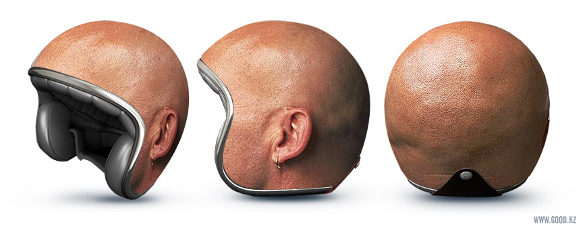
There must be a comical drawing of a woman as a chair or an actual chair in the form of a woman. I looked for furniture in human form, and found some stuff in the general neighborhood — the Dali-inspired lips sofa — and this amused me:

And you can unburden yourself here:

IN THE COMMENTS: Lauderdale Vet said:
I passed that along to my wife, who seems interested :) She'd make a nice chair, I think.Which made me think of this famous Thurber drawing:
>
There must be a comical drawing of a woman as a chair or an actual chair in the form of a woman. I looked for furniture in human form, and found some stuff in the general neighborhood — the Dali-inspired lips sofa — and this amused me:
And you can unburden yourself here:

Monday, December 24, 2012
"See? You can be messy on the inside, and no one knows."
Step inside a 400-square-foot apartment space, transformed by elaborate built-ins:
The quote I've used for the post title appears about midway and marks the spot where my mood began to shift from delight to despair. What do we think of this man, who is promoting what seems to be a simplified, de-cluttered way of life, but who is, himself, in a business, promoting expensive merchandise, the machinery of compression. Do we want to be compressed thusly? It's one thing to live like this on board a cruise ship, but permanently? For a certain type of person — perhaps this man, or the man he pretends to be — it's a fine, joyful existence. Would he ever really have a dinner party for 10 in this space, as we see enacted at the end? It's not a real party, because it's an on-camera demonstration of the space. Watch closely and notice how the women are responding. There is something they do not love, and it is visible even in this crisply edited production. I felt empathy with these women and resistance to the man's sales pitch. And I remembered the gutted space shown at the beginning of the video, and thought that I could be happy, living in SoHo, in that 400-square-foot space as it looks right then. Just do the kitchen and the bathroom, nice and modern and constrained into a modest space, and let me put in some normal furniture — a good-sized table near the window for my work and eating space (that can be cleared off if anyone needs to come over for dinner) and I'll order a sleeper sofa from Design Within Reach. Spare me all those insane, ever-encroaching built-ins, and those crazy pop-up extra beds for guests. Guests to the city can get a hotel room or sleep on the floor or I'll add sleeper chair. By the end of the video, I felt paranoid that the government had a plan to shift us into smaller and smaller pods with evil corporations getting rich fitting them out with soul crushing storage bins. Mayor Bloomberg! Who fixed your ducts? Huh? Fixed your ducts, all right. I told you before - they fixed themselves. Oh, yeah? Then where did this come from, eh? Out of your nostril? Eh? Nostrils, eh? Central Services. They don't take kindly to sabotage. Sabotage, huh? Jesus, this place is in a terrible state. Just a minute! You're not gonna leave it like this, are you? Why not? All you gotta do is blow your nose and it's fixed, innit?
The quote I've used for the post title appears about midway and marks the spot where my mood began to shift from delight to despair. What do we think of this man, who is promoting what seems to be a simplified, de-cluttered way of life, but who is, himself, in a business, promoting expensive merchandise, the machinery of compression. Do we want to be compressed thusly? It's one thing to live like this on board a cruise ship, but permanently? For a certain type of person — perhaps this man, or the man he pretends to be — it's a fine, joyful existence. Would he ever really have a dinner party for 10 in this space, as we see enacted at the end? It's not a real party, because it's an on-camera demonstration of the space. Watch closely and notice how the women are responding. There is something they do not love, and it is visible even in this crisply edited production. I felt empathy with these women and resistance to the man's sales pitch. And I remembered the gutted space shown at the beginning of the video, and thought that I could be happy, living in SoHo, in that 400-square-foot space as it looks right then. Just do the kitchen and the bathroom, nice and modern and constrained into a modest space, and let me put in some normal furniture — a good-sized table near the window for my work and eating space (that can be cleared off if anyone needs to come over for dinner) and I'll order a sleeper sofa from Design Within Reach. Spare me all those insane, ever-encroaching built-ins, and those crazy pop-up extra beds for guests. Guests to the city can get a hotel room or sleep on the floor or I'll add sleeper chair. By the end of the video, I felt paranoid that the government had a plan to shift us into smaller and smaller pods with evil corporations getting rich fitting them out with soul crushing storage bins. Mayor Bloomberg! Who fixed your ducts? Huh? Fixed your ducts, all right. I told you before - they fixed themselves. Oh, yeah? Then where did this come from, eh? Out of your nostril? Eh? Nostrils, eh? Central Services. They don't take kindly to sabotage. Sabotage, huh? Jesus, this place is in a terrible state. Just a minute! You're not gonna leave it like this, are you? Why not? All you gotta do is blow your nose and it's fixed, innit?
Thursday, October 18, 2012
Thursday, July 12, 2012
The average rent in Manhattan is $3,778, up 9% in a year.
And for a studio, it's $2,569 — up 18.8% in the past year.
As for small apartments in NYC, we've been talking about Mayor Bloomberg's competition for designing tiny apartments called "micro-units." Well, here's a NYT article about furnishing your micro-unit. It's bizarrely — mockingly — unhelpful, suggesting a chewable toothbrush, a very small dog, and growing plants on your wall in some doodad that hangs over the fireplace. Hello? Get a normal toothbrush. Don't keep any pets. And you won't even have a fireplace. But I love the idea — in the photo at the NYT link — of putting your handgun right there next to your objets on one of the étagères that flank the fireplace that you won't have in your micro-unit.
But if you have a micro-unit, you may want to compensate by getting a gun.
Real-estate agent Josh Lichy, 27, appreciated the rental crunch first-hand when he and his girlfriend were hit with a $300 increase, from $3,000 to $3,300 for their 750-square-foot, one-bedroom apartment at 160 Riverside Drive. “It’s too much. We want to have money to spend so we’re not rent-poor,” he said.Rent-poor. That's derived from house poor, but quite different. If you're house poor, you're building wealth in the form of equity (unless prices fall). But a rented apartment isn't a repository of money set aside for the future. It's as gone as if you'd blown it on a European vacation.
As for small apartments in NYC, we've been talking about Mayor Bloomberg's competition for designing tiny apartments called "micro-units." Well, here's a NYT article about furnishing your micro-unit. It's bizarrely — mockingly — unhelpful, suggesting a chewable toothbrush, a very small dog, and growing plants on your wall in some doodad that hangs over the fireplace. Hello? Get a normal toothbrush. Don't keep any pets. And you won't even have a fireplace. But I love the idea — in the photo at the NYT link — of putting your handgun right there next to your objets on one of the étagères that flank the fireplace that you won't have in your micro-unit.
But if you have a micro-unit, you may want to compensate by getting a gun.
Tuesday, June 19, 2012

Monday, June 18, 2012
Freedom Chair.
May I recommend a great work chair? I know a lot of people like Aeron Chairs, but they don't work for me because I sit in a half-lotus position much of the time, so I don't like the hard edge of the seat. And I really wanted something with a headrest. I have a big head, and it needs some rest. Anyway, the Freedom Chair is nice, it adjusts itself when you lean back into it.
We had it delivered today along with a second motorized sit-stand desk. Here's my post from a year ago demonstrating the first motorized desk. Obviously, I loved it and Meade was envious, so we now have side-by-side motorized desks in our living space looking out at the old oak tree.
We had it delivered today along with a second motorized sit-stand desk. Here's my post from a year ago demonstrating the first motorized desk. Obviously, I loved it and Meade was envious, so we now have side-by-side motorized desks in our living space looking out at the old oak tree.
Thursday, May 17, 2012
LifeEdited says: "Design your life to include more money, health and happiness with less stuff, space and energy."
The NYT calls that "an awkward manifesto" but conspicuously admires the project of perfecting the small, virtuous, upscale way of life.
[Graham] Hill’s [LifeEdited] has proposed apartment buildings designed around large, open courtyards with units ranging from 300 to 600 square feet. It is quite something to promote studio-apartment living in a state that has so much housing stock available at such a steep discount....You know, if you're editing down your possessions, fuck the antler.
Mr. Hill, whose possessions run to athletic gear and vitamins, has domesticated the apartment with objects belonging to his girlfriend, Kumara Sawyers, a massage therapist and yoga instructor. He chose a globe, an antique camera, an antler and a potted plant, along with a few books....
Saturday, April 28, 2012
The science of sitting.
We all know — don't we? — that sitting too much isn't healthy. (I love my motorized sit-stand desk, which I demonstrate here.) I'm interested in reading the science of sitting, and there's some good material here, but the family life part of it kind of annoyed me:
2. You inform us that America is fat, but your son and husband are skinny. Insults + bragging = annoying.
In [one study], researchers determined that watching an hour of television can snip 22 minutes from someone’s life. If an average man watched no TV in his adult life, the authors concluded, his life span might be 1.8 years longer, and a TV-less woman might live for a year and half longer than otherwise.
So I canceled our cable, leaving my 14-year-old son staggered. I’d deprived him of his favorite shows on The Food Network, a channel that, combined with sitting, explains much about the American waistline. (Thankfully, my son is blessed with his father’s lanky, string-bean physique.)1. Did you take his books away too? What if he were willing to watch TV standing up? It seems to me this anti-TV agenda is wholly separate. Maybe you have some other reason for canceling cable, but this is bad science (and kind of a mean thing to do to the kid, but you report it as if it was funny to "stagger" him).
2. You inform us that America is fat, but your son and husband are skinny. Insults + bragging = annoying.
Thursday, April 26, 2012
If the rate of fatal accidents for children and teens has fallen 30% in the past 10 years...
... why has the death by suffocation rate for babies under 1 year old risen 51%?
It's also notable that the death by poisoning rate increased 91% among 15 to 19 year olds. 15 to 19? I'm guessing these unfortunates are ingesting substances voluntarily. Alcohol poisoning counts in this statistic, right?
Let's concentrate on the babies who don't make it past their first year. I thought suffocation precautions had stepped up. Didn't everyone switch to putting the baby to sleep on his back, and aren't there all these rules about the construction of cribs and the dangers of bed clothes and dangling cords? Is it "co-sleeping"?
The reasons bed sharing has increased are multifaceted. For some parents it is about bonding with their baby, and ease of breastfeeding; for some it is a periodic thing, because a child is sick or frightened, or because the parents just happen to fall asleep with the baby in their bed. It also seems to be cultural — the phenomenon is more prevalent among Asian and African-American households. And sometimes it is out of sheer necessity — the family can’t afford a crib....Or is it murder, undetected?
The American Academy of Pediatrics has been cautioning against [co-sleeping] for years, warning that parents can roll on top of their infants during sleep, or that a pillow can cover a baby’s face or a blanket can get wrapped around the child’s neck, or the child can get wedged between the mattress and the wall...
Wednesday, January 18, 2012
Monday, November 7, 2011
"We spent a lot of time asking ourselves, 'What is the purpose of a sofa?'"
Malcolm Gladwell quotes Walter Isaacson quoting Laurene Powell quoting her husband Steve Jobs.
Powell lived with her fabulously wealthy husband in a house often mostly devoid of furniture, because he didn't want his space infiltrated with anything he didn't feel perfectly sure of.
It would be hard to get fabulously wealthy if all consumers were so resistant to purchasing, but it might be a good attitude for individual consumers to adopt. Especially if you live alone. It's great to appreciate the open, uncluttered space you have and to save your money. But if you live with someone else, she'd better share or at least love that attitude, because if those empty spaces are perceived as deprivations, it's going to hurt — especially if she breaks away and taps into that pile of money you kept instead of blowing on upholstered merchandise.
And then there's the pristine space that is the inside of your body. You can be very fussy about what you let in there, and you can wait and wait until your sure it's exactly right, and then what? From the Isaacson biography:
To the horror of his friends and wife, Jobs decided not to have surgery to remove the tumor, which was the only accepted medical approach. “I really didn’t want them to open up my body...” he told me years later with a hint of regret....I love the default position of doing nothing. First, do no harm. That's a fine aphorism. A saying I made up that I've relied on for decades and care about immensely is: Better than nothing is a high standard. But it's not such a high standard that it's only beaten by perfection. Perfect is the enemy of good. Now, there's a great saying. Get the cancer surgery that saves your life. And if your wife wants a sofa and she can't explain exactly why... you'd better think about it. Empty space can get really empty.
“The big thing was that he really was not ready to open his body,” Powell recalled. “It’s hard to push someone to do that.”
Wednesday, October 19, 2011
"His ignorance was as remarkable as his knowledge."
Who?
They're happy enough with the rooms they've got. They feel comfortable. They can't be spending all their time moving furniture about, thinking about whether some piece earns the space it takes up, always ready to drag something ugly or useless out to the curb, and going shopping for the perfect new tables and chairs. They want to live in those rooms they've already furnished. Why can't you be a more pleasant guest?
Of contemporary literature, philosophy and politics he appeared to know next to nothing. Upon my quoting Thomas Carlyle, he inquired in the naivest way who he might be and what he had done. My surprise reached a climax, however, when I found incidentally that he was ignorant of the Copernican Theory and of the composition of the Solar System. That any civilized human being in this nineteenth century should not be aware that the earth travelled round the sun appeared to me to be such an extraordinary fact that I could hardly realize it.Just something I ran into when I Googled the phrase "mental furniture," which came up during the conversation excerpted in the previous post. We'd been talking about how people have opinions and beliefs that are like rooms that they've got arranged some way that they like or they're used to, and if you want to come in and say maybe the sofa would be better on the other side of the room, and they're not up for moving it over there to check your theory, well... you can understand how they feel.
"You appear to be astonished," he said, smiling at my expression of surprise. "Now that I do know it I shall do my best to forget it."
"To forget it!"
"You see," he explained, "I consider that a man's brain originally is like a little empty attic, and you have to stock it with such furniture as you choose. A fool takes in all the lumber of every sort that he comes across, so that the knowledge which might be useful to him gets crowded out, or at best is jumbled up with a lot of other things, so that he has a difficulty in laying his hands upon it. Now the skillful workman is very careful indeed as to what he takes into his brain-attic. He will have nothing but the tools which may help him in doing his work, but of these he has a large assortment, and all in the most perfect order. It is a mistake to think that that little room has elastic walls and can distend to any extent. Depend upon it there comes a time when for every addition of knowledge you forget something that you knew before. It is of the highest importance, therefore, not to have useless facts elbowing out the useful ones."
"But the Solar System!" I protested.
"What the deuce is it to me?" he interrupted impatiently: "you say that we go round the sun. If we went round the moon it would not make a pennyworth of difference to me or to my work."
They're happy enough with the rooms they've got. They feel comfortable. They can't be spending all their time moving furniture about, thinking about whether some piece earns the space it takes up, always ready to drag something ugly or useless out to the curb, and going shopping for the perfect new tables and chairs. They want to live in those rooms they've already furnished. Why can't you be a more pleasant guest?
Wednesday, September 21, 2011
"Early example of crystal-meth-influenced chair construction."
A drawing... to accompany an essay on civility.
Monday, August 1, 2011

Wednesday, July 27, 2011

Thursday, July 7, 2011
Wednesday, July 6, 2011
"Chairs designed by architects for high-profile commissions increasingly are for sale in stores."
"They are often pricy, but the appeal is the chance to bring a slice of cutting-edge international design into your home."
Mentioned in the article are the Arne Jacobsen chairs that we sat in here. Identified in the comments as Arne Jacobsen chairs by Palladian.
Here's a great book: "The Chair: Rethinking Culture, Body, and Design." (Hey! It has a new cover, and one of the chairs pictured on it is a chair I have. Cool! Not sure I'd call that a "chair" though. Or... yeah... it's a chair. A chair long.)
Subscribe to:
Posts (Atom)
 :.
