Pages

Labels

Showing posts with label fashion. Show all posts

Monday, February 25, 2013

HuffPo can't tell the difference between nipples and darts.

Because... look!... darts nipples!!!!

If you see nipples, it's because that's what you want to see.

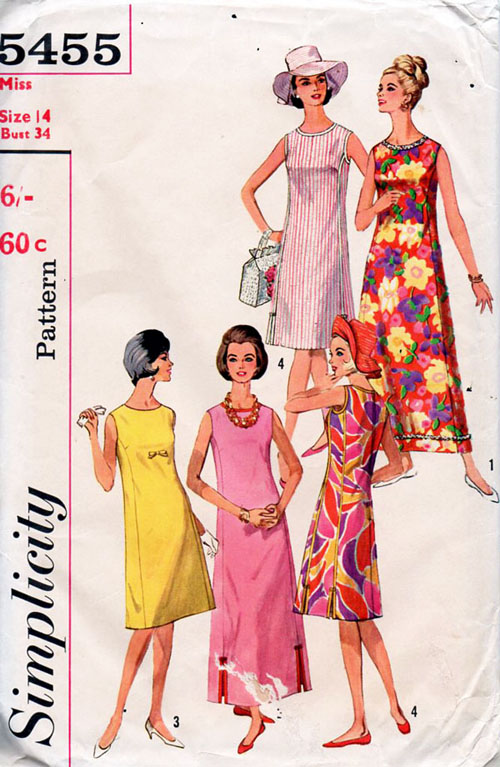
Maybe Anne Hathaway's breathtaking bust darts will bring back traditional style bust darts. It actually is something that looks new in fashion, and it's fascinatingly retro. In the 50s and 60s — before the "natural look" seemed like a good idea — bodices were constructed with darts.


Remember when a size 14 had a 34" bust measurement?! What's 14 today? Something like 40"?

"Were the Oscars always this sexist, or are we spoiled by Tina Fey and Amy Poehler's Golden Globes?"

"Host Seth MacFarlane has been leaning on sexist punchlines all night, and people are noticing. Here are the transcripts, so you can calibrate your outrage and/or eye rolls accordingly...."

That's Maureen O'Connor at The Atlantic. Maybe she's just looking for traffic or a neat framework for presenting some of the jokes from last night's big show, but how can you judge how sexist the jokes are when only the jokes about women are taken out of context? What was said about men?

I know there was a big song-and-dance number naming lots of actresses and the movies where they bared their breasts, but what was said about male nakedness? All of those women chose to display their boobs — to use the word in the song lyrics (which you can read at the link above (video here)) — and they got whatever admiration or career advancement they got. Having taken the advantages offered — perhaps including ousting some other actress with more modesty or less impressive attributes — they're not immune from jokes at their expense.

We make fun of men all the time. It would be sexist to have a rule that you can only make fun of men. So, were there jokes about male genitalia? But male actors don't normally go waggling their willies around in big Hollywood pictures, so it's hard to say what the parallelism would be for "I Saw Your Boobs." (It looks funny to write "male actors," but "actors" is used these days for both sexes. Maybe we could use "mactors" or — I know, it's taken — "malefactors.")

Now, it might have been impolite or in bad taste to call out the names of actresses who were there, proudly seated at this ritual of self-celebration, and to sing out "I saw your boobs" at particular individuals, right when they wanted everyone to think they were such goddesses, in their lovely ball gowns, which were quite possibly designed to make a special show of the very boobage that the song was about.

But that's not the topic of sexism. That's the topic of whether you want the Oscars host to display respect and reverence to the assembled dignitaries or would you rather have some broad comedy that might appeal to the big TV audience? It's a question of taste and a desire to maximize the size of the audience, which was the same question that led to the baring of the boobs in the first place.

ADDED:  I don't really think Maureen O'Connor cares about sexism one way or the other. If she really thought McFarlane's jokes deserved condemnation, she wouldn't have written "are we spoiled by Tina Fey and Amy Poehler's Golden Globes?" — which is also a joke about boobs. I'd condemn that joke for being so stale.

Who was the first person to equate "Golden Globes" and actresses' breasts? The Golden Globes were first presented in January 1944, so I'm betting the joke goes back to 1943. We needed some sexy laughs back in 1943. I'll bet just about anything you might say about breasts was either sexy or funny or both back in 1943. But today? It's hard to say something new. Maureen O'Connor doesn't seem to know how to say something new. McFarlane did. Gasping about how that might have been sexist is really incredibly dull. One thing that actually makes some people sexist is the unwillingness of (some!) women to laugh at themselves. Come on. Laugh at women. Laugh at men. We all deserve it.

Sunday, February 24, 2013

You need to wear your comfortable jeans today.


(Yes, I've blogged this before, but you know you've worn your "Randy Normal" jeans before.)

Tuesday, February 19, 2013

Emma Watson has a problem with English guys and American guys.

"English guys are very well put together.... They dress really well and they are very well mannered. But they are also very restrained. Usually in the whole courting situation, I‘m used to being first of all, ignored for the first two months of the ritual. And then maybe they'll acknowledge my presence."

American guys are "like, 'I like you. You're great. Let's go on a date. Let's do it.' I'm like, 'I'm sorry, what just happened?' This is like a huge culture shock for me. They're very like open and very straight-forward—but they wear flip-flops and I don't know if I like that."

And I'm like, wow, poor Emma Watson. 

Saturday, February 16, 2013

"We might have welcomed him, except for one thing — his pants."


An old Levis ad I ran across by chance. I was playing "Adore," by Prince, intentionally, and when it ended, the next song in alphabetical order came on. It was "Adult Kindergarten," from this "Best of Word Jazz" album, and I went looking for it. The Levis ad, it turns out, is based on another track on that album called "Flibberty Jib." Which isn't about pants.

Thursday, February 14, 2013

"Was the problem that had no name possibly the lack of Wi-Fi?"

Noreen Malone gets a grip on what Betty Friedan — on behalf of suburban women in general — was bellyaching about in "The Feminine Mystique." She's responding to a piece by Emily Bazelon, which we talked about in a long comments thread yesterday. Malone says:
I grew up with a whip-smart mom who stayed at home with us, and so I always approach discussions like these with a bit of a chip on my shoulder, alert to any slights whatsoever against the choices and life mission of someone I so love and admire — even if I don’t plan to make precisely the same ones. But more of it is probably generational. For recession-scarred twentysomethings, staying at home or taking menial jobs is involuntary, but not because social mores dictate that women can’t achieve: It’s because so few of us, regardless of gender, have gotten hired at jobs Friedan might consider fulfilling...

I’m sure Betty wouldn’t be happy to see all the expensively educated young women of Brooklyn, where I live, spending their free time taking floral-arranging classes and knitting and fussily setting up their living rooms just so....
What's so wrong about paying close attention to the details of the beauty of your environment? Fussy... there's a word. When is intense, attentive work deemed fussy? This is a word that has long been used against women and against gay men. Is a person supposed to be interested in something other than what he or she finds interesting? Why? Who says what the proper foci of interest are in this world? Some people are more sensitive to the visual specifics of their environment. It's not as if the people who aren't spend their lives plumbing the meaning of the universe. Perhaps the interior decorator is closer to the core of what truly matters than the corporate lawyer. 

Now, I've derailed onto the subject of the word "fussy." I just had a long conversation with Meade about his associations with the word. Knowing nothing of the context in which I'd encountered the word, he associated it with objects — specifically drawings and handmade pottery — that are inferior because they have been overworked. I prompted him to think of calling a person fussy, and he said "a baby." Time to check the Oxford English Dictionary (which I can't link to). The first meaning applies to "persons, their habits and actions": "Fond of fuss, moving and acting with fuss; habitually busy about trifles." Examples:
1831  T. Moore Mem. (1854) VI. 201   Lucky for him that he is so little of an irritable or fussy nature.
1850   Fraser's Mag. 41 163   She is fussy and fidgetty (if there be such words).
The third meaning relates to things: "Of dress, etc.: Full of petty details. Also, in dressmaking language, without depreciatory implication; With many flounces, puffs, pleats, etc."
1858   J. G. Holland Titcomb's Lett. i. 92   Let every garment be well fitted.. fussy in no point....
1896   Westm. Gaz. 7 May 3/1   The fussy sunshade is much beflounced with lace-edged chiffon.
Flounces, puffs... Hear the homophobic echoes. Anyway, the etymology of fussy is obvious. It's just a -y added to fuss. What's the etymology of fuss?
Perhaps echoic of the sound of something sputtering or bubbling, or expressive of the action of ‘puffing and blowing’. 
The 2 oldest examples for fuss:
1701   G. Farquhar Sir Harry Wildair iii. i. 21   Ah! I hate these Congregation-women. There's such a fuss and such a clutter about their Devotion.
c1730   Ld. Lansdowne Wild Boar's Def. in Wks. (1732) I. 140   With your Humanity you keep a Fuss; But are in truth worse brutes than all of us.
And now, I am fully off track, looking for the full text of Lord Landsdowne's very cool poem "The Wild Boar's Defense," which I'm going to type out in full, because I'm only seeing images of book pages and I want to make it more available. The wild boar wants to be free:
A boar, who had enjoy'd a happy reign
For many a year, and fed on many a man,
Call'd to account, softening his savage eyes,
Thus suppliant pleads his cause before he dies:

"For what am I condemned? My crime's no more
To eat a man than yours to eat a boar.
We seek not you, but take what chance provides,
Nature and mere necessity our guides:
You murder us in sport, then dish us up
For drunken feasts, a relish for the cup.
We lengthen not our meals: but you much feast;
Gorge till your bellies burst — pray who's the beast?
With your humanity you keep a fuss,
But are in truth worse brutes than all of us.
We prey not on our kind; but you, dear brother,
Most beastly of all beasts, devour each other:
Kings worry kings, neighbour with neighbour strives,
Fathers and sons, friends, brothers, husbands, wives,
By fraud or force, by poison, sword, or gun,
Destroy each other, every mother's son!"
My Wi-Fi took me there, in my unfussy riffing this morning. I suppose I could tie it all up somehow. Husbands, wives... destroy each other.

Who's the beast?

Monday, January 21, 2013

Michelle and Barack Obama look great in the Inauguration morning outfits.

Very nice. Love the blue. Love the matching clasped hands as — we're told — they approach the Episcopal Church. Michelle's checker-patterned coat is made of "silk jacquard based on a necktie fabric." Beautiful!

In church:
... Pastor Andy Stanley from North Point Community Church in Alpharetta, Ga., delivered the sermon. He spoke of Jesus washing his disciples' feet and saying "now that I, your Lord and teacher, have washed your feet, you should also watch each other's feet." The president, Pastor Stanley said, should follow that example and "leverage" his power for the benefit of others.
IN THE COMMENTS: Erika notes the typo in the blocked quote, which is from NPR.org:  You should also watch each other's feet. Maybe NPR misheard and didn't get what Jesus was supposedly doing. Some commenters thought Pastor Stanley didn't get what Jesus meant.

Palladian: "The washing of the feet was about humility and service, not about 'leveraging power.'"

Cheryl: "I'm pretty sure Jesus didn't need to leverage his power. Biblical teaching like this is why we don't attend Pastor Stanley's church, which is right down the road from us."

Bago20 reacted: "Nooooooooooooooooooooo! Please don't help anymore."

Maguro had a different problem: "I find it disturbing that even southern preachers are using 'leverage' as a verb these days."

MORE IN THE COMMENTS: I said: "The humble servant image is a little edgy when the President is black." And Palladian said: "The humble servant image is a little edgy when the President is a profligate, arrogant, narcissistic asshole."

Wednesday, January 16, 2013

"Carpenters' union protests Madison businesses; refuses to back up claims."

"On two occasions, two people at two separate NCSRCC offices have sworn emphatically that a phone call would be returned that day or the next, but no calls ever materialized. Someone named 'Tony' from the union once left a voicemail, but then never answered a returned call."

I've seen the 3 guys holding up the sign out by Hilldale shopping center. Twice I tried to read the sign to figure out which place they had a beef with. I assumed it was the steakhouse, which was the place they were closest to, but I couldn't read the name of the place at the bottom of the sign, because the men were letting the sign droop. Now I see their target was Lululemon Athletica, a shop with some nice-looking athletic-wear. Makes me want to run over there and buy some toasty tech tights.

Tuesday, January 15, 2013

"I was put off by all the breasts. The peekaboo-slit-neckline-breast-exposing dress. the breast-on-a-platter strapless dress."

Over at the WaPo slideshow of Golden Globes fashions, one commenter seems a tad breast-o-phobic.

But I'd just like to say that this approach to clothing breasts — inflicted on Jessica Chastain, chastising Chastain — is one of the worst fashion screw-ups I've ever seen. Why didn't anyone see the optical illusion and stop her from leaving the house in that thing?

Wednesday, January 9, 2013

Wednesday, January 2, 2013

"Through this twilight universe Daisy began to move again with the season..."

"... suddenly she was again keeping half a dozen dates a day with half a dozen men, and drowsing asleep at dawn with the beads and chiffon of an evening dress tangled among dying orchids on the floor beside her bed."

We're sticking to sentences, here in our "Gatsby" project. I won't pretend not to know that Daisy is the main female character in the book, but for the purposes of this project, I'm disregarding what we know about her and where she might be in the plot line when this sentence appears. I'd like to follow a rule that excludes all extrinsic evidence, but the phrase "this twilight universe" shows why that rule may be too severe. Nevertheless, I'm going to stick with the no-extrinsic-evidence rule, and accept "this twilight universe" as a mystery. Daisy has been up to something in what is now being referred to as "this twilight universe," and there's something poignant about encountering someone — a flower-named woman — in a mysterious place where she has moved before and is beginning to move again.
That Daisy's renewed movement comes with the season makes us think of the plants that come and go seasonally. One third of the way through the sentence, we are thinking about the annual cycle of the seasons as well as the daily cycle of light and dark that contains twilight. A flower that is a woman moves within the inexorable movements of the universe.

This lone female is suddenly joined by numerous men. Though the unnamed men never get definition as individuals, they presumably get one-on-one dates with her, since the numbers match up: half a dozen dates a day with half a dozen men. This is the kind of "dating" one associates with a prostitute. The "twilight universe" feels more sinister, and the next thing we see is Daisy in bed: drowsing asleep at dawn. The daily sun cycle has turned from twilight to dawn, the 6 dates have somehow been cranked through and (suddenly) there is our wilted flower on her bed, but there is a string of words — like a string of men — that we must experience before we get to to "bed" (the last word of the sentence (she and we must get to bed)).

The words are the things on the floor beside her bed: "the beads and chiffon of an evening dress tangled among dying orchids." Orchids! There is Daisy — the flower we associate with freshness and simplicity — and there, next to her, on the way to the bed, are the complicated flowers whose name, literally, means testicles. So the 6 men were unnamed, but there is a name that bespeaks male sexuality. And there are those testicles, dying (as Daisy is drowsing), dying and all tangled up the pretty tatters — beads and chiffon — of what once was a dress.

Note carefully that it is not a dress that is tangled up with the orchids, it is the beads and chiffon, suggesting that the delicate dress has lost all integrity. And yet our Daisy has disentangled herself from the spewings of sex that lie on the floor. And she's not passed out, dead drunk. She's drowsing, in her presumably pretty nakedness.

It's dawn, and she will emerge again, with the cycle of the new day, fresh and daisy-like again. Remember, she was only beginning to move through this twilight universe, and with the new day, the movement will continue, with 6 more men and another dress to move through. She's not caught in this twilight universe. She moves through it. She gets through the men and through the dresses, and sleeps lightly as the detritus dies on the floor.
Sunday, December 16, 2012

Lower left-hand corner of a magazine is a monument to things not being anywhere nearly as good as they are said to be.

Untitled

AND: This seems to be the post where I should remind you to use my Amazon portal, and let me just recommend: "Betsey Johnson Women's Flirty Faux Fur Slipper Boot." What's up with calling everything "flirty"? This is a strange fashion-writing tic. There's no way that slipper boot is flirting with anyone. It's quite the opposite. I mean, it's like those "In the mood/Not in the mood" pillows, with those slippers being the "not in the mood." [These can be your "in the mood" slippers.]

But... I know... the craze for "flirty" started with skirts, because of the rhyme "flirty skirts." And "flirty" is an alternative to "sexy," when you've already written "sexy" somewhere else on the page and "slutty," "sultry," "seductive," etc. etc. — all those other words on your women's magazine editor list — are not quite right.

Friday, December 14, 2012

All over the world, women are self-comforting...

... grasping their skirt hems and rolling, rolling them upward, absent-mindedly.

Meanwhile, women eat cupcakes, cupcakes, which were ranked among the 10 most overrated things in the world, which made me say:
The only reason cupcakes are popular is because people have forgotten actual cake, which is moist and tender. Cupcakes have way too much edge... and that fluting doubles the already-too-much edge. But if you never eat real cake, you don't notice. It's like how good crackers are if you never have bread or how good a popsicle is if you never get a nice big dish of ice cream.

But people won't go back to cake, because you can't get a slice of cake and carry it around with you on the street. How would it be presented? It can't be sliced and left out on the shelves like cupcakes. You'd need some saran wrap or something to keep it from getting dried out.

So here, lonely ladies of America, here's your pre-dried-out cake: cupcake.

It sounds like something an old-fashioned guy would call you if he thinks you're pretty, so maybe you're thinking about him as you walk down the street licking icing and choking down dry cake... and tears.

Sunday, November 18, 2012

"Do you surround yourself with things you really like or things you like only because they are absurd?"

"Listen to your own speech. Ask yourself: Do I communicate primarily through inside jokes and pop culture references?" 
What percentage of my speech is meaningful? How much hyperbolic language do I use? Do I feign indifference? Look at your clothes. What parts of your wardrobe could be described as costume-like, derivative or reminiscent of some specific style archetype (the secretary, the hobo, the flapper, yourself as a child)? In other words, do your clothes refer to something else or only to themselves? Do you attempt to look intentionally nerdy, awkward or ugly? In other words, is your style an anti-style?

Monday, November 5, 2012

Robin Givhan is sick of hearing about Michelle Obama's clothes.

Robin Givhan. If the robin is the first sign of spring, Robin Givhan being sick of the topic of Michelle's clothes is the last sign that the Obamas are about to depart the scene.
Ah, but wait. It's more nuanced:
To be clear, there is still plenty to be written about the first lady and her wardrobe choices....

Mrs. Obama’s lean and sculpted arms were admired, not simply from an aesthetic perspective but because they acknowledged that she was from a generation of post-Title IX women who....

For a lot of women in their 30s and beyond, who often felt estranged from the fashion industry, Mrs. Obama provided encouragement and reassurance....

But somewhere along the way, the attention lavished on the first lady’s wardrobe became indiscriminate....

[T]he flood of Joan Rivers-style verbiage about her day-to-day wardrobe has overwhelmed those nuanced conversations. Fashion is fun. But the nonstop attention to Mrs. Obama’s wardrobe isn’t fun; it’s exhausting. It’s too much. And it’s pointless....
Givhan has much more to say about the deep meaning of the way Michelle Obama looks. But the peons simply must hush up.

Thursday, November 1, 2012

"On my wedding day, I’m like freaking out, obviously. ‘You’ve got to give me a character.'"

And fashion designer John Galliano said to Kate Moss: "You have a secret — you are the last of the English roses. Hide under that veil. When he lifts it, he’s going to see your wanton past!'"