Pages

Labels

Showing posts with label Shakespeare. Show all posts

Thursday, February 7, 2013

"Lincoln" smears Connecticut.

"I could not believe my own eyes and ears," said Connecticut Congressman Joe Courtney. "Placing the State of Connecticut on the wrong side of the historic and divisive fight over slavery is a distortion of easily verifiable facts."
"It is historical fiction -- a noble genre going back to Shakespeare and well before -- not history," [said Columbia University historian Eric Foner].
And yet we're pressured to go see that movie because of the way it explains history. 

By coincidence, Shakespeare is getting some negative press this week, after bones found under a parking lot in England were determined to have belonged to Richard III, the last of the Plantagenet dynasty, supplanted by the Tudors, whom Shakespeare had reason to flatter as he portrayed Richard III as a villain.
No “bunch-backed toad,” no “slave of nature and the son of hell,” no “bottled spider,” the exhumed Richard is enjoying a remake as a physically challenged fellow with spinal curvature who might have starred in last year’s London Paralympics if given the chance.

Alas he got clobbered several times with a halberd (presumably wielded by a halberdier ignoring late 15th century safety regulations), and may have suffered the ignominy of being sodomized with an unlicensed dagger while being carried naked on horseback to Leicester. ....

“I’ve spoken to scoliosis experts and they say acute scoliosis like that was painful,” Philippa Langley, a Richard III enthusiast, told The Guardian. “So we know that he was working through the pain barrier every day just to do his job.... He had an incredibly powerful, strong work ethic. This man never stopped. He was on a horse every day, fighting skirmishes, doing everything they had to do.”
Imagine a movie about Lincoln that does not cater to the tastes of the present-day dynasty. There's plenty of old material to rake over. He wasn't called "bunch-backed toad" or a "bottled spider," but he was called "The obscene ape of Illinois." And:
The illustrious Honest Old Abe has continued during the last week to make a fool of himself and to mortify and shame the intelligent people of this great nation. His speeches have demonstrated the fact that although originally a Herculean rail splitter and more lately a whimsical story teller and side splitter, he is no more capable of becoming a statesman, nay, even a moderate one, than the braying ass can become a noble lion. People now marvel how it came to pass that Mr. Lincoln should have been selected as the representative man of any party. His weak, wishy-washy, namby-pamby efforts, imbecile in matter, disgusting in manner, have made us the laughing stock of the whole world. The European powers will despise us because we have no better material out of which to make a President. The truth is, Lincoln is only a moderate lawyer and in the larger cities of the Union could pass for no more than a facetious pettifogger. Take him from his vocation and he loses even these small characteristics and indulges in simple twaddle which would disgrace a well bred school boy.

Monday, February 4, 2013

"A team of archaeologists confirmed Monday that ancient remains found under a parking lot belong to long-lost King Richard III..."

"The verification came after scientific tests were used to match DNA samples taken from Canadian-born Michael Ibsen, a direct descendent of Anne of York, Richard’s elder sister."
Richard III supporters such as Philippa Langley, a screenwriter and member of the Richard III Society, were driven to find the lost king’s remains by a desire to reopen the debate over his place in history....

“I think the discovery brought the real Richard into sharp focus,” Langley said. “People are realizing that a lot of what they thought they knew about Richard III was pretty much propaganda and myth building.”
Why does finding the body have anything to do with the historical project of finding out what really happened in the past? There's something in the human psyche that makes us care about an ancient controversy because we are confronted with the man's bones. But there is also some relevant evidence:
Trauma analysis of the skeleton found 10 battle wounds, eight on the skull and two on the body, which were inflicted around the time of death, according to Jo Appleby, project osteologist of the University of Leicester. Many of the wounds provided evidence of “post-mortem humiliation injuries,” exacted on Richard III after death by his adversaries.
It looked a little something like this:


Warning: That was propaganda. And Class A scenery chewing.

By the way: As I was setting up that clip for the embed, Meade came over and said: "From just the audio, I couldn't tell if that was Laurence Olivier or a Monty Python parody."

ADDED: There's a Richard III ward in the Hospital for Overacting:

Saturday, February 2, 2013

"Perhaps we could design 'love drugs,' pharmaceutical cocktails that could boost affection between partners..."

"... whisking them back to the exquisite set of pleasures that colored their first years together. The ability to do this kind of fine-tuned emotional engineering is beyond the power of current science, but there is a growing field of research devoted to it. Some have even suggested developing 'anti-love drugs' that could dissolve abusive relationships, or reduce someone's attachment to a charismatic cult leader. Others just want a pill to ease the pain of a wrenching breakup."

What's to prevent your abusive-relationship person from committing further abuse by slipping the drug to his/her victim Oberon-style?
What thou seest when thou dost wake,
Do it for thy true-love take,
Love and languish for his sake:
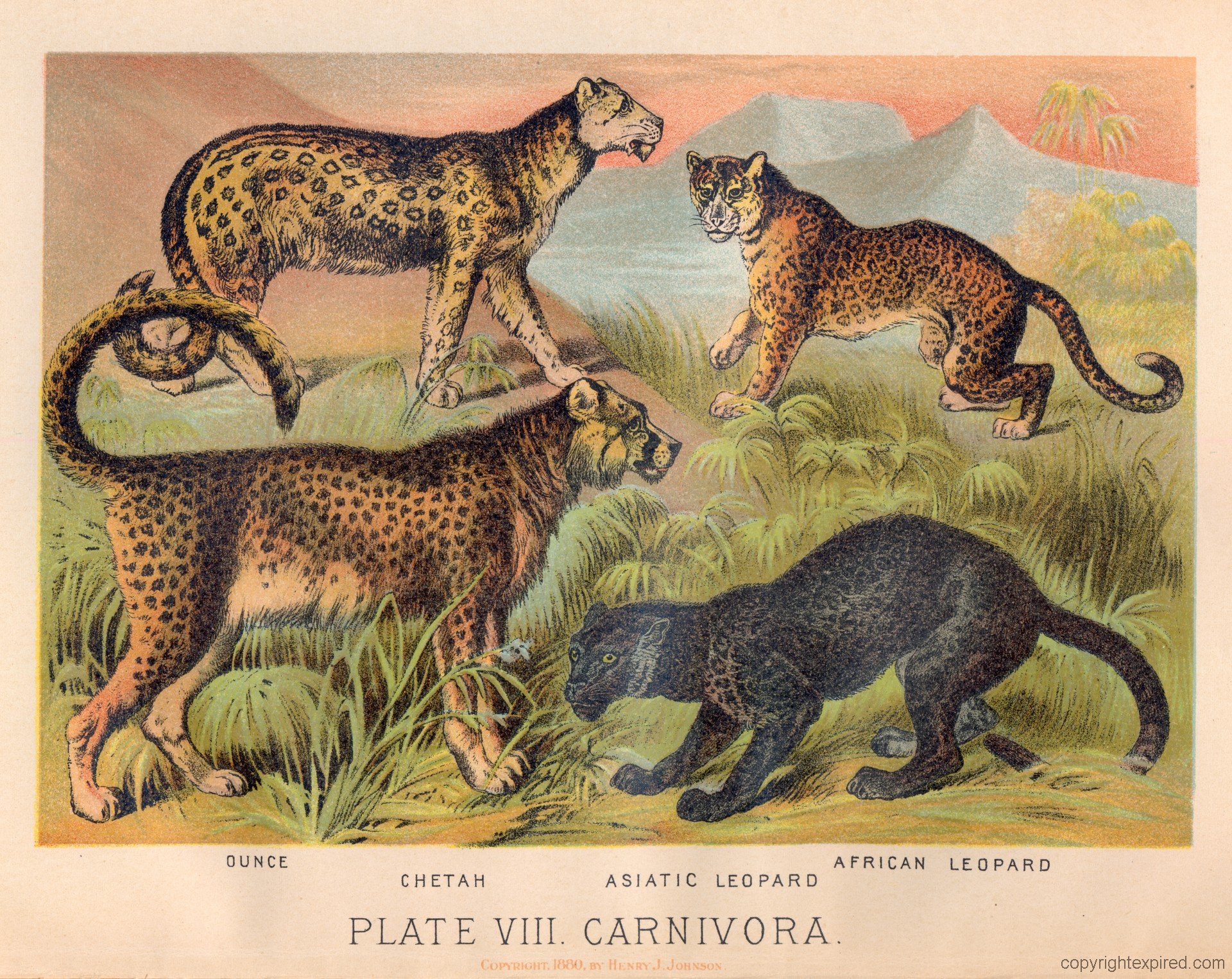
Be it ounce, or cat, or bear,
Pard, or boar with bristled hair,
In thy eye that shall appear
When thou wakest, it is thy dear:
Wake when some vile thing is near.
IN THE COMMENTS: furious_a said:
Artificially aroused men pursuing artificially enhanced women under the influence of artificially induced emotions.

Who says "Romance is dead"?
Kevin said:
I wonder if they watched Eternal Sunshine of the Spotless Mind and are going forward in spite of, or are going forward because of.

Wednesday, January 2, 2013

"A paparazzo hoping to get a picture of Justin Bieber in his Ferrari after the vehicle was pulled over by police in Los Angeles got struck and killed by an SUV instead."

"And as it turned out, the 18-year-old singer wasn't even in the sports car."

This seems to be an occasion for wheeling out that horrible old saying: He died doing what he loved. He thought he had Justin Bieber set up for a shot. The photographer was swelling with delight and then — blam — not from a Ferrari but an SUV. Let's hope he never knew what hit him — to coin a phrase — and never knew that Bieber wasn't even in that car. He died doing what he loved! He had his peak of paparazzi ecstasy and then... annihilation. A consummation. It's over.

But wait! Justin Bieber wants to speak:
"While I was not present nor directly involved with this tragic accident, my thoughts and prayers are with the family of the victim... Hopefully this tragedy will finally inspire meaningful legislation and whatever other necessary steps to protect the lives and safety of celebrities, police officers, innocent public bystanders, and the photographers themselves."
Oh, Justin. Not every screw-up is an argument for legislation. Putting "meaningful" in front of "legislation" is itself meaningful, but what does it mean? 1. It means meaninglessness, an empty existential cry in the face of helplessness. 2. It means I would like to soothe myself with the fantasy that if the right laws had been in place, the bad thing that just happened would not have happened. 3. It means that we can express meaning through laws, that laws work as expression, quite aside from whether they have any effect on the bad things we would like to call bad.

Now, should we also get on Bieber's case for calling what happened a "tragedy"?
Tragedy (Ancient Greek: τραγῳδία, tragōidia, "he-goat-song") is a form of drama based on human suffering that invokes in its audience an accompanying catharsis or pleasure in the viewing....
Pedants love to say that the word "tragedy" is misused, but I think we may have encountered a correct use of the word. That correct usage seems out of place with the rest of the statement, with its angst about prayer, inspiration, and meaning. One suspects Bieber bumbled into saying something he wouldn't have meant to say. It's meaning without a mind that meant it. We witness human suffering and feel... good!

ADDED: The more apt term is poetic justice — "a literary device in which virtue is ultimately rewarded or vice punished, often in modern literature by an ironic twist of fate intimately related to the character's own conduct." The key is the self-contained logic of the story. It makes sense. There should be no call for legislation to find meaning. The meaning is already there. What happened is exactly right: poetic justice. The Wikipedia page I just linked has some examples, and since we were just talking about Wile E. Coyote, I enjoyed seeing him first on the list of poetic justice in TV and film: "Wile E. Coyote always sets traps for Road Runner, only to end up in the traps themselves." The phrase "hoist with his own petard" expresses the concept. Did you know it's from "Hamlet":
"For 'tis the sport to have the engineer / Hoist with his own petard." (Shakespeare, Hamlet (III.iv.226).)
And did you know (again, from Wikipedia):
During the late 17th century, critics pursuing a neo-classical standard would criticize William Shakespeare in favor of Ben Jonson precisely on the grounds that Shakespeare's characters change during the course of the play.... When Restoration comedy, in particular, flouted poetic justice by rewarding libertines and punishing dull-witted moralists, there was a backlash in favor of drama, in particular, of more strict moral correspondence.

Wednesday, June 13, 2012

The theme of the opening ceremony for the London Olympics is "green and pleasant."

We will see a representation of "the mythical British countryside: meadows, maypoles, picnicking families, toiling farmers, cricketers on the village green. There will be twelve horses and three sheepdogs. There will be Elgar, and the world’s largest harmonized bell, inscribed with the line 'Be not afeard, the isle is full of noises,' from 'The Tempest.'"

It will be — by design — quite the contrast to the big show they did in Beijing back in 2003.  It will be "a bit warmer, and more inclusive, and more involving."

What do you think of the "green and pleasant" approach?
  
pollcode.com free polls 

Monday, May 21, 2012

"Friends, Romans, countrymen..."

This amused me. Cowboy style. I ran across it because I was looking for the text to the famous Mark Antony speech, which I'd been forced to memorize in junior high school, many decades ago. (Here's Marlon Brando doing it, not amusingly.) And what got me testing my own memory was something I'd just read about Barack Obama, which someone had emailed me, a propos of the recent "born in Kenya" dustup. It's a GQ article from November 2009 called "Barack Obama's Work in Progress."
Over the past few years, we’ve gotten to know our president as a lot of different things: campaigner, lawyer, father, basketballer. But what if Obama’s first and truest calling—his desire to write—explains more about him than anything else? Robert Draper recounts the untold story of the first man since Teddy Roosevelt to serve as author in chief.
I haven't combed through that whole article looking for the Kenya connections, but I noticed this bit about Shakespeare:
Sometime in 2002, the young state senator pays a daytime visit to the Chicago Shakespeare Theater. The artistic director, Barbara Gaines, is happy to show the politician around. Watching the carpenters erect the set, he asks Gaines which play is about to be performed. “Julius Caesar,” she tells him.

At first, Obama doesn’t say anything. Then, in a very soft voice, he begins to recite some twenty lines from the play. As he does so, he places his hand on his heart, as if stricken by the words’ transcendent beauty.

The director is agog. She has never heard an elected official quote Shakespeare in such a way.
Now, wait a minute. Who, upon mention of "Julius Caesar," doesn't start going "Friends, Romans, countrymen, lend me you ears..."? If it was some other 20 lines from the play, I might be impressed. The fact that he went on for 20 lines is sort of cool as a demonstration of memory. It's more than I can do without missing some words, but then, I learned it during the LBJ administration. But who goes on for 20 lines, putting on a memory show? Maybe you would if you saw that you were getting the director of the Chicago Shakespeare Theater agog.

And would you put your hand on your heart? (Cf., Obama not putting his hand over his heart during the National Anthem.)

Back to GQ:
Later, she tells a co-worker, “I just had the most amazing experience. I met the first politician to have the soul of a poet.” (The first, she means, since Abe Lincoln, who quoted lines from Macbeth less than a week before his assassination: I think our country sinks beneath the yoke…)
The soul of a poet. Doesn't anyone remember Eugene McCarthy?


Many women loved this Senator from Minnesota, who challenged LBJ in 1968, and the poetry was part of it. My maternal grandmother loved him because he was a poet. 1968 — there was a year. Bobby Kennedy pushes Senator McCarthy — the good Senator McCarthy — aside, LBJ declines to run, Martin Luther King is shot down, 2 months later Bobby follows him, and Nixon becomes inevitable.

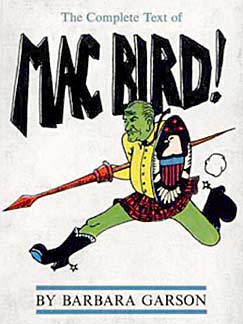
By the way, speaking of MacBeth and LBJ, they made a play back then: MacBird!


The playwright, Barbara Garson said:
"People used to ask me then, 'Do you really think Johnson killed Kennedy?'... I never took that seriously. I used to say to people, 'If he did, it's the least of his crimes.' It was not what the play was about. The plot was a given."

Saturday, April 14, 2012

"You're disarming yourself in an important struggle if you can't produce a fucking sonnet."

Asserted Christopher Hitchens in an interview in 2010, which I'm reading a propos of a discussion we're having about the value of the childish humor that comes in the form of substituting one word for another. Hitchens and his friends — intelligent adults — cracked each other up over the years by redoing book titles, changing "man" to "cunt" or "love" to "fuck," which is endlessly productive of laughter if you give yourself permission to do it. But I drifted into the part of the interview that's about the importance — the sexual importance — of reciting poetry. Hitchens continues:
"What if I had to try on my own merits? You've got to have some sort of reserve arsenal." He looks incredulous when the photographer, a very beautiful young woman, expresses doubt about the efficacy of this seduction technique.

"Oh no, not if it's done right," he says knowingly. Go on then, I say. Give us a demonstration. "Maybe at lunch?" he suggests, cheering up immediately. "Let's have lunch, and make a day of it." And so, inevitably, we adjourn to the pub....


[D]rink certainly makes him livelier company than the 10am sober version, and we pass a highly enjoyable few hours in a pub garden, during which he tries out successive renditions of a Shakespearean sonnet, Being Your Slave, What Should I Do But Tend, on the photographer.

"Well?", I ask her.

"Give her time to let it sink in!" he objects.

"Um," she ventures. "I'm feeling something like blind panic."

"Really? No!" And he's off again. "Being your slave what should I do but tend/Upon the hours and times of your desire?"

"My feeling," she reports kindly after he finishes, "is that I would be more seduced by argument."

"Well, I've got arguments!" he exclaims, laughing. "You want arguments? I've got arguments!"
Argument! When you say you want argument, I think that means I'm going to reject your arguments. I'll give you — as we say in law — a full and fair opportunity to litigate... and then you should feel decently well treated enough when I reject your claim.

Tuesday, February 7, 2012

Prop 8 ruling from the 9th Circuit is expected momentarily.

At 10 a.m. Pacific Time, noon Central.

UPDATE: The court holds that the ban on same-sex marriage violates equal protection.

AND: Here's the opinion [PDF].

ALSO: What Prop 8 did, the court writes, was take away the designation "marriage," and that word matters:
We are excited to see someone ask, "Will you marry me?", whether on bended knee or in text splashed across a stadium Jumbotron. Certainly it would not have the same effect to see "Will you enter into a registered domestic partnership with me?". Groucho Marx's one-liner, "Marriage is a wonderful institution... but who wants to live in an institution?" would lack its punch if the word "marriage" were replaced with the alternative phrase. So too with Shakespeare's "A young man married is a man that's marr'd," Lincoln's "Marriage is neither heaven no hell, it is simply purgatory," and Sinatra's "A man doesn't know what happiness is until he's married. By then it's too late." We see tropes like "marrying for love" versus "marrying for money" played out again and again in our films and literature because of the recognized importance of the marriage relationship. Had Marilyn Monroe's film been called How to Register a Domestic Partnership with a Millionaire, it would not have conveyed the same meaning as did her famous movie....
You get the idea. The judges are old. I mean... marriage — even just the word — matters.

Friday, December 16, 2011

Wednesday, July 6, 2011

Revenge, the Wikipedia article.

A report that the wife of Dominique Strass-Kahn is seeking "revenge" got me thinking about the specific meaning of the word. Surely, it doesn't include merely remembering who kicked you when you were down.

My curiosity about the concept was sufficient to get me to Wikipedia, where I was, first, interested that there was an article at all, and second, interested that it was as short as it was. It wasn't super-short, like a dictionary definition. If you're going to purport to cover the history of revenge and its function in society and religion plus that famous saying, how do you keep the length to 2 screens?

Presumably: editing! Wikipedia is all about editing. People load crap in. That's the easy part. The miracle of Wikipedia is in the editing.

Oh, come on, Althouse. It's not a miracle. I mean, check it out:  "A miracle is an event attributed to divine intervention."

No, no. I'm not going there. The Daily News used "revenge" to portray a specific individual in a negative light for the titillation of readers. I used hyperbole, in a complimentary sense, to refer to the behind-the-scenes work of thousands of editors who deserve some extra praise and thanks.

Both miracles and revenge play a part in human storytelling, but revenge is a much better story. "Deus ex machina" is not the most admirable plot device, as Aristotle explained:
It is obvious that the solutions of plots too should come about as a result of the plot itself, and not from a contrivance... There should be nothing improbable in the incidents; otherwise, it should be outside the tragedy....
Revenge makes a good tragedy. See "Hamlet."  If you haven't seen it already.
Of the psychological, moral, and cultural foundation for revenge, philosopher Martha Nussbaum has written: "The primitive sense of the just—remarkably constant from several ancient cultures to modern institutions ...—starts from the notion that a human life ... is a vulnerable thing, a thing that can be invaded, wounded, violated by another's act in many ways. For this penetration, the only remedy that seems appropriate is a counter invasion, equally deliberate, equally grave. 
For this penetration.... a good image, when we're talking about rape. But what of the false accusation of rape? That too is a penetration.
"And to right the balance truly, the retribution must be exactly, strictly proportional to the original encroachment."
I think revenge asks for more.  Nussbaum explains the moral aspect of revenge, not the passionate edge that wants more than justice. There is passion, but wait...
Revenge is a dish best served cold.
That is the saying about revenge. And it doesn't suggest becoming dispassionate. You're not using your measuring spoons and cups, preparing a dish "strictly proportional to the original encroachment." The cold dish that is the best revenge is not a calibrated diet dish.

Nussbaum's Heart-Healthy Justice Salad is not revenge.

Monday, June 20, 2011

"Shakespeare would have been appalled."

Asserts Julie Taymor, who wanted to be free of the people taking shots at her show, especially via Twitter and Facebook and blogging, which Shakespeare did not have to put up with.
"It’s very hard to create, it’s incredibly difficult to be under a shot glass and a microscope like that...

"When you’re trying to create new work and you’re trying to break new ground and experiment, which seems an incredibly crazy thing to do in a Broadway environment, the immediate answers that audiences give are never going to be good...

"It’s just in the nature of things that when you’re doing something very new, audiences don’t know how necessarily to talk about it immediately..."
How does she imagine Shakespeare worked?

Wednesday, May 25, 2011

I find toast-botch too painful to mock.


What if you gave a toast and nobody raised their glass with you, because they were in the middle of a solemn ritual that you had thought was the solemn ritual that is your toast but was their national anthem and the elderly queen was queenly enough to say gently to you "that's very kind"? You would carefully place your glass on the table and stand stiffly like everyone else and hope that the wide frown on your face expressed not your nightmare experience but some simulacrum of the "national anthem face" you should have had there all along, when you were blabbing that Shakespeare — Shakespeare! — to try to butter them up about what a great country they think they have. Oh! The rigidity of this horror!

Sunday, February 20, 2011

What's your sign? Scott Walker is "assassinating the middle class — he's getting us."

I'm struck by "Et tu, Brute" — the most famous assassination quote — in the context of Scott Walker...

P1060959

... so I engage this young man in a conversation about how to interpret his sign, which lists Walker along with Judas and — of all people — Brett Favre:


ADDED: The sign in the back says: "All that serves labor serves the nation. All that harms it is TREASON! — Abraham Lincoln." Having these 2 assassination signs together disturbed me. A couple days ago, I saw a sign that read "SIC SEMPER TYRANNIS."

Tuesday, January 11, 2011

Thursday, December 9, 2010

Are you on Team Chaucer or Team Shakespeare?

"Who 'Invented' More New Words?"

"Invent" is in quotes because all we know is the first recorded use of each word, so the fact that Chaucer has more than Shakespeare isn't as interesting as who has the best words. I'm tempted to go on Team Shakespeare because I like immediacy, laughable, obscene, generous, radiance, tranquil, and useful. But I'm going with Team Chaucer, because, in addition to quantity, he's got accident, Martian, princess, superstitious, vacation, vulgar, snort, universe, theater, scissors, perpendicular, village, wildness, outrageous, femininity, dishonest, and galaxy. No, it's not really fair. Chaucer got there first, and snagged many useful words (though not useful, the word).

***

Bonus Althouse info: The first house I ever lived in was on Chaucer Drive.

Tuesday, October 19, 2010

"Rich professors doth protest too much."

Says Michael Kinsley. And I might want to read that article, but I'm too annoyed by the use of the verb "dost" with a third-person plural subject. I know it's a Shakespearean reference, but in an effort to go literary, he goes illiterate. He goeth illiterate. See? Doth is does, with a lisp. It's not plural.

ADDED: This post wrongly assumes Kinsley writes his own headlines over at Politico. Some unknown headline writer attempting to be literary, went illiterate.

Saturday, July 17, 2010

The John Edwards bio is "an extraordinary story filled with motivations, decisions and consequences that would have lit Shakespeare up."

Aaron Sorkin is making a movie of Andrew Young's "The Politician: An Insider's Account of John Edwards's Pursuit of the Presidency and the Scandal That Brought Him Down."

Would the John Edwards story "have lit Shakespeare up"?
Yes. John Edwards is a grand tragic hero with fascinating flaws.
Yes. Shakespeare loved to apply his gifts to tacky, melodramatic tales.
No. Shakespeare was too high class for that sort of muck.
No. John Edwards didn't reach a high enough height for Shakespeare to care about his fall.
  
pollcode.com free polls

Sunday, June 27, 2010

Camille Paglia — opining on the failing libido of the American female — has something to say about "new age" and "men in shorts."

Men in shorts is, as you probably know, an Althouse theme, and New Age is the obsession of our beloved commenter Crack Emcee. Here's the Paglia:
The real culprit, originating in the 19th century, is bourgeois propriety. As respectability became the central middle-class value, censorship and repression became the norm. Victorian prudery ended the humorous sexual candor of both men and women during the agrarian era, a ribaldry chronicled from Shakespeare’s plays to the 18th-century novel. The priggish 1950s, which erased the liberated flappers of the Jazz Age from cultural memory, were simply a return to the norm.

Only the diffuse New Age movement, inspired by nature-keyed Asian practices, has preserved the radical vision of the modern sexual revolution....

Nor are husbands offering much stimulation in the male display department: visually, American men remain perpetual boys, as shown by the bulky T-shirts, loose shorts and sneakers they wear from preschool through midlife. The sexes, which used to occupy intriguingly separate worlds, are suffering from over-familiarity, a curse of the mundane. 
Paglia is dithering. Good Lord! Isn't she embarrassed to enthuse about the Rolling Stones one more time? And much as I enjoy her company in my crusade against adult men dressing like children, her inane bow to "the diffuse New Age movement, inspired by nature-keyed Asian practices" makes it all feel hit and miss.

***

On adult men looking like enlarged boys, my favorite description is still Tom Wolfe's:
[H]e had on a short-sleeved shirt that showed too much of his skinny, hairy arms, and denim shorts that showed too much of this gnarly, hairy legs. He looked for all the world like a seven-year-old who at the touch of a wand had become old, tall, bald on top, and hairy everywhere else, an ossified seven-year-old, a pair of eyeglasses with lenses thick as ice pushed up to the summit of his forehead -- unaccountably addressing thirty college students....