Showing posts with label Frank Lloyd Wright. Show all posts
Showing posts with label Frank Lloyd Wright. Show all posts
Thursday, December 20, 2012

Saturday, March 3, 2012
Snow walk.
Picnic Point:

(Photo by Meade.)
Unitarian Church:

(Photo by me. Architecture by Frank Lloyd Wright.)
(Photo by Meade.)
Unitarian Church:
(Photo by me. Architecture by Frank Lloyd Wright.)
Friday, December 23, 2011
The unseen Frank Lloyd Wright house.
This is how close we got to Samara when we were in West Lafayette, Indiana the other day.

This just looks closer:

But here's a delightful 10-minute video interviewing the original owner of the house in the house where he still lives:
This just looks closer:
But here's a delightful 10-minute video interviewing the original owner of the house in the house where he still lives:
Tuesday, November 22, 2011
"I've never spent $200 for a Lego set."
"The most I've spent was the $150 for the Modular Houses, and even that made me cringe a bit. They're so darned fun and detailed that I just can't help myself. From a price to piece standpoint, the set is still less than 10 cents per piece."
It's the Frank Lloyd Wright Robie House. Seems like a great family Christmas present.
And while I'm Amazoning... please buy your Christmas and other holiday presents and all presents for yourself and others through the Althouse portal to Amazon (which is always linked right under this blog's name). You can send a little money my way without paying anything more for your things. And by the way, you can save 55% today on "Lion King" and "Cars" Director's editions sets. But I'm fascinated by these Lego sets. Here's Fallingwater. Seems like you could play with your kids and teach them (and yourself) about architecture.
It's the Frank Lloyd Wright Robie House. Seems like a great family Christmas present.
***
And while I'm Amazoning... please buy your Christmas and other holiday presents and all presents for yourself and others through the Althouse portal to Amazon (which is always linked right under this blog's name). You can send a little money my way without paying anything more for your things. And by the way, you can save 55% today on "Lion King" and "Cars" Director's editions sets. But I'm fascinated by these Lego sets. Here's Fallingwater. Seems like you could play with your kids and teach them (and yourself) about architecture.
Wednesday, November 2, 2011
The University of Wisconsin Marching Band practices "I Got Plenty o' Nuttin'" in the rain...
... and Meade and I watch from the car. We proceed around town and there's some miscellaneous conversation about ant heads and graveyards and so forth. This is just a late-night trifle for anybody who wants to hang out with us for 14 minutes or less.
Thursday, May 26, 2011

Thursday, November 11, 2010
"The Top 100 Influential Figures in American History."
I'm going to click through all this, beginning with Herman Melville at #100 — he's "the American Shakespeare." Come with me. #99 is Nixon! Why's Nixon only 99? I know. He's ugly. And we hate him. Have to click to 86 to get to the first woman. It's Mary Baker Eddy, who, of course, influenced health care reform. Another lady at 81. It's Margaret Mead, famous for being had by 3d world pranksters. Nothing more American than that. A woman at 77: Betty Friedan. I never read her book. I thought it was for my parents' generation. My — my my my — generation transcended sex roles. We were star dust, we were golden.
Frank Lloyd Wright is 76. Architects may come and architects may go, and never change your point of view. Not Frank. He'd sock you in the head with a low-hanging roof as soon as look at you. He was from Wisconsin. That's important. So was Georgia O'Keeffe, who might be on this list. She's a woman, you know. 20 bonus points for being a woman? Here's Jane Addams at 64. Another woman. And I, your humble female blogger, would like to register a complaint against my high school speech teacher who rejected my proposal to do a speech on the topic of Jane Addams. He said she wasn't important enough. I used to want to be a social worker.
Oliver Wendell Holmes Jr. is 53. The only judge so far. Another woman at 51: Margaret Sanger. (A "thoroughgoing racist" says Jonah Goldberg.) Not too many Presidents. After Nixon, you have to wait until #44 for another President. It's Lyndon Johnson. I call him "LBJ." Works better in rhyming chants. LOL! It's Eleanor Roosevelt at #42. "She used the first lady’s office and the mass media to become 'first lady of the world.'" Women playing the media to focus attention on themselves. Yeah, I guess that's a big deal in American culture. She's responsible for that? All right then.
Harriet Beecher Stowe. #41. The power of novels. Rachel Carson is #39. She saved the eagles... and the mosquitoes. Susan B. Anthony is 38. Elizabeth Cady Stanton is #30. Women's rights. Earl Warren is 29. A second judge. Eisenhower is 28. A third President. Eli Whitney deserves to be 27: "His gin made cotton king and sustained an empire for slavery."
John Adams at 25? Come on? Is HBO/David McCullough the arbiter of history? But yeah, he was President. Truman is 21. A 5th President. Man, get a David McCullough biography about you to cement your historical importance. Andrew Jackson is 18. A 6th President. Reagan's 17. That's 7. Theodore Roosevelt is 15. The 8th Prez on the list, and the 2d of what I predict will be 3 Roosevelts. James Madison is 13. The 9th President, a Founding Father. Ulysses S. Grant gets to be 12. A 10th Prez. And he won the war. Woodrow Wilson is #10 and the 11th President on the list. Martin Luther King Jr. is only #8. John Marshall is #7, the 3d judge. Ben Franklin is 6, deservedly. Another Founder at 5: Alexander Hamilton. FDR snags #4 and is the 12th President on the list. Jefferson is #3, so you know who ##1 and 2 are. And Lincoln beats Washington for the top spot. A total of 15 Presidents.
The final count for women was 10. 10 out of 100. (I think.) Fair enough. I'm not going to say there should have been more. If they'd counted femaleness as a plus factor, they'd have had to "plus-factor" a lot of other groups, and they didn't. Not one Native American?! That's politically incorrect.
ADDED: Actually there were a couple more Presidents, Polk and John Quincy Adams. I'm noticing this leaning over Meade's shoulder as he clicks through. Sorry. My effort was studiously haphazard.
Frank Lloyd Wright is 76. Architects may come and architects may go, and never change your point of view. Not Frank. He'd sock you in the head with a low-hanging roof as soon as look at you. He was from Wisconsin. That's important. So was Georgia O'Keeffe, who might be on this list. She's a woman, you know. 20 bonus points for being a woman? Here's Jane Addams at 64. Another woman. And I, your humble female blogger, would like to register a complaint against my high school speech teacher who rejected my proposal to do a speech on the topic of Jane Addams. He said she wasn't important enough. I used to want to be a social worker.
Oliver Wendell Holmes Jr. is 53. The only judge so far. Another woman at 51: Margaret Sanger. (A "thoroughgoing racist" says Jonah Goldberg.) Not too many Presidents. After Nixon, you have to wait until #44 for another President. It's Lyndon Johnson. I call him "LBJ." Works better in rhyming chants. LOL! It's Eleanor Roosevelt at #42. "She used the first lady’s office and the mass media to become 'first lady of the world.'" Women playing the media to focus attention on themselves. Yeah, I guess that's a big deal in American culture. She's responsible for that? All right then.
Harriet Beecher Stowe. #41. The power of novels. Rachel Carson is #39. She saved the eagles... and the mosquitoes. Susan B. Anthony is 38. Elizabeth Cady Stanton is #30. Women's rights. Earl Warren is 29. A second judge. Eisenhower is 28. A third President. Eli Whitney deserves to be 27: "His gin made cotton king and sustained an empire for slavery."
John Adams at 25? Come on? Is HBO/David McCullough the arbiter of history? But yeah, he was President. Truman is 21. A 5th President. Man, get a David McCullough biography about you to cement your historical importance. Andrew Jackson is 18. A 6th President. Reagan's 17. That's 7. Theodore Roosevelt is 15. The 8th Prez on the list, and the 2d of what I predict will be 3 Roosevelts. James Madison is 13. The 9th President, a Founding Father. Ulysses S. Grant gets to be 12. A 10th Prez. And he won the war. Woodrow Wilson is #10 and the 11th President on the list. Martin Luther King Jr. is only #8. John Marshall is #7, the 3d judge. Ben Franklin is 6, deservedly. Another Founder at 5: Alexander Hamilton. FDR snags #4 and is the 12th President on the list. Jefferson is #3, so you know who ##1 and 2 are. And Lincoln beats Washington for the top spot. A total of 15 Presidents.
The final count for women was 10. 10 out of 100. (I think.) Fair enough. I'm not going to say there should have been more. If they'd counted femaleness as a plus factor, they'd have had to "plus-factor" a lot of other groups, and they didn't. Not one Native American?! That's politically incorrect.
ADDED: Actually there were a couple more Presidents, Polk and John Quincy Adams. I'm noticing this leaning over Meade's shoulder as he clicks through. Sorry. My effort was studiously haphazard.
Wednesday, October 28, 2009
"It was in an odd, improvised shape, because Mr. Halprin knew his wife could not be contained by a rectangle."
Lawrence Halprin was "the tribal elder of American landscape architecture," who had a "passion to give people as many options as possible to go this way or that, to reverse directions, to pause, to start over, to be alone, to meet others, and to experience as many different sights, smells and sounds as the site permits," and his wife was "the former Anna Schuman, a modern dancer and choreographer." He was born in Brooklyn in 1916 — he died last Sunday — but he studied at the University of Wisconsin and his original urge to become a landscape designer arose from seeing Taliesin East, Frank Lloyd Wright’s studio in here in Wisconsin. It was Anna who suggested the trip to Taliesin, back in 1939, and the "odd, improvised shape" was a dance deck he designed for her at Mount Tamalpais, which is not in Wisconsin. It's in California.
Ah — here! — I've found a picture:

Ah — here! — I've found a picture:

Friday, September 25, 2009
"Respect the vision of Frank Lloyd Wright and look to the future and forget the towers.”
Do you know about the Lamp House? What do you think of this proposal to raze the surrounding buildings and construct a giant glass box all around it?
Brenda Konkel champions the buildings slated for destruction:
But is that so wrong? I'm thinking of the Temple of Dendur at the Metropolitan Museum in NYC. Yes, it's radically out of context, but that's what museums always do to things. The real question is whether the recontextualization is good.
Brenda Konkel champions the buildings slated for destruction:
[She] said what makes the Lamp House charming is the fact that it’s surrounded by other historic homes, in a largely intact historic neighborhood. “Coming in and tearing out six houses just destroys the neighborhood,” she said. “Moving the Lamp House is insane. Part of what’s special about the Lamp House is that it was put in the middle of the block on purpose.”Here's her blog post showing those other houses, which are really ordinary. But I guess that's the idea. The Lamp House looks distinctive because of the contrast to the other old residences. Putting all that new glass around it would create a completely different effect.
But is that so wrong? I'm thinking of the Temple of Dendur at the Metropolitan Museum in NYC. Yes, it's radically out of context, but that's what museums always do to things. The real question is whether the recontextualization is good.
Saturday, June 6, 2009
I was a caryatid for Frank Lloyd Wright.

In case you were wondering where I was all day, I was serving as a docent on the 2009 Wright and Like Tour in the morning, at the Jacobs II house....

... and touring various houses in Madison in the afternoon. The photo at the top of the post was taken at the John C. Pew House.
Friday, February 6, 2009
"We are both architects in a way. We both deal with structure, we are both artists, and we are both egomaniacs. I have worn a cape."
"There is where we end."
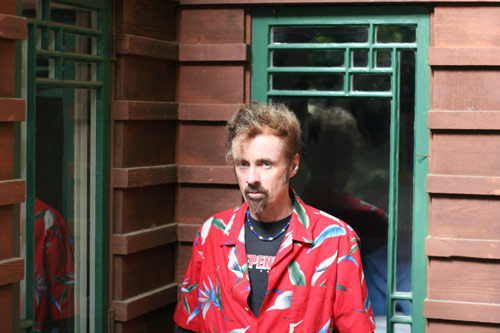
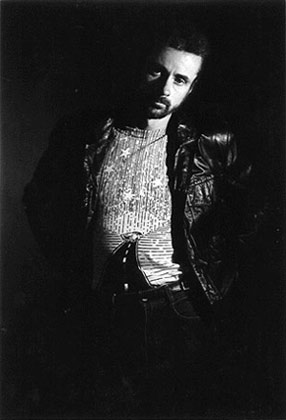
Says T.C. Boyle about Frank Lloyd Wright, the subject of his new novel. Boyle actually lives in a Wright house, the George C. Stewart House in Montecito. Here's a photo of the house, and looking closely at the windows, I believe this portrait of Boyle at his website shows a detail of the house. Here's another portrait of Boyle from his website. I think it's interestingly phallic.
ADDED: If you buy the book — "The Women" — using this link, you will be making a contribution to this blog (without paying extra).
Says T.C. Boyle about Frank Lloyd Wright, the subject of his new novel. Boyle actually lives in a Wright house, the George C. Stewart House in Montecito. Here's a photo of the house, and looking closely at the windows, I believe this portrait of Boyle at his website shows a detail of the house. Here's another portrait of Boyle from his website. I think it's interestingly phallic.
ADDED: If you buy the book — "The Women" — using this link, you will be making a contribution to this blog (without paying extra).
Wednesday, October 29, 2008
What's my line? "World famous architect."
Awkward, but awesome. Frank Lloyd Wright on the ancient TV quiz show:
(Via About Last Night.)
I love this exchange:
The host John Charles Daly makes a ruling:
Ugh. What an outrageous ruling from the host, John Daly. He's acting as though he's all erudite and urbane, making an elaborate technical ruling, and the "no" answer ends the questioner's turn. But the questioner worded his question carefully, saying "anything" and "in any way," so the ruling, relying on excluding the "incidental" and the concept of a "basic line of questioning" is thoroughly specious. I hate that kind of phony, show-offy, fake intelligence. Now, Wright, the "world famous architect," was also a world famous genius, and his 2-world answer was absolutely smart, correct, and funny.
Or do you miss that old-fashioned style of witty speech?
(Via About Last Night.)
I love this exchange:
"Would it have anything to do with law in any way?"
"Unfortunately, yes."
The host John Charles Daly makes a ruling:
"No, I think that, while there may be some relationship, in some aspects of your work, with law, they would be incidental to our basic line of questioning."
Ugh. What an outrageous ruling from the host, John Daly. He's acting as though he's all erudite and urbane, making an elaborate technical ruling, and the "no" answer ends the questioner's turn. But the questioner worded his question carefully, saying "anything" and "in any way," so the ruling, relying on excluding the "incidental" and the concept of a "basic line of questioning" is thoroughly specious. I hate that kind of phony, show-offy, fake intelligence. Now, Wright, the "world famous architect," was also a world famous genius, and his 2-world answer was absolutely smart, correct, and funny.
Or do you miss that old-fashioned style of witty speech?
Monday, June 9, 2008
The E. Clarke and Julie Arnold House and the Richard C. and Berenice Smith House — by Frank Lloyd Wright.
Visited last Saturday on the "Wright & Like" 2008 tour.

That's the E. Clarke and Julie Arnold House in Columbus, Wisconsin, visited at around 11 a.m., when it was a nice, sunny day. This house is composed with lots of diamond shapes.
Later in the day, after spending 2 hours as a docent at the Dr. Maurice and Mrs. Margaret Greenberg House, I hurried down the wooded path as a thunderstorm was about to hit. Secure from electrocution in my car, I enjoyed the fireworks over the rolling Wisconsin farmland. I did wonder about the strength of the wind, which seemed intent on running me off the road. And when I switched from satellite to land radio, after I got out of the really windy area, I was scared retrospectively by the reports of tornadoes. I got a little lost — finding myself on Country Road Z — which was not in my print-out directions from Google, and decided I'd better just try to keep my bearings and head for home. But then I found a road that was on the print-out and the route started to make sense, so I got to the Richard C. and Berenice Smith House in Jefferson, Wisconsin:

It's more interesting from the other side, because it's built around a really large oak tree — a 300-year sort of thing. The red concrete floors — which look just like the driveway seen in my photo — extend throughout the house. After all the rain, those floors were quite wet inside, a classic Frank Lloyd Wright feature (leakiness). It was, to my eye, an unpleasant design. Too many angles. Zig-zags everywhere. But maybe I could settle in and get used to it. The interior walls were all stone, and they zig-zagged around that noble tree. The whole house honored a tree. And the tree deserved it.
That's the E. Clarke and Julie Arnold House in Columbus, Wisconsin, visited at around 11 a.m., when it was a nice, sunny day. This house is composed with lots of diamond shapes.
Later in the day, after spending 2 hours as a docent at the Dr. Maurice and Mrs. Margaret Greenberg House, I hurried down the wooded path as a thunderstorm was about to hit. Secure from electrocution in my car, I enjoyed the fireworks over the rolling Wisconsin farmland. I did wonder about the strength of the wind, which seemed intent on running me off the road. And when I switched from satellite to land radio, after I got out of the really windy area, I was scared retrospectively by the reports of tornadoes. I got a little lost — finding myself on Country Road Z — which was not in my print-out directions from Google, and decided I'd better just try to keep my bearings and head for home. But then I found a road that was on the print-out and the route started to make sense, so I got to the Richard C. and Berenice Smith House in Jefferson, Wisconsin:
It's more interesting from the other side, because it's built around a really large oak tree — a 300-year sort of thing. The red concrete floors — which look just like the driveway seen in my photo — extend throughout the house. After all the rain, those floors were quite wet inside, a classic Frank Lloyd Wright feature (leakiness). It was, to my eye, an unpleasant design. Too many angles. Zig-zags everywhere. But maybe I could settle in and get used to it. The interior walls were all stone, and they zig-zagged around that noble tree. The whole house honored a tree. And the tree deserved it.
Sunday, June 8, 2008
Things not said while serving as a docent in Frank Lloyd Wright's Dr. Maurice and Mrs. Margaret Greenberg House.
I was too tired last night to write very much about the Frank Lloyd Wright tour. Now, I'm up too early. (How does anyone sleep past 5 this time of year with all the birds chirping?) I'm looking at that picture I took of the Greenberg House again and thinking it looks rather ugly! Perhaps it's meant to be seen from a distance, tucked into the landscape. It was supposed to be made of stone, but Wright changed to brick to lower the cost, and that takes something away from it.
The house makes more sense from the inside, which has a huge living/dining room with two levels of big windows that stretch across a long wall and around half of 2 side walls. These look out into the middle of the trees and — if you stand at the raised floor level — the tree tops. There are terraces at the 2 sides, connected by a walkway that goes in front of the long wall of windows.

You don't see the bottom third of the forest because the house projects out over the large boulder that Wright made the starting point of his design. The site is beautiful, but it was rejected by other builders because of the big rock. I was serving as a docent explaining things to visitors on the 2008 "Wright & Like" architectural tour, and at some point in the second hour of describing the design, I thought of the Bible verse, "The stone the builders rejected has become the capstone" (or "cornerstone"). I was talking to a woman and something — I forget what — that she said made the verse spring to mind. In another situation, this could become a conversation, but it was rather obvious that quoting the Bible in this context was inappropriate. Docents are bound by the principle of the separation of church and architecture, are we not? I was not tempted by the seductions of free associating on the spot about Wright and Jesus. I can always go home and blog.
So here's the passage, Matthew 21:42:
IN THE COMMENTS: First, there's Ruth Anne:
Or — per Ruth Anne — God-up!
The house makes more sense from the inside, which has a huge living/dining room with two levels of big windows that stretch across a long wall and around half of 2 side walls. These look out into the middle of the trees and — if you stand at the raised floor level — the tree tops. There are terraces at the 2 sides, connected by a walkway that goes in front of the long wall of windows.
You don't see the bottom third of the forest because the house projects out over the large boulder that Wright made the starting point of his design. The site is beautiful, but it was rejected by other builders because of the big rock. I was serving as a docent explaining things to visitors on the 2008 "Wright & Like" architectural tour, and at some point in the second hour of describing the design, I thought of the Bible verse, "The stone the builders rejected has become the capstone" (or "cornerstone"). I was talking to a woman and something — I forget what — that she said made the verse spring to mind. In another situation, this could become a conversation, but it was rather obvious that quoting the Bible in this context was inappropriate. Docents are bound by the principle of the separation of church and architecture, are we not? I was not tempted by the seductions of free associating on the spot about Wright and Jesus. I can always go home and blog.
So here's the passage, Matthew 21:42:
Jesus said to them, "Have you never read in the Scriptures:This is the part I remembered. Looking it up this morning, I see it continues in a darker tone:"'The stone the builders rejected
has become the capstone;
the Lord has done this,
and it is marvelous in our eyes'?"
"Therefore I tell you that the kingdom of God will be taken away from you and given to a people who will produce its fruit. He who falls on this stone will be broken to pieces, but he on whom it falls will be crushed."Write your own short story where the docent in the Maurice Greenberg house is talking with a woman, impulsively quotes a Bible verse, and everything subsequently goes to hell.
When the chief priests and the Pharisees heard Jesus' parables, they knew he was talking about them. They looked for a way to arrest him, but they were afraid of the crowd because the people held that he was a prophet.
IN THE COMMENTS: First, there's Ruth Anne:
Hmmm....you're up early and quoting scripture on a Sunday. Perhaps you're being nudged to go somewhere?Then, there's this thread that begins with rhhardin:
He who falls on this stone will be broken to pieces, but he on whom it falls will be crushed.And later added:
This was before paper and scissors.
"Do you know that according to Aristotle a person who dies crushed by a column does not die a tragic death? And yet here is that nontragic death hanging over you."Which prompted UWS guy to say:
here
Of course, a newspaper writer, were he to be crushed by a column, would have died an ironic death.Yes! Man-up ye wordsmiths!
Also, I clicked the comment section to read short stories...so man-up ye wordsmiths!
Or — per Ruth Anne — God-up!
Saturday, June 7, 2008
I was deeply ensconced in Wisconsin architecture today.
I spent much of the day here:

At the Maurice Greenberg House — which was designed by Frank Lloyd Wright. I put in 2 hours as a docent, posted in the living room, where I pointed out the view and identified the items of furniture that were designed by Wright.
I have more pictures, but I'm I little too tired to do a good job of getting them web-ready. Why should I be tired so early? It's not just from 2 hours of docent work. I also drove many miles around south central Wisconsin, including some grueling time through pouring rain, the kind of rain that renders the windshield wipers useless. And there was another part of the drive where there were thick streaks of lightning and wind so rough I had to grip the wheel to keep from being swerved around. Then I turned the radio on and heard about the tornadoes spotted in this storm. Find sturdy shelter, the warning said. Where? I'm in my car, driving through farmland. I just keep going, trusting in luck and airbags.
At the Maurice Greenberg House — which was designed by Frank Lloyd Wright. I put in 2 hours as a docent, posted in the living room, where I pointed out the view and identified the items of furniture that were designed by Wright.
I have more pictures, but I'm I little too tired to do a good job of getting them web-ready. Why should I be tired so early? It's not just from 2 hours of docent work. I also drove many miles around south central Wisconsin, including some grueling time through pouring rain, the kind of rain that renders the windshield wipers useless. And there was another part of the drive where there were thick streaks of lightning and wind so rough I had to grip the wheel to keep from being swerved around. Then I turned the radio on and heard about the tornadoes spotted in this storm. Find sturdy shelter, the warning said. Where? I'm in my car, driving through farmland. I just keep going, trusting in luck and airbags.
Thursday, June 5, 2008
A little photowalk to test out what my new 24 mm lens can do.
Here's the new lens. (It was the right answer to the question "Notice anything?" — a post that got a lot of comments. It seems you like these puzzle photo posts.)
So I was testing out the lens today. First, as I was sitting in my favorite café, I caught a woman glancing over the top of the NYT to check out the fashion on the street.

Yes, we're wearing leggings in Madison. But the main thing I wanted to test out with the lens was architecture. Like this:

Yes, we're flying the French flag here in Madison. The reason I was concerned about the lens and architecture is that I want to be prepared to take photographs on the Wright & Like tour this Saturday. Check out the houses you can tour. If you come to the right Frank Lloyd Wright house at the right time, I'll be the docent showing off the living/dining area. I won't be combining photography with docenting, but I will on my own go to all the houses and photograph the exteriors (as I did on last year's tour: here). To join the tour:
Here are some daisies with an adorable tiny bee:

And here's a fly who has no idea he's not as cute as the bee:

And here's a tree that's not cute either. In fact, it seems vaguely obscene:

Just a walk around 2 blocks with a new 24 mm lens in Madison, Wisconsin.
IN THE COMMENTS: I'm told it's not a bee. It's a hoverfly. I apologize to the flies. Apparently, some of them are very cute. And maybe some insults need to be hurled at bees. Zachary Paul Sire says:
So I was testing out the lens today. First, as I was sitting in my favorite café, I caught a woman glancing over the top of the NYT to check out the fashion on the street.
Yes, we're wearing leggings in Madison. But the main thing I wanted to test out with the lens was architecture. Like this:
Yes, we're flying the French flag here in Madison. The reason I was concerned about the lens and architecture is that I want to be prepared to take photographs on the Wright & Like tour this Saturday. Check out the houses you can tour. If you come to the right Frank Lloyd Wright house at the right time, I'll be the docent showing off the living/dining area. I won't be combining photography with docenting, but I will on my own go to all the houses and photograph the exteriors (as I did on last year's tour: here). To join the tour:
Tour Headquarters | The Gobbler Restaurant, I-94 and Highway 26 Centrally located in Johnson Creek, WIJames Lileks wrote about The Gobbler here: "This site is an appreciation of a lost slice of American architecture and design - a period when just about everything had run off the rails, and good taste, restraint and classic traditions were utterly abandoned." Ha ha. Please go over there and click through all the pages. It's hilarious. Anyway, there will be bad taste and good on the Wright & Like tour.
The Gobbler Restaurant, a not-to-be-missed futurist style building, will be our one day tour headquarters. The site is located south of Interstate Highway 94 (Exit 267) off Hwy 26 and will open at 8 a.m. for ticket and merchandise sales. Same day tickets are $55 (non members) and $50 (members).
Here are some daisies with an adorable tiny bee:
And here's a fly who has no idea he's not as cute as the bee:
And here's a tree that's not cute either. In fact, it seems vaguely obscene:
Just a walk around 2 blocks with a new 24 mm lens in Madison, Wisconsin.
IN THE COMMENTS: I'm told it's not a bee. It's a hoverfly. I apologize to the flies. Apparently, some of them are very cute. And maybe some insults need to be hurled at bees. Zachary Paul Sire says:
Bees are not cute. They are ruthless killing machines. Trust me on this one.Revenant say:
bees = the devilChip Ahoy say:
We're taught those wonderful bees pollinate flowers and that's a good thing. But then once I noticed one particular bee positively rape a flower bud. It didn't wait for the flower to bloom. It forced open the bud and climbed in, buzzed around inside, bzzzzzz bzzzzzz bzzzzz, came out covered in sticky pollen and looking kind of drunk. Bees are naughty.
Sunday, June 10, 2007
"The Road Not Taken."
As I was saying, I played the docent at the Fred B. Jones Gatehouse, which was part of a Frank Lloyd Wright tour in Delavan, Wisconsin yesterday. Here are some views of the exterior:

(That's the water tower on the left.)

But I was posted -- imagine me, a blogger, posted -- in the interior, so let's go in:

Yesterday's post has one picture of the interior, showing the fireplace, which has a space above it where the current owners have painted a line from that Robert Frost poem "The Road Not Taken." Here's a closeup of the inscription:

I showed many people through the room, and I always had to say that it was the original fireplace, but the line was not there originally, as, indeed, it could not have been -- unless, as I said once, "Frank Lloyd Wright was unusually prescient" -- because it had yet to be written in 1901 when the gatehouse was built. So I had some interesting conversations with visitors about the line. Would Frank Lloyd Wright have approved? He took the road less traveled, but the road that consists of loving that poem is very well traveled. All these people enamored of a line about nonconformity -- it's ironic. Most of the people I talked to wanted to take the road less traveled and reject the poem.
Let's hear it read by R. Frost:
One visitor said that Wright and Frost were contemporaries and that there's a good film clip out there of Wright interviewing Frost. "That should be on the internet," I said. I'm not finding it, but there sure are a lot of student films using "The Road Not Taken." Sample:
Now, when I see that line -- "I took the one less traveled by/And that has made all the difference" -- I think of the documentary "Grey Gardens." Little Edie, truly a nonconformist, treasures the old line. Part of what is so poignant about Little Edie is that she feels so deeply about some terribly shallow things, like astrology, scarves, and the VMI fight song. And so, that poem...
I'm frustrated that YouTube doesn't seem to have the clip of Little Edie reciting Frost, but I did find this video of Rufus Wainwright singing his song "Grey Gardens":
[Speaking of feeling deeply about terribly shallow things, I'm remembering the Rufus Wainwright line: "There's never been such grave a matter/As comparing our new brand name black sunglasses...."]
And then, if I may bring this meandering post in for a crash landing, I found this clip of Christine Ebersole -- who plays Little Edie (and the young Big Edie) in the Broadway musical made from the documentary. She's struggling to answer the question why gay men love "Grey Gardens." At one point, her answer seems promising, but then it devolves into typical showbiz political talk about Republicans:
No, let's not end there. Let's get back to the real feeling of Little Edie:
"I always took French, but nothing ever happened there."
ADDED: I did not know when I wrote this post that there had been a terrible murder in Delavan the night before I was there. MORE: Actually, the murder was the night after the tour:
(That's the water tower on the left.)
But I was posted -- imagine me, a blogger, posted -- in the interior, so let's go in:
Yesterday's post has one picture of the interior, showing the fireplace, which has a space above it where the current owners have painted a line from that Robert Frost poem "The Road Not Taken." Here's a closeup of the inscription:
I showed many people through the room, and I always had to say that it was the original fireplace, but the line was not there originally, as, indeed, it could not have been -- unless, as I said once, "Frank Lloyd Wright was unusually prescient" -- because it had yet to be written in 1901 when the gatehouse was built. So I had some interesting conversations with visitors about the line. Would Frank Lloyd Wright have approved? He took the road less traveled, but the road that consists of loving that poem is very well traveled. All these people enamored of a line about nonconformity -- it's ironic. Most of the people I talked to wanted to take the road less traveled and reject the poem.
Let's hear it read by R. Frost:
One visitor said that Wright and Frost were contemporaries and that there's a good film clip out there of Wright interviewing Frost. "That should be on the internet," I said. I'm not finding it, but there sure are a lot of student films using "The Road Not Taken." Sample:
Now, when I see that line -- "I took the one less traveled by/And that has made all the difference" -- I think of the documentary "Grey Gardens." Little Edie, truly a nonconformist, treasures the old line. Part of what is so poignant about Little Edie is that she feels so deeply about some terribly shallow things, like astrology, scarves, and the VMI fight song. And so, that poem...
I'm frustrated that YouTube doesn't seem to have the clip of Little Edie reciting Frost, but I did find this video of Rufus Wainwright singing his song "Grey Gardens":
[Speaking of feeling deeply about terribly shallow things, I'm remembering the Rufus Wainwright line: "There's never been such grave a matter/As comparing our new brand name black sunglasses...."]
And then, if I may bring this meandering post in for a crash landing, I found this clip of Christine Ebersole -- who plays Little Edie (and the young Big Edie) in the Broadway musical made from the documentary. She's struggling to answer the question why gay men love "Grey Gardens." At one point, her answer seems promising, but then it devolves into typical showbiz political talk about Republicans:
No, let's not end there. Let's get back to the real feeling of Little Edie:
"I always took French, but nothing ever happened there."
ADDED: I did not know when I wrote this post that there had been a terrible murder in Delavan the night before I was there. MORE: Actually, the murder was the night after the tour:
Six people, including twin infants, were shot dead Saturday night inside an apartment house. The shooting also wounded a 2-year-old girl, who was still fighting for her life Sunday....The helicopters to the hospital fly over my house. I heard a helicopter in the middle of the night last night.
The wounded girl was flown to the University of Wisconsin Hospital in Madison.
Saturday, June 9, 2007
Was I a decent docent?
My 2 hours are up. I've been saying things like: "This is the Fred B. Jones Gatehouse, which was designed by Frank Lloyd Wright in 1901 for Fred B. Jones, who was in the business of making brass fittings for Pullman cars. Fred B. Jones, a bachelor, loved to give big parties, and this house was for the caretaker, but also for the overflow of party guests."

I'm taking a moment, resting by the stonework walls, thinking about whether I'd been too critical of the owners who replaced two windows with a set of double doors onto the terrace and whether I'd been too law professor-y questioning people about whether Frank Lloyd Wright would approve of the way the new owners have set the dining table at an angle and painted a Robert Frost quote above the fireplace like that:

ADDED: I was at the Gatehouse, which is about 1200 square feet. But Fred himself stayed in this beautiful house (when he came to Delavan on vacation).

It's quite magnificent inside, but I wasn't allowed to take pictures. I'll just show you the door:

Wide, no? Mr. Jones was a very fat man. He gave great parties, back in the early 1900s. What kind of parties? Who were the guests? He was a "bachelor"? I ask the docent at the main house whether Jones was gay. He says they didn't talk about it that way back then, so we don't know. I said but this is the way we talk about it now. If they say someone in the past was a "bachelor," what we say now is: Was he gay? I was trying to get the answer because I was about to start my docenting, and I figured if I say he was a bachelor, people are going to ask me if he was gay. But it turns out, no one does.
Don't you love the stonework?

That's from the Boathouse. Destroyed by arson in 1979, but rebuilt according to Wright's plan:

Everyone was saying, I want to live out here:

It's all open air, and it must get awfully cold in the winter. But the feeling of the place was so beautiful, that you still wanted to commit to living here, under this roof, with no walls, reveling in the breeze from Lake Delavan.
I'm taking a moment, resting by the stonework walls, thinking about whether I'd been too critical of the owners who replaced two windows with a set of double doors onto the terrace and whether I'd been too law professor-y questioning people about whether Frank Lloyd Wright would approve of the way the new owners have set the dining table at an angle and painted a Robert Frost quote above the fireplace like that:
ADDED: I was at the Gatehouse, which is about 1200 square feet. But Fred himself stayed in this beautiful house (when he came to Delavan on vacation).
It's quite magnificent inside, but I wasn't allowed to take pictures. I'll just show you the door:
Wide, no? Mr. Jones was a very fat man. He gave great parties, back in the early 1900s. What kind of parties? Who were the guests? He was a "bachelor"? I ask the docent at the main house whether Jones was gay. He says they didn't talk about it that way back then, so we don't know. I said but this is the way we talk about it now. If they say someone in the past was a "bachelor," what we say now is: Was he gay? I was trying to get the answer because I was about to start my docenting, and I figured if I say he was a bachelor, people are going to ask me if he was gay. But it turns out, no one does.
Don't you love the stonework?
That's from the Boathouse. Destroyed by arson in 1979, but rebuilt according to Wright's plan:
Everyone was saying, I want to live out here:
It's all open air, and it must get awfully cold in the winter. But the feeling of the place was so beautiful, that you still wanted to commit to living here, under this roof, with no walls, reveling in the breeze from Lake Delavan.
Friday, June 8, 2007
I hope I'm a decent docent.
I've never been a docent before. I've gone on a lot of architectural tours, and I was going to go on this one anyway, but somehow, I ended up getting to be a docent... at a little place called Penwern AKA the Fred B. Jones Gatehouse. Frank Lloyd Wright 1901-03. Me, a docent. I'll still do the whole tour, and I'll only be there for a 2-your slot. But I feel really awed by it. Frank Lloyd Wright!
Architects may come and
Architects may go and
Never change your point of view.
When I run dry
I stop awhile and think of you
Saturday, June 10, 2006
What we saw in Wausau.
I thought I was going to Wauwatosa, but really it was Wausau. Well, I got the "Wau" right. I saw "Wau," and naturally, I assumed Wauwatosa. Who wouldn't? Wauwatosa is, relative to Madison, almost all the way to Milwaukee. Wausau is dead center in Wisconsin, which means it's way north of here -- a two and a half hour drive. That's means five hours of talking in the car, which we did, and it was scintillating. Really.
Why did we go to Wausau? To me, and probably to you, Wausau is an insurance company, not so much a real place. But it's a pretty big city, by Wisconsin standards, and there have been enough wealthy people there over the years -- dealing in lumber and insurance -- that there are some excellent houses. We went on an architectural tour.
The best thing on the tour was the Charles and Dorothy Manson House, built by Frank Lloyd Wright, 1938-41:

There was another Wright house, the Duey-Wright House, done in 1957, shortly before Wright's death:

I also liked the Aytchmonde and Leigh Yawkey Woodson House, designed by George Washington Maher, 1913-14. Here's a detail:

There were tons of cool details inside all the houses, but, unfortunately, photography was only allowed outside.
Here's the lovely arbor outside the Cyrus and Alice Yawkey House:

We saw a couple Wright-inspired houses built in the last decade. They're at the bottom of the page at the link. We loved one and scorned the other. The Letarski house was designed by a guy who had really internalized Wright's ideas and had an artist's feeling for what he was doing. He lived in the house with his family. The Sorenson House was built by an architect who said he was given free rein by his clients -- two doctors -- and he had collected elements from three Wright designs and fitted them together, but it didn't have a believable, genuine spirit to it. It didn't make sense. The difference between the two houses was quite striking. I felt as though the Sorenson House could be an exam for architecture students: What do you count as mistakes and why?
I hope your day was as Usonian as ours.
Why did we go to Wausau? To me, and probably to you, Wausau is an insurance company, not so much a real place. But it's a pretty big city, by Wisconsin standards, and there have been enough wealthy people there over the years -- dealing in lumber and insurance -- that there are some excellent houses. We went on an architectural tour.
The best thing on the tour was the Charles and Dorothy Manson House, built by Frank Lloyd Wright, 1938-41:
There was another Wright house, the Duey-Wright House, done in 1957, shortly before Wright's death:
I also liked the Aytchmonde and Leigh Yawkey Woodson House, designed by George Washington Maher, 1913-14. Here's a detail:
There were tons of cool details inside all the houses, but, unfortunately, photography was only allowed outside.
Here's the lovely arbor outside the Cyrus and Alice Yawkey House:
We saw a couple Wright-inspired houses built in the last decade. They're at the bottom of the page at the link. We loved one and scorned the other. The Letarski house was designed by a guy who had really internalized Wright's ideas and had an artist's feeling for what he was doing. He lived in the house with his family. The Sorenson House was built by an architect who said he was given free rein by his clients -- two doctors -- and he had collected elements from three Wright designs and fitted them together, but it didn't have a believable, genuine spirit to it. It didn't make sense. The difference between the two houses was quite striking. I felt as though the Sorenson House could be an exam for architecture students: What do you count as mistakes and why?
I hope your day was as Usonian as ours.
Subscribe to:
Posts (Atom)
 :.
:.