Pages

Labels

Showing posts with label Warhol. Show all posts

Sunday, October 14, 2012

"For Andy Warhol to be openly gay... and at the same time intentionally celibate seems to represent a certain peace about the man..."

"... an intellectual separation of the sinless same-sex attraction and the sinful homosexual action, and an effort at communion with the teachings of the Catholic Church."
If it is sinful from the Catholic perspective, it is only sinful in that he may have lead others astray, those who did not know of his intentional celibacy.

But all this would be a view of the man, struggling for the good, failing and succeeding as only sinners can, not of the caricature our Gays vs. Hate world is comfortable with. It’s a pity, as an understanding of Warhol’s Catholicism lends a unique — and ignored — insight into his art.
No comment from me. Presented for what it's worth.

Here's a book: "The Religious Art of Andy Warhol."

ADDED: From Andy's diary:
“Yesterday, I was watching a game show, Blockbusters with Bill Cullen, and it was two black guys, a warden and his cousin, against a white girl and the category was “Letters” and the question was: “Andy Warhol is a ‘V.’” And (laughs) she got the answer right, she said “Virgin.””

Saturday, December 17, 2011

"I leave it in your capable hands to do whatever you want..."

"... and please write back saying how much money you want."

Question for normal readers: The idealized working relationship?

Question for first year law students: Is that a contract?

ADDED: Compare the story about Steve Jobs dealing with the master of the corporate logo, Paul Rand:
The [Next] computer would be a cube, Jobs pronounced. He loved that shape. It was perfect and simple. So Rand decided that the logo should be a cube as well, one that was tilted at a 28° angle. When Jobs asked for a number of options to consider, Rand declared that he did not create different options for clients. “I will solve your problem, and you will pay me,” he told Jobs. “You can use what I produce, or not, but I will not do options, and either way you will pay me.” 
Jobs admired that kind of thinking, so he made what was quite a gamble. The company would pay an astonishing $100,000 flat fee to get one design. “There was a clarity in our relationship,” Jobs said. “He had a purity as an artist, but he was astute at solving business problems. He had a tough exterior, and had perfected the image of a curmudgeon, but he was a teddy bear inside.” It was one of Jobs’s highest praises: purity as an artist.
"Steve Jobs," by Walter Isaacson (Kindle Location 3941).

Sunday, July 25, 2010

"No one in recent pop memory has been a greater enemy to the authentic than Lady Gaga."

No one? What about Madonna?
From the start of her career Madonna was a savvy pop trickster, using outrageous imagery as a distraction while smuggling ideas about religion and social politics into her music. Most of the Gaga generation, however, is interested in distraction as an end in itself.
As a 60s person, I'm highly amused by this presentation of the 80s as the standard what was once real in popular culture. Madonna was fake as a means to an end, but Lady Gaga is really fake, and fake is what's real now. To my 60s ears, that sounds like something Andy Warhol would say.
Lady Gaga has become successful by adhering to the belief that there’s no inner truth to be advertised, or salvaged: all one can do is invent anew.

It wasn’t that long ago when artifice appeared to be on its last leg. In the mid-to-late-1990s female performers especially were in a confessional place, a movement captured and branded by Lilith Fair, the summer tour package founded in part by Sarah McLachlan that ran from 1997 to 1999.
Wait. People took Lilith Fair seriously? 11-year-old girls, maybe. Seems to me it was mostly abhorred.
The last couple of years have seen the first wave of 1990s nostalgia, which might explain in part why Lilith was resurrected this year. But Lilith aesthetics haven’t aged well....
Do we say hasn't aged well about something that was never pretty?

Tuesday, June 1, 2010

Photographs by/of Dennis Hopper.

Hopper took some cool photographs in the 1960s — cool not just because he had access to some of the celebrities of that era (Paul Newman, Jane Fonda, Bill Cosby, Brian Jones, Tuesday Weld, Andy Warhol, etc.).

And Terry Richardson did a nice cigar-smoking sequence of Hopper.

Via Metafilter, which highlights the great photoblog Chasing Light.

Tuesday, May 11, 2010

"Ms. Angell committed suicide, her father, the author Roger Angell, said."

I don't know if I've ever seen an obituary that presented suicide so directly.

I'd never heard of Callie Angell, but I am intrigued by the idea of devoting one's mind to the study of the films of Andy Warhol and the nature of a mind that ultimately arrives at the decision to commit suicide.

I have read many articles by Roger Angell — the pieces on baseball that appeared in The New Yorker were quite wonderful. I'm sorry for him now.

From the daughter's obituary, I see that Roger Angell's stepfather was E. B. White, and that the dead woman was, in her time, close to White. Perhaps he read "Charlotte's Web" to her. From the obit:
"She untangled this web of films and revealed how they were a vital part in Andy Warhol’s life as an artist..."
This web... Who can untangle the reasons for suicide?

There is nothing in the article about a terrible physical illness. There is no reference to chronic depression. I assume Roger Angell, the brilliant writer, chose to present the news so starkly. But why? Why wouldn't you soften the news of your daughter's death?

Baseball, Warhol, children's books... there are always things to be seen and loved.

Saturday, March 6, 2010

"Edith started screaming, 'Stop the car, let me out!' [Jackson Pollock] put his foot all the way to the floor. He was speeding wildly."

The Oldsmobile 88 convertible threw Ruth Kligman clear of the death wreck and back into a long life, in which she was not only able to write that description of how her lover Pollack killed himself and her friend Edith Metzger, but she got to paint her own abstract expressionist paintings and to become — if I am to believe this NYT obituary — a great muse:
Irving Penn and Robert Mapplethorpe made portraits of her; Willem de Kooning, with whom she was romantically involved, titled a 1957 painting “Ruth’s Zowie,” supposedly after she made that exclamation upon seeing it...
"It" being the painting, right? Or are these buried sex jokes? "Ms. Kligman said that de Kooning had called her 'his sponge'" — supposedly because she absorbed so much learning about art from him. I'm thinking a man calling a woman "his sponge" — presumably the quote is "my sponge" — is thinking about spewing something other than information.
Andy Warhol mentions her in his diaries several times, and she wrote that they “had a terrific crush on each other” for many years; she was friendly with Jasper Johns, to whom she once proposed, and with Franz Kline, whose former studio on 14th Street became her home and the studio where she continued to paint almost to the end of her life.
The full text of Andy Warhol's diaries ought to be on line.  That's what the internet is for. But you can go to Amazon and do a "search inside the book" for Kligman. So let's check out the substance of that terrific crush. Page 7:
I read the Ruth Kligman book Love Affair about her "love affair" with Jackson Pollock — and that's in quotes. It's so bad — how could you ever make a movie of it without making it a whole new story? Ruth told me she wants me to produce it and Jack Nicholson to star.

In the book she says something like, "I had to get away from Jackson and I ran as far as possible." So do you know where she went? (laughs) Sag Harbor. He lived in Springs. So that's — what? Six miles? And she was making it like she went to the other side of the world. And then she said, "The phone rang — how oh how did he ever find me?" I'm sure she called hundreds of people to give them the number in case he asked them. 
Ha. Terrific crush. Page 17:
Read the Ruth Kligman book again, she was driving Jackson Pollock crazy in the car and that's when he ran into the pole.
Page 19:
Ruth Kligman had called me that afternoon and I told her I was seeing Jack Nicholson and I would talk to him about starring in the Jackson Pollock movie. She asked me if I would take her to meet Jack and I said no. (laughs) I wouldn't take her anywhere after reading her book. She killed Pollock, she was driving him so nuts.
Terrific crush. Terrific crash.

Page 35:
Ruth Kligman kissed me and I didn't know what she was doing, she started talking all about a love affair she and we had had together, apologizing for breaking it off, kissing me, and it was all a fantasy, so I thought if she could do that with me, then she probably never had a love affair with Pollock. She looked good. She was in a velvet Halston. 
Terrific crush. Can I bitch about the accuracy of the journalism in the New York Times when it's the lady's obituary? She died at — not 88, like the Oldsmobile — 80.

She never got her book made into a movie, but they did eventually make a movie "Pollock" — and Kligman sued the filmmakers for ripping off her memoir. The obit doesn't say if she won, lost, or settled. (And I'm not seeing a reported case.) Jack Nicholson never played the role. It was Ed Harris. Kligman — who looked, it was written,  like one of those "earthy, voluptuous movie stars of the era, such as Elizabeth Taylor or Sophia Loren" — was played by Jennifer Connelly:

Thursday, November 12, 2009

"200 One Dollar Bills."

Parlayed into 43,700,000 dollar bills.

ADDED: Poor Andy!


He's not around to enjoy the fabulous joke of his pictures of money grabbing so much money. And yet, the price of the painting is affected by the fact that Andy Warhol is dead. How did he die? Not from the bullet wounds, the scars of which you can see in that painting (by Alice Neel). He died after a gall bladder operation:
His condition was stable after the operation... but he had a heart attack in his sleep...
It was 1987.
In 1968... a would-be follower shot and critically wounded Mr. Warhol at the Factory....
He lived almost 20 years after the assassination attempt, and then he died mysteriously, at the age of 58.
He never denied his obsession with art as a business and with getting publicity; instead, he proclaimed them as philosophical tenets.

"Being good in business is the most fascinating kind of art," he said on one occasion. On another, he said: "Art? That's a man's name." As widely known as his art and his own image were, however, Mr. Warhol himself was something of a cipher. He was uneasy while speaking about himself. "The interviewer should just tell me the words he wants me to say and I'll repeat them after him," he once said....

In his glancing and elliptical style, Mr. Warhol wrote about subjects ranging from art to money and sex. "Checks aren't money," he wrote in one section of the book. In another, he said: "Fantasy love is much better than reality love. Never doing it is very exciting. The most exciting attractions are between two opposites that never meet."
What would he say if he could have seen the price grabbed by "200 One Dollar Bills"? What do you want him to say?

Wednesday, October 28, 2009

"As if a '70s time-capsule blasted off into space and you're watching it through a holographic filter."

Adam Lambert's description of his new album, the cover design of which is getting a big reaction:


Lyndsey Parker loves it:
Now, I adore this cover's absolutely fabulous retro vibe. (It looks so much like a beauty shot snapped by Andy Warhol in some glitter-dusted private party room at Studio 54, I can almost imagine Bianca Jagger riding a white horse in the background; what's not to like?)
Others are less enthusiastic. Ian Spaceman:
What do you get when you mix together My Little Pony, Ziggy Stardust, a cheesy 80s school picture, the Purple Rain font, and Microsoft Publisher? The new Adam Lambert album cover, that's what. This is artistically indefensible and, I suspect, commercially suicidal.
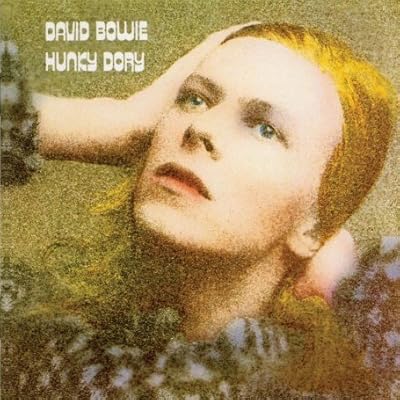
I'm not sure what "absolutely fabulous retro vibe" feels like to people who didn't live through the 70s when they were really happening. I've been through much of Andy Warhol's visual work and I've read his various scribblings — "Diaries," "Philosophy" — but nothing about that Lambert cover reminds me of Andy Warhol. I thought more of David Bowie, but browsing through old Bowie album covers — after looking at Lambert's — they all looked damned subtle and artful to me. Compare:


Tuesday, May 5, 2009

Thursday, September 25, 2008

"The tattoo community sees them as posers. It’s like going out in the 1960s to buy a Beatles wig."

Said Bob Baxter, the editor of the tattoo journal Skin & Ink, of people who get hand or neck tattoos before they've inked up the rest of their bodies.

Why I love this quote:

1. Everything's a "community" these days. There's no escape. The tattoo community. The rugged individualist community. The loner community.

2. Who knew you had to earn your neck tattoo? I'd have thought getting a neck tattoo as opposed to, say, one of those peeping-over-the-pantyline tattoos was a real demonstration of commitment. Ten (or more) years ago I stood in line at the University Bookstore behind a pretty young woman who had a tattoo on her neck of an old-fashioned, claw-footed bathtub -- complete with the extended pipe and shower-head. "Poseur" is not the word that crossed my mind.

3. The simile. It's so inapt! The whole point of a wig is that you don't have to have the hair. It's the equivalent of a fake tattoo. But in another respect, a wig is out there. What man dares to wear a wig? Look at all the men who, balding, shave their heads. They miss their hair, but they still won't wear a wig. In the 60s, guys who wanted the Beatle look but needed a professional style some of the time would comb the front part down as well as they could and not go so long that they couldn't comb it up and over.

4. When I think of an actual wig, I think of Andy Warhol -- look at him here. He was doing something men still won't do. I know there are men who dress up like women and use lady's wigs for that, and there are plenty of women who rely on wigs, but where is the men in men's wigs community, eh?

Sunday, February 24, 2008

"I'm going to kill somebody."

I heard a man say that today. I was walking down the street. A man was standing there, and I heard him mutter that.

DSC07805

(We were just minding our own business. Afterwards, we went to the Museum of Modern Art.)

Tuesday, March 16, 2004

Art, commerce, politics. Last week at the law school we had a discussion about free speech, privacy, and commerce, prompted by an article that proposed limiting the first amendment free speech clause to political speech (to be protected absolutely), realigning personal expression rights with the right of privacy (to be protected subject to balancing), and withdrawing protection for expression that is not political or personal. Commercial speech is the big loser in the realignment. This has left me thinking about not just the way the personal is political but also the way the personal is commercial. Filmmaking, for example, is a huge commercial enterprise. So is TV. The lone artist at his easel or writer with a typewriter is romantic--I'm picturing Johnny Depp in Secret Window. ...

Long interlude taken at this point in the writing to buy several Depp DVDs on Amazon ... Fear and Loathing in Las Vegas, Don Juan De Marco, Dead Man, Benny and Joon (with Mary Stuart Masterson at her easel), and Donnie Brasco .... This art/commerce interlude ties to the point I'm going to make.

The lone artist at his easel or writer with a typewriter is romantic but not the source of the kind of artistic expression most of us spend our time taking in. Where is the line between personal expression and commerce? I think Depp is an immensely individualistic artist, making eccentric choices, yet only appearing in works that are the result of elaborate commercial production, and I'm caught up in the stream of commerce buying the films, but also reaching out to an artistic experience.

And it's not just films, other products are personally defining, even if advertisers push us to define ourselves with products. I had my new iBook on the table during the discussion of free speech and couldn't help feeling personally expressed by it. Earlier that day, one colleague had dropped by to show off her iPod and another to show off a new text-messaging cell phone. Buying clothes, buying a car, choosing a soda. These are also personal expressions. Even if these aren't the loftiest aspects of personal expression, they matter, just like how you cut your hair matters. There's even a political dimension. Andy Warhol said it well:

What's great about this country is that America started the tradition where the richest consumers buy essentially the same things as the poorest. You can be watching TV and see Coca-Cola, and you can know that the President drinks Coke, Liz Taylor drinks Coke, and just think, you can drink Coke. A Coke is a Coke and no amount of money can get you a better Coke than the one the bum on the corner is drinking. All the Cokes are the same and all the Cokes are good. Liz Taylor knows it, the President knows it, the bum knows it, and you know it.