Tennessee House Democrat Steve Cohen was only trying to send a private message, but — like your ordinary-citizen reckless idiot — he released it into his public Twitter feed.
Embarrassing.
But in the modern world, how can people today be expected to sit through a 1-hour speech and not fiddle with their electronic devices? Personally, I would lose my mind.
And by the way, how can all these people — some of them quite old — sit still for 1+ hours? They have to be in their seats in advance and remain there for a while afterwards, so the President can make his big entrance and exit. What percentage of them worried about having to go to the bathroom? How many of them took the precaution of wearing adult diapers? How many of them employed the convenience and relieved themselves?
I don't mean to be rude. I just think it's important to recognize our shared humanity. As Marco Rubio said the other day: "I needed water, what am I going to do? God has a funny way of reminding us we’re human." What about the other end of our hydration-related humanity?
Bob Dylan sang: "Even the President of the United States sometimes must have to stand naked." And I say: Even the members of the United States Congress sometimes must have to pee.
And tweet.
Showing posts with label Dylan. Show all posts
Showing posts with label Dylan. Show all posts
Friday, February 15, 2013

Sunday, February 10, 2013
"A more obviously historic site in Duluth is the Armory" where "Dylan caught Buddy Holly's tour two days before Holly's fatal plane crash."
"Dylan was at the front of the crowd and spoke later of making eye contact with Holly, a moment fans in Duluth think of as a kind of mystical passing of the baton from one rock 'n' roll generation to the next."
From an article about traveling through Bob Dylan's Minnesota.
This post gets my "religion substitutes" tag. That's a pretty creepy example. Why is that worth saying? Poor Buddy Holly died at the age of 22. He was only 5 years older than Dylan. There was no one generation to the next! Buddy Holly only exemplifies the 1950s for us because he didn't make it out alive. But he would have fit in just fine with the 1960s. The Rolling Stones had a hit with "Not Fade Away" in 1964. The Beatles covered "Words of Love":
From an article about traveling through Bob Dylan's Minnesota.
This post gets my "religion substitutes" tag. That's a pretty creepy example. Why is that worth saying? Poor Buddy Holly died at the age of 22. He was only 5 years older than Dylan. There was no one generation to the next! Buddy Holly only exemplifies the 1950s for us because he didn't make it out alive. But he would have fit in just fine with the 1960s. The Rolling Stones had a hit with "Not Fade Away" in 1964. The Beatles covered "Words of Love":
The Beatles' version was recorded on October 18, 1964. John Lennon and Paul McCartney, who were fans of Holly, harmonized on their version, holding to the vocal and instrumental sound of Holly's original as well as they could. When they had played this song in their early days at the Cavern Club in 1961 and 1962, Lennon and George Harrison were the vocalists. Ringo Starr played a packing case on this song as well as drums, to achieve a similar sound to Holly's "Everyday."When that recording was made, Holly would have just turned 28. The Beatles — at the height of their popularity — were doing their best to sound like the man who had died 5 years earlier. Even if you are a soft touch for spiritualistic claptrap, the "baton" was Buddy's to keep, and it's nothing but sad that we didn't get to hear what he would have done in the 1960s.
Friday, February 1, 2013
Steven Tyler appears in drag on "American Idol" and quotes Bob Dylan's "Talkin' World War III Blues."
He came out as if he were the last contestant and maybe it took half a second to recognize the big rock star (who was on the judge's panel last season). The news reports of the little stunt emphasize the drag and the (miniscule) surprise, but even where the lyric is quoted, the attribution to Bob Dylan is missing. Here's the NY Daily News:
Now that you get the reference, is there anything to be made of it? Maybe Dylan was making an in joke at the time and Tyler was referring to that joke. Maybe Tyler wanted to alert us to the threat of nuclear war. Maybe Tyler wanted to wink at Dylan fans. But the best clue I found — as I did a Google search to see if anyone had recognized the Dylan quote — was an article from back in November about friction between Tyler and current-season judge Nicki Manaj. Tyler had said in an interview:
So Steven Tyler had a lot to say, if anybody wants to notice. He's saying we don't get artists like Bob Dylan anymore. The music industry — like NYC after the bomb — is devoid of real people. We're desperate for a human voice. And Nicki Manaj is the embodiment — for all her voluptuous physicality — of emptiness. He was spoofing her, critiquing everything, crying out for real human art, which — for him — Bob Dylan embodies.
But did anyone hear him? He pranced out as a clown. He was dressed as a woman. It resonated in the hollowness that has always been television. In drag, with that wide smile, he even looked like Milton Berle.


IN THE COMMENTS: In this post where I chide others for missing the Dylan reference, Mumpsimus dings me for missing a reference:
"What the, what?" Randy Jackson said when he got a first glimpse of his former co-star on stage.
"My name is Pepper. I'm going to sing a song called 'Tell Your Ma, Tell Your Pa, Our Love Going to Grow, Wah Wah,'" he joked to judging panel. "But before I do I'm going to judge you all (bleeps) first."I'm not finding any news reports that place the lyric — which I have engraved on my brain — in the old Bob Dylan song. "Talkin' World War III Blues" has 12 verses of Bob talking his way through a dream he had about walking through post-nuclear NYC, with all the people gone from the "lonesome town." Here's the 9th verse:
Well, I remember seein’ some adTyler said "Ooh-wah, Ooh-wah," by the way, just like Dylan, not "Wah Wah," as the Daily News would have it.
So I turned on my Conelrad
But I didn’t pay my Con Ed bill
So the radio didn’t work so well
Turned on my record player—
It was Rock-a-day Johnny singin’, “Tell Your Ma, Tell Your Pa
Our Love’s A-gonna Grow Ooh-wah, Ooh-wah”
Now that you get the reference, is there anything to be made of it? Maybe Dylan was making an in joke at the time and Tyler was referring to that joke. Maybe Tyler wanted to alert us to the threat of nuclear war. Maybe Tyler wanted to wink at Dylan fans. But the best clue I found — as I did a Google search to see if anyone had recognized the Dylan quote — was an article from back in November about friction between Tyler and current-season judge Nicki Manaj. Tyler had said in an interview:
“If it was Bob Dylan, Nicki Minaj would have had him sent to the cornfield! Whereas, if it was Bob Dylan with us, we would have brought the best of him out, as we did with Phillip Phillips....”Manaj thereafter tweeted:
“Steven Tyler said I would have sent Bob Dylan to a cornfield??? Steven, you haven’t seen me judge one single solitary contestant yet!”And:
“I understand you really wanted to keep your job but take that up with the producers. I haven’t done anything to you. That’s a racist comment.”Racist because it's against her... or because sending someone "to the cornfield" is a reference to slavery?
“You assume that I wouldn’t have liked Bob Dylan??? why? black? rapper? what? go f— yourself and worry about yourself babe.”To quote Bob Dylan — especially while dressed in a garish blonde wig and big inflated breasts — is to tweak Nicki. Talking blues is related to rap, somewhere in the ancestry. The quoted line, which is talked, is about singing, singing like a rockabilly guy — "Rock-a-day Johnny" — and Tyler was acting as though he were going to sing the song Bob Dylan heard. Dylan is all alone in his dream, looking for company, and in his desperation, he turns on the radio, and then puts on a record, and it's this pop culture idiot, singing nonsense — ooh-wah, ooh-wah —but it's very poignant, because, after the war, Bob is longing for any kind of a voice. In the 10th verse, he calls the telephone number where a recorded voice says the time, and he listens to that voice, repeating the same time — 3 o'clock, the time the war started — for over an hour.
So Steven Tyler had a lot to say, if anybody wants to notice. He's saying we don't get artists like Bob Dylan anymore. The music industry — like NYC after the bomb — is devoid of real people. We're desperate for a human voice. And Nicki Manaj is the embodiment — for all her voluptuous physicality — of emptiness. He was spoofing her, critiquing everything, crying out for real human art, which — for him — Bob Dylan embodies.
But did anyone hear him? He pranced out as a clown. He was dressed as a woman. It resonated in the hollowness that has always been television. In drag, with that wide smile, he even looked like Milton Berle.


IN THE COMMENTS: In this post where I chide others for missing the Dylan reference, Mumpsimus dings me for missing a reference:
"To the cornfield" refers to the SF/Horror story "It's A Good Life" by Jerome Bixby. Or, more likely in this context, to the Twilight Zone episode based on that story.Dust Bunny Queen links to this TZ clip.
Thursday, January 31, 2013
Althouse unfair to F. Scott Fitzgerald?
Midway through my journey of isolating and writing about sentences from "The Great Gatsby," I find myself confronted by one creeley23 — a commenter within the confines of this Althouse blog — who says: "Hmm... rereading the first ten pages of Gatsby I see that Ann is picking klunky, atypical sentences out of the text."
I have chosen things like: "Sometimes a shadow moved against a dressing-room blind above, gave way to another shadow, an indefinite procession of shadows, that rouged and powdered in an invisible glass." And: "A breeze blew through the room, blew curtains in at one end and out the other like pale flags, twisting them up toward the frosted wedding-cake of the ceiling, and then rippled over the wine-colored rug, making a shadow on it as wind does on the sea."
But, in my defense, I have also chosen: "A breeze stirred the gray haze of Daisy’s fur collar." And: "Americans, while occasionally willing to be serfs, have always been obstinate about being peasantry."
Remember, the original idea was:
Here's a way the book could be taught in a high school class. (But maybe they'd fire you!) Class, this is a book with some very weird sentences. Who can find one? Students read individual sentences out loud and the teacher cuts and pastes the sentences, so they are projected on the board. Encourage the students to pull out things that are the most outlandish and impossible to understand. Encourage laughter. Email the list of sentences to the class and have them reply to the email cutting out all but one sentence, the sentence they'd most like to talk about. Quickly read the email and pick a sentence that got a lot of attention. Puzzle through what it might mean with the students so that they appreciate the fun of getting wrapped up inside one sentence. Give them 20 minutes to write about one of the other sentences.
Must they read the book? Tell them they can read the book if they want. But tell them they can go to Wikipedia and read the plot summary and the list of characters there. The idea is to spend time with particular sentences and to figure out why someone would write like that. Must they love F. Scott Fitzgerald? No! They can be like Palladian — the original commenter genius of the Althouse blog — who said:
watchword watchphrase of this blog has long been "cruel neutrality." And, indeed, I see that even before I responded to Original Commenter Genius Palladian, he was responded to by Upstart Commenter Genius betamax3000, who said:
But is today the last day? Is it time to move on to "Paradise Lost" or "The Divine Comedy"?
If the assignment were — in this non-existent high school class — to read straight through "The Great Gatsby," you would know when you were done. The hard task your real teacher tasked you with has a knowable end. It's not interminable, even though the word "ceaselessly" is the 4th-to-the-last word. You get to "ceaselessly" and there's "into the past" and you are done. Your reading of "Gatsby" has receded into the past, like last night's huge, hard-to-digest dinner. You wake up with a stomachache. You can't take too much. You only want to nibble at the edges of some stale ideas, like maybe a blog post, a blog post about one sentence. You can nibble, and — in the comments — you can dribble. Like betamax3000 on last night's "Something was making him nibble" post :
I have chosen things like: "Sometimes a shadow moved against a dressing-room blind above, gave way to another shadow, an indefinite procession of shadows, that rouged and powdered in an invisible glass." And: "A breeze blew through the room, blew curtains in at one end and out the other like pale flags, twisting them up toward the frosted wedding-cake of the ceiling, and then rippled over the wine-colored rug, making a shadow on it as wind does on the sea."
But, in my defense, I have also chosen: "A breeze stirred the gray haze of Daisy’s fur collar." And: "Americans, while occasionally willing to be serfs, have always been obstinate about being peasantry."
Remember, the original idea was:
What I like [about "The Great Gatsby"] is that each sentence is good, on its own. Seriously. Test it out. "As my train emerged from the tunnel into sunlight, only the hot whistles of the National Biscuit Company broke the simmering hush at noon." Every sentence is a writer's inspiration....I didn't start a new blog, obviously, only a daily discipline on this blog. I confess to not proceeding by random selection. But I haven't gone searching for "klunky" sentences. I've flipped around in near-random style, though. I don't use the first thing I see. Opening up Chapter 1 right now, I see "I told him" and "We talked for a few minutes on the sunny porch." These are examples of non-"klunky" sentences that I would reject, but not because I'm gunning for F. Scott. My initial motivation was love. I thought of all the high school students — I remember being one — who were assigned this book and made to read the whole thing. That being the task, the really interesting sentences are speed bumps. They're completely annoying. You can't take the time to figure them out. What should be loved is hated. Later in life, I reread the book and enjoyed it, because of the worthiness of individual sentences.
I feel like starting a blog devoted to individual sentences in "The Great Gatsby," chosen randomly, and continuing until all the sentences have been used up.
Here's a way the book could be taught in a high school class. (But maybe they'd fire you!) Class, this is a book with some very weird sentences. Who can find one? Students read individual sentences out loud and the teacher cuts and pastes the sentences, so they are projected on the board. Encourage the students to pull out things that are the most outlandish and impossible to understand. Encourage laughter. Email the list of sentences to the class and have them reply to the email cutting out all but one sentence, the sentence they'd most like to talk about. Quickly read the email and pick a sentence that got a lot of attention. Puzzle through what it might mean with the students so that they appreciate the fun of getting wrapped up inside one sentence. Give them 20 minutes to write about one of the other sentences.
Must they read the book? Tell them they can read the book if they want. But tell them they can go to Wikipedia and read the plot summary and the list of characters there. The idea is to spend time with particular sentences and to figure out why someone would write like that. Must they love F. Scott Fitzgerald? No! They can be like Palladian — the original commenter genius of the Althouse blog — who said:
Has anyone calculated how long this Gatsby project is going to go on? How many sentences are in the book? How many sentences have been covered so far?I said:
I ask partially out of curiosity and partly because I hate "The Great Gatsby". Why couldn't we have done Chaucer or "Paradise Lost" or something?
I don't think the project asks you to like "The Great Gatsby." It should work for the haters. Bring that hate!Palladian said:
That's true! I think the general tone of the comments on these threads led me to think of them as reverential, but your writing about them is actually neutral and occasionally negative.The
"the Inquisition that goes on forever. Interminably."(That's a quote from the post, which is about a "Gatsby" sentence that includes "interminable inquisitions.")
Ann has gone full Althouse Snow Globe Theory now:And there betamax3000 is quoting himself, from this earlier thread, about one of the least "klunky" sentences that has ever found its way into the "Gatsby" project:
"She sets the Snow Globe with cruel neutrality for us to shake and see patterns from the flitter. There is not the expectation of sentimentality. She is asking us to look, together; however, often there is no resolution, each reader seeing only his own flitter of understanding."
"They knew that presently dinner would be over and a little later the evening, too, would be over and casually put away."When can we put this "Gatsby" project away, like a dinner and an evening consumed blandly and casually in the Midwest, where all the Gatsby characters belong?
"I see now that this has been a story of the West, after all — Tom and Gatsby, Daisy and Jordan and I, were all Westerners, and perhaps we possessed some deficiency in common which made us subtly unadaptable to Eastern life."That's a sentence I've been saving, in my holding pen of sentences — "klunky" and not-"klunky" — that might get the nod some day on this project, and I guess I've given that one the nod today.
But is today the last day? Is it time to move on to "Paradise Lost" or "The Divine Comedy"?
If the assignment were — in this non-existent high school class — to read straight through "The Great Gatsby," you would know when you were done. The hard task your real teacher tasked you with has a knowable end. It's not interminable, even though the word "ceaselessly" is the 4th-to-the-last word. You get to "ceaselessly" and there's "into the past" and you are done. Your reading of "Gatsby" has receded into the past, like last night's huge, hard-to-digest dinner. You wake up with a stomachache. You can't take too much. You only want to nibble at the edges of some stale ideas, like maybe a blog post, a blog post about one sentence. You can nibble, and — in the comments — you can dribble. Like betamax3000 on last night's "Something was making him nibble" post :
Re: "Oh! For a minute there, I saw 'nimble,' and I was flummoxed."Is your tummy feeling better now? Maybe saltines and ginger ale would help. That's what my midwest-born-and-raised mother would offer me when I was feeling queasy. But you've got to eat something. You must go on — ceaselessly, interminably — when the project is one sentence a day. One day at a time. One sentence at a time. One nibble at a time. One blog post at a time.
I like nibble better. Not just because it makes me think of squirrels nibbling on a nosh. I often find myself nibbling at the edge of stale ideas. Of course, it is easier to nibble at the edges when the stale idea is square-shaped, like a behind-the-sofa-cushion Cheez-It: there are corners. Corners are the perfect nibble starters. Plus, Cheez-Its -- and the non-square Cheeto, for that matter -- leave your fingers orangey, like all the best ideas, stale or not.
So one morning when the sun was warm
I rambled out of New York town
Pulled my cap down over my eyes
And headed out for the western skies
So long New York
Howdy, East Orange*.
(*"Even when the East excited me most with sprawling, swollen orange fingers: you're gonna have to take notes faster, friends)
Which brings us back to a point: Naked Dylan Robot would love to hear Fitzgerald try to sing some of Fitzgerald's sentences. Naked Dylan Robot would laugh and laugh.
"Everybody's sturdy physical egotism must get stoned."
"When the winds of changes shift
May your malnourished peremptory heart always be joyful
And may your song always be sung
May you stay forever slightly worn, young man, with shell-rimmed glasses and scanty blond hair."
For a writer whose rep is based in large part on making words sing his words just don't... sing. Maybe Naked Albanian Phonetical Dylan Robot could give a try, but I don't think it would get there. Nor Naked Phoenician Dylan Robot, for that matter*.
(*this is -- of course -- self-contradictory: per Wikipedia "in Phoenician writing, unlike that of most later abjads such as those of Aramaic, Biblical Hebrew and Arabic, even long vowels remained generally unexpressed, and that regardless of their origin". No Naked Dylan Robot of any proud heritage could forsake the long vowels: exps: oooohhhhhmaaa-ma is this reaaaaaaally the eeeeend, etc etc).
Perhaps Naked Dylan Fitzgerald Cow could make a go of the following:
Now you see this one-eyed midget
Shouting the word "MOO
And you say, "For what reason ?"
And he says, "Hoo?"
And you say, "What does this mean ?"
And he screams back, "You're a cow
Give me some milk
Or else go home".
-- but Naked Dylan Fitzgerald Cow is a Talent. And not afraid to nibble, stale or no. Someone should make a Snow Globe for Naked Dylan Fitzgerald Cow: Ann could put it next to her Robot on her desk and take a picture. I would call in sick to work the next day.
Wednesday, January 30, 2013
Forget Beyonce. It will be Bob Dylan entertaining us at Super Bowl half-time.
That's what Tim Heidecker says:
ADDED: The "Infidels" album has a song with the phrase "running out the clock" in it. It's called "Neighborhood Bully," and whatever they tell you about violence in football, it's not about football. It's about Israel. Lyrics here. Audio. Buy it here.
[Dylan] is replacing Beyonce who dropped out after her inauguration lip synching scandal.Song audio at the link. I find this a tad hard to believe. I love old Bob, but I don't picture him in this setting, and I can't imagine Beyonce is so easily embarrassed.
“Running Out The Clock” is a previously unreleased song from Dylan’s 1983 “Infidels” album. I guess it makes sense… the football metaphors and references.
ADDED: The "Infidels" album has a song with the phrase "running out the clock" in it. It's called "Neighborhood Bully," and whatever they tell you about violence in football, it's not about football. It's about Israel. Lyrics here. Audio. Buy it here.
Thursday, January 24, 2013
Saturday, January 19, 2013
"I don’t think we should talk about Lincoln’s underwear..."
"It’s not appropriate for someone so iconic. Even in the bedroom, Lincoln is never shown in his pajamas. He’s in his shirt and pants."
Joanna Johnston, movie costume designer.
"But even the President of the United States/Sometimes must have to stand naked."
Bob Dylan.
"How many Bob Dylan songs have the word 'naked' and how many of them can you name?" I challenge Meade with a Bob Dylan test, as I tend to do when I've done a search at bobdylan.com (as I did for the "It's Alright Ma" quote, above).
Meade immediately says "even the President of the United States sometimes must have to stand naked," then none of the others — not even "You see somebody naked and you say who is that man?" — and makes 2 wrong guesses:

Beards. Fidel Castro made a beard as off limits to an American president — in spite of Lincoln — as Hitler made the mustache. And here I want to go back to that "Becoming Adolf" article by Rich Cohen that were were talking about a couple days ago:
Pick one:


Joanna Johnston, movie costume designer.
***
"But even the President of the United States/Sometimes must have to stand naked."
Bob Dylan.
***
"How many Bob Dylan songs have the word 'naked' and how many of them can you name?" I challenge Meade with a Bob Dylan test, as I tend to do when I've done a search at bobdylan.com (as I did for the "It's Alright Ma" quote, above).
Meade immediately says "even the President of the United States sometimes must have to stand naked," then none of the others — not even "You see somebody naked and you say who is that man?" — and makes 2 wrong guesses:
MEADE: "'Mr. Tambourine Man'... just to dance beneath the naked sky..."In "Motorpsycho Nightmare," Bob Dylan is just trying to get some sleep — no sign that he's sleeping naked — when Rita — "Lookin’ just like Tony Perkins" (i.e., the murderer in "Psycho") importunes him to take a shower. He's freaked out: "Oh, no! no! I’ve been through this [movie] before." Afraid of getting knifed to death, but unwilling to run off unless her father (the farmer) throws him out (because he promised the farmer he'd milk the cows in the morning), his sees his only option as saying "something to strike him very weird." What he says is: "I like Fidel Castro and his beard."
ME: "That's 'diamond sky.'"
MEADE: "The one where the farmer is chasing him out of his house."
ME: "'Motorpsycho Nightmare?' No."
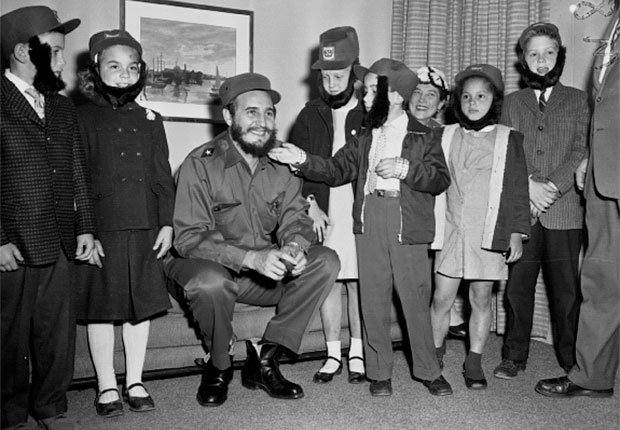
Beards. Fidel Castro made a beard as off limits to an American president — in spite of Lincoln — as Hitler made the mustache. And here I want to go back to that "Becoming Adolf" article by Rich Cohen that were were talking about a couple days ago:
[Y]ou could not wear any kind of mustache after [WWII], because, running from Hitler, you might run into Stalin. Hitler plus Stalin ended the career of the mustache in Western political life. Before the war, all kinds of American presidents wore a mustache and/or beard. You had John Quincy Adams, with his muttonchops...Are we going to decide who deserves out trust based on they look? Come on, Abe. Lose the beard. Okay.
You had Abe Lincoln, whose facial hair...
... like his politics, was the opposite of Hitler's: beard full, lip bare. You had James Garfield, who had the sort of vast rabbinical beard into which whole pages of legislation could vanish.
You had Rutherford B. Hayes...
Grover Cleveland...
... and Teddy Roosevelt, whose asthma and elephant gun were just a frame for his mustache.
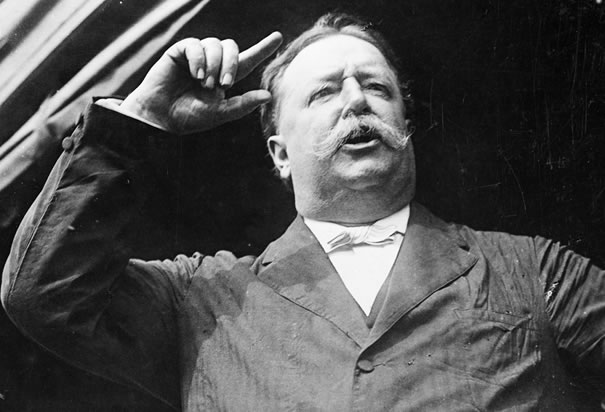
You had William Howard Taft — the man wore a Walrus!
After the war, the few American politicians who still wore a mustache were those who had made their name before Hitler and so had been grandfathered in. Like Thomas Dewey.
Dewey was Eliot Spitzer. He was a prosecutor in New York in the 1930s (and later governor), the only guy with the guts to take on the Mob. For Dewey, the rise of Hitler was a fashion disaster. Because Dewey wore a neat little mustache. Dewey ran for president twice — losing to F.D.R., losing to Truman. In my opinion, without the mustache, the headline in the Chicago Daily Tribune (Dewey Defeats Truman) turns true. One of the few prominent American politicians to wear facial hair in recent memory is Al Gore, who grew a Grizzly Adams beard after he lost to George Bush, in 2000. The appearance of this beard was taken to mean either (1) Gore would never again run for office, or (2) Gore had gone completely mental.
The decision to grow a mustache or a beard is all by itself reason to keep a man away from the nuclear trigger.
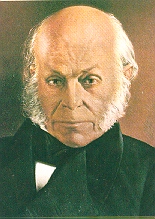

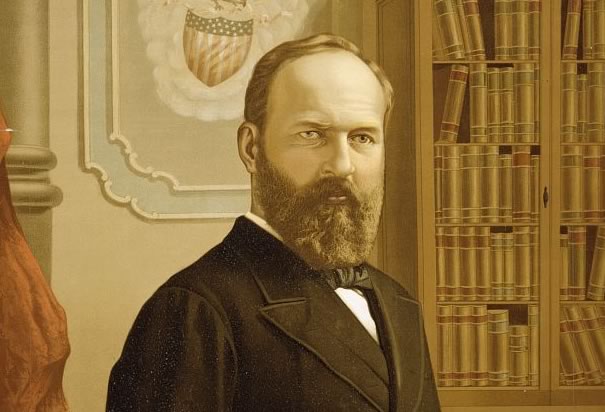


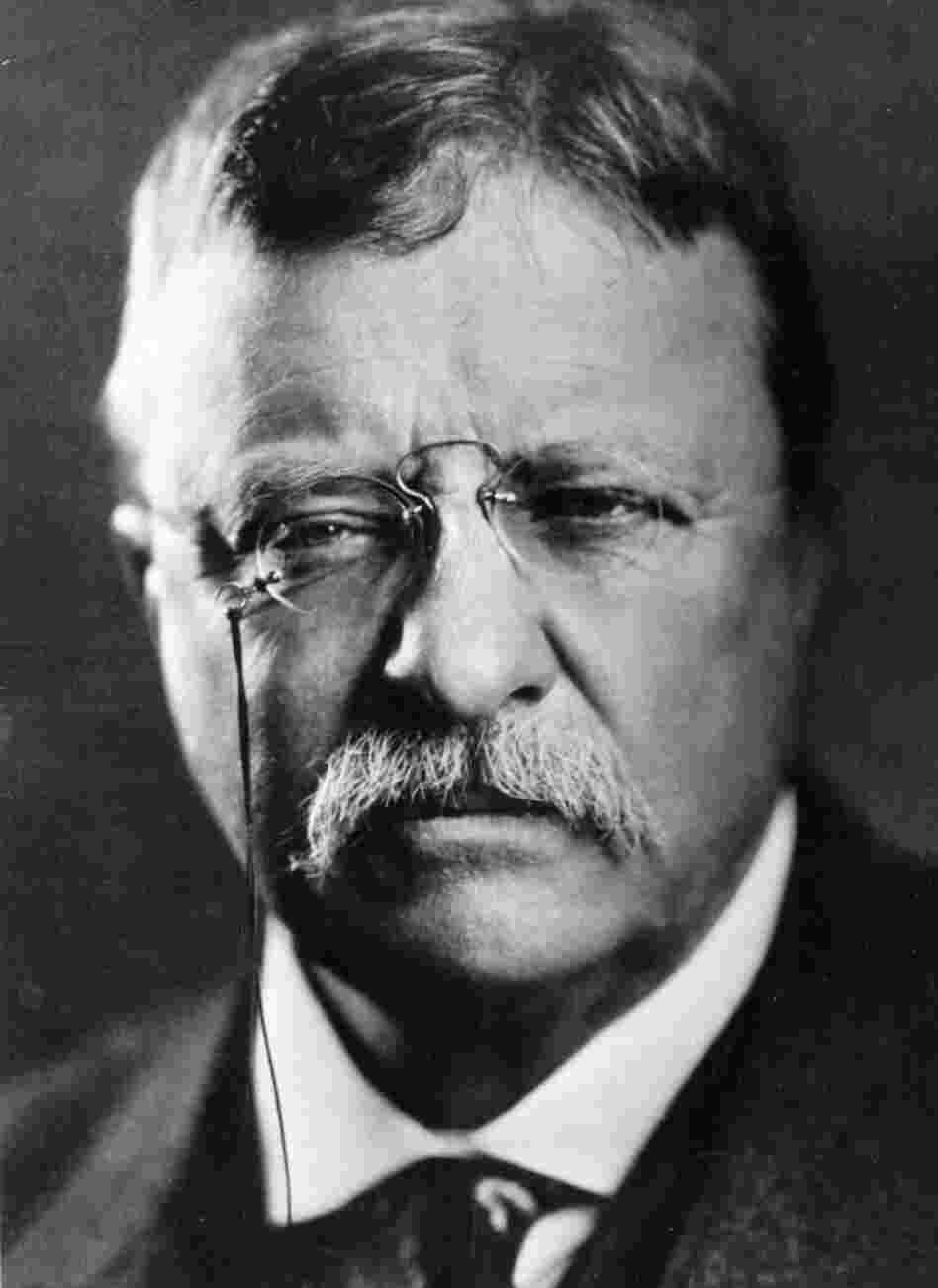


Pick one:


Thursday, January 17, 2013
The use of children in politics — if you find it persuasive, you'd better sharpen up.
Drudge is doing propaganda here:

But it's very heavy-handed propaganda deployed to critique propaganda. You won't slip into falling for Drudge's propaganda, because it's so obvious. It's ridiculous to equate Obama to Hitler and Stalin, but Obama is using a form of propaganda that should be considered not merely ridiculous but repulsive. For us today to see Hitler and Stalin using children is to easily perceive the absurdity of promoting a political agenda juxtaposing it to a lovely, innocent child.
Who falls for that? No one should! The implicit argument the political leader makes, in all 3 of these pictures, is: I'm making the country good for the sake of the children. The child can't vouch for the policies. The child hasn't competently requested anything. The child is merely a prop representing goodness, innocence, and the future.
I've had a "using children in politics" tag for a while. I've made it part of my work here on the blog to notice this phenomenon, to help you see it, and to build widespread resistance to it. Remember the "children of the future" blaming us? The children taught to chant "Hey hey, ho ho, Scott Walker has got to go"? The children delighted by the "Voter Report Card"?
Drudge links to a collection of "Tyrants Who Have Used Children as Props." It's not hard to dig up these things. All politicians pose with children.

Baby-kissing is a campaign cliché.

It's a way of saying: I'm a real person. I'm normal and empathetic.
No reason to condemn that. It's too late to reject the kind of old-fashioned political kitsch that goes in the same category as eating regional food. You know, what Bob Dylan was singing about in "I Shall Be Free":

But it's very heavy-handed propaganda deployed to critique propaganda. You won't slip into falling for Drudge's propaganda, because it's so obvious. It's ridiculous to equate Obama to Hitler and Stalin, but Obama is using a form of propaganda that should be considered not merely ridiculous but repulsive. For us today to see Hitler and Stalin using children is to easily perceive the absurdity of promoting a political agenda juxtaposing it to a lovely, innocent child.
Who falls for that? No one should! The implicit argument the political leader makes, in all 3 of these pictures, is: I'm making the country good for the sake of the children. The child can't vouch for the policies. The child hasn't competently requested anything. The child is merely a prop representing goodness, innocence, and the future.
I've had a "using children in politics" tag for a while. I've made it part of my work here on the blog to notice this phenomenon, to help you see it, and to build widespread resistance to it. Remember the "children of the future" blaming us? The children taught to chant "Hey hey, ho ho, Scott Walker has got to go"? The children delighted by the "Voter Report Card"?
Drudge links to a collection of "Tyrants Who Have Used Children as Props." It's not hard to dig up these things. All politicians pose with children.

Baby-kissing is a campaign cliché.

It's a way of saying: I'm a real person. I'm normal and empathetic.
No reason to condemn that. It's too late to reject the kind of old-fashioned political kitsch that goes in the same category as eating regional food. You know, what Bob Dylan was singing about in "I Shall Be Free":
Now, the man on the stand he wants my voteDon't you eat the bullshit!
He’s a-runnin’ for office on the ballot note
He’s out there preachin’ in front of the steeple
Tellin’ me he loves all kinds-a people
(He’s eatin’ bagels
He’s eatin’ pizza
He’s eatin’ chitlins
He’s eatin’ bullshit!)
Sunday, January 13, 2013
"I was reckless writing about recklessness."
I say, noting that I got quoted over at Instapundit with a missing "it's" apostrophe: "he’s entirely reckless about what these laws would really mean to ordinary people, and its a recklessness that thrives in the mind of someone who...."
"Oh! It's blogging," says Meade. "It's the internet. Think how many times you've gotten it right."
"And it's more embarrassing to get the apostrophe wrong the other way," I soothe myself, referring to putting the apostrophe in "its" when it's supposed to be out.
"It's embarrassing to be embarrassed," Meade asserts aphoristically.
"But I was criticizing recklessness at the very point when I was reckless," I brood nonetheless. "It's like the way whenever you mock a misspelling, you end up misspelling something."
I decide to write this post, which — speaking of blogging — is the antidote to embarrassment.
"Oh! It's blogging," says Meade. "It's the internet. Think how many times you've gotten it right."
"And it's more embarrassing to get the apostrophe wrong the other way," I soothe myself, referring to putting the apostrophe in "its" when it's supposed to be out.
"It's embarrassing to be embarrassed," Meade asserts aphoristically.
"But I was criticizing recklessness at the very point when I was reckless," I brood nonetheless. "It's like the way whenever you mock a misspelling, you end up misspelling something."
I decide to write this post, which — speaking of blogging — is the antidote to embarrassment.
***
On the rooftops they dance
Valentino-type tangos
While the makeup man’s hands
Shut the eyes of the dead
Not to embarrass anyone
The sky is embarrassed
And I must be gone
Saturday, January 12, 2013
"If there were equal justice under the law, what would be the point of being a Very Important Person?"
Asks Glenn Reynolds after quoting me on David Gregory and equal justice under the law.
I'm working on my song parody:
This isn't parody — this is straight from the original "Lonesome Death of Hattie Carroll":
Here, the "noble" David Gregory got special handling, the strings in the books were pulled and persuaded, and the ladder of law obviously has a top.
I'm not saying I want Gregory prosecuted. I only want people to see how unfair it is to have a law that seems ridiculous to enforce against him, when that law is used against others. And Gregory richly deserves to be slapped around on the blogs, because he's making the argument — that's why he was waving that thing around — that there ought to be more invasive gun laws. He wants the government to reach more deeply into the ordinary lives of private citizens, and he's entirely reckless about what these laws would really mean to ordinary people, and it's a recklessness that thrives in the mind of someone who easily and instinctively believed — correctly! — that the law did not apply to him.
And even the nobles get properly handled....
I'm working on my song parody:
David Gregory had a high-capacity ammunition magazineI've parodied that song before (back when William Zantzinger died).
He held it and twirled it 'round his diamond ring finger
At a "Meet the Press" studio society gath’rin’
And the cops weren't called in but the bloggers demanded
That David Gregory should be booked for possession
Take the rag away from your face
Now ain’t the time for your tears....
This isn't parody — this is straight from the original "Lonesome Death of Hattie Carroll":
In the courtroom of honor, the judge pounded his gavelIn David Gregory's case, the cops never even considered chasing him. There will be no judge pounding the gavel, because there will be no prosecution. Bob Dylan was outraged that Zantzinger — Zanzinger, to spell it the Dylan way — got a light sentence. At least he went to trial. And he was convicted.
To show that all’s equal and that the courts are on the level
And that the strings in the books ain’t pulled and persuaded
And that even the nobles get properly handled
Once that the cops have chased after and caught ’em
And that the ladder of law has no top and no bottom
Here, the "noble" David Gregory got special handling, the strings in the books were pulled and persuaded, and the ladder of law obviously has a top.
I'm not saying I want Gregory prosecuted. I only want people to see how unfair it is to have a law that seems ridiculous to enforce against him, when that law is used against others. And Gregory richly deserves to be slapped around on the blogs, because he's making the argument — that's why he was waving that thing around — that there ought to be more invasive gun laws. He wants the government to reach more deeply into the ordinary lives of private citizens, and he's entirely reckless about what these laws would really mean to ordinary people, and it's a recklessness that thrives in the mind of someone who easily and instinctively believed — correctly! — that the law did not apply to him.
And even the nobles get properly handled....
Tuesday, January 8, 2013
"Your average Dylan fan could be excused for not knowing about a new European compilation called The Copyright Extension Collection Vol. 1."
"Only 100 of these four-CD sets even exist, and they've been shipped to a tiny number of stores located in Germany, France, Sweden, and Britain."
Obviously, ultimately, this is a product that will be mass produced. But it's not what Dylan wants to put out now, and it doesn't hurt business, in the long run, to have this enticing rarity out there getting people advance-excited over what is only 86 outtakes from the Times-They-Are-A-Changin' days.
Though it collects Dylan's highly precious unreleased studio outtakes and live recordings from 1962 and 1963, Sony is putting almost no promotion behind the collection....Although this no-promotion thing works as a kind of promotion, viral promotion. But apparently, this release isn't about selling product at all. It's about preserving copyright. After 50 years, if nothing is done with a recording, the European copyright would expire. By doing something — next to nothing — the copyright can be extended for another 20 years. So they put out a 4-CD set — only 100 of them.
Obviously, ultimately, this is a product that will be mass produced. But it's not what Dylan wants to put out now, and it doesn't hurt business, in the long run, to have this enticing rarity out there getting people advance-excited over what is only 86 outtakes from the Times-They-Are-A-Changin' days.
Saturday, January 5, 2013
"The only building in sight was a small block of yellow brick sitting on the edge of the waste land, a sort of compact Main Street ministering to it, and contiguous to absolutely nothing."
The Waste Land... I think of T.S. Eliot's poem, which was published in 1922. Coincidentally, "The Great Gatsby" — the source of the sentence quoted above — is a story that takes place in 1922. F. Scott Fitzgerald began planning "The Great Gatsby" in 1922, and the book was published in 1925. I'm forced to think this sentence is a shout-out to Eliot.
The waste land sits in the middle of a sentence about a building sitting on the edge of that waste land. It's an expansive vista, with one lone building. The building is called a "block," as if it's a child's toy, and it's all alone, because it's the only building in sight. We, the readers, are placed at a vantage point from which we can see this cityscape as a desolate plain, upon which there's that one block. But it's yellow. That's jazzy and hopeful.
What's going on with that building? We're not going to find out in this sentence, and whatever's around it is like a waste land, because we don't talk about the context in this Gatsby project, which is all about taking one sentence out of context, but of course we know there's a great book all around it, and that sentence is not sitting like a yellow block on the edge of a waste land.
I've been ignoring the second half of the sentence for too long. Let's examine the post-waste land segment. Our yellow block is on the edge of a waste land. If it's an edge, could there not be interesting things somewhere else? No. We're told that it's contiguous to absolutely nothing. I'm having a bit of a hard time understanding how the building can be on an edge when everything around it is nothing — absolutely nothing — especially since there's Main Street in the picture too. A sort of compact Main Street ministering to it.
That's a mystery, so I take it we need to get the message: There is a mystery here. Why does a lone yellow-brick building exist in a void and yet receive ministering?
The words building, block, yellow, brick, sitting, edge, waste, sort, compact, main, minister, contiguous, and absolute do not appear in the poem "The Waste Land." Sight and small appear, but not importantly. Land, street, and nothing are all significant:
As Bob Dylan says: "You’ve been through all of F. Scott Fitzgerald’s books/You’re very well read/It’s well known" and "And Ezra Pound and T. S. Eliot/Fighting in the captain’s tower/While calypso singers laugh at them/And fishermen hold flowers."
But you're probably wondering by now, what about that yellow brick? Maybe Fitzgerald was thinking about the yellow brick road in the "The Wizard of Oz" or that Elton John song.
The waste land sits in the middle of a sentence about a building sitting on the edge of that waste land. It's an expansive vista, with one lone building. The building is called a "block," as if it's a child's toy, and it's all alone, because it's the only building in sight. We, the readers, are placed at a vantage point from which we can see this cityscape as a desolate plain, upon which there's that one block. But it's yellow. That's jazzy and hopeful.
What's going on with that building? We're not going to find out in this sentence, and whatever's around it is like a waste land, because we don't talk about the context in this Gatsby project, which is all about taking one sentence out of context, but of course we know there's a great book all around it, and that sentence is not sitting like a yellow block on the edge of a waste land.
I've been ignoring the second half of the sentence for too long. Let's examine the post-waste land segment. Our yellow block is on the edge of a waste land. If it's an edge, could there not be interesting things somewhere else? No. We're told that it's contiguous to absolutely nothing. I'm having a bit of a hard time understanding how the building can be on an edge when everything around it is nothing — absolutely nothing — especially since there's Main Street in the picture too. A sort of compact Main Street ministering to it.
That's a mystery, so I take it we need to get the message: There is a mystery here. Why does a lone yellow-brick building exist in a void and yet receive ministering?
The words building, block, yellow, brick, sitting, edge, waste, sort, compact, main, minister, contiguous, and absolute do not appear in the poem "The Waste Land." Sight and small appear, but not importantly. Land, street, and nothing are all significant:
April is the cruellest month, breeding/Lilacs out of the dead land...So the poem begins. And very near the end:
I sat upon the shoreStreet:
Fishing, with the arid plain behind me
Shall I at least set my lands in order?
"What shall I do now? What shall I do?Nothing:
I shall rush out as I am, and walk the street
With my hair down, so. What shall we do to-morrow?
What shall we ever do?"
“What is that noise?”I really have no idea if F. Scott Fitzgerald was thinking about T.S. Eliot.
The wind under the door.
“What is that noise now? What is the wind doing?”
Nothing again nothing.
“Do
You know nothing? Do you see nothing? Do you remember
Nothing?”
I remember
Those are pearls that were his eyes.
“Are you alive, or not? Is there nothing in your head?”
As Bob Dylan says: "You’ve been through all of F. Scott Fitzgerald’s books/You’re very well read/It’s well known" and "And Ezra Pound and T. S. Eliot/Fighting in the captain’s tower/While calypso singers laugh at them/And fishermen hold flowers."
But you're probably wondering by now, what about that yellow brick? Maybe Fitzgerald was thinking about the yellow brick road in the "The Wizard of Oz" or that Elton John song.
Tuesday, January 1, 2013

Thursday, November 15, 2012
"Back there America was put on the cross, died and was resurrected."
"The godawful truth of that would be the all-encompassing template behind everything that I would write."
Bob Dylan, quoted at Lancaster.com by staff writer Jack Brubaker, on the occasion of the Spielberg movie about Lincoln, in which Tommy Lee Jones plays Thaddeus Stevens, who was "one of Lancaster's most famous sons." The Dylan quote was in Bob's 2004 memoir "Chronicles, Volume One" — hey, where's Volume 2? — in which he writes about the effect of reading a biography of Thaddeus Stevens.
Bob Dylan, quoted at Lancaster.com by staff writer Jack Brubaker, on the occasion of the Spielberg movie about Lincoln, in which Tommy Lee Jones plays Thaddeus Stevens, who was "one of Lancaster's most famous sons." The Dylan quote was in Bob's 2004 memoir "Chronicles, Volume One" — hey, where's Volume 2? — in which he writes about the effect of reading a biography of Thaddeus Stevens.
Friday, November 9, 2012
An orchestra of outdated printing equipment plays Bob Dylan's "Times They Are A-Changin'."
Warning: it is an ad.
Here's a video about making the ad:
Maybe you think an artist should hold himself above commercial advertising. I'm not especially puritanical on the subject, but I don't like to see the artist's most holy songs sold out. It hurt me circa 1980 when Orange Slice — was it Orange Slice? — used "Good Vibrations." But "The Times They Are A-Changin'" is not the most sacred Dylan. And it kind of always was an advertisement. And when I think what are his holiest, unsell-out-able works, I have a hard time. If some glue company did something with "Stuck Inside of Mobile..." I think I would laugh.
PRINTER ORCHESTRA from Chris Cairns on Vimeo.
Here's a video about making the ad:
Maybe you think an artist should hold himself above commercial advertising. I'm not especially puritanical on the subject, but I don't like to see the artist's most holy songs sold out. It hurt me circa 1980 when Orange Slice — was it Orange Slice? — used "Good Vibrations." But "The Times They Are A-Changin'" is not the most sacred Dylan. And it kind of always was an advertisement. And when I think what are his holiest, unsell-out-able works, I have a hard time. If some glue company did something with "Stuck Inside of Mobile..." I think I would laugh.
Tuesday, November 6, 2012
Bob Dylan in Madison: "We tried to play good tonight since the president was here today."
"Don’t believe the media. I think it’s going to be a landslide."
Spoken from the stage last night in Madison, in the middle of his encore song "Blowin' in the Wind."
Which squarely contradicts my late-night post about Bob Dylan's concert: "And not a word... not a word... about politics. No imploring us to vote for Obama. Or even to vote."
I loved the absence of politics, and I believe/have believed that Bob Dylan has almost entirely avoided politics since the early 1960s. I can see a way to say his quote about Obama is enigmatic, sardonic, and in some real way nonpolitical: Don't believe what they're telling you in the newspapers. A sound and distanced observation. Etc.
But no subtle interpretation can undo my over-strong "not a word." So I have to confess that Meade and I have been to a lot of Bob Dylan concerts. We know he will do one encore. We even knew it would be "Blowin' in the Wind." Halfway through it, we slipped out into the night. We zipped right out of there.
Far between sundown’s finish an’ midnight’s broken toll
We ducked outside the doorway, snowflakes drifting...
It was as if they saw us leave. Good! Althouse and Meade are gone. Now we can talk about politics.
IN THE COMMENTS: Many of you say that "I think it’s going to be a landslide" is ambiguous. Especially after "Don't believe the media." And the idea of trying to "play good" because the President was in town is kind of comical — playing at being deferential to authority. He never says Obama's name, and that landslide might go toward the other guy. This reminds me of an old law school anecdote: The famous old professor says: "It's obvious how this case will be decided." And the young lawprof says: "Yes, but which way is it obvious?"
Chip Ahoy said it best:
Spoken from the stage last night in Madison, in the middle of his encore song "Blowin' in the Wind."
Which squarely contradicts my late-night post about Bob Dylan's concert: "And not a word... not a word... about politics. No imploring us to vote for Obama. Or even to vote."
I loved the absence of politics, and I believe/have believed that Bob Dylan has almost entirely avoided politics since the early 1960s. I can see a way to say his quote about Obama is enigmatic, sardonic, and in some real way nonpolitical: Don't believe what they're telling you in the newspapers. A sound and distanced observation. Etc.
But no subtle interpretation can undo my over-strong "not a word." So I have to confess that Meade and I have been to a lot of Bob Dylan concerts. We know he will do one encore. We even knew it would be "Blowin' in the Wind." Halfway through it, we slipped out into the night. We zipped right out of there.
Far between sundown’s finish an’ midnight’s broken toll
We ducked outside the doorway, snowflakes drifting...
It was as if they saw us leave. Good! Althouse and Meade are gone. Now we can talk about politics.
IN THE COMMENTS: Many of you say that "I think it’s going to be a landslide" is ambiguous. Especially after "Don't believe the media." And the idea of trying to "play good" because the President was in town is kind of comical — playing at being deferential to authority. He never says Obama's name, and that landslide might go toward the other guy. This reminds me of an old law school anecdote: The famous old professor says: "It's obvious how this case will be decided." And the young lawprof says: "Yes, but which way is it obvious?"
Chip Ahoy said it best:
Uh, excuse me, how do you extract "I think Obama will win in a landslide" from "I think there will be a landslide."And I defend our walking out:
I know what you're going to say.
There is a sentence before that and another sentence after following and those three sentences together add up to an Obama endorsement and I say they do not. I am interpreting them as I go and those are three separate things. Not that I care, it's that sometimes everyone around me is wrong and I'm the only one around who thinks otherwise and as much as I'd like to stay a quiet little church mouse I am compelled to be a pillar of strength momentarily, stand up and say so.
Actually, the way Dylan uses "Blowin' in the Wind" suggests he means it as a closing-credits/filing-out-of-the-theater song. The show was over at "Watchtower" and you're supposed to go home, you're not leaving, and he comes back to say: okay, here's that famous oldie, now get outta here.
Monday, November 5, 2012
Thanks to Bob Dylan... for a fabulous concert here in Madison tonight.

And not a word... not a word... about politics. No imploring us to vote for Obama. Or even to vote.
UPDATE: You know I could be wrong....
Thursday, November 1, 2012
Obama, Springsteen, and Bob Dylan converge on Madison next Monday.
Obama and Springsteen are arriving as a team. Obama, sans Springsteen, was just here last month, but apparently he thinks this city needs more prompting, this time with Springsteen added. Springsteen was here in '04 with the Democratic nominee, John Kerry. And the state did, in fact, go for Kerry.
Meanwhile, Bob Dylan will be in town on the same day, not in anyone's tow and with no politicians in tow, but along with Mark Knofpler.
Meanwhile, Bob Dylan will be in town on the same day, not in anyone's tow and with no politicians in tow, but along with Mark Knofpler.
Friday, October 26, 2012
Camille Paglia, who voted for Obama in '08, delivers a fine rant about why she's not voting for him this time.
She's interviewed on video here, by Glenn Reynolds. Most of the interview is about art in America and her new book "Glittering Images" (which I just bought, in Kindle). But in the end, she's asked why she's not voting for Obama — she's voting for Jill Stein — and out flow the words, which I started transcribing without knowing how long she'd go on. I kept transcribing, because it was all such great material, so here it is (with a few screen grabs, taken from the art section of the interview):

Yes, this hope for racial transformation got squandered early, over that awful Henry Louis Gates incident. Back to Paglia:


Yes. Exactly. This is how the Democratic Party lost me — by trading freedom for statism.
I was very excited about him. I thought he was a moderate. I thought that his election would promote racial healing in the country.This is the point at which I started transcribing, thinking: This is how I felt, when I voted for Obama in 2008. Except I wouldn't say I was "very excited." I wasn't caught up in the ecstasy. I thought it was the better bet, compared to the GOP alternative, and I hoped for the moderation and advancement in attitudes about race.
It would be a tremendous transformation of attitudes. And instead: one thing after another. Not least: I consider him, now, one of the most racially divisive and polarizing figures ever. I think it's going to take years to undo the damage to relationships between the races.

Yes, this hope for racial transformation got squandered early, over that awful Henry Louis Gates incident. Back to Paglia:
But beyond that, I am just sick and tired of endless war. I was in favor of bombing the hell out of the Afghanistan mountains after 9/11, but I would have never agreed to this land war in Afghanistan, this endless land war, as well as things like this Libyan incursion that Obama appears to have been pushed into by these women, like Hillary Clinton and Samantha Power, the chaos in foreign policy, the bowing to foreign leaders.

Also the Obamacare: of course, we need health care reform in this country. What a mess! Everyone agrees about that. But the Obamacare is, to me, a Stalinist intrusion — okay? — into American culture.

The creation of this culture of surveillance, from these bureaucracies, which is also carried over into Obama's endorsement of drones on the military level as well as for police control of the population. I mean, I don't understand how any... veteran of the 1960s who's a Democrat could not see the dangers here, that Obama is a statist. It's exactly what Bob Dylan was warning about in "Subterranean Homesick Blues," okay?I paused the video at "It's exactly what Bob Dylan was warning about" and asked Meade what song she's about to name, and he said "Masters of War," and I said "That's what I thought." But it's "Subterranean Homesick Blues," and as soon as she says it, we know why. (Look out kid/They keep it all hid/Better jump down a manhole/Light yourself a candle...)
You don't want government agencies being empowered to intrude into people's lives like this. The controlling force in Obamacare is the IRS! Okay? This flies in the face of what the Free Speech Movement was about at Berkeley or about any of the values, I feel, of my generation.

Yes. Exactly. This is how the Democratic Party lost me — by trading freedom for statism.
So I feel the Democratic Party needs to be shattered and remade to recover its true progressive roots. I don't see progressives. All I see is white upper-middle-class liberals who speak in this unctuous way about the needs of the poor.Unctuous. Yes. White upper-middle-class liberals lubricating themselves.
They have no connection whatever with the working class. Okay? It's the professional class gone amok. And that's why they don't notice what a bureaucratic nightmare Obamacare is.
Thursday, October 25, 2012
"The Emptiest Candidate in Presidential Election History: Mitt Romney truly believes in nothing."
They've got nothing on him, so they call him nothing. Ah, well, Obama's opponents call him Zero. that makes it Nothing vs. Zero.
***
Too much of nothing
Can turn a man into a liar
It can cause one man to sleep on nails
And another man to eat fire
Ev’rybody’s doin’ somethin’
I heard it in a dream
But when there’s too much of nothing
It just makes a fella mean
***
"I have heard what the prophets say who prophesy lies in my name. They say, ‘I had a dream! I had a dream!’ How long will this continue in the hearts of these lying prophets, who prophesy the delusions of their own minds?"
Subscribe to:
Posts (Atom)
 :.
:.
