Pages

Labels

Showing posts with label the History of. Show all posts

Tuesday, February 26, 2013

"The Danish people were amongst those known as the Vikings during the 8th–11th centuries...."

"The Danish Vikings were most active in Britain, Ireland, France, Spain, Portugal and Italy where they raided, conquered and settled (their earliest settlements included sites in the Danelaw, Ireland and Normandy)...."
Paris was besieged and the Loire Valley devastated during the 10th century. One group of Danes were granted permission to settle in northwestern France under the condition that they defend the place from future attacks. As a result, the region became known as "Normandy" and it was the descendants of these settlers who conquered England in 1066.

In addition, the Danes and Norwegians moved west into the Atlantic Ocean, settling on Iceland, Greenland, and the Shetland Isles. Brief Vikings expeditions to North America around 1000 did not result in any settlements and they were soon driven off by natives....

The Danes were united and officially Christianized in 965 AD by Harald Bluetooth... In retaliation for the St. Brice's Day massacre of Danes in England, the son of Harald, Sweyn Forkbeard mounted a series of wars of conquest against England. By 1014, England had completely submitted to the Danes.
Sweyn Forkbeard... in Denmark, today's "History of" country.

Monday, February 25, 2013

"The Kingdom of Bohemia was, as the only kingdom in the Holy Roman Empire, a significant regional power during the Middle Ages...."

"In 1212, King Přemysl Ottokar I... extracted the Golden Bull of Sicily (a formal edict) from the emperor, [declaring] that the Czech king would be exempt from all future obligations to the Holy Roman Empire except for participation in imperial councils..." 
King Přemysl Ottokar II earned the nickname "Iron and Golden King" because of his military power and wealth. He acquired Austria, Styria, Carinthia and Carniola, thus spreading the Bohemian territory to the Adriatic Sea. He met his death at the Battle on the Marchfeld in 1278 in a war with his rival, King Rudolph I of Germany. Ottokar's son Wenceslaus II acquired the Polish crown in 1300 for himself and the Hungarian crown for his son. He built a great empire stretching from the Danube river to the Baltic Sea. In 1306, the last king of Přemyslid line was murdered in mysterious circumstances in Olomouc while he was resting.
In the place that is now called the Czech Republic, today's "History of" country.

Friday, February 22, 2013

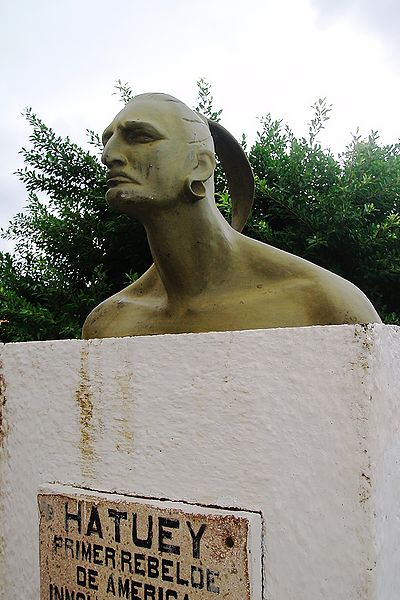
"In 1511, Diego Velázquez de Cuéllar set out from Hispaniola to form the first Spanish settlement in Cuba..."

"... with orders from Spain to conquer the island. The settlement was at Baracoa, but the new settlers were to be greeted with stiff resistance from the local Taíno population. The Taínos were initially organized by cacique (chieftain) Hatuey, who had himself relocated from Hispaniola to escape the brutalities of Spanish rule on that island. After a prolonged guerrilla campaign, Hatuey and successive chieftains were captured and burnt alive, and within three years the Spanish had gained control of the island. In 1514, a settlement was founded in what was to become Havana."

In Cuba, today's "History of" country.

Thursday, February 21, 2013

"Croatian romantic nationalism emerged in mid-19th century to counteract the apparent Germanization and Magyarization of Croatia."

"The Illyrian movement attracted a number of influential figures from 1830s on, and produced some important advances in the Croatian language and culture. In the Revolutions of 1848 Croatia, driven by fear of Magyar nationalism, supported the Habsburg court against Hungarian revolutionary forces."

In Croatia, today's "History of" country (wherein we read the Wikipedia "history" pages of the world's 206 countries.)

Tuesday, February 19, 2013

"Côte d'Ivoire officially became a French colony on March 10, 1893."

"French colonial policy incorporated concepts of assimilation and association. Assimilation presupposed the inherent superiority of French culture over all others, so that in practice the assimilation policy in the colonies meant extension of the French language, institutions, laws, and customs.... Under [the policy of association], the Africans in Ivory Coast were allowed to preserve their own customs insofar as they were compatible with French interests. An indigenous elite trained in French administrative practice formed an intermediary group between the French and the Africans.... As subjects of France they had no political rights. Moreover, they were drafted for work in mines, on plantations, as porters, and on public projects as part of their tax responsibility."

In Côte d'Ivoire – Ivory Coast — today's country in the "History of" project, wherein we read the Wikipedia "History of" page for each of the world's 206 countries, in alphabetical order. Next up? Here's a clue:

Saturday, February 16, 2013

"Costa Rica was described as 'the poorest and most miserable Spanish colony in all America' by a Spanish governor in 1719."

This occurred because Costa Rica was all the way south in the Captaincy General of Guatemala and forbidden to trade with the Viceroyalty of New Granada (to its south), and it lacked gold and silver and an indigenous population to do forced labor. In the long run — if I am to believe the presentation on the Wikipedia "History of Costa Rica" page — this all worked out for the best:
... Costa Rica was by and large unappreciated and overlooked by the Spanish Crown and left to develop on its own. The small landowners' relative poverty, the lack of a large indigenous labor force, the population's ethnic and linguistic homogeneity, and Costa Rica's isolation from the Spanish colonial centers in Mexico and the Andes all contributed to the development of an autonomous and individualistic agrarian society. Even the Governor had to farm his own crops and tend to his own garden due to the poverty that he lived in. An egalitarian tradition also arose. Costa Rica became a "rural democracy" with no oppressed mestizo or indigenous class.
(In the "History of" project on this blog, we're going through the Wikipedia "History of" pages for all the 206 countries in the world, in alphabetical order.) 

Friday, February 15, 2013

In 1491, King Nzinga a Nkuwu was baptized as the first Christian Kongolese king João I.

This happened after Captain Diogo Cão — on a mission from  King John II of Portugal — discovered the mouth of the Congo River and the Kingdom of Kongo and found the local nobility amenable to Christianity. Today, this place is called the Republic of the Congo, and it is today's "History of" country.

Wednesday, February 13, 2013

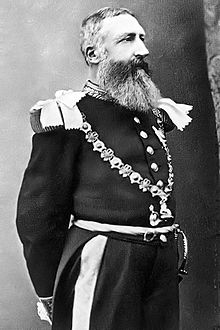
"The Congo Free State was a corporate state privately controlled by Leopold II, King of the Belgians...."

"Under Leopold II's administration, the Congo Free State became the site of one of the most infamous international scandals of the turn of the twentieth century. The report of the British Consul Roger Casement led to the arrest and punishment of white officials who had been responsible for cold-blooded killings during a rubber-collecting expedition in 1903, including one Belgian national for causing the shooting of at least 122 Congolese natives. Estimates of the total death toll vary considerably. In the absence of a census, the first was made in 1924, it is even more difficult to quantify the population loss of the period. Roger Casement's famous 1904 report estimated ten million people. According to Casement's report, indiscriminate 'war,' starvation, reduction of births and tropical diseases caused the country's depopulation."

The Congo Free State included all of what is now the Democratic Republic of the Congo, which is our "History of" country today.

Monday, February 11, 2013

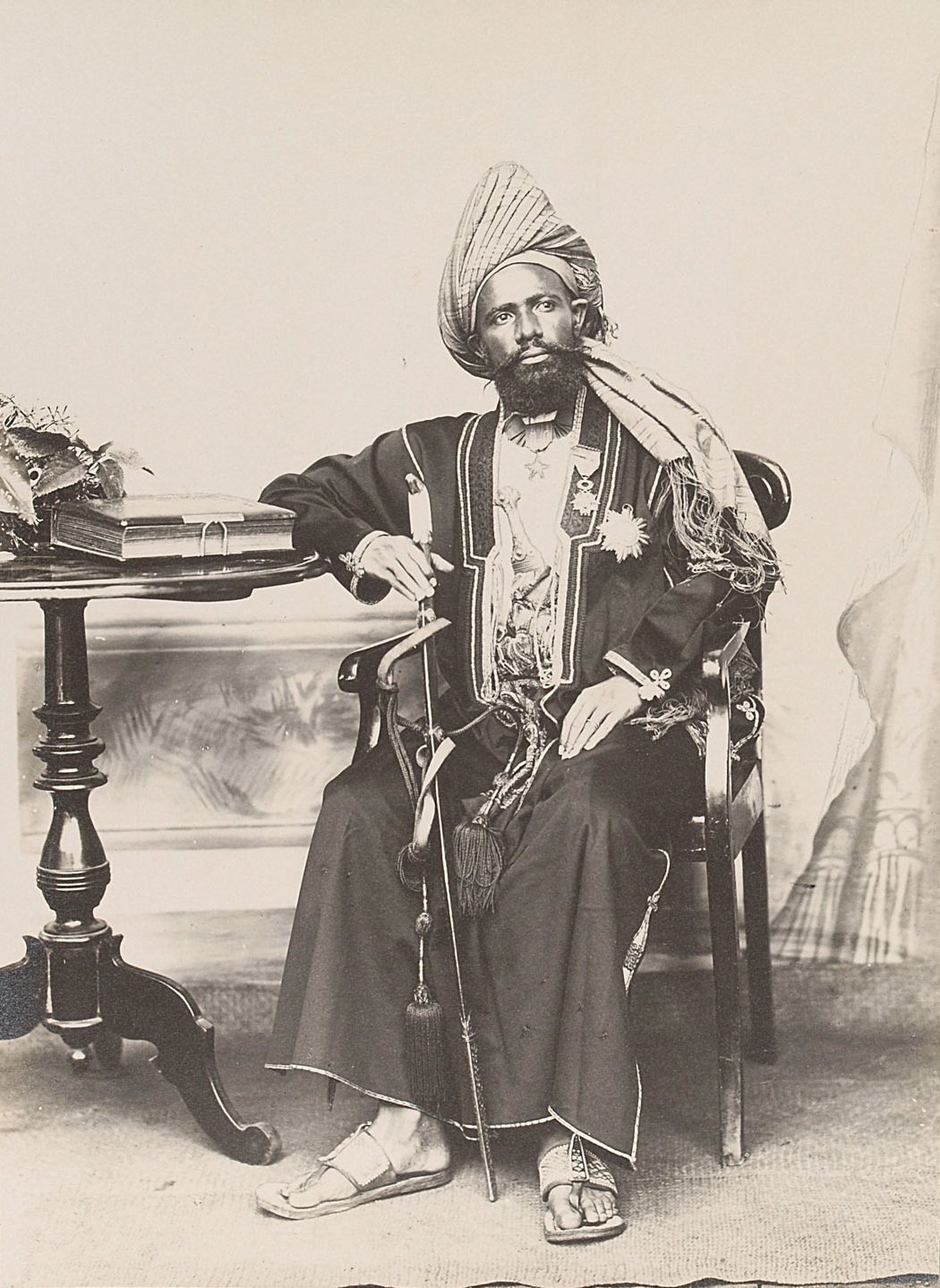
"The history of Comoros goes back some 1,500 years."

"According to myth, the Comoros islands were first visited by Phoenician sailors. The earliest inhabitants of the islands were probably Arabs and Africans, the latter probably Bantu-speaking... The most notable of these early immigrants were the Shirazi Arab royal clans, who arrived in Comoros in the 15th and 16th centuries and stayed to build mosques, create a royal house and introduce architecture and carpentry."

Comoros — it's some little islands near Madagascar — is today's "History of" country.

Sunday, February 10, 2013

"Beginning in the first millennium AD, groups of Amerindians developed a political system, the cacicazgo, a pyramidal power structure headed by a cacique."

"Within Colombia, the two cultures with the most complex cacicazgo systems were the Tayronas in the Caribbean region, and the Muiscas in the highlands near Bogotá, both of which belonged to the Chibchan language family. The Muisca people had one of the most developed political systems in South America, surpassed only by the Incas."

In Colombia, today's "History of" country.

Saturday, February 9, 2013

"The conventional view of Chinese history is that of alternating periods of political unity and disunity..."

"... with China occasionally being dominated by steppe peoples, most of whom were in turn assimilated into the Han Chinese population. Cultural and political influences from many parts of Asia, carried by successive waves of immigration, expansion, and cultural assimilation, are part of the modern culture of China."

Today's "History of" country is China, a country with so much history, it makes my "History of" project — in which we go in alphabetical order and read the Wikipedia page for the "History of" each of the 206 countries in the world — more absurd than usual. I've devised a few strategies for getting through these posts. Maybe go for the picture that appeals to me....


I could pick a sentence or so that seems to embody as much of the story as possible (above) or pull something out that seems distant and strange yet compelling...
In the 8th century BC, power became decentralized during the Spring and Autumn period, named after the influential Spring and Autumn Annals.... The Spring and Autumn Period is marked by a falling apart of the central Zhou power. In each of the hundreds of states that eventually arose, local strongmen held most of the political power and continued their subservience to the Zhou kings in name only. Some local leaders even started using royal titles for themselves. China now consisted of hundreds of states, some of them only as large as a village with a fort.

The Hundred Schools of Thought of Chinese philosophy blossomed during this period, and such influential intellectual movements as Confucianism, Taoism, Legalism and Mohism were founded, partly in response to the changing political world.
There are other strategies....

Wednesday, February 6, 2013

"The Kanem Empire originated in the 9th century AD to the northeast of Lake Chad."

"Historians agree that the leaders of the new state were ancestors of the Kanembu people. Toward the end of the 11th century the Sayfawa king (or mai, the title of the Sayfawa rulers) Hummay, converted to Islam. In the following century the Sayfawa rulers expandeded southward into Kanem, where was to rise their first capital, Njimi. Kanem's expansion peaked during the long and energetic reign of Mai Dunama Dabbalemi (c. 1221–1259)."


In Chad, today's "History of" country.

Tuesday, February 5, 2013

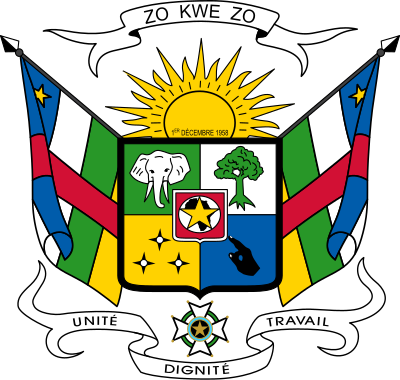
"The territory of modern Central African Republic is known to have been settled from at least the 7th century on by overlapping empires..."

"... including the Kanem-Bornu, Ouaddai, Baguirmi, and Dafour groups based on the Lake Chad region and along the Upper Nile. Later, various sultanates claimed present-day CAR, using the entire Oubangui region as a source of slave, from which slaves were traded north across the Sahara Desert."

Today's "History of" country is the Central African Republic.

Saturday, February 2, 2013

"When the British evacuated New York City in 1783, they took many Loyalist refugees to Nova Scotia..."

"... while other Loyalists went to southwestern Quebec. So many Loyalists arrived on the shores of the St. John River that a separate colony — New Brunswick — was created in 1784..."
... followed in 1791 by the division of Quebec into the largely French-speaking Lower Canada (French Canada) along the St. Lawrence River and Gaspé Peninsula and an anglophone Loyalist Upper Canada, with its capital settled by 1796 in York, in present-day Toronto. After 1790 most of the new settlers were American farmers searching for new lands; although generally favorable to republicanism, they were relatively non-political and stayed neutral in the War of 1812....

"[English Canada] inherited, not the benefits, but the bitterness of the Revolution. It got no shining scriptures out of it. It got little release of energy and no new horizons of the spirit were opened up. It had been a calamity, pure and simple. And to take the place of the internal fire that was urging Americans westward across the continent there was only melancholy contemplation of things as they might have been and dingy reflection of that ineffably glorious world across the stormy Atlantic. English Canada started its life with as powerful a nostalgic shove backward into the past as the Conquest had given to French Canada: two little peoples officially devoted to counter-revolution, to lost causes, to the tawdry ideals of a society of men and masters, not to the self-reliant freedom alongside of them."
Today's "History of" country is Canada.

Thursday, January 31, 2013

"Legend has it that in 802 CE, Jayavarman II, king of the Khmers, first came to the Kuhlen hills, the future site of Angkor Wat."

"Later, under Jayavarman VII (1181–ca. 1218), Khmer reached its zenith of political power and cultural creativity. Jayavarman VII gained power and territory in a series of successful wars. Khmer conquests were almost unstoppable as they raided home cities of powerful seafaring Chams.... Following Jayavarman VII's death, Khmer experienced a gradual decline.... The Angkorian monarchy survived until 1431...."

In Cambodia, today's "History of" country.

Wednesday, January 30, 2013

"European explorers and missionaries.... compared the organisation of the kingdom of Burundi with that of the old Greek empire."

"It was not until 1899 that Burundi became a part of German East Africa."
Unlike the Rwandan monarchy, which decided to accept the German advances, the Burundian king Mwezi IV Gisabo opposed all European influence, refusing to wear European clothing and resisting the advance of European missionaries or administrators. The Germans used armed force and succeeded in doing great damage, but did not destroy the king’s power. Eventually they backed one of the king's sons-in-law Maconco in a revolt against Gisabo. Gisabo was eventually forced to concede and agreed to German suzerainty.....
With WWI, Belgium took over, running things "through indirect rule, building on the Tutsi-dominated aristocratic hierarchy." Independence came in 1962, and "Tutsi King Mwambutsa IV Bangiriceng established a constitutional monarchy comprising equal numbers of Hutus and Tutsis." Horrific events follow.

In Burundi, today's "History of" country.

Tuesday, January 29, 2013

"Soon after the fall of Ava, a new dynasty rose in Shwebo to challenge the authority of Hanthawaddy."

"Over the next 70 years, the highly militaristic Konbaung dynasty went on to create the largest Burmese empire, second only to the empire of Bayinnaung."

Empires and dynasties galore in the history of Burma, our "History of" country today.

Monday, January 28, 2013

"From medieval times until the end of the 19th century, the region of Burkina Faso was ruled by the empire-building Mossi people..."

"... who are believed to have come up to their present location from northern Ghana, where the ethnically-related Dagomba people still live. For several centuries, Mossi peasants were both farmers and soldiers; as the Mossi Kingdoms successfully defended their territory, indigenous religious beliefs, and social structure against forcible attempts to conquer or convert them to Islam by Muslim peoples from the northwest."

Burkina Faso is today's "History of" country.


More recently, children of the 1983-1987 revolution: 

Sunday, January 27, 2013

"Under Boris I, Bulgarians became Christians..."


"... and the Ecumenical Patriarch agreed to allow an autonomous Bulgarian Archbishop at Pliska. Missionaries from Constantinople, Cyril and Methodius..."


"... devised the Glagolitic alphabet, which was adopted in the Bulgarian Empire around 886.... In the early 9th century, a new alphabet — Cyrillic — was developed at the Preslav Literary School, adapted from the Glagolitic alphabet invented by Saints Cyril and Methodius...."

In Bulgaria, today's "History of" country.
In the following centuries Bulgaria established itself as a powerful empire, dominating the Balkans through its aggressive military traditions, which led to development of distinct ethnic identity. Its ethnically and culturally diverse people united under a common religion, language and alphabet which formed and preserved the Bulgarian national consciousness despite foreign invasions and influences.