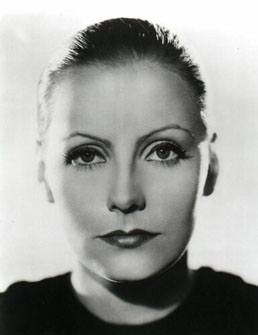
"... and Charlize Theron’s, perhaps best described as 'ice-cold daggers hurled directly from the eyeballs.'"
Showing posts with label actress. Show all posts
Monday, February 25, 2013
"The Internet in its wisdom has provided GIFs of the best reactions" to the Oscar song-and-dance routine "We Saw Your Boobs"...
"... including Naomi Watts’, perhaps best described as 'the death of a smile'..."

"... and Charlize Theron’s, perhaps best described as 'ice-cold daggers hurled directly from the eyeballs.'"
Labels:
actress,
breasts,
Oscars,
Seth McFarlane
Saturday, February 23, 2013
Speaking of being called to a higher law and speaking of speaking....
In the previous post, we're talking about what Jesus wrote in the sand and what he said out loud, in the New Testament story where the scribes and Pharisees present Jesus with the question of what to do with a woman who was caught in the act of adultery. In the Gospel text, we're told Jesus that wrote on the ground, but not what he wrote, and we're told that he subsequently spoke and said "Let him who is without sin among you be the first to throw a stone at her."
I'm putting up a separate post because I found the scene that sydney said he loved in the movie "The King of Kings." Made in 1927, it's a silent movie, so no one is saying anything out loud. We see what Jesus says written out on the intertitles, and we also see what he writes in the sand.
Beautiful filmmaking, particularly as the sand-words, not written in Roman letters, transform into our English words, naming the sins that the men in the crowd realize they've committed, and that's why they all turn and walk away.
That's not an accurate depiction of what happens in the biblical text though. The movie shows a mob on the verge of stoning the woman and Jesus intervenes and announces his rule about casting the first stone. Only thereafter, does he write the names of the sins in the sand. But in the Bible story, there is no angry mob with stones in hand. There are scribes and Pharisees demanding that Jesus deliver a legal opinion. Jesus bends down and writes on the ground instead of answering the question. Only after they persist does he stand up and pronounce his new rule, which causes the scribes and Pharisees to walk away — "beginning with the older ones." The movie would have you see the members of the mob acknowledging their sins and their consequent lack of qualification to cast the first stone. But the text has intellectuals trying to box Jesus in on a question of law, and Jesus getting the better of a conversation he didn't want to have in the first place.
It's not surprising that a movie plays up the visible drama, and it's also not surprising that when I — a law professor — read the text, I see something akin to a law school class. The professors try to stump the student and the student transcends their tricky game. To me, the part where Jesus bends over and writes in the sand is like what happens in a law school class when the lawprof poses a difficult hypothetical and the students bend their heads down and go through motions of writing. They don't want to answer. It's not that they're writing something magically revelatory and startling. But if the lawprof keeps pushing and calls on someone, an answer will be spoken out loud.
I guess the law-professorly interpretation of the text isn't terribly cinematic. It's no wonder the movies present an angry mob with stones in hand and Jesus miraculously knowing and changing the hearts of the sinners. (And the adulteress is an actress evincing exactly the form of sexiness that was fashionable in the year the movie was made. I love the eyeliner!)
But to me the lawprof interpretation is thrilling and dramatic. The professors think they've got the upper hand. They know the legal text and it's tough. And then the brilliant student who will soon be the greatest professor of all gets on top of the dialogue and says something they must accept as correct: If you're going to have strict rules and severe mechanisms of enforcement, you must apply them equally to everyone. This is the structural safeguard of equal protection of the laws that is the necessary component of a democratic system. If there can't be exceptions and special treatment for preferred people, legislatures will resist imposing harsh rules and painful punishments.
In this context, let me give you my favorite Justice Scalia quote, which happens to include one of the key words of Christianity: "Our salvation is the Equal Protection Clause, which requires the democratic majority to accept for themselves and their loved ones what they impose on you and me."
I'm putting up a separate post because I found the scene that sydney said he loved in the movie "The King of Kings." Made in 1927, it's a silent movie, so no one is saying anything out loud. We see what Jesus says written out on the intertitles, and we also see what he writes in the sand.
Beautiful filmmaking, particularly as the sand-words, not written in Roman letters, transform into our English words, naming the sins that the men in the crowd realize they've committed, and that's why they all turn and walk away.
That's not an accurate depiction of what happens in the biblical text though. The movie shows a mob on the verge of stoning the woman and Jesus intervenes and announces his rule about casting the first stone. Only thereafter, does he write the names of the sins in the sand. But in the Bible story, there is no angry mob with stones in hand. There are scribes and Pharisees demanding that Jesus deliver a legal opinion. Jesus bends down and writes on the ground instead of answering the question. Only after they persist does he stand up and pronounce his new rule, which causes the scribes and Pharisees to walk away — "beginning with the older ones." The movie would have you see the members of the mob acknowledging their sins and their consequent lack of qualification to cast the first stone. But the text has intellectuals trying to box Jesus in on a question of law, and Jesus getting the better of a conversation he didn't want to have in the first place.
It's not surprising that a movie plays up the visible drama, and it's also not surprising that when I — a law professor — read the text, I see something akin to a law school class. The professors try to stump the student and the student transcends their tricky game. To me, the part where Jesus bends over and writes in the sand is like what happens in a law school class when the lawprof poses a difficult hypothetical and the students bend their heads down and go through motions of writing. They don't want to answer. It's not that they're writing something magically revelatory and startling. But if the lawprof keeps pushing and calls on someone, an answer will be spoken out loud.
I guess the law-professorly interpretation of the text isn't terribly cinematic. It's no wonder the movies present an angry mob with stones in hand and Jesus miraculously knowing and changing the hearts of the sinners. (And the adulteress is an actress evincing exactly the form of sexiness that was fashionable in the year the movie was made. I love the eyeliner!)
But to me the lawprof interpretation is thrilling and dramatic. The professors think they've got the upper hand. They know the legal text and it's tough. And then the brilliant student who will soon be the greatest professor of all gets on top of the dialogue and says something they must accept as correct: If you're going to have strict rules and severe mechanisms of enforcement, you must apply them equally to everyone. This is the structural safeguard of equal protection of the laws that is the necessary component of a democratic system. If there can't be exceptions and special treatment for preferred people, legislatures will resist imposing harsh rules and painful punishments.
In this context, let me give you my favorite Justice Scalia quote, which happens to include one of the key words of Christianity: "Our salvation is the Equal Protection Clause, which requires the democratic majority to accept for themselves and their loved ones what they impose on you and me."
Labels:
actress,
adultery,
Equal Protection Clause,
Jesus,
law,
law school,
lawprofs,
makeup,
misreadings,
movies,
Scalia,
sin,
speaking,
students,
sydney,
too much drama,
writing
Tuesday, November 27, 2012
Saturday, April 23, 2011
Recreating an old reality show, with actors playing the parts of the real people...
... who once lived their supposedly real lives in front of the cameras.
Is this something we want to watch now, or do we feel sorry for actors who are stuck with roles like this? Why not watch the original show, "An American Family," which aired in 1973?
HBO's "Cinema Verite" makes me feel the way I felt about the movie "Frost/Nixon." The original is still available. What's the point of actors imitating them? Presumably, there can be some different angles on what was really happening, but, most likely, we'll just be more aware of the phoniness of acting than we usually are.
Meanwhile, speaking of HBO, I'm struggling through the 5 episodes of the mini-series "Mildred Pierce." (I'm not watching alone, but I'm saying "I'm struggling," because I'm the one with the will to watch, and Meade mainly has this thing of hanging out with me when I'm watching one of my shows, which is something I also do for him sometimes (read: sports).)
Now, "Mildred Pierce," isn't the recreation of something that happened in reality, but it is the recreation of an old and (for some people) very familiar movie. Kate Winslet is playing Joan Crawford. Now, it's not the same as watching Faye Dunaway play Joan Crawford in "Mommie Dearest," because both Joan and Kate were playing this fictional entity Mildred, but, come on. It was Joan Crawford. Winslet has the challenge of getting us to not think about Crawford.
Now, Kate's doing a fine job of not being Joan Crawford, but... the real thing here is melodrama, and Joan was more truly melodramatic, which means that Kate, by trying to be more authentically human, gives us a less genuine melodrama.
Is this something we want to watch now, or do we feel sorry for actors who are stuck with roles like this? Why not watch the original show, "An American Family," which aired in 1973?
HBO's "Cinema Verite" makes me feel the way I felt about the movie "Frost/Nixon." The original is still available. What's the point of actors imitating them? Presumably, there can be some different angles on what was really happening, but, most likely, we'll just be more aware of the phoniness of acting than we usually are.
Meanwhile, speaking of HBO, I'm struggling through the 5 episodes of the mini-series "Mildred Pierce." (I'm not watching alone, but I'm saying "I'm struggling," because I'm the one with the will to watch, and Meade mainly has this thing of hanging out with me when I'm watching one of my shows, which is something I also do for him sometimes (read: sports).)
Now, "Mildred Pierce," isn't the recreation of something that happened in reality, but it is the recreation of an old and (for some people) very familiar movie. Kate Winslet is playing Joan Crawford. Now, it's not the same as watching Faye Dunaway play Joan Crawford in "Mommie Dearest," because both Joan and Kate were playing this fictional entity Mildred, but, come on. It was Joan Crawford. Winslet has the challenge of getting us to not think about Crawford.
Now, Kate's doing a fine job of not being Joan Crawford, but... the real thing here is melodrama, and Joan was more truly melodramatic, which means that Kate, by trying to be more authentically human, gives us a less genuine melodrama.
Tuesday, April 12, 2011
"I had many love affairs — and a lot of awful lovers. I wasn't into 'sexscapades' but I did try it once. I had three people in one day."
Says Shirley MacLaine. Who were these "people" — as she calls them? Not Jack Lemmon:
Song lyric evoked:
'I wasn't attracted to Jack Lemmon. He was a sweetheart. He didn't have that dangerous, complicated sexual thing that I liked helping the man I was attracted to figure out.Authentically dangerous... is too much. Presumably, Lemmon wasn't even inauthentically dangerous. It's so hard for a fellow to get into exactly the right zone.
"Jack Nicholson had too much of it. He is authentically dangerous."
I had quite a relationship with Robert Mitchum. And Yves Montand...So there you have it. That's the zone. Robert Mitchum. (And Yves Montand...)
Song lyric evoked:
Can I have your autograph?
He said to the fat blonde actress
You know, I've seen every movie you've been in
From "Paths of Pain" to "Jewels of Glory"
And when you kissed Robert Mitchum
Gee, but I thought you'd never catch him
You're over the hill right now, and you're looking for love...
Sunday, February 27, 2011
Oscars, anyone?
I haven't seen any of the movies, but I'm DVR-ing the show and will dip in from time to time. You can talk about it here and I might say something now and then.
For example, Jennifer Hudson has a smashing dress.
UPDATE: Man, this show sucks so bad.
UPDATE2: I'm IM-ing with my son Chris. I write: "is any celebrity saying anything pro-union or in support of the wisconsin protesters?" And he's all:
For example, Jennifer Hudson has a smashing dress.
UPDATE: Man, this show sucks so bad.
UPDATE2: I'm IM-ing with my son Chris. I write: "is any celebrity saying anything pro-union or in support of the wisconsin protesters?" And he's all:
haven't heard anythingLOL.
oh gwyneth paltrow mentioned you
in the middle of the song
she stopped and said you know ann althouse
needs to stop criticizing those protestors
Thursday, February 10, 2011
"Halle Berry may have chosen the wrong words but she makes the right point."
"It is important to read past her ugly custody case to have a larger conversation about race (one the baby's father apparently does not want to have). Her daughter will have to choose a racial identity, the way she had to choose a racial identity. In America, that means it will probably be chosen, at least in part, by the way people react to her. In America, her skin color (black or white) will be something that people use to define her. I applaud Halle Berry's courage, if not her choice of words. When she says, 'I believe in the one drop theory,' of course, she does not mean to endorse racism. But she does have the courage to do something so few Americans can: talk about race."
Either that or she's using whatever weapons she finds at hand as she fights for what she wants in her child custody battle.
Labels:
actress,
children,
law,
race and law,
race and pop culture,
racial politics
Sunday, December 19, 2010
"I've been texting for a year with a couple of guys without ever going on a date with them."
"The other day I got a text from a boy, but it wasn't hot. I mean, if you're going to text me every day, you haven't seen me for months and you're trying to seduce me, you'd better spice up that text and make it more exciting than 'How was your day? I hope you're having a beautiful one.' Sadly, I haven't been doing a lot of kissing lately."
Chloe Sevingny.
Chloe Sevingny.
Labels:
actress,
kissing,
relationships,
text messaging
Saturday, December 4, 2010
The movie we watched last night.
"Rebecca."
I'd seen it before, but others here hadn't. I'd forgotten some of the details, but I remembered the key surprises. So I wallowed in the old-fashioned acting, especially Joan Fontaine moving her eyebrows asymmetrically in a way that only a comic actress today would use...
"Rebecca" won the best picture Oscar in 1940, beating "The Grapes of Wrath." I guess people preferred watching the melodramatically exaggerated travails of rich people in gigantic houses more than they liked watching the melodramatically exaggerated travails of poor people in gritty hovels.
I'd seen it before, but others here hadn't. I'd forgotten some of the details, but I remembered the key surprises. So I wallowed in the old-fashioned acting, especially Joan Fontaine moving her eyebrows asymmetrically in a way that only a comic actress today would use...
"Rebecca" won the best picture Oscar in 1940, beating "The Grapes of Wrath." I guess people preferred watching the melodramatically exaggerated travails of rich people in gigantic houses more than they liked watching the melodramatically exaggerated travails of poor people in gritty hovels.
Sunday, October 17, 2010
What's with powerful women and thick bumpers of bangs?
Drudge is — I think — implicitly asking with this alignment of photographs:

What drives intelligent women to that hairstyle? Are they thinking something like I don't want those feathery bangs...

... or the classic Louise Brooks straight-across look...

... but I can't have my forehead just out there to be gazed at!

What's wrong with foreheads? Is it that the forehead symbolizes the mind, and a woman can't have you looking straight at that? The intelligence must be filtered. There must be a buffer zone of femininity, so there must be some hair veiling the forehead — the theory seems to be. But why the bumper look that we see in the Drudge trio of Angela Merkel, Condoleezza Rice, and Maureen Dowd?

What drives intelligent women to that hairstyle? Are they thinking something like I don't want those feathery bangs...
... or the classic Louise Brooks straight-across look...
... but I can't have my forehead just out there to be gazed at!
What's wrong with foreheads? Is it that the forehead symbolizes the mind, and a woman can't have you looking straight at that? The intelligence must be filtered. There must be a buffer zone of femininity, so there must be some hair veiling the forehead — the theory seems to be. But why the bumper look that we see in the Drudge trio of Angela Merkel, Condoleezza Rice, and Maureen Dowd?
Tuesday, August 31, 2010
"What Audrey does in 'Breakfast at Tiffany’s' is not uninteresting, but it is far from the modern woman..."
"... even the one introduced to American audiences in the persons of Bette Davis, Irene Dunne, Margaret Sullavan, the other Hepburn (though she could talk herself into a self-centered corner, too), Carole Lombard, Rosalind Russell, Jean Arthur, as well as Barbara Stanwyck. Instead Audrey rather resembles her physical antithesis Marilyn Monroe (who wanted to play Holly) in that they have very distinctive voices, but not voices that are good for talking to people."
Questioning "the chilly yet unlived-in gamine glamour of Audrey Hepburn."
Tuesday, August 24, 2010
"The bogusity of the New York Times' story about how technology leads more park visitors into trouble."
Nice takedown by Jack Shafer. (But isn't the correct spelling "bogosity"? Try saying it. I know the adjective is "bogus," but people don't say "bogusity." They might say "bogusness," but not "bogusity.")
Anyway, the problem is something that's common to journalism about trends (including that ridiculous Daily Caller piece about blog payola). A headline declaring a trend gets readers' attention, but then you need a lot of examples of the things that constitute the trend. The writer has some things that look like a trend, but he's got to beef up the article with more examples or it's not a trend. But he's itching to get to trend!!!! so he includes things that don't really fit, and then the whole thing looks stupid.
It's really annoying for the reader, because the trend!!!! declaration worked, and you've already read it and rewarded the website with traffic before you realize it's not quite a trend. What can you do? Resolve not to read trend pieces anymore? But then you still see the headline and it makes the impression that there is a trend!!!! and now you're been deprived of the evidence that there isn't a trend.
Now, I'm reading the comments at the Shafer piece and see that some of his readers are pouncing on the "bogusity/bogosity" spelling issue. I'm glad to see that others share my priorities. There's also this from one "nerdnam":
Hmm. That People article no longer contains the information about tweeting that is referred to here:
Anyway, the problem is something that's common to journalism about trends (including that ridiculous Daily Caller piece about blog payola). A headline declaring a trend gets readers' attention, but then you need a lot of examples of the things that constitute the trend. The writer has some things that look like a trend, but he's got to beef up the article with more examples or it's not a trend. But he's itching to get to trend!!!! so he includes things that don't really fit, and then the whole thing looks stupid.
It's really annoying for the reader, because the trend!!!! declaration worked, and you've already read it and rewarded the website with traffic before you realize it's not quite a trend. What can you do? Resolve not to read trend pieces anymore? But then you still see the headline and it makes the impression that there is a trend!!!! and now you're been deprived of the evidence that there isn't a trend.
Now, I'm reading the comments at the Shafer piece and see that some of his readers are pouncing on the "bogusity/bogosity" spelling issue. I'm glad to see that others share my priorities. There's also this from one "nerdnam":
Well, what's her name's plastic surgeon just died after driving off a cliff immediately after twittering a picture of his dog at the beach. The dog survived, luckily. So I see a trend here.Oh?! "Heidi Montag Mourns Death of Her Plastic Surgeon." Oh, lord, look at the expression on her face! Isn't it ironic? You plastic-surgerize — what's the verb for "surgery"? — somebody's face and then you die and her face is incapable of looking convincingly sad. Her gigantic breasts don't look sad either, but they make it into the People Magazine photograph, and because they stand as monuments to your work, that's not ironic at all.
Hmm. That People article no longer contains the information about tweeting that is referred to here:
According to People, Dr. Frank Ryan's jeep Wrangler careened off of the Pacific Coast Highway on Monday....One more dubiously technology-related death. Maybe confirmations from former girlfriends don't cut it anymore.
People later reported that Ryan's former girlfriend confirmed that his accident was caused by texting and driving. He had posted a Twitter message about hiking with his dog just before the accident. The dog survived the crash.
Labels:
actress,
breasts,
death,
headlines,
Jack Shafer,
journalism,
plastic surgery,
slang,
spelling
Subscribe to:
Posts (Atom)