Showing posts with label T.C. Boyle. Show all posts
Showing posts with label T.C. Boyle. Show all posts
Saturday, October 20, 2012

Friday, February 6, 2009
"We are both architects in a way. We both deal with structure, we are both artists, and we are both egomaniacs. I have worn a cape."
"There is where we end."
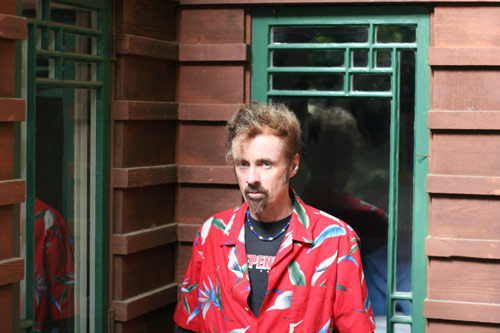
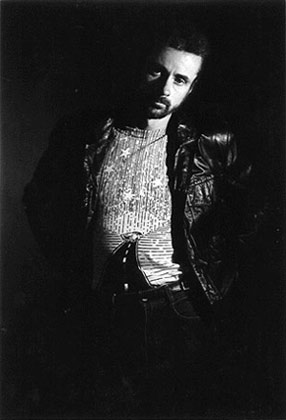
Says T.C. Boyle about Frank Lloyd Wright, the subject of his new novel. Boyle actually lives in a Wright house, the George C. Stewart House in Montecito. Here's a photo of the house, and looking closely at the windows, I believe this portrait of Boyle at his website shows a detail of the house. Here's another portrait of Boyle from his website. I think it's interestingly phallic.
ADDED: If you buy the book — "The Women" — using this link, you will be making a contribution to this blog (without paying extra).
Says T.C. Boyle about Frank Lloyd Wright, the subject of his new novel. Boyle actually lives in a Wright house, the George C. Stewart House in Montecito. Here's a photo of the house, and looking closely at the windows, I believe this portrait of Boyle at his website shows a detail of the house. Here's another portrait of Boyle from his website. I think it's interestingly phallic.
ADDED: If you buy the book — "The Women" — using this link, you will be making a contribution to this blog (without paying extra).
Saturday, July 29, 2006
Drive talk.
Driving across the continent this week, I listened to the satellite radio for hours and hours. Around Madison, I stay with the music channels most of the time, but on this long trip, I needed the talk channels to keep me going. And there's only so much news I can take, and I gravitated to non-news talk shows. My heart always lifted when "This American Life" came on, as it does more than once a day on the XM Public Radio channel. I also got through long stretches of highway listening to interviews with artists. On one of the comedy channels, there was a long, absorbing session with Carlos Mencia, who's really smart as well as funny. Then there was a great hour with a musician whose name I can't recall, one of The Pacers -- not Sonny Burgess. He had memories of Sun Studio in the golden days and so much heart, so much love for rockabilly music. (Don't you love rockabilly music?) And then there was a Public Radio interview that I stumbled into the end of and then heard on repeat from the beginning.
It was T.C. Boyle, whose crushingly depressive quote bugged me the other day. Some blogger criticized that post for making everything political, even though all that bothered me was the repulsive pessimism, and it occurred to me later that the blogger who criticized me -- he's linked in the linked post -- was not only ridiculously hypocritical -- he was the one seeing politics everywhere -- but he had also made an embarrassing concession about the political vision of the left: It feels like depression.
Anyway, on the radio, T.C. Boyle didn't seem like a depressing guy at all. He seemed perfectly energized, bubbling with ideas. In fact, he reminded me of blogging. He said he got his ideas from reading the newspaper, finding some little thing that touched off his thinking and taking it from there.
What reminded me that I wanted to say I really like Boyle is seeing this NYT review of "Talk Talk," the book I heard him talking about on the radio.
ADDED: You can buy a download of the interview with Boyle here.
It was T.C. Boyle, whose crushingly depressive quote bugged me the other day. Some blogger criticized that post for making everything political, even though all that bothered me was the repulsive pessimism, and it occurred to me later that the blogger who criticized me -- he's linked in the linked post -- was not only ridiculously hypocritical -- he was the one seeing politics everywhere -- but he had also made an embarrassing concession about the political vision of the left: It feels like depression.
Anyway, on the radio, T.C. Boyle didn't seem like a depressing guy at all. He seemed perfectly energized, bubbling with ideas. In fact, he reminded me of blogging. He said he got his ideas from reading the newspaper, finding some little thing that touched off his thinking and taking it from there.
What reminded me that I wanted to say I really like Boyle is seeing this NYT review of "Talk Talk," the book I heard him talking about on the radio.
These jubilant portrayals of the loathsome and the lunkheaded have earned Boyle a reputation as a satirist, but the truth is more complicated. His outsize attack may at first glance appear surreal and excessive. In fact, this is 21st-century naturalism. Boyle depicts his whirling, pestilential world like an amused, not unaffectionate Hieronymus Bosch, graphically detailing the 31 flavors of greed.Hey, wait a second! How did Scalia get into the review?! And talk about seeing politics everywhere!
He doesn’t remake the thriller in “Talk Talk” — that’s a tall and probably superfluous order. But without being too explicit, let’s say that he does engineer an ending unusual for a genre in which writers tend to administer justice like Antonin Scalia, displaying little sympathy for the criminal element. More than 20 years ago, in the story “Greasy Lake,” Boyle wrote, “There was a time when courtesy and winning ways went out of style, when it was good to be bad, when you cultivated decadence like a taste.” With T. C. Boyle, thankfully, such times have never gone out of fashion. No one writes better about the wages of American sin. Or, if not wages exactly, sin purchased on credit, and that probably stolen.
ADDED: You can buy a download of the interview with Boyle here.
Thursday, July 20, 2006
"Do you really think anything is ever going to get better as long as there are 6.2 billion people?"
"Don’t you see that the wars we are fighting now are for resources? It’s just going to get worse; it’s utterly tragic and I have no solution. I’ve been writing about this for a long time.”
I want to like novelists. Really, I do. For example, T.C. Boyle. I read him sometimes. That is to say: I subordinate my mind to his and let his thoughts become my thoughts. But then I read quotes like this, and it sets me to wondering all over again about this practice of reading novels. They're written by novelists, you know.
ADDED: Roy thinks I'm objecting to Boyle's politics. He specializes in calling me an idiot, in numerous posts, but he never seems to begin to understand my writing. Here, he comes to the defense of writers. But do writers even want to be defended by a man who is such a poor reader?
I want to like novelists. Really, I do. For example, T.C. Boyle. I read him sometimes. That is to say: I subordinate my mind to his and let his thoughts become my thoughts. But then I read quotes like this, and it sets me to wondering all over again about this practice of reading novels. They're written by novelists, you know.
ADDED: Roy thinks I'm objecting to Boyle's politics. He specializes in calling me an idiot, in numerous posts, but he never seems to begin to understand my writing. Here, he comes to the defense of writers. But do writers even want to be defended by a man who is such a poor reader?
Monday, March 8, 2004
 Drop City ... Gloria. I drove in to work this morning listening to an NPR interview with T.C. Boyle, who talked about being really a rock star at heart, forced to be a writer for lack of musical talent. (Hey, that's the way I feel about being a law professor! At least there's a live audience.)
[I]n Drop City, the Van Morrison song "Mystic Eyes" is used to underscore the novel's central conflict between a hippie commune in Alaska and the locals they incense.
I'm going to read that. Me, I liked the early Van Morrison, before his name was known, and he was just Them. I bought the first Them single when it came out ("Here Comes the Night"). It wasn't quite the sort of thing I liked at the time, but it was close enough, and it was clearly good. "Gloria" was even better.
 So let me say something about "Gloria," which relates to the single best moment of musical performance I ever witnessed live. It was the mid-1970s, in Greenwich Village, in a small music club that was called The Metropolitan (or something close to that). We had gone to see the folk duo Happy and Artie Traum, whom we liked a lot at the time--this is a good folky album--and were dismayed to see that there was an opening act, and it was just some poet who was going to do a reading. That didn't seem right, and I came close to leaving and coming back later so I wouldn't have some idiot's poetry inflicted on me. Well, the poet was Patti Smith, and there was a guitarist sitting in a chair behind her, sort of aimlessly, quietly noodling, while she recited her poetry in the singsongish way typical of beatnik poets. At some point, it became more like singing, and then, somewhere down the line, with the participation of the guitarist, it became "Gloria." That was the coolest thing ever. A version of her Gloria, appears on the album pictured here. I have that album in a frame on my living room wall.
Subscribe to:
Posts (Atom)
 :.
:.