From the February 16, 2013 Amazon Associates Earnings Report:
Mario Kart Racing Wheel for Wii (2pcs Bundle) (Bulk Packaging) by Ebest (Earnings to the Althouse blog = $0.97)
85704 Campus.org Poly Color Jackets - 6 Pack, Assorted Colors by Smead (Earnings to the Althouse blog = $0.45)
LifeStraw Personal Water Filterby Vestergaard-Frandsen (Earnings to the Althouse blog = $1.84)
ch ching:
T-fal Actifry Low-Fat Multi-Cooker (Earnings to the Althouse blog = $16.72 )
Microsoft Office Home and Business 2013 (1PC/1User) [Download] (Earnings to the Althouse blog = $17.60)
Hoover Linx Cordless Stick Vacuum Cleaner (Earnings to the Althouse blog = $11.92 )
... and 28 other items purchased — at no additional cost to the buyers. Or as Barack might say, "Nothing about using the Althouse Amazon portal tonight should increase your family budget deficit by a single dime."
Only I'm not even lying.
So suck it up, load it down, fry it deep, sip it slow. If you like it, you better put a jacket on it. And WEEE!!! Thank you.
Showing posts with label Obama. Show all posts
Showing posts with label Obama. Show all posts
Sunday, February 17, 2013

Tuesday, December 25, 2012
"The more I study the history of intellectuals, the more they seem like a wrecking crew, dismantling civilization bit by bit — replacing what works with what sounds good."
Writes Thomas Sowell, in a column called "On Christmas, Liberals Are By No Means Liberal."
Here's the documentary about Jonestown. And here's Sowell's excellent book "Intellectuals and Society."
After watching a documentary about the tragic story of Jonestown, I was struck by the utterly unthinking way that so many people put themselves completely at the mercy of a glib and warped man, who led them to degradation and destruction. And I could not help thinking of the parallel with the way we put a glib and warped man in the White House.Wow. That's harsh.
Here's the documentary about Jonestown. And here's Sowell's excellent book "Intellectuals and Society."
Monday, November 19, 2012
About those states that are opting to set up the Obamacare health insurance exchanges.
It won't be easy! Consider California:
Under the federal law, the state-run exchange aims to fundamentally reshape the health insurance market by negotiating with insurers for the best rates and assisting consumers in choosing a plan. The exchange must also help millions of Californians figure out whether they qualify for an expansion of Medicaid, the government insurance for the poor, or federally subsidized private coverage....Recreational soccer leagues? Bloggers popular with Latino mothers? Health insurance plotlines on "Modern Family"? Does that sound like the way an insanely huge, complex, and comprehensive program will successfully penetrate a vast population quickly and pervasively? Oh, but the billions in federal dollars is such an incentive! Except that if you don't succeed, you won't get that money....
[If California doesn't get enough people enrolled, it] could lose billions in federal dollars and insurance premiums could soar. The task is daunting, given the size and diversity of California's population, said Paul Fearer, an exchange board member. "It's critical to get it right," he said....
[In] focus groups of consumers recently in San Diego and Sacramento[, o]nly about 20%... had even heard of the exchange....
About half of California's 7 million uninsured are Latinos, according to the exchange. To reach those who are eligible for coverage, the state may sponsor professional and recreational soccer leagues and court bloggers popular with Latino mothers. Officials also may hit up Hollywood to get TV shows such as "Modern Family" or "Grey's Anatomy" to weave the health insurance expansion into their scripts.
Thursday, October 25, 2012
"Ayn Rand is one of those things that a lot of us, when we were 17 or 18 and feeling misunderstood, we'd pick up."
"Then, as we get older, we realize that a world in which we're only thinking about ourselves and not thinking about anybody else, in which we're considering the entire project of developing ourselves as more important than our relationships to other people and making sure that everybody else has opportunity – that that's a pretty narrow vision. It's not one that, I think, describes what's best in America. Unfortunately, it does seem as if sometimes that vision of a 'you're on your own' society has consumed a big chunk of the Republican Party."
Said Barack Obama.
Said Barack Obama.
Sunday, October 21, 2012
"Tragically, it seems the president feels boxed in by his blackness."
"It has, at times, been painful to watch this particular president’s calibrated, cautious and sometimes callous treatment of his most loyal constituency... African-Americans will have lost ground in the Obama era."
Email from Tavis Smiley to NYT reporter Jodi Kantor, quoted in "For President, a Complex Calculus of Race and Politics."
Email from Tavis Smiley to NYT reporter Jodi Kantor, quoted in "For President, a Complex Calculus of Race and Politics."
Wednesday, October 3, 2012
Lots of talk about Romney winning.
I'm just scanning the web (and listening to the TV commentators). Romney certainly seemed to be trying to win, and Obama was quite mellow. Obama dished out policy points and always sounded steady, if a bit tired at times, but I think he was relying on his famous likeability, occasionally flashing his famous smile (for little reason). Romney might have gotten too passionate, but he was bubbling with policy ideas, and the message was: Give me the job, let me work for you, I can help.
Monday, September 24, 2012
I've been thinking a lot today about about the verb "to like."
First, I was struck by the Democratic pollster who said, about Romney, "Ultimately, people don’t like this guy. If they don’t like someone, it’s hard to get people to vote for him — particularly to fire someone they do like."
And then later today, I overheard a professor — I won't say who — telling students they will be meeting representatives of 2 groups, one conservative and one liberal, and that they "would like" the liberals. These particular conservatives, he said, were more effective pursuing their aims — some field of policy that I won't identify — but the liberals, you will like.
And it got me thinking about this word "like." What is this liking that we do — or are told to do or assert that we do — these days? You can "like" somebody on Facebook. It's a social thing. Politically, it's about liberals. Liberals are likeable. Barack Obama is — it's drummed into our heads — likeable. He's so likeable. He got ahead of Hillary Clinton for being so darned likeable, and he famously said "You're likeable enough" to her on his way to beating her to the nomination.
It occurred to me that that liberals have quite effectively insinuated the message into our brains that they are likeable, and, in particular, Barack Obama is likeable. And that doesn't just mean that any given individual likes him, subjectively. He is likeable, objectively. If you don't like him, what's wrong with you? You don't seem likeable. You'd better like him or no one will like you. All the likeable people are liberal, so you'd better be liberal or no one will like you.
That sounds very schoolyard, or like a shallow adult. Maybe if you're old like me, you remember the Arthur Miller play "Death of a Salesman," in which a pathetic man was way too concerned about whether he was well liked. Years ago, when we Baby Boomers were young, it seemed pathetic to dwell on being liked. It was a distraction for small minds, for conventional people.
Consider the etymology of the verb "to like":
I'm reading the long Oxford English Dictionary entry for "like" — sorry, it's not linkable — and I run across the line in "Uncle Tom's Cabin": "I may like him well enough; but you don't love your servants." I can link to the full context:
But only like. You don't love....
Love... it's so old fashioned and retrograde. It's what the Baby Boomers talked about, back when they were hippies.
And then later today, I overheard a professor — I won't say who — telling students they will be meeting representatives of 2 groups, one conservative and one liberal, and that they "would like" the liberals. These particular conservatives, he said, were more effective pursuing their aims — some field of policy that I won't identify — but the liberals, you will like.
And it got me thinking about this word "like." What is this liking that we do — or are told to do or assert that we do — these days? You can "like" somebody on Facebook. It's a social thing. Politically, it's about liberals. Liberals are likeable. Barack Obama is — it's drummed into our heads — likeable. He's so likeable. He got ahead of Hillary Clinton for being so darned likeable, and he famously said "You're likeable enough" to her on his way to beating her to the nomination.
It occurred to me that that liberals have quite effectively insinuated the message into our brains that they are likeable, and, in particular, Barack Obama is likeable. And that doesn't just mean that any given individual likes him, subjectively. He is likeable, objectively. If you don't like him, what's wrong with you? You don't seem likeable. You'd better like him or no one will like you. All the likeable people are liberal, so you'd better be liberal or no one will like you.
That sounds very schoolyard, or like a shallow adult. Maybe if you're old like me, you remember the Arthur Miller play "Death of a Salesman," in which a pathetic man was way too concerned about whether he was well liked. Years ago, when we Baby Boomers were young, it seemed pathetic to dwell on being liked. It was a distraction for small minds, for conventional people.
Consider the etymology of the verb "to like":
O.E. lician "to please, be sufficient," from P.Gmc. *likjan (cf. O.N. lika, O.Fris. likia, O.H.G. lihhen, Goth. leikan "to please"), from *lik- "body, form; like, same." The basic meaning seems to be "to be like" (see like (adj.)), thus, "to be suitable." Like (and dislike) originally flowed the other way: It likes me, where we would say I like it. The modern flow began to appear late 14c.The modern flow! I like Obama would pre-14c be expressed: Obama likes me. He pleases me. And why? Because he's like me? I see myself in him? Is that what we are doing? Looking in a mirror? If it feels as though we are looking in a mirror, we like him?
I'm reading the long Oxford English Dictionary entry for "like" — sorry, it's not linkable — and I run across the line in "Uncle Tom's Cabin": "I may like him well enough; but you don't love your servants." I can link to the full context:
"Would you think you were well off, if there were not one creature in the world near you to love you?"
"I?—Well, of course not."
"And you have taken Dodo away from all the friends he ever had, and now he has not a creature to love him;—nobody can be good that way."
"Well, I can't help it, as I know of. I can't get his mother and I can't love him myself, nor anybody else, as I know of "
"Why can't you?" said Eva.
"Love Dodo! Why, Eva, you wouldn't have me! I may like him well enough; but you don't love your servants."
"I do, indeed."
"How odd!"
"Don't the Bible say we must love everybody?"
"O, the Bible! To be sure, it says a great many such things; but, then, nobody ever thinks of doing them,—you know, Eva, nobody does."
Eva did not speak; her eyes were fixed and thoughtful for a few moments.Now, I certainly don't think we ought to love our political leaders. "He loved Big Brother" is the last line of George Orwell's "1984":
He gazed up at the enormous face. Forty years it had taken him to learn what kind of smile was hidden beneath the dark moustache. O cruel, needless misunderstanding! O stubborn, self-willed exile from the loving breast! Two gin-scented tears trickled down the sides of his nose. But it was all right, everything was all right, the struggle was finished. He had won the victory over himself. He loved Big Brother.Horrifying. But this liking of Obama — not loving, liking — what is it? Is it racist? You like him. You really, really like him. Or something's wrong with you. Do you twinge with anxiety that you might be racist if you don't like him? Better like him. Why suffer the cruel, needless misunderstanding, the stubborn, self-willed exile from the likeable breast! Everything can be all right. The struggle can be finished. Surrender to the victory over yourself. You like Barack Obama.
But only like. You don't love....
Love... it's so old fashioned and retrograde. It's what the Baby Boomers talked about, back when they were hippies.
It's so fine, It's sunshineNot anymore. Now, the word is: LIKE.
It's the word, love
Everywhere I go I hear it said
In the good and the bad books that I have read
Monday, September 17, 2012
"We never insult any prophet — not Moses, not Jesus — so why can’t we demand that Muhammad be respected?"
Asked a man holding a "Shut Up America" sign outside the American embassy in Cairo.
Oh, wait, the President of the United States today argues that corporations don't have free-speech rights, and many Americans, including highly educated lawyers, are saying the Constitution should be amended to delete those rights.
Let's not be so quick to assume the man with the "Shut Up America" sign is thoroughly alien. The threats to free speech lie within. They always have.
"Obama is the president, so he should have to apologize!"...
“We don’t think that depictions of the prophets are freedom of expression. We think it is an offense against our rights,” [said Ismail Mohamed, a religious scholar.] “The West has to understand the ideology of the people.”
Even during the protests, some stone throwers stressed that the clash was not Muslim against Christian. Instead, they suggested that the traditionalism of people of both faiths in the region conflicted with Western individualism and secularism....
Some commentators said they regretted that the violence here and around the region had overshadowed the underlying argument against the offensive video.ADDED: We're not that far from criminalizing blasphemy in the United States, though it seems obvious to educated Americans today that these laws are unconstitutional. Here's a quick summary of the history of blasphemy law in the U.S. And here's the 1952 case Joseph Burstyn, Inc. v. Wilson where the Supreme Court struck down a New York law that banned showing "sacrilegious" movies. New York's highest court had interpreted the statute to mean "that no religion, as that word is understood by the ordinary, reasonable person, shall be treated with contempt, mockery, scorn and ridicule." The U.S. Supreme Court said:
[T]he state has no legitimate interest in protecting any or all religions from views distasteful to them which is sufficient to justify prior restraints upon the expression of those views. It is not the business of government in our nation to suppress real or imagined attacks upon a particular religious doctrine, whether they appear in publications, speeches, or motion pictures.My point is: it took a Supreme Court case as recently as 1952, to establish that principle in our country, with its rich free-speech tradition. Lawyers even saw fit at that time to argue that movies shouldn't get free-speech protection at all because "their production, distribution, and exhibition is a large-scale business conducted for private profit."
Oh, wait, the President of the United States today argues that corporations don't have free-speech rights, and many Americans, including highly educated lawyers, are saying the Constitution should be amended to delete those rights.
Let's not be so quick to assume the man with the "Shut Up America" sign is thoroughly alien. The threats to free speech lie within. They always have.
Tuesday, July 17, 2012
"When my son was 5, he asked me if I thought his 1-year-old sister was 'president of all the babies in the world — I mean, like, secretly'..."
"... and I had to admit that I couldn’t prove she wasn’t," writes Eric McHenry, explaining why he isn't going to respond to every argument made by Jack Cashill, the man who obsesses over Barack Obama's poetry. (There are 3 Obama poems, published when he was in college.)
I love the linked piece. Cashill is so bizarre, Obama's poetry is so jejune, and McHenry's an elegant writer.
But let's get back to the babies. I'm fascinated by the notion that all the babies of the world would somehow have a secret alliance. How would they communicate? What are their nationalistic goals? Could someone please write a screenplay?
ADDED: Here's what the Maraniss bio of Obama says about that poem "Pop":
I love the linked piece. Cashill is so bizarre, Obama's poetry is so jejune, and McHenry's an elegant writer.
But let's get back to the babies. I'm fascinated by the notion that all the babies of the world would somehow have a secret alliance. How would they communicate? What are their nationalistic goals? Could someone please write a screenplay?
ADDED: Here's what the Maraniss bio of Obama says about that poem "Pop":
The assumption then, and decades later, when the poem resurfaced and became an artifact for condescending literary criticism of a politician, was that “Pop” was about his grandfather Stan Dunham. There were aspects of the figure depicted in the poem that fit Stan: he smoked, drank, watched television, told jokes, and sometimes seemed small in the eyes of his grandson. But the essence of the work points in another direction, toward Frank Marshall Davis, the old black poet of Honolulu. Obama had visited Davis the previous summer for the first time in several years, after the traumatic bus stop discussion with his grandparents, so Davis’s visage was fresh in his mind. He found Davis a colorful figure and liked to write about him, as his memoir later revealed. Also, he called his grandfather Gramps, not Pop, by no means a conclusive hint, but one of many signs. Pop, or Pops, was a nickname more commonly used in the black community for older men. It was a jazz and pool hall nickname. The younger hippies who lived around Davis and acquaintances in the bars on Smith Street often called him Pop or Pops. At the time Obama wrote this, Stan was sixty-two, while Davis was a generation older, seventy-six, more of a Pops. In one stanza Obama listened as Pop told the young man that he was naïve and failed to understand the world because he had not suffered enough. In another Pop “recited an old poem he wrote before his mother died.” Stan would say many things to his hapa grandson, but not that his life was too easy. He was careless in other ways but always mindful of what Barry, with his darker skin, had to endure. Stan told people he wrote poetry, but he rarely did. He could recite a few limericks, but not his own poetry, and he was only eight when his mother committed suicide. In the scene in Dreams from My Father where Obama visited Frank after the bus stop incident, he was wearing reading glasses and drinking whiskey and sitting in an overstuffed chair....If you actually want to read the poem, it's here.
“Pop” reveals more about the poet than the subject, or composite subjects. Obama the poet, like the memoirist, shows a keen awareness of otherness and life’s duality. He looks at Pop and sees something that repels him and attracts him, that he wants to run away from yet knows he must embrace. Pop makes himself small by what he says; Obama shrinks in his physical presence. The same stain on their pants, smelling the same smell, blood rushing from one face to the other. Looking in his own mirror first and then in the reflection of Pop’s glasses, he realizes that the old man, who bores him and twitches unhappily in his stuffed chair with his whiskey and his cigarette ashes, nonetheless knows all that he knows. Black or white, black and white, Stan or Frank, Stan and Frank— the same in the end.
Monday, July 16, 2012
"Obama... was known in [his Occidental College dorm] for his wicked impression of Mick Jagger."
"He could do the walk, the strut, the face, and act out the dramatic scene of the Rolling Stones onstage at the Altamont Speedway outside Livermore, California, on December 6, 1969, as violence that would lead to murder broke out in the crowd below: 'Hey, hey people, sisters and brothers, brothers and sisters, come on now! That means everybody just cool out! They’re fightin’ a lot. Will you cool out, everybody?'"
Page 341 of "Barack Obama: The Story," by David Maraniss.
The line I remember from that scene is "Who's fighting and what for?" Here's a good on-line clip of the Speedway incident, taken from the excellent Maysles Brothers documentary "Gimme Shelter."
It's interesting to think of Barack Obama seeing himself in the Mick Jagger role. It's not just that Obama envisions himself as the rock star, but that he saw the partying dorm-mates as the rough crowd at the Speedway who needed instruction from the stage on how to cool out.
Page 341 of "Barack Obama: The Story," by David Maraniss.
The line I remember from that scene is "Who's fighting and what for?" Here's a good on-line clip of the Speedway incident, taken from the excellent Maysles Brothers documentary "Gimme Shelter."
It's interesting to think of Barack Obama seeing himself in the Mick Jagger role. It's not just that Obama envisions himself as the rock star, but that he saw the partying dorm-mates as the rough crowd at the Speedway who needed instruction from the stage on how to cool out.
Tuesday, July 10, 2012
Drudge goes black-and-white with Rahm, Brad Pitt, Uncle Sam, and Obama.
Look. Only Pitt and Rahm are photographs. Obama — like Uncle Sam — is done with artwork. Pretty bad artwork. It looks like a bad drawing, and I'm guessing it was done by computer-processing of a photo. It's funny the way the photographiness of a photo shows through when a drawing is made. Something more timeless and grand is found when the artist draws from life. Of course, there's the usual risk that it won't look like the person. But that's why you need a good artist. Or stick with a regular photo-photo.
Unless you're looking for an odd effect. Perhaps Drudge is trying to say that Obama is drained of life. It might have something to do with the big drained-of-color idea, which does unify the 4 images. There's another processed photo further down on the page: Hugo Chavez. His image has been subjected to posterization — where all shades of gray have been eliminated.
Ah! I said it: shades of grey. Is Drudge hinting that these men have some kind of Christian Grey sadistic power over us? Speaking of photoprocessing, there was this article in the Daily Mail yesterday, imagining Christian Grey as a composite — depicted in shades of gray — of various famous guys, including Brad Pitt (but not Rahm, Uncle Sam, Obama, and Chavez).
Also on the Drudge page, in column 1, under Brad Pitt, is Vladimir Putin. Putin and Pitt are both wearing sunglasses. The Pitt image pushes "Brad Pitt's mom in fear after slamming Obama..." and the Putin image goes to "West is on decline." Chavez is positioned under Uncle Sam, and both of those images include hands — Sam pointing at us (over a warning about taxes and Obama) and Chavez with his hand to his forehead in the position Drudge showed Obama 3 days ago. Obama had his hand like that along with the headline "Barack and Bones: I've Been Eating," and today's Chavez image goes along with an assertion that Chavez is "totally free" of cancer (a likely lie).
The main story, about Rahm ("the Godfather") is about the murder rate spiking in Chicago. Rahm's picture is centered over Uncle Sam and Hugo Chavez, and Rahm's hand is holding his chin in a manner that implies thinking and judgment especially given the intensity of his eyes, looking off to his right. Uncle Sam's eyes are also intense, staring right at us in that accusatory way. As noted above, Pitt and Putin have their eyes covered with sunglasses — shades (Shades of Grey?!). So what might we say about Obama's eyes? I'd say they look up slightly, conveying vague confusion or dreaminess.
Obama tops the third column, which has no other faces, but 2 other images: of solar flares ("getting stronger") and of NYC ("Bloomberg asks developers to test tiny apartments..."). The Obama image has "$0$" under it, which links to a story about how Romney raised much more money than Obama in June ($106 million, compared to $71 million).
What does it all mean? The easy explanation is that black-and-white imposes unity over the diverse images, and the similarities and differences are mostly by chance, aided by a bit of conscious design (putting the sunglasses pictures in one column and the hands pictures in another). Black-and-white was a big move by Drudge, but it too is likely meaningless. Just another way to get attention. Maybe he thought going black-and-white with the Rahm picture made him look more like a gangster (even though the "Godfather" movies are in color), and that led to the idea of making the whole page black-and-white, just to get the webfolk thinking, making stuff up.
But the only interesting lead I thought of is "50 Shades of Grey." Maybe Drudge is trying to say that government and crime are whipping us into submission. Government and crime... and solar flares. Wear sunglasses!

Unless you're looking for an odd effect. Perhaps Drudge is trying to say that Obama is drained of life. It might have something to do with the big drained-of-color idea, which does unify the 4 images. There's another processed photo further down on the page: Hugo Chavez. His image has been subjected to posterization — where all shades of gray have been eliminated.
Ah! I said it: shades of grey. Is Drudge hinting that these men have some kind of Christian Grey sadistic power over us? Speaking of photoprocessing, there was this article in the Daily Mail yesterday, imagining Christian Grey as a composite — depicted in shades of gray — of various famous guys, including Brad Pitt (but not Rahm, Uncle Sam, Obama, and Chavez).
Also on the Drudge page, in column 1, under Brad Pitt, is Vladimir Putin. Putin and Pitt are both wearing sunglasses. The Pitt image pushes "Brad Pitt's mom in fear after slamming Obama..." and the Putin image goes to "West is on decline." Chavez is positioned under Uncle Sam, and both of those images include hands — Sam pointing at us (over a warning about taxes and Obama) and Chavez with his hand to his forehead in the position Drudge showed Obama 3 days ago. Obama had his hand like that along with the headline "Barack and Bones: I've Been Eating," and today's Chavez image goes along with an assertion that Chavez is "totally free" of cancer (a likely lie).
The main story, about Rahm ("the Godfather") is about the murder rate spiking in Chicago. Rahm's picture is centered over Uncle Sam and Hugo Chavez, and Rahm's hand is holding his chin in a manner that implies thinking and judgment especially given the intensity of his eyes, looking off to his right. Uncle Sam's eyes are also intense, staring right at us in that accusatory way. As noted above, Pitt and Putin have their eyes covered with sunglasses — shades (Shades of Grey?!). So what might we say about Obama's eyes? I'd say they look up slightly, conveying vague confusion or dreaminess.
Obama tops the third column, which has no other faces, but 2 other images: of solar flares ("getting stronger") and of NYC ("Bloomberg asks developers to test tiny apartments..."). The Obama image has "$0$" under it, which links to a story about how Romney raised much more money than Obama in June ($106 million, compared to $71 million).
What does it all mean? The easy explanation is that black-and-white imposes unity over the diverse images, and the similarities and differences are mostly by chance, aided by a bit of conscious design (putting the sunglasses pictures in one column and the hands pictures in another). Black-and-white was a big move by Drudge, but it too is likely meaningless. Just another way to get attention. Maybe he thought going black-and-white with the Rahm picture made him look more like a gangster (even though the "Godfather" movies are in color), and that led to the idea of making the whole page black-and-white, just to get the webfolk thinking, making stuff up.
But the only interesting lead I thought of is "50 Shades of Grey." Maybe Drudge is trying to say that government and crime are whipping us into submission. Government and crime... and solar flares. Wear sunglasses!

Tuesday, June 19, 2012
"In the college life of Barack Obama in 1961 and 1962, as recounted by his friends and acquaintances in Honolulu, there was no Ann; there was no baby."
Writes David Maraniss, at page 171 of "Barack Obama."
ADDED: There is a subsequent letter written by Obama Sr. that refers to "my wife" — not "my former wife — "in Nairobi" (p. 180). This letter makes no mention of the additional wife, Stanley Ann.
In Neil Abercrombie’s crowd, the antiestablishment group that carried on a movable conversation from the Snack Bar on campus to George’s Inn and Peter Gilpin’s apartment, only Abercrombie himself could dredge up memories of Ann Dunham in 1960. By the following year, the year he was married and had a hapa son, Obama had developed another large network of friends and acquaintances on campus....Here's what Abercrombie remembered (pp. 157-158):
These gatherings, they weren’t necessarily formal, but we would see each other and all that. She made her appearance, but she was a girl. And what I mean by that is she was only eighteen [still seventeen, in fact, until November 29]. She had just got out of high school the year before, she was a freshman, and he met her and he brought her at different times.… She mostly observed because she was a kid, among other things. Everybody there was pretty high-powered grad student types, and the women were older. She never participated much in the discussions, but she was obviously interested and obviously interested in Barack. He always saw himself in charge of everything. And don’t forget he was also very much a man of his time. We’re talking the nineteen-fifties culture and we are just beginning to talk about patriarchy, just beginning to try to figure out what feminism is all about, just beginning. In the Beat era women were still seen as servicing men. They hadn’t gotten past that, or even in remotely understanding that dynamic. The whole Kerouac era when you read it now is almost misogynistic. As Thoreau said, you drag your cultural baggage through life with you. In any event, Barack, I expect he dominated the relationship is what I’m trying to say.As Maraniss puts it, Dunham and Obama Sr.'s "time... together" was "a brief point of confluence with few witnesses or supporting documents." They did marry, after she became pregnant, but he already had another wife, and they don't seem to have lived together. A friend from that period described Obama Sr.'s apartment:
“I could see no sign of other inhabitants,” [Robert] Ruenitz said. “It was monastic at best. A study table and a bed and a light. It was not a dorm. It was private. I think he had a landlord who had built a small attachment to their house. It was small, and I think he had a hot plate for coffee; not very well appointed. It was not close [to campus], but I think each day he would walk to school.”Maraniss says — at pages 175-176 — that apartment "reflected the reality of a man who was married in name only."
Within a month of the day Barry came home from the hospital, he and his mother were long gone from Honolulu, back on the mainland, returned to the more familiar turf of Mercer Island and Seattle and the campus of the University of Washington. The question of why they left is what lingers, unresolved. This period, Washington State revisited, is missing from the memoir the son would write decades later. In his account, the family breach would not occur until 1963, when his father left the island. That version of events is inaccurate in two ways. The date: his father was gone from Hawaii by June 1962, less than a year after Barry was born, not 1963. And the order: it was his mother who left Hawaii first, a year earlier than his father.Maraniss surmises that Dunham left because of the apparent bigamy. He notes that there might have been physical abuse, though the only evidence is Obama Sr.'s abuse of his next wife. He doesn't mention what would seem to me to be the easiest explanation: That Obama Sr. married Stanley Ann Dunham only to make the baby "legitimate," and there was never a prospect of living together as a family. That fits the facts, including the fact that Dunham didn't want to talk about any of the details.
ADDED: There is a subsequent letter written by Obama Sr. that refers to "my wife" — not "my former wife — "in Nairobi" (p. 180). This letter makes no mention of the additional wife, Stanley Ann.
Thursday, May 17, 2012
NPR says Obama and Romney "wade into" — or "weighed in" on — the Scott Walker recall election.
Wait. The headline says they "wade in" and the text says they "weighed in." Those are transcriptions at the NPR website. I prefer "wade in," because it conveys Wisconsin as... swamp-like.
I was writing a more substantial post, but the raw material at NPR was so lame, I deleted what I had. Just one of the many ways I save you time in your busy day.
I was writing a more substantial post, but the raw material at NPR was so lame, I deleted what I had. Just one of the many ways I save you time in your busy day.
Monday, May 14, 2012
"What fascinates Althouse about Obama?"
Asks ricpic. And I answer:
Wow. How can you ask? Who is more fascinating than Obama... by which I mean the entire story of everyone relating to Obama?
He is the most interesting character I've seen emerge in my lifetime, perhaps. Simultaneously, he's boring! Which is interesting.
Who do you find more interesting? Romney's not that interesting.
I don't think Presidents should be chosen based on interestingness, but blogging is based on interestingness.
Saturday, May 12, 2012
An inquiry into the 3 times Obama called people "faceless" in "Dreams From My Father."
"Dreams From My Father" is, according to its subtitle "A Story of Race and Inheritance," and this post is a story of facelessness — a bloggish riff undertaken without any particular goal in mind. I'd been struck yesterday by Obama's use of the word "faceless" to describe the children who, long ago, surrounded him in the playground and, with a bit of mockery, inspired him to shove the little black girl Coretta.
My search for facelessness was not as long nor as painstaking as Obama's search for his father's dreams. I have the Kindle edition of "Dreams," and I did a word search. I found 2 other appearances of "faceless." Here is the first one, from his college days as Occidental.
Back to the college scene:
The final use of the word "faceless," comes up in Chicago as he interacts with a character — composite? — he calls Ruby. She was a woman in the community he was trying to "organize." As he describes it, she has a lack of self-esteem borne of racial subordination.
Notice the connection between facelessness and ghostliness. In yesterday's post — about the incident with the faceless white kids in the playground — I said "It's like he's sleepwalking in ghost world, where human beings are apparitions." And now, I'm seeing that he goes on to say: "For the rest of the afternoon, I was haunted by the look on Coretta’s face...." Faces haunt him.
In the Ruby incident, he speaks of a ghost haunting dreams, and "dreams" is the key word in the book: He's searching for dreams from his father. The good dreams, the dreams he seeks, are the dreams of the black side of his genetic heritage. He would like to exorcise the white component, which is oppressing him, or maybe not really him, but all those other black people with whom he needs to ally — alliance, as opposed to the fraud of being an individual — so he can build something, build something out of the people who have been turned into good building blocks by having the whiteness within extracted.
By conceptualizing a white person buried inside the subordinated black person — Ruby — Obama has found a way to think of all black people as needing the process that he — the half-black person — felt he needed.
Who are these people — Coretta, Joyce, and Ruby? Are they all really Barack, projected onto a female alter ego? He's created faces of females — each time in a context of faceless ghost characters. Who are they... and who is this mysterious man who revealed himself in this haunted-dreams book that we all feel we've almost read, but never very closely? He went on to become that face...

... the face that drew us in.
My search for facelessness was not as long nor as painstaking as Obama's search for his father's dreams. I have the Kindle edition of "Dreams," and I did a word search. I found 2 other appearances of "faceless." Here is the first one, from his college days as Occidental.
There were enough of us [black students] on campus to constitute a tribe, and when it came to hanging out many of us chose to function like a tribe, staying close together, traveling in packs....By the way, in the section about Coretta, his reaction to his own behavior is to avoid other people. (He describes this passively: "I was left mostly alone.") He goes home after school, does his homework, and watches a lot of television while eating "the latest snack food" with "Gramps." Obama describes himself as "[n]ested in the soft, forgiving bosom of America’s consumer culture" where he "felt safe. " It was "as if I had dropped into a long hibernation."
I had stumbled upon one of the well-kept secrets about black people: that most of us weren’t interested in revolt; that most of us were tired of thinking about race all the time; that if we preferred to keep to ourselves it was mainly because that was the easiest way to stop thinking about it, easier than spending all your time mad or trying to guess whatever it was that white folks were thinking about you.
Back to the college scene:
So why couldn’t I let it go?Note the potential sarcasm in the use of the word "individuals." Individuality is the opposite of facelessness.
I don’t know. I didn’t have the luxury, I suppose, the certainty of the tribe.... I hadn’t grown up in Compton, or Watts. I had nothing to escape from except my own inner doubt. I was more like the black students who had grown up in the suburbs, kids whose parents had already paid the price of escape. You could spot them right away by the way they talked, the people they sat with in the cafeteria.
When pressed, they would sputter and explain that they refused to be categorized. They weren’t defined by the color of their skin, they would tell you. They were individuals.
That’s how Joyce liked to talk.Uh-oh. Here she comes. It's Joyce. Is she real? Is she concocted? Is she composite and compressed?
She was a good-looking woman, Joyce was, with her green eyes and honey skin and pouty lips. We lived in the same dorm my freshman year, and all the brothers were after her. One day I asked her if she was going to the Black Students’ Association meeting. She looked at me funny, then started shaking her head like a baby who doesn’t want what it sees on the spoon.Do you believe there was really a Joyce who talked like this — so disgustingly disgusted? It doesn't matter. She's a literary device. She's a stereotype — the stereotype of the person who thinks she's an individual.
“I’m not black,” Joyce said. “I’m multiracial.”
Then she started telling me about her father, who happened to be Italian and was the sweetest man in the world; and her mother, who happened to be part African and part French and part Native American and part something else. “Why should I have to choose between them?” she asked me. Her voice cracked, and I thought she was going to cry. “It’s not white people who are making me choose. Maybe it used to be that way, but now they’re willing to treat me like a person. No—it’s black people who always have to make everything racial. They’re the ones making me choose. They’re the ones who are telling me that I can’t be who I am….” They, they, they.Have reporters located this "Joyce" person who embodied exactly what he needed a character to embody at this point in the memoir? Or is she really Barack Obama, in the guise of a beautiful lady after whom all the "brothers" lusted?
That was the problem with people like Joyce. They talked about the richness of their multicultural heritage and it sounded real good, until you noticed that they avoided black people. It wasn’t a matter of conscious choice, necessarily, just a matter of gravitational pull, the way integration always worked, a one-way street. The minority assimilated into the dominant culture, not the other way around.
Only white culture could be neutral and objective. Only white culture could be nonracial, willing to adopt the occasional exotic into its ranks.I wonder if that last sentence expresses what he thinks of himself now, about Americans having voted him into the presidency: He's the occasional exotic the white culture adopted.
Only white culture had individuals. And we, the half-breeds...Half-breed! That's all I ever heard!
... and the college-degreed, take a survey of the situation and think to ourselves, Why should we get lumped in with the losers if we don’t have to? We become only so grateful to lose ourselves in the crowd, America’s happy, faceless marketplace...The marketplace, where you can hibernate in the forgiving bosom of America’s consumer culture. Notice the flip: If you think of yourself as an individual, paradoxically, you'll melt into the crowd. You'll be faceless.
... and we’re never so outraged as when a cabbie drives past us or the woman in the elevator clutches her purse, not so much because we’re bothered by the fact that such indignities are what less fortunate coloreds have to put up with every single day of their lives—although that’s what we tell ourselves—but because we’re wearing a Brooks Brothers suit and speak impeccable English and yet have somehow been mistaken for an ordinary nigger.This is a vicious rejection of the desire to be seen as an individual. He equates it to the subordination of black people. Individuality is a con. If you fall for it, you might imagine yourself to be happy and special, but you are really faceless. You've been duped by — by whom? — the "marketplace"? The "consumer culture"? But Obama's truth is: To have identity, you must identify with your identity group.
Don’t you know who I am? I’m an individual!
The final use of the word "faceless," comes up in Chicago as he interacts with a character — composite? — he calls Ruby. She was a woman in the community he was trying to "organize." As he describes it, she has a lack of self-esteem borne of racial subordination.
If the language, the humor, the stories of ordinary people were the stuff out of which families, communities, economies would have to be built, then I couldn’t separate that strength from the hurt and distortions that lingered inside us. And it was the implications of that fact, I realized, that had most disturbed me when I looked into Ruby’s eyes.Ruby has eyes and therefore a face, but she exists in the book to embody a component of a larger entity that needs to "be built." That's what community organizing is: Getting individuals to find identity as a component of the whole. They are "the stuff out of which" things are "built."
The stories that I had been hearing from the leadership, all the records of courage and sacrifice and of great odds, hadn’t simply arisen from struggles with pestilence or drought, or even mere poverty. They had arisen out of a very particular experience with hate. That hate hadn’t gone away; it formed a counternarrative buried deep within each person and at the center of which stood white people—some cruel, some ignorant, sometimes a single face, sometimes just a faceless image of a system claiming power over our lives. I had to ask myself whether the bonds of community could be restored without collectively exorcising that ghostly figure that haunted black dreams. Could Ruby love herself without hating blue eyes?He "looked into Ruby’s eyes" and he was "disturbed," because he saw "buried" inside her a "ghostly" white person. Looking back out of Ruby's eyes were the blue eyes of that white person, who sometimes had no face at all... and maybe wasn't even a person, but "a system." For the Rubys of Chicago to suffice as the raw material — "the stuff" — out of which the larger entity could "be built," that blue-eyed/faceless white person/system would need to be exorcised.
Notice the connection between facelessness and ghostliness. In yesterday's post — about the incident with the faceless white kids in the playground — I said "It's like he's sleepwalking in ghost world, where human beings are apparitions." And now, I'm seeing that he goes on to say: "For the rest of the afternoon, I was haunted by the look on Coretta’s face...." Faces haunt him.
In the Ruby incident, he speaks of a ghost haunting dreams, and "dreams" is the key word in the book: He's searching for dreams from his father. The good dreams, the dreams he seeks, are the dreams of the black side of his genetic heritage. He would like to exorcise the white component, which is oppressing him, or maybe not really him, but all those other black people with whom he needs to ally — alliance, as opposed to the fraud of being an individual — so he can build something, build something out of the people who have been turned into good building blocks by having the whiteness within extracted.
By conceptualizing a white person buried inside the subordinated black person — Ruby — Obama has found a way to think of all black people as needing the process that he — the half-black person — felt he needed.
Who are these people — Coretta, Joyce, and Ruby? Are they all really Barack, projected onto a female alter ego? He's created faces of females — each time in a context of faceless ghost characters. Who are they... and who is this mysterious man who revealed himself in this haunted-dreams book that we all feel we've almost read, but never very closely? He went on to become that face...
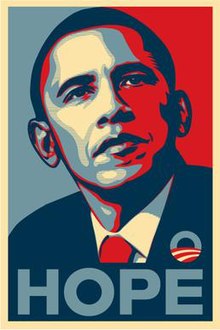
... the face that drew us in.
Monday, April 30, 2012
"Because I criticized the President, it’s news?"
"Last I checked, he’s President, not King! This is America! Freedom of Speech. what’s the bfd?"
I know I've made a lot of Obama tags over the years, but looking for the right one for this post made me realize I have a serious Obama tag proliferation problem on this blog. Few other characters have even one additional tags beyond their name. For example, Hillary Clinton only has 2 extra tags, one dedicated to her work as Secretary of State and another one called "Hillary snaps." But look at my list of Obama tags:
I need to do some tag consolidation! At the very least, all the one-timers ought to go. Including the obvious mistake "obama the." Or is that fascinatingly evocative?
***
I know I've made a lot of Obama tags over the years, but looking for the right one for this post made me realize I have a serious Obama tag proliferation problem on this blog. Few other characters have even one additional tags beyond their name. For example, Hillary Clinton only has 2 extra tags, one dedicated to her work as Secretary of State and another one called "Hillary snaps." But look at my list of Obama tags:
- Obama (1176)
- Obama + Chavez (2)
- Obama 2012 (120)
- Obama and abortion (4)
- Obama and blogging (4)
- Obama and education (6)
- Obama and foreign policy (30)
- Obama and gay rights (32)
- Obama and Honduras (2)
- Obama and iran (9)
- Obama and Iraq (7)
- Obama and irony (15)
- Obama and manliness (12)
- Obama and pop culture (39)
- Obama and sports (4)
- Obama and the courts (7)
- Obama and the fly (8)
- Obama and the GOP (8)
- Obama and the military (98)
- Obama and the press (5)
- Obama and Wisconsin (9)
- Obama and women (16)
- Obama attacked from the left (4)
- Obama caricatures (7)
- Obama eats dog (10)
- Obama economics (135)
- Obama gets mad (1)
- Obama Girl (1)
- Obama hating (3)
- Obama helps kids (5)
- Obama inauguration (21)
- Obama is bland (33)
- Obama is conservative (3)
- Obama is everywhere (2)
- Obama is like Bush (56)
- Obama is like Carter (12)
- Obama is like Clinton (2)
- Obama is like Dukakis (2)
- Obama is like Ford (1)
- Obama is like Lincoln (1)
- Obama is like Nixon (12)
- Obama is like Palin (1)
- Obama is like Reagan (3)
- Obama is like Sarah Palin (3)
- Obama is not like Bush (3)
- Obama media (3)
- Obama rhetoric (93)
- Obama says something strange (1)
- Obama scandals (11)
- Obama songs (6)
- Obama stumbles (64)
- obama the (1)
- Obama the boyfriend (19)
- Obama the Candidate (9)
- Obama the father (11)
- Obama the mood elevator (19)
- Obama the pragmatist (27)
- Obama the teacher (20)
- Obama transition (17)
- Obama wins (19)
- Obama wit (1)
- Obama's book (13)
- Obama's citizenship (23)
- Obama's Congress (137)
- Obama's environmentalism (19)
- Obama's extended family (8)
- Obama's gate-crashers (6)
- Obama's in trouble (44)
- Obama's judges (15)
- Obama's lawyers (1)
- Obama's mandate (1)
- Obama's media (1)
- Obama's new Congress (31)
- Obama's psyche (22)
- Obama's religion (53)
- Obama's Supreme Court (111)
- Obama's temperament (2)
- Obama's tired (4)
- Obama's war on terror (110)
- ObamaCare (330)
- Obamedy (17)
I need to do some tag consolidation! At the very least, all the one-timers ought to go. Including the obvious mistake "obama the." Or is that fascinatingly evocative?
Thursday, April 12, 2012
What is Barack Obama's full name?
I am just noticing this for the first time. Writing that last post, seeing that John Mellencamp sang "Small Town" at an Obama rally, I was about to add that like Scott Walker, Obama was not born in a small town. (The song, you may remember, is all about being "born in a small town" and staying in that small town even though there's "little opportunity.")
Anyway, Obama was born in Honolulu, Hawaii. (Deal with it, birthers!) Honolulu is about the size of Colorado Springs. Looking up Obama's birthplace, I just went to Wikipedia, naturally, and I noticed something I'd never noticed before. I did not know Obama's full name. I asked Meade, and he got it wrong too.
Obama's full name is Barack Hussein Obama, II. II? What's with II instead of "Jr."? Generally, Jr. is used for a son who has exactly the same name as his father (when the father is still living), and "II" is used when the relationship is other than father-son, such as grandfather-grandchild.
But you don't have to follow these conventions. It's just interesting when you don't. For example, FDR and Eleanor Roosevelt named their daughter Anna Eleanor Jr.
I'm not trying to make any political points about Obama here. I just thought it was interesting that we didn't know the President's full name.
Anyway, Obama was born in Honolulu, Hawaii. (Deal with it, birthers!) Honolulu is about the size of Colorado Springs. Looking up Obama's birthplace, I just went to Wikipedia, naturally, and I noticed something I'd never noticed before. I did not know Obama's full name. I asked Meade, and he got it wrong too.
Obama's full name is Barack Hussein Obama, II. II? What's with II instead of "Jr."? Generally, Jr. is used for a son who has exactly the same name as his father (when the father is still living), and "II" is used when the relationship is other than father-son, such as grandfather-grandchild.
But you don't have to follow these conventions. It's just interesting when you don't. For example, FDR and Eleanor Roosevelt named their daughter Anna Eleanor Jr.
The decision to put "II" rather than "Jr" on the birth certificate may not have been the parents' choice.... It could have been taken by the Hawaiian official who registered the birth.And then there's the comma. One reason I don't like these Jr. and III style names is that people aren't sure about whether to put in a comma or not. Usage books disagree. I wouldn't want a name that brought along a fussy issue like that.
Barack Obama's Kenyan father would have been perfectly comfortable with the idea of passing on his own name to his son - it is a practice common not only in the US, but in his own country too, and especially among the Luo tribe, to which he belonged.
But there too, it would be normal to use the word "Junior" to refer to the son, according to the BBC's Noel Mwakugu in Nairobi....
I'm not trying to make any political points about Obama here. I just thought it was interesting that we didn't know the President's full name.
Wednesday, April 4, 2012
Laurence Tribe says Obama "didn't say what he meant" about the Supreme Court and needs to "clarify."
"I don’t think anything was gained by his making these comments and I don’t think any harm was done... except by public confusion."
ADDED: Remember when Larry Tribe pushed Obama (his former student) to nominate Elena Kagan to the Supreme Court because "Neither Steve Breyer nor Ruth Ginsburg has much of a purchase on Tony Kennedy's mind"?
ADDED: Remember when Larry Tribe pushed Obama (his former student) to nominate Elena Kagan to the Supreme Court because "Neither Steve Breyer nor Ruth Ginsburg has much of a purchase on Tony Kennedy's mind"?
Kagan, Tribe said, had a way of "gently but firmly persuading a bunch of prima donnas to see things her way in case after case." Of course, he was referring to the prima donna professors at Harvard Law School, and mainly talking about new faculty appointments, which is quite different from persuading Supreme Court Justices about interpretations of law. It's one thing to build a law school community where professors can spout diverse ideologies and still feel like it's a happy, functioning institution. It's quite another to amass votes for a legal proposition that produces an outcome in a case and binds all the courts in the United States.I wonder how well Kagan is doing scaling the convolutions of Kennedy's brain these days. As I said at the time: "if the target of a light touch knows that the most powerful man in the world has selected that approach to prying his brain into a particular political direction, that target ought to become highly vigilant and not get played."
Thursday, March 29, 2012
Sunday, March 25, 2012
Photographing Obama/Clarence Thomas so he appears to have a halo.
I've seen many photographs of Obama that go for a halo image around his head. Photographers/editors seem to really love this kind of thing:

So it caught my eye when the New York Times — in "Groups Blanket Supreme Court on Health Care" — chose a haloed image of Clarence Thomas:

I exclude the possibility that this is an accident. The selection of photographs in the NYT is exquisitely deliberate. I exclude the possibility that the NYT adores Thomas. The halo cannot possibly reflect the religious awe that we sense in the Obama halo pictures. I doubt that is has anything to do with race, though Thomas, like Obama is black. That is, maybe strange notions of spiritualism arise in the minds of white photographers and editors when they gaze at images of black people. Maybe!
I can only come up with 2 explanations I think are plausible:
1. The Clarence Thomas halo is a really messed up halo, constructed of fuzzy dots and sagging at either end. It vaguely calls to mind a UFO. It therefore conveys a negative opinion of the man, especially if you also think of the extremely well-formed haloes that appear around the sainted President's head.
2. The NYT is trying to butter up Clarence Thomas. They'd like to influence him to uphold the health care law. The article begins with an elaborately set-up quote from Thomas, likening Supreme Court decisionmaking to shooting free throws in basketball: You focus on the rim and ignore all the crowd noise.
And if they could do that, they would all deserve haloes. But sophisticated legal folk don't think there is any such purity to be found among mortals.

So it caught my eye when the New York Times — in "Groups Blanket Supreme Court on Health Care" — chose a haloed image of Clarence Thomas:

I exclude the possibility that this is an accident. The selection of photographs in the NYT is exquisitely deliberate. I exclude the possibility that the NYT adores Thomas. The halo cannot possibly reflect the religious awe that we sense in the Obama halo pictures. I doubt that is has anything to do with race, though Thomas, like Obama is black. That is, maybe strange notions of spiritualism arise in the minds of white photographers and editors when they gaze at images of black people. Maybe!
I can only come up with 2 explanations I think are plausible:
1. The Clarence Thomas halo is a really messed up halo, constructed of fuzzy dots and sagging at either end. It vaguely calls to mind a UFO. It therefore conveys a negative opinion of the man, especially if you also think of the extremely well-formed haloes that appear around the sainted President's head.
2. The NYT is trying to butter up Clarence Thomas. They'd like to influence him to uphold the health care law. The article begins with an elaborately set-up quote from Thomas, likening Supreme Court decisionmaking to shooting free throws in basketball: You focus on the rim and ignore all the crowd noise.
With three days of arguments scheduled for this week, the nine justices will need the steely nerves of a clutch free-throw shooter to block out all the noise surrounding a case that has generated perhaps the most intense outside lobbying campaign that the court has ever seen.The article itself is part of that campaign, no?
Proponents of the sweeping 2010 law, working with the White House, have also developed “talking points” to emphasize the potential harm if the law is thrown out, including the reduction in coverage for those with pre-existing conditions and for young adults who wish to remain on their parents’ policies.Yes, it will take an immense amount of nerve to throw out this uniquely momentous law. I don't think they can exclude all the noise. Maybe Thomas can, but none of the others. Maybe Scalia. But the question is whether the pressure against the law feels greater than the pressure for it. It's momentously valuable/momentously destructive. The noise could cancel itself out, leaving the Justices to decide using a purely legal methodology.
And if they could do that, they would all deserve haloes. But sophisticated legal folk don't think there is any such purity to be found among mortals.
“All that other background noise, I never — I don’t listen to all this stuff,” [Clarence Thomas] said. “I don’t read the papers, I don’t watch the evening news.” If justices let outside pressures distract them, he said, “in my opinion, you have no business in the job.”Jesus said: "You therefore must be perfect, as your heavenly Father is perfect." And Paul wrote: "All have sinned and fall short of the glory of God."
Subscribe to:
Posts (Atom)
 :.
:.
