Pages

Labels

Showing posts with label Marlon Brando. Show all posts

Friday, December 14, 2012

"Cornball brother."

There's a current controversy about some ESPN commentator musing over whether RG3 is a "cornball brother."
"My question, which is just a straight honest question: is he a brother, or is he a cornball brother?" [Rob] Parker asked... "Well... he's black, he kind of does his thing, but he's not really down with the cause, he's not one of us. He's kind of black, but he's not really the guy you'd really want to hang out with, because he's off to do something else.... I want to find out about him.... I don't know because I keep hearing these things. We all know he has a white fiancee. Then there was all this talk about he's a Republican...."
All right. I just want to talk about the word "cornball," which strikes me as a very old fashioned word. I mean, I thought it was weird hearing Marlon Brando use the word in his 1953 movie "The Wild One":
Kathie Bleeker: Well, what d'ya do? I mean, do you just ride around or do you go on some sort of a picnic or something?

Johnny: A picnic? Man, you are too square. I'm... I... I'll have to straighten you out. Now, listen, you don't go any one special place. That's cornball style. You just go.
Brando's Johnny was the leader of a motorcycle gang that rode into a small town and scared people like Kathie Bleeker. I saw that movie when I was in college, circa 1970, and we thought it was very funny that Brando said "cornball." For years, perhaps decades, we amused ourselves by saying "That's cornball style," Brando-style, usually with an added, "Man, you are too square."

But maybe "cornball" has made a comeback, maybe specifically in the context of "cornball brother." I check Urban Dictionary, and (unsurprisingly) it's got a couple of completely new entries inspired by the RG3 flap: "A classy, intelligent African-American athlete. The kind of guy who dominates his enemies and doesn't fall in line with the opinion of douchebags — a freethinker and warrior." Fine, but not responsive to my inquiry. "Cornball" was the April 13, 2005 Urban Word of the Day with the definition: "Of a cheesy, corny, and otherwise over-the-top feelgood nature. Virtually any inspirational quote that makes you shudder." (The example given is of George Bush saying something deemed "cornball.") There's another entry — with more down than up votes — from 2005:
Its that dumbass motherfucker that says stupid ass shit and acts like a moron... STOP DOIN THAT! U AINT GOT NO FRIENDS GO HOME!
Okay, so... let's look at the Oxford English Dictionary, where if we skip past the references to "a sweetmeat made of popped corn or maize" — "Nanny remained near the dutch oven to keep us supplied with red-hot pones, or corn-balls" 1843 — we get to the metaphorical use of "a 'corny' person," with the first appearance being a mere 1 year before "The Wild One":
1952   R. C. Ruark in H. Wentworth & S. B. Flexner Dict. Amer. Slang (1960) 124/2   Eisenhower on no account can be called a cornball.
Now, the use of "corny" to refer to a kind of person goes back to 1932, according to the OED. The derivation is obvious as the word means "Of such a type as appeals to country-folk; rustic or unsophisticated; tiresomely or ridiculously old-fashioned or sentimental; hackneyed, trite; inferior."
1932   Melody Maker June 511/1   The ‘bounce’ of the brass section... has degenerated into a definitely ‘corny’ and staccato style of playing.
1935   Peabody (Mass.) Bull. Dec. 42/2   Corny—Derived from cornfed, meaning [music] played in country style, out of date, hill-billy, or in a style of pre-1925....
That's as much light as I can shed right now on the word cornball, which — you get my point — seems to be a word that is itself cornball.

Friday, October 19, 2012

What if men sang about longing for life in the larger world the way the Little Mermaid did?


Via Metafilter, where I think people are experiencing this as really sweet, because these are — presumably — fathers and the fathers are warm and fuzzy and must love their daughters. We see the man at the end singing with a little girl. That's why these men know the song, and that's why they work diligently at jobs during the day. And they really are "part of [the daughter's] world," so the longing expressed in the song has nothing to do with leaving this place, which is what the lyrics are talking about: "I wanna be where the people are... When's it my turn? Wouldn't I love, love to explore that world up above?"

That song, as presented in the movie, is a female's longing for a deeply satisfying life achieved by getting out there into the wider world. There's a very similar song in "Beauty and the Beast," another Disney movie of the same period, in which the central female character sets up her narrative arc by singing about her need to get away from all the tedious people in her "provincial town." This is an American pop culture template that applies to women. These cartoon females supposedly inspire the female dream to have it all. The Little Mermaid's song begins with the observation that she pretty much looks like "the girl who has everything." But she wants more, more, more. (Song cue.)

But men? Our culture doesn't want you saying such things anymore. There was a time when Marlon Brando and James Dean were icons, and they seemed to be all about rejection of this humdrum life in your sad little town. But they have been swallowed up into the past. In the American pop culture of today, the admirable man cannot seriously express such longings and expect love and admiration. It can only be a joke, comic dissonance with the reality of the good man's life, scrambling eggs at the kitchen table with his adorable little girl (who is, herself, permitted to internalize the female dream of getting out of this dreary, constricting place to get what she deserves — the bigger, brighter, better life).

Monday, May 21, 2012

"Friends, Romans, countrymen..."

This amused me. Cowboy style. I ran across it because I was looking for the text to the famous Mark Antony speech, which I'd been forced to memorize in junior high school, many decades ago. (Here's Marlon Brando doing it, not amusingly.) And what got me testing my own memory was something I'd just read about Barack Obama, which someone had emailed me, a propos of the recent "born in Kenya" dustup. It's a GQ article from November 2009 called "Barack Obama's Work in Progress."
Over the past few years, we’ve gotten to know our president as a lot of different things: campaigner, lawyer, father, basketballer. But what if Obama’s first and truest calling—his desire to write—explains more about him than anything else? Robert Draper recounts the untold story of the first man since Teddy Roosevelt to serve as author in chief.
I haven't combed through that whole article looking for the Kenya connections, but I noticed this bit about Shakespeare:
Sometime in 2002, the young state senator pays a daytime visit to the Chicago Shakespeare Theater. The artistic director, Barbara Gaines, is happy to show the politician around. Watching the carpenters erect the set, he asks Gaines which play is about to be performed. “Julius Caesar,” she tells him.

At first, Obama doesn’t say anything. Then, in a very soft voice, he begins to recite some twenty lines from the play. As he does so, he places his hand on his heart, as if stricken by the words’ transcendent beauty.

The director is agog. She has never heard an elected official quote Shakespeare in such a way.
Now, wait a minute. Who, upon mention of "Julius Caesar," doesn't start going "Friends, Romans, countrymen, lend me you ears..."? If it was some other 20 lines from the play, I might be impressed. The fact that he went on for 20 lines is sort of cool as a demonstration of memory. It's more than I can do without missing some words, but then, I learned it during the LBJ administration. But who goes on for 20 lines, putting on a memory show? Maybe you would if you saw that you were getting the director of the Chicago Shakespeare Theater agog.

And would you put your hand on your heart? (Cf., Obama not putting his hand over his heart during the National Anthem.)

Back to GQ:
Later, she tells a co-worker, “I just had the most amazing experience. I met the first politician to have the soul of a poet.” (The first, she means, since Abe Lincoln, who quoted lines from Macbeth less than a week before his assassination: I think our country sinks beneath the yoke…)
The soul of a poet. Doesn't anyone remember Eugene McCarthy?


Many women loved this Senator from Minnesota, who challenged LBJ in 1968, and the poetry was part of it. My maternal grandmother loved him because he was a poet. 1968 — there was a year. Bobby Kennedy pushes Senator McCarthy — the good Senator McCarthy — aside, LBJ declines to run, Martin Luther King is shot down, 2 months later Bobby follows him, and Nixon becomes inevitable.

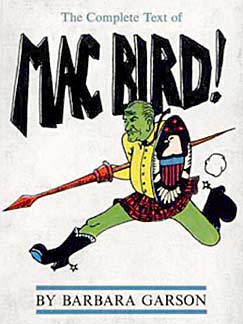
By the way, speaking of MacBeth and LBJ, they made a play back then: MacBird!


The playwright, Barbara Garson said:
"People used to ask me then, 'Do you really think Johnson killed Kennedy?'... I never took that seriously. I used to say to people, 'If he did, it's the least of his crimes.' It was not what the play was about. The plot was a given."

Friday, October 7, 2011

The difference between Occupy Wall Street and the Wisconsin protests.

Andy Kroll at Mother Jones identifies 3 main differences

1. Different organizers: In Wisconsin, "the day after Republicans reclaimed the state Legislature and the governor's mansion, union leaders began plotting how to respond to the looming assault on organized labor.... From their command center in Madison's only unionized hotel, labor turned out more than a 100,000 supporters in a span of weeks." But the Occupy Wall Street protesters were responded to a prompt from Adbusters magazine and then grew "almost entirely without institutional support, an organic groundswell without leaders or executive boards or much structure at all."

2. Different goals: The Wisconsin protests, at their height, were focused on something quite specific: defeating Gov. Walker's budget reform bill. "Occupy Wall Street so far has had no clear set of demands—and intentionally so, it seems."

3. Different reaction from the police: Here in Madison, the police mostly accommodated the huge crowds that besieged the state Capitol. In NYC, the cops have cracked down.

Kroll also lists 2 similarities. Both sets of protesters: 1. used social media, and 2. ate pizza.

ADDED: As for that seemingly intentional lack of demands... I think of this:

Thursday, February 3, 2011

"I felt very sad because I was treated like a sex symbol."

"I wanted to be recognized as an actress, and the whole scandal and aftermath of the film turned me a little crazy and I had a breakdown. Now, though, I can look at the film and like my work in it.... I felt humiliated and to be honest, I felt a little raped, both by Marlon and by Bertolucci... After the scene, Marlon didn’t console me or apologize. Thankfully, there was just one take."

Maria Schneider, dead at 58.

Tuesday, April 7, 2009

"I will never forget the sight of our table... with Brando on his left and that childhood friend, who just happened to be Dylan, on his right."

"At first... the Seder progressed normally without anyone noticing anything out of the ordinary. But after about 45 minutes, 'the rabbi figured out that ours was not your average Seder table.'"
"'Mr. Brando, would you please do us the honor of reading the next passage from the Haggada?' he asked. Marlon replied, 'It would be my pleasure.'"

Brando rose and delivered the passage "as if he were reading Shakespeare on Broadway. Mouths fell open and eyes focused on the speaker with an intensity any rabbi would covet. When he was done, I think people actually paused, wondering if they should applaud."

Next... the rabbi approached another member of our table: "Mr. Dylan, would you do us the honor of singing us a song?"

Tuesday, February 3, 2009

"Gilliam... was standing outside a restaurant in Soho when a car backed into him. 'Yes, a man can fly,' observed a bystander as he flew past."

Hilarious assholes they have in England, it seems.
He broke his back, but seems fine now, despite a cracked vertebra and dislodged disc. "Yeah, I'm a lizard," he says, cackling.
From an article on Terry Gilliam's seemingly cursed movie "The Imaginarium of Dr Parnassus." Other problems: The producer died suddenly. And so did the star — Heath Ledger.
"It just isn't possible that he's dead," [said Gilliam.] "There's nothing he can't do, it just flows out of him with ease and grace. He lifted everybody. He wasn't like Marlon Brando or James Dean or any of the more neurotic actors, his was all positive energy. I knew he was tired but that Saturday he had been doing all his own stunts, he was leaping off wagons, indestructible. On no level did his death make sense.... "
We're not all flying men/lizards.
"I ... looked at how to do the remaining scenes without Heath, and realised that, since his character goes through a magic mirror three times, we could get three actors to play the role."
He got Johnny Depp, Jude Law, and Colin Farrell, who are all donating their compensation to Ledger's 3-year-old child Matilda.

Other interesting things in the linked article:

1. George Harrison believed that the soul of The Beatles transmigrated into Monty Python when The Beatles died.

2. Monty Python broke up because the guys "got bored of each other."

3. "[Gilliam] renounced his American citizenship in 'disillusionment' with the Bush years, but he retains a pigtail which makes him look like an ageing hippy." You know what I don't understand? The role of "but" in that sentence.

4. Gilliam has never taken drugs, out of sheer fear of losing the distinction "between fantasy and reality." "It was only 15 years ago that I discovered I couldn't fly. I have such a 'sense memory' of flying around the world at the height of a table that when someone asked me to show them, I really thought I could do it."

5. In lieu of drugs: Dali, Ernst, Breughel, Bosch, and Mad magazine.

Monday, October 13, 2008

McCain, too, is a memoirist.

We keep talking about "Dreams From My Father." What about "Faith of My Fathers"?
His 1999 memoir, “Faith of My Fathers,” for the first time put his prison camp ordeal at the center of his public persona. In its pages, he recalled the experience as much more than a trial: a turning point from glory-seeking flyboy to responsible patriot, the final resolution of a rebellion against his father’s expectations, and the origin of a drive “to serve a cause” larger than himself....

[Co-author Mark] Salter, taking a little literary license, assembled from Mr. McCain’s recollections a neat narrative that he had never before articulated. It became a best seller, a television movie and the first of five successful McCain-Salter volumes. And on the eve of Mr. McCain’s 2000 Republican primary run, its story line reshaped his political identity. In interviews and speeches, Mr. McCain has increasingly described his life in the book’s language and themes, and never more so than during his current campaign, which has turned back to the story of “Faith of My Fathers” for everything from its first television commercial to his speech at the Republican convention.

Politics was imitating art, said Stephen Wayne, a political scientist at Georgetown who has studied Mr. McCain’s career and memoir. “It is almost as if McCain had described himself as a literary character,” Professor Wayne said, “and then he tried to be that person in real life.”
Lots more at the link, especially about McCain's interest in literary characters, like the hero of “Of Human Bondage” (whose "final realization could fit almost as well near the conclusion of Mr. McCain’s memoir: 'It might be that to surrender to happiness was to accept defeat, but it was a defeat better than many victories'") and Marlon Brando ("Friends say Mr. McCain likes to imitate Brando erupting in rage: 'You scum-sucking pig!'")

AND: Strange -- isn't it? -- that both candidates wrote a memoir with the word "father/s" in the title. Is there something about a struggle to come to terms with his father that drives a man to the top position? If only Mitt Romney's dad had given him more trouble!

Sunday, May 18, 2008

Music for driving.

As you can see from my last post, I took a long drive yesterday, driving for the sake of driving, and I wrote: "Propitiously, the radio played 'Radar Love.'" A commenter — aptly named Skeptical — challenged me:
Sorry, I don't think "Radar Love" on the radio can count as propitious. That's a song about somebody who isn't driving just to drive; he's driving because there is somewhere that he definitely has to be.
That's a pretty subtle point about the close interpretation of the lyrics. If it's a song about driving and you're driving and the music feels great for driving, does the stress on reaching the destination make it not a great driving song? Of course, there are some great songs about driving that don't stress the destination. I'm thinking of all the songs that rave about the car itself — like "Little GTO" and "409"— or the songs that are using driving as a metaphor for sex — like "Little Red Corvette" and "Mustang Sally." But stressing the destination creates an urgency about the forward motion that makes the song great for driving even when you are driving just to drive. Don't you love to drive to "Six Days on the Road"?

But I'm not so sure "Radar Love" is about the destination. It's in the now. It's about extrasensory powers enabling the singer to hear the voice of his "baby" without a phone or radio at all. "She sends her comfort, coming in from above. Don't need no radio at all." Via radar love, he's able to feel good again, driving now.

Anyway, driving yesterday, I needed a radio. I like the chance combinations of song and landscape. I like it when they fit and I like it when they don't. Here I am driving across the Wisconsin River on Route 14:


"Radar Love" has ranked well on some lists of best driving songs. We could try to make a list, but most people end up with songs that mean something to them, that are from their era. Let's try to transcend that. "Radar Love" is not from my era. I just happened to have the 70s channel on the radio, where I go when the 60s channel is playing one too many Supremes songs. Here's a VH1 list of Top 10 driving songs. There are a lot of things to object to about that list. #10 is something that would make me instantly change channels. But I'm not going to object to the fact that #1 is a motorcycle song. I'm going to use that as an excuse to embed this:


And now that the topic is movies and motorcycles, I have even more of an excuse to put this up, which I was going to put up anyway, because of the way it expresses the idea of driving for the sake of driving:


One last thing. This is my choice of best driving song:

Tuesday, January 22, 2008

"Mr. Ledger magically and mysteriously disappears beneath the skin of his lean, sinewy character."

"It is a great screen performance, as good as the best of Marlon Brando and Sean Penn."

Dead at 28. Heath Ledger.

IN THE COMMENTS: Pogo writes:
My 15 year old son was quite shaken by this. He loves the movies. We both liked him in the ones already mentioned.

But he was mostly waiting to see him in Batman, feverishly following all the viral teasers the studio has thrown out over the internet....

I don't know what happened to Ledger; we'll hear soon enough. My son had seen a recent interview that suggested something wasn't quite right with Mr. Ledger, all jittery and picking at his arms....
Here's the video. I knew right away what you were talking about because I was looking for a clip to include with the original post. After watching it, I decided it wasn't the tone I was looking for.

Thursday, July 5, 2007

Have you heard about John Edwards' $1,250 haircut?

WaPo is on the story that -- like a cowlick -- won't stay down. It seems that Joseph Torrenueva -- hairdresser to the stars (Marlon Brando!) -- "hit it off with" with Edwards back in 2003.
At first, the haircuts were free. But because Torrenueva often had to fly somewhere on the campaign trail to meet his client, he began charging $300 to $500 for each cut, plus the cost of airfare and hotels when he had to travel outside California.

Torrenueva said one haircut during the 2004 presidential race cost $1,250 because he traveled to Atlanta and lost two days of work.

"He has nice hair," the stylist said of Edwards in an interview. "I try to make the man handsome, strong, more mature and these are the things, as an expert, that's what we do."
Response from the Edwards campaign?
"Breaking news -- John Edwards got some expensive haircuts and probably didn't pay enough attention to the bills," said spokeswoman Colleen Murray. "He didn't lie about weapons of mass destruction or spring Scooter Libby; he just got some expensive haircuts."
This story has been dogging you for weeks and that's all you can think of to say? Others did worse?

But why is the friendly hairdresser coming forward with the story of a haircut that cost 3 times as much as the one that already drove people nuts. The hairdresser has feelings. He has pride. When Edwards was asked about that $400 haircut he posited that "the haircuts were some kind of aberration given by 'that guy' his staff had arranged."
"I'm disappointed and I do feel bad. If I know someone, I'm not going to say I don't know them," he said. "When he called me 'that guy,' that hit my ears. It hurt." He paused and then added, "I still like him. . . . I don't want to hurt him."
You don't want to.... but....

There's lots of blogging about this story. Let's see what they're saying.

Captain Ed takes it up a notch: "Now it looks like Edwards has an honesty problem as well as questionable use of campaign funds. This wasn't some one-off; Edwards has used Torrenueva for over three years. The Edwards campaign's attempt to spin this as a single case of bad judgment by a staffer shows a less-than-honest approach to errors by Edwards, which should concern people considering his candidacy seriously, a number that appears to drop on a weekly basis anyway."

TBogg mocks WaPo for following the story at all: "Woodward and Bernstein were pussies compared to Solomon. I smell Pulitzer." Anonymous Liberal takes the same tack: "[T]he article is a perfect example of everything that is wrong with mainstream political reporting... a tour de force of triviality and passive aggressiveness." (A "tour de force of triviality and passive aggressiveness"? -- sounds like everything we want in a blog. How dare MSM horn in!)

The Democratic Daily says: "Didn’t the WaPo’s John Solomon have anything better to do with his time then chase down a prima dona [sic] Hollywood stylist for the scoop?" Brilliant at Breakfast: "If we're going to flog insignificant bullshit, can we at least flog Mitt Romney's treatment of animals just as much?"

Bit of a pattern, no? Let's call it Democratic pattern blogging. Somehow none of the Democratic bloggers can see the deeper credibility issue perceived by our Captain. Which is fine. But must they all say the same thing? And why do they think it's smart just to say that? Obviously, the $400 story hurt Edwards a lot. Now, here's the $1,250 story. It's out. Bitch about The Washington Post's "triviality" all you want, but the story will hurt Edwards, and, really, as self-respecting bloggers looking for readers, why do you all want to keep repeating the same thing?

I take the time to read all the liberal bloggers on the story, and what I learn is that they are boring. They all offer advice to The Washington Post, but look what they are: boring! Clue: You're writers. Say something new!

But maybe you're not writers. You're more good soldiers for the cause. Fine. But I'm not the cause. I'm a reader. If you show your allegiance is other than to the reader, I'm gone.

ADDED: I should say that I think it's important for a presidential candidate to get a proper haircut. The money should be spent on a good haircut, as well as on appropriate makeup and clothes. I'm not shocked that he spent the money, just that he didn't do it in a way that controlled the information. It's obviously the sort of thing that people make a big deal about -- a stupid distraction, but entirely predictable. I can't believe that after making the mistake of letting the story about he $400 haircut come out, the Edwards campaign did not keep Torrenueva happy enough not to opening up to the WaPo. The mistake wasn't spending $1,250 on a haircut. It was calling Torrenueva "that guy."

Friday, July 1, 2005

What passage in Revelation did Marlon Brando circle?

This one:
"The merchandise of gold, and silver, and precious stones, and of pearls, and fine linen, and purple, and silk, and scarlet, and all thyine wood, and all manner vessels of ivory, and all manner vessels of most precious wood, and of brass, and iron, and marble . . ."
That's Revelation 18:12. We know this because his personal effects were put up for auction, including his Bible. Here's the report in the WaPo, written by Robyn Givhan, who scoffs that "pop psychologists, street-corner ministers, literary deconstructionists" can now "have at" the marked-up Bible.

In case you want to interpret the mind of Brando, based on that circled passage, here it is in context, which is that all the riches in the city of Babylon are burning:
15 The merchants of these things, which were made rich by her, shall stand afar off for the fear of her torment, weeping and wailing, 16 And saying, Alas, alas, that great city, that was clothed in fine linen, and purple, and scarlet, and decked with gold, and precious stones, and pearls! 17 For in one hour so great riches is come to nought. And every shipmaster, and all the company in ships, and sailors, and as many as trade by sea, stood afar off, 18 And cried when they saw the smoke of her burning, saying, What city is like unto this great city!

Forget the mind of Brando for a moment, what about the mind of the person who, setting up this exhibit, decided to display the Bible opened to that page? I'm thinking that person meant to criticize the people who had become merchants of these things -- and the people who came to gawk at them.

Thursday, June 30, 2005

"#Through the nose, #High voice, #Nose broken early in youth to account for difficulty."

Brando's notes on the "Godfather" script -- along with other personal effects up for auction -- pictured here.

And here's "the only item relating to his film career that he displayed in his Mulholland Drive home." (Some nudity.)

Here's his typed letter to Marilyn Monroe advising her to experience her depression as an opportunity for personal growth:
Be glad for it and don't be afraid of being afraid. It can only help. Relax and enjoy it.

Maybe if she'd just eaten a lot more ice cream. Marilyn and Brando were very similar at that time. Highly sexualized movie icons running into mental problems. What if Marilyn had just put on weight, like Marlon, and lived a long time? Picture incredibly obese, old Marilyn, turned into a figure of fun over the years. Kind of sweet!

REVISED UPDATE: Links are good now!

Tuesday, June 21, 2005

Those 100 AFI quotes.

Okay, I'm game. I'll TiVo-blog, numbering each entry. Watch for continuous updates. Ah, it's good to be simulblogging again!

1. “Life is a banquet and most poor suckers are starving to death.” That's the first one that made me want to type it out. That's # 91. Hmmm… I’m seeing a theme. Life affirmingness. “Nobody puts Baby in a corner.” “Carpe diem.” “I’m the King of the World.” It’s all so damned positive… so far.

2. I singled out a few quotes in my post on the original 400 nominees, and coming it at #84 is one of my favorites: "Oh, no, it wasn't the airplanes. It was beauty killed the beast."

3. File under: movies no one feels any compunction about spoiling. "Soylent Green is people." (#77) Ray Romano: "Not a day went by when someone didn't yell that out in the school cafeteria."

4. "What a dump." (#62) The line everyone knows without seeing the movie. The movie is "Beyond the Forest," which I'm not going to recommend to you because I don't want to hear your bellyaching when you discover it's not a good movie. But I love this movie! I love when Bette Davis finally gets out of her damn little town and makes it to Chicago -- Chicago! of all places -- and she goes to a bar and, because she's a woman alone, she's perceived as a prostitute, and they kick her out. And then there's the part where she's pregnant, but she doesn't want the baby, so she just hurls herself down a hill. And all those great scenes where she stands by the window and looks at the smoking factory right outside and just burns with unexploded sexual passion. That is a movie! Oh, they scarcely tell us anything about this film, they just segue quickly to "Who's Afraid of Virginia Woolf," with Elizabeth Taylor saying the same line. The line doesn't get counted a second time. The point seems to be it was such a line that it got quoted in the movies, quoted by a big, big movie star. But "Beyond the Forest," that's on my personal list.

5. We're getting into doubles for the same movie. A second quote from "Streetcar Named Desire." ("Stella" beat "kindness of strangers.") A second quote from "Casablanca." ("We'll always have Paris" beat "Of all the gin joints..." I'm predicting at least one more from "Casablanca.") A second quote from "The Graduate." ("Plastics" beat "You're trying to seduce me.")

6. Okay, enough baseball already! We're at the fourth or fifth baseball quote, including the mushy-headed "If you build it, he will come." (#39) "Luckiest man on the face of the earth" follows at #38.

7. Yes, another "Casablanca" quote: "Round up the usual suspects." (That must get extra credit for providing the title for another film.) Ah, now they tell us the total for "Casablanca" is going to be six. So three more to go. "Here's looking at you, kid" -- I assume. And "Play it, Sam." And, maybe the "hill of beans" quote. Or the final "this is the beginning" quote? Not sure what the third one left is.

8. "That movie is about so much. I think that it is so much about God...." So says Jennifer Grey about -- what else? -- "The Wizard of Oz." The quote at #23 is the dopey "There's no place like home." Aren't there 23 better lines in that film alone?

9. Another "Casablanca" at #20. Oh, it's "Louis, I think this is the beginning of a beautiful friendship."

10. "I'm mad as hell and I'm not going to take it anymore." Now, that's a catchphrase. Remember when Peter Finch went on "The Tonight Show" to promote that movie -- "Network" -- and for some reason got to talking about how some of the people watching the show that night would be dead next week, and then he proceeded to die within the next week? Am I getting that right?

11. "Love means never having to say you're sorry." That's #13. Ugh! Pure crapola!

12. "Napalm in the morning" ... "Failure to communicate" ... "You talkin' to me?" ... "Fasten your seatbelts, it's going to be a bumpy night."

13. "May the force be with you." George Lucas tells us he meant that to sum up and represent all religions and save us from the difficulty of scrutinizing the details that make them different.

14. "All right, Mr. DeMille, I'm ready for my closeup." #7. I approve!

15. The final "Casablanca" quote is "Here's looking at you kid." #5. (Doesn't Ingrid Bergman have the most beautiful lips?)

16. At #4: "Toto, I have a feeling we're not in Kansas anymore." Only line on the list addressed to a dog.

17. Three left, and we're told one actor said two of them. Clearly, it's Marlon Brando, and as we see the first one is "I coulda been a contender," we know that "I'll make him an offer he can't refuse" is either number 1 or number 2.

18. Second place goes to Brando, for "offer ... refuse." Why am I not thinking of the top quote? It should be obvious, right?

19. Oh, it's "Frankly, my dear, I don't give a damn." Somehow, I had the feeling we'd already hit that one. So, sure. I would have put that first... in the world of American movie catchphrases.

20. Okay, that was three hours of slogging through the quotes. Three hours well spent? Who knows!

21. During the show, they pointed us to the AFI website to read a quote from "Mrs. Miniver" that wasn't on the list, but that, we were told, FDR had printed up and dropped from planes on Nazi-occupied Europe.
This is the people's war! It is our war! We are the fighters! Fight it, then! Fight it with all that is in us, and may God defend the right.

Of course, the war quote that made the list was the cynicism-promoting "I love the smell of napalm in the morning."

22. In the first entry to this post, I noted that the quotes seem to have been selected for their life-affirmingness. But toward the top of the list, things got darker. The top quotes are all pretty sad or cynical or nutty or negative. They stowed all that sunny stuff at the bottom of the list.

23. Adam at Throwing Things has some observations including the count of lines spoken by nonwhite actors: 3. All by men, I note. Two of the three make the speaker look bad ("Show me the money" and "stinking badges"), Adam notes. I note that the other one -- "They call me Mr. Tibbs" -- is too pretty. Why not one of Samuel Jackson's lines from "Pulp Fiction"? Adam asks. Which reminds me: how about Quentin Tarantino? Not a single line from him. Well, most of the lines they had drew attention to the actors that delivered them, not the person who happened to write them. This was not a celebration of screenwriters.

24. Here's the whole list. I took the trouble to figure out the percentage of quotes spoken by women: 25%.

Saturday, February 5, 2005

Simulblogging the Screen Actors Guild Awards.

7:05 (Central Time): Glenn Close wins for TV Movie Actress, beating, among others, Charlize Theron, who looks really cool in slick black hair. Close gasps about how daunting it was to do a role made "iconic" by Katharine Hepburn (in "Lion in Winter"). In the tradition of Screen Actors Guild Awards, Close speaks in terms of acting as a field of labor. Close is wearing a yellow, spaghetti-strapped gown, and her upper chest glistens with sweat. You can see her freckles. I've always had freckles, so I'm always pleased to see the freckles shining through a beautiful person's makeup. In the preshow, I could see that Jamie Foxx has freckles.


7:10: Now, for the TV Movie Actor. Geoffrey Rush (and not the freckle-faced Jamie Foxx) wins. Rush fondles the little naked man that is the statuette and says he deludes himself into thinking that when he's naked he looks like that little guy.


7:18: Jamie Foxx is the next presenter, and the teleprompter malfunctions (or he does). He comically calls for a do-over, and screws up again, and has to comically call for another do-over. He introduces the clip from "Ray." I haven't seen the movie, but is it all about how he cheats on his wife? Who needs to see that? The next award is for movie supporting actress. Based on the clips, I'm for Laura Linney. Cate Blanchett wins, creating the second opportunity of the night to talk about Katharine Hepburn (the character she plays in "The Aviator"). She talks about freckles! She thanks the makeup artist who painted every freckle on her face. Katharine Hepburn was another freckle-face. Freckles! It's a night in celebration of freckles! Now, there's a cool tribute to stunt people and puppeteers and voiceover artists and extras and dancers. They count as actors too in the Guild's way of structuring things. "Extras," in this way of thinking about things, are called "background actors."


7:33: Male actor in a comedy TV series is the next award. I don't watch any of these shows, so I don't care. Tony Shaloub wins. Sandra Oh is one of the presenters of the next award, and I love the way she looks and her green dress. The award is for actress in a TV series, and here I do know one of the shows: "Sex and the City." So maybe I hope Sarah Jessica Parker wins. But what do I know? Teri Hatcher wins. Sandra Oh, by the way, is in "Sideways," which I haven't seen, because when I went to go see it, I crashed my car and didn't make it. Teri Hatcher is wearing a weird, breast-smooshing black dress. Like most of the actresses, she's wearing extra-long dangly earrings. Paul Giamatti comes out to introduce the clip of "Sideways," and he gets a ton of applause, presumably because he got passed over for the Oscar. Now: Ellen Degeneres, giving the comedy series ensemble award. I love the ensemble awards. She tells some jokes and is pretty cute. "Arrested Development" and "Desperate Housewives" look great in the clips. "Desperate Housewives" wins. The women are all sheathed in such tight dresses that they have trouble walking to the stage. The guy that makes the speech -- some producer or whatever -- uses the opportunity to denounce reality TV, which he's "ringing the death knell" of -- a cause dear to the people in the room.


7:52: Mel Gibson comes out and does a bad job of reading the teleprompter. He's giving a lifetime achievement award to James Garner. Shots of Garner in the audience show him giving what looks to me like the stinkeye to Gibson. "Such low level crap they're celebrating," I say as they show the Garner clip show. He just doesn't seem to be an important enough actor to be getting this treatment. To his credit, he doesn't seem at all egotistical. He talks of doing his best. And you have to admit, he was a very handsome man when he was young. Oh, this is going on WAY too long. We're eight minutes into this! Garner comes up and says he's "umbled" to receive an award. Now, we're eleven minutes into it. This is insane! He's touched deep in his heart. Can you believe it? He loves his wife! "Actors are very special people." Can't go wrong with that in this room, but you people are on television. Finally, after thirteen minutes, the segment is over. Unbelievable!


8:08: Melissa Gilbert, president of the Guild, comes out to say some general things. She's wearing a pink dress, inflated breasts, and what looks like a boa of giant black ashes slung over her shoulder. Next is Don Cheadle, introducing the "Hotel Rwanda" clip. Now: Kate Winslet -- a big favorite chez Althouse. She's wearing a tight light blue satin dress. The clips are for movie supporting actor. The clip for Thomas Hayden Church has him saying "asshole" totally unbleeped. (The show is on "E!") [CORRECTION: The show was on TNT.] Morgan Freeman wins. The crowd goes wild! Standing ovation! The actors love this guy. He sings the "Maverick" theme song, because, I guess, the tribute to James Garner just did not go on long enough. Freeman thanks everybody on the face of the earth. Laura Linney comes out in a horrible blackish dress. She introduces the memorial to dead actors segment. First: Ronald Reagan! Big cheer for Rodney Dangerfield. Also for Ossie Davie, who died a couple days ago. Also for Jerry Orbach, Ray Charles, Christopher Reeve, and Johnny Carson. Surprisingly not so much for the greatest actor who died this past year: Marlon Brando.


8:25: Actress in a TV drama. They all look great. Jennifer Garner -- who seems pretty surprised -- wins. She's got a cool silvery dress. The small-breasted women are looking especially good in their dresses tonight. I hope that will be the new style. I'm quite tired of the balloony look. Actor in a TV drama. A chair thrown through a window is featured more than the actor in one of the clips. The dead man, Jerry Orbach, wins. His wife accepts, and she runs up to the stage. "How bittersweet, but it's still sweet." Clint Eastwood comes out to introduce the clip of his own movie, "Million Dollar Baby," which he briefly forgets the name of. Glenn Close introduces the award for TV drama series ensemble. I only watch "Six Feet Under" and "The Sopranos." "CSI" wins, which bores me. But, again, what do I know? I don't watch that show. The clip looked dumb.


8:42: It's the beautiful Johnny Depp! He's introducing the best actress award. It's between Kate and Hilary. Depp is all in black: black suit, shirt, and tie. He must want Kate, who starred with him in "Finding Neverland." (Kate's nomination is for "Eternal Sunshine.") Hilary Swank wins. Depp darts away -- the man is so shy. I'm glad to see Swank win, because I think she doesn't get so many roles, which I think is, frankly, because she is not as good looking as the main actresses who get the roles she ought to get. When she's gotten a great script, she's been great. Her mom's there. She thanks everyone. Leonardo Dicaprio and Cate Blanchett come out to introduce the clip from "The Aviator." Charlize Theron is next -- sporting the excellent new tiny breasts look. She's a bit late coming out, and she runs to catch up. The award is best actor in a movie. The award goes to the gloriously freckle-faced Jamie Foxx.


8:58: Chris just emailed me this link, showing that Charlize Theron is making a movie about the landmark sexual harassment case, Jenson vs. Eveleth Mines. The final award is announced, for movie ensemble: it's "Sideways." Another chance to see Sandra Oh's fabulous green dress. She does the speech too. "This has been such a pure filmmaking experience." Ah, her green dress and my green car, the greenness of destiny! I like that they are having Oh speak, because she's the only one of the four actors who did not get singled out for any nominations. Tim Robbins romps out to say, "Good night, everybody!" And that's the show! End of post! It's been a great privilege, simulblogging for you this evening!


UPDATE: A next-day realization.

Sunday, July 4, 2004

"A Streetcar Named Desire."

We watched "A Streetcar Named Desire" last night. We had been close to watching it the other day, and now, with Brando's death, it was easy to pick it out from the DVD collection as the movie of the night. We have a ridiculously large DVD collection, the product of too much idle shuffling about on Amazon.com. To give you a sense of the size and nature of the home collection, I'll list the four movies that were shelved on either side of "Streetcar" (from the set of alphabetized DVDs that belong to me and are not music, documentary, or television):

Stardust Memories

Stargate

The Story of Adele H.

Stroszek


Sweet and Lowdown

The Sweet Hereafter

Swimming with Sharks

Talk Radio


("Stargate" was sent free by Amazon, back when Amazon used to send you presents to remind you that you were spending a ridiculous amount of money there. I've never watched "Stargate," but I'm interested enough in it not to have sold it.)


Here's an explanation of the censorship that affected the transition from the play of "Streetcar" to the movie. The rape scene, crucial to the plot, has been restored on the DVD. The tacked-on Hollywood ending, however, remains (though you're free to click the movie off at the point when Blanche finally exits). It's idiotic for Stella to have the last grand gesture, suddenly gaining feminist sensibility and leaving her abusive husband, as though she had turned into Nora from "A Doll's House." When I was in high school, we were shown a film of "A Doll's House" that had an alternate ending in which Nora's husband shows her their sleeping children and causes her to change her mind and stay. You can't just tack on a different ending to a great play. It's especially bad in "Streetcar" because Stella is not the main character, and her story had been appropriately tied up before the resolution of Blanche's grand tragedy. To reopen Stella's story in a banal, moralistic anti-climax was just awful. [ADDED: In the play, after Blanche is taken away, Stella calls after her, Stanley lulls her with a few comforting words and seductive petting, and one of the poker players calls out the last line, "The game is seven card stud."]


It was interesting to watch Brando display his grand talents. And he looks just great. (No human body in the history of cinema comes close to the extremes of good and bad set by Brando in "Streetcar" and "The Island of Dr. Moreau.") It's hard not to absorb the movie as: Brando takes off his T-shirt! Brando dunked in the shower! Brando screaming in the courtyard! Brando heaving the radio through the window! Brando gnawing on chicken bones! Brando uncapping a beer! Brando in his silk pajamas! It's a real struggle to concentrate on Blanche's story, even though the play is Blanche's story, and Vivien Leigh is on screen without Brando much of the time. It's especially hard to focus on Leigh today, since she seems so stilted and mannered compared to Brando, who seems to be acting not in some brilliant new way, but the way actors are supposed to act, because we are so used to all the actors that learned to act from looking at Brando. Is it worth the struggle to watch this movie and empathize with Blanche? You can only do so by compartmentalizing your reaction to Brando, which makes you think he's screwing up the movie by deliberately undercutting Leigh's performance.

Saturday, July 3, 2004

Truman Capote on Brando.

The NYT Brando obit calls attention to "a crushing profile by Truman Capote in The New Yorker in 1957." The New Yorker has the Capote article up on its website. There is a lot of great Capote writing in the article, so you should read it. I'll just set out my three favorite Brando quotes:

"The last eight, nine years of my life have been a mess," he said. "Maybe the last two have been a little better. Less rolling in the trough of the wave. Have you ever been analyzed? I was afraid of it at first. Afraid it might destroy the impulses that made me creative, an artist. A sensitive person receives fifty impressions where somebody else may only get seven. Sensitive people are so vulnerable; they're so easily brutalized and hurt just because they are sensitive. The more sensitive you are, the more certain you are to be brutalized, develop scabs. Never evolve. Never allow yourself to feel anything, because you always feel too much. Analysis helps. It helped me. But still, the last eight, nine years I've been pretty mixed up, a mess pretty much. . . ."


"I’m going to walk through the part, and that’s that. Sometimes I think nobody knows the difference anyway. For the first few days on the set, I tried to act. But then I made an experiment. In this scene, I tried to do everything wrong I could think of. Grimaced and rolled my eyes, put in all kind of gestures and expressions that had no relation to the part I’m supposed to be playing. What did [the director] Logan say? He just said, ‘It’s wonderful. Print it!’”


“I’ve seriously considered—I’ve very seriously thought about—throwing the whole thing up. This business of being a successful actor. What’s the point, if it doesn’t evolve into anything? ... You know, it took me a long time before I was aware that that’s what I was—a big success. I was so absorbed in myself, my own problems, I never looked around, took account. I used to walk in New York, miles and miles, walk in the streets late at night, and never see anything. I was never sure about acting, whether that was what I really wanted to do; I’m still not. Then, when I was in ‘Streetcar,’ and it had been running a couple of months, one night—dimly, dimly—I began to hear this roar. It was like I’d been asleep, and I woke up here sitting on a pile of candy.”

Evaluating Marlon Brando.

The NYT runs an above-the-fold obituary for Marlon Brando. (You'll have to look at the paper copy to see this, but here's the obit.) Meanwhile, will the anti-Brando people resist having their say? Terry Teachout doesn't hold back out of respect for the recently dead. (Via Jeff Jarvis, via Memeorandum.) I favor having a full discussion of Brando, just as I think it was appropriate to evaluate Reagan's life work right after he died. One ought to refrain from nasty sniping, perhaps, especially if there are still family around, but the death of a great man or woman is a unique occasion for a retrospective, for learning about art or politics or some other important area of human endeavor, and readers deserve good information and trenchant opinion. Brando was a controversial figure for many reasons, and he himself had a broad idea of what was appropriate to do on a given occasion, as he showed when he used the Oscar ceremony to plead for attention to the way movies portray Native Americans. In fact, Brando did a lot of bad and sloppy work, and he made too few movies and too many bad movies. He squandered much of what he had to offer, and that was a great loss.


I watched "Don Juan de Marco" last night, and it demonstrates many of the problems. For one thing, Brando's body, once a powerful part of his screen expression, was a constant obstacle to full expression. For another thing, he was not trying half as hard as the two brilliant actors--Johnny Depp and Faye Dunaway--who seemed all jazzed up by the opportunity to play opposite him. He didn't bother to meet the enthusiasm they brought to the project.


His off-screen statements show that he was not interested in the phenomenon of being Brando. These statements remind me of the sorts of things The Beatles said about breaking up: they got tired of being The Beatles. But when you're a one-person phenomenon, you can't break up--at least not the way a foursome can. You can become so fat that you're not that screen idol anymore. It's to his credit that he put that broken-down man on film in at least three great films: "The Godfather," "Last Tango in Paris," and "Apocalypse, Now."


Here are some apt lines from the NYT obit:

And more often than not, he would express contempt for the craft of acting. "Acting is the least mysterious of all crafts," Mr. Brando once said. "Whenever we want something from somebody or when we want to hide something or pretend, we're acting. Most people do it all day long."


He described himself as a lazy man, and he was notoriously lax about learning his lines. "If a studio offered to pay me as much to sweep the floor as it did to act, I'd sweep the floor," he said. "There isn't anything that pays you as well as acting while you decide what the hell you're going to do with yourself. Who cares about the applause? Do I need applause to feel good about myself?"


Yet no one was better at finding brilliant touches that brought a character to life. Many have pointed to a scene in "On the Waterfront" during which he delicately put on the dainty lace glove of the young woman he was awkwardly trying to court, a seemingly unconscious gesture that fills the moment with heart-breaking vulnerability.


The NYT refers "to a pair of truly odd appearances on "Larry King Live" in the mid-1990's." I'm thinking King will re-run these over the weekend and recommend setting the TiVo.

Friday, July 2, 2004

The great Marlon Brando.

The brilliant Marlon Brando has died. He died on Thursday--I had a dream about him in the early a.m. hours of that day. We were looking at the cover for "Don Juan De Marco" just yesterday and talking about what a great actor he was. I was going to watch "Don Juan De Marco" last night; I will watch it tonight. I was just looking at my old computer the other day, the one where I had changed all the little folder icons to other images, and the folder called "ideas" was a tiny picture of Marlon Brando--it was Brando in his white T-shirt from "A Streetcar Named Desire." We almost watched "Streetcar" the last time we had to agree on a movie--it was in the final three. I've seen that film many times. It's a film that is hard to see for the real story it tells because one is so absorbed and affected and fascinated by Brando. IMDB only lists 42 movies for Brando--which ones have I seen?

The Island of Dr. Moreau

The Freshman

Superman

The Missouri Breaks

Last Tango in Paris

The Godfather

Mutiny on the Bounty

The Fugitive Kind

Guys and Dolls

On the Waterfront

The Wild One

Julius Caesar

A Streetcar Named Desire


I've also seen the Brando parts of "Apocalypse, Now."


Brando invented a way of acting that has affected what many other actors have done. Too bad he was not in more great films. Why did he make some quite awful things? I've read Peter Manso's biography of Brando, which explains a lot of his strange choices, though it was published too early to explain how he got the idea to wear a bucket of ice strapped to his head as Dr. Moreau. Ah, it's sad to lose the great man--a great artist! Good-bye to Brando!


UPDATE: There will be many beautiful obituaries in tomorrow's papers. This is from the NYT:

Certainly among the handful of enduringly great American film actors — some say the greatest — he has also been, without question, the most widely imitated. Virtually all of the finest male stars who have emerged in the last half-century, from Paul Newman to Warren Beatty to Robert De Niro to Leonardo DiCaprio, contain some echo of Mr. Brando's world-shaking paradigm.


Simply put: In film acting, there is before Brando, and there is after Brando.


And I did watch "Don Juan de Marco." Marlon Brando was last seen dancing on a perfect beach with Faye Dunaway.


ANOTHER UPDATE: I have more to say about Brando and the response to his death here.

Tuesday, May 18, 2004

New Interpretation of Soprano's Dream.

Now I've rewatched the episode of The Sopranos I wrote about yesterday, and I have also been reminded that they are still doing another season (something I'd previously read they were not). Since there is to be a final set of 10 episodes next year, that affects what this season's pay off can be. It doesn't mean Tony can't get killed, though. It's shocking to kill off a lead character early (Psycho is the classic example), which might make it a good plot idea. Godfather II went on and was quite great without Marlon Brando. Also, since Gandolfini has been troublesome, that makes killing his character compelling for non-plot reasons. Let Buscemi take over!


So here's my interpretation of the dream and new prediction. In the dream, two key things happen to Tony. First, he's being instructed to do something (the phone call at the beginning, the constant pointing), which appears to be to kill someone. Second, he's constantly experiencing impotence (he doesn't have a gun, the gun malfunctions, Christopher takes his Toblerone, he loses his teeth, the coach who's chewing him out has a big cigar). I think the person to kill, based especially on the way he is driven up to the house in the car of death, is Carmela. When he is in the house with Carmela, he's on a horse, which she disapproves of. His being on the big horse obviously represents having sex (there are several other incidents in the dream that combine riding a horse and having sex). The horse is another one of the many phallic symbols in the dream. But here he is successfully riding the horse and approaching his wife: but she turns him away. In his real life, his horse was burned to death, and in this episode, before the dream, his girlfriend is badly burned. So the horse represents both sex and death. One could say the dream means he must either kill or get back together with Carmela. In the dream, there is also the idea of another man doing the murder instead of him. His cousin (Tony/Steve Buscemi) arrives at a scene and shoots a man before Tony Soprano can, so I think there is a good chance that cousin Tony will arrive at the scene and kill Carmela before Tony is able to. Tony will have a failure of will, as he had 20 years ago, when his impotence left his cousin to do a crime without him, to his endless shame. His failure as a man is tightly interwoven with the story of cousin Tony, so the key role in the end for cousin Tony makes sense.


The appearance of Annette Bening in the dream reinforces the prediction that Tony will try but fail to kill Carmela. Bening appears in the dream as herself. Other movie stars appear in the dream, but on a TV screen, in their roles--most notably, Gary Cooper, in High Noon, who is the model of a man who has some killing to do and does it. Bening appears in person, at the restaurant, and interacts with Tony. Now, clearly, Bening is most associated with the movie American Beauty, which has a marital breakup at its center and ends with the shooting death of the husband. In the end of American Beauty, Bening drives up to the house with a gun--she's got herself a gun--yet it is someone else who gets there first and does the shooting. Now this might mean that Carmela is going to be the one who tries to kill Tony, but I think all of the impotence symbolism in the dream suggests Tony will go to kill Carmela and cousin Tony will end up shooting her. It's hard to believe Carmela will die, but it would be very shocking, and there could be a great death scene. Emmy for Edie Falco. Oh, what the hell: let Tony die too (or instead). The new season: it's all about Steve Buscemi, the new boss, who hung an I'm-the-boss plaque on his wall in this episode.