
Showing posts with label Portugal. Show all posts
Showing posts with label Portugal. Show all posts
Friday, February 15, 2013
In 1491, King Nzinga a Nkuwu was baptized as the first Christian Kongolese king João I.
This happened after Captain Diogo Cão — on a mission from King John II of Portugal — discovered the mouth of the Congo River and the Kingdom of Kongo and found the local nobility amenable to Christianity. Today, this place is called the Republic of the Congo, and it is today's "History of" country.


Friday, February 1, 2013
"The earliest inhabitants of Cameroon were probably the Baka (Pygmies)."
"They still inhabit the forests of the south and east provinces...."
During the late 1770s and the early 19th century, the Fulani, a pastoral Islamic people of the western Sahel, conquered most of what is now northern Cameroon, subjugating or displacing its largely non-Muslim inhabitants.Cameroon is today's "History of" country.
Although the Portuguese arrived on Cameroon's doorstep in the 16th century, malaria prevented significant European settlement and conquest of the interior until the late 1870s, when large supplies of the malaria suppressant, quinine, became available....
Monday, January 14, 2013
"The Arab navigator, Ahmad Bin Majid, visited Bahrain in 1489..."
"... and gave a contemporary account of the country that the first Portuguese would have seen:"
"In Awal (Bahrain) there are 360 villages and fresh water can be found in a number of places. A most wonderful al-Qasasir, where a man can dive into the salt sea with a skin and can fill it with fresh water while he is submerged in the salt water. Around Bahrain are pearl fisheries and a number of islands all of which have pearl fisheries and connected with this trade are 1,000 ships."Today's "History of" country is Bahrain.
Sunday, January 6, 2013
What's the difference between Kwanzaa and Kwanza?
Kwanzaa is that religionish holiday we were just talking about. Kwanza is the unit of currency in Angola, our "History of" country today. Before getting to the history of Angola, I pause to think of the holidays we could invent by taking the names of the world currencies. Here's a list of the currencies currently circulating in the world. Following the Kwanzaa model, you could add a letter or change the word slightly as you take off on your flight of inspirational fancy. Now, what should we do for Dollaro? Worship the Almighty Dollar is a common enough phrase.

But let's get back to the history of Anglola, as quickly scanned via the "History of Angola" Wikipedia page, in accordance with our 206-day project. The name Angola comes from "N'gola," the Kimbundu word for king.
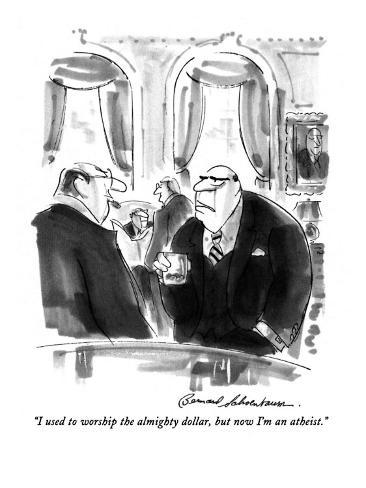
But let's get back to the history of Anglola, as quickly scanned via the "History of Angola" Wikipedia page, in accordance with our 206-day project. The name Angola comes from "N'gola," the Kimbundu word for king.
The first ones to settle were the Bushmen, great hunters, similar to Pygmies in stature. This changed at the beginning of the sixth century AD, when the Bantu, already in possession of metal-working technology, ceramics and agriculture began one of the greatest migrations in history.... The first large political entity in the area, known to history as the Kingdom of Kongo, appeared in the thirteenth century and stretched from Gabon in the north to the river Kwanza in the south, and from the Atlantic in the west to the river Cuango in the east....In 1482, the Portuguese arrived:
The Portuguese colony of Angola was founded in 1575 with the arrival of Paulo Dias de Novais with a hundred families of colonists and four hundred soldiers. Luanda was granted the status of city in 1605....The Portuguese took over again and stayed until 1975, after a coup d'etat in Portugal that installed President António de Spínola.
After undertaking various journeys [Queen Jinga] succeeded in 1635 in forming a grand coalition with the states of Matamba and Ndongo, Kongo, Kassanje, Dembos and Kissamas. At the head of this formidable alliance, she forced the Portuguese to retreat.
Meanwhile, Portugal had lost its King and the Spanish took control of the Portuguese monarchy.... Jinga entered into an alliance with the Dutch... In 1648, after Portugal has regained its independence from the Spanish rulers... a large Portuguese force from Brazil under the command of Salvador Correia de Sá retook Luanda, leading to the return of the Portuguese in large numbers.
The Spínola government agreed to give all of Portugal's colonies independence, and handed power in Angola over to a coalition of the three largest separatist movements, the MPLA, UNITA, and the FNLA, through the Alvor Agreement. The coalition quickly broke down, however, and the country descended into civil war....Cuba involved itself, and the U.S. had difficulties with that involvement. An accord was signed in 1988 and another in 1991. There were democratic elections, but the results were questioned and more war followed. It seems that the conflict ended 2002.
Friday, January 7, 2011
"We’re given menus, but they’re in Portuguese. The waiter has a handful of English words and as best as..."/"Asbestos? They had asbestos?!"
Meade interrupts me in the middle of my reading of Nina's post about her trip to Cascais, Portugal, which you can get to from here if you take "two Madison buses, three separate flights, one Lisbon bus, and finally one Portuguese train."
Sunday, August 12, 2007
"Bullfighting in Portugal is like a play with the ending missing... Killing the bull is an art..."
"Bullfighting in Portugal... deprives the bull of his dignity." It's illegal to kill the bull in Portugal, but one bullfighter did, and he's been fined $137,000:
The crowd had begun waving white napkins and chanting, “Kill the bull! Kill the bull!” [Pedrito] recalled in an interview. Eager to satisfy, he pulled out his sword and stabbed the raging half-ton bull in its spinal cord. He received a standing ovation, was hoisted on the crowd’s shoulders and paraded through the streets....We are lovers! We fight bulls but don't kill them. Our dictators are less authoritarian, and our conquerors refrain from pillaging. Come on, that's a concept of love, isn't it?
The case spawned a national debate here. His supporters argue that a death-free struggle is a sacrilege because the culmination of a bullfight should reflect man’s ultimate triumph or defeat against the bull, while critics contend that Portugal must retain its civility and show humanity to animals....
Sociologists here say that bullfighting in Portugal is less of a blood sport than in Spain because the Portuguese, compared with the Spanish, are “soft machos.”
Marcelo Rebelo de Sousa, a leading cultural commentator, notes in this regard that António de Oliveira Salazar, the dictator who ruled Portugal for nearly 40 years, was less authoritarian than Francisco Franco in Spain. Furthermore, he says, rather than pillaging their empire, as the Spanish did, the Portuguese married and reproduced with the inhabitants of their colonies.
“We Portuguese are lovers, not fighters,” he said. “And this is reflected in most aspects of our culture, including our approach to bullfighting.”
Subscribe to:
Posts (Atom)
 :.
:.
