Pages

Labels

Showing posts with label 1960s. Show all posts

Saturday, February 9, 2013

Why does a telephone have 1-2-3 at the top instead of at the bottom, like a calculator?

Because "a modest man" with "variegated accomplishments (he had a doctorate in mathematical psychology, was trained in electrical engineering and had been a professional violinist)" applied behavioral science to telephone design. He was John E. Karlin, who died on January 28th at the age of 94.

Karlin also determined "the optimal length for a phone cord":
Telephone company executives wondered whether the standard cord, then about three feet long, might be shortened. Mr. Karlin’s staff stole into colleagues’ offices every three days and covertly shortened their phone cords, an inch at time. No one noticed, they found, until the cords had lost an entire foot.

From then on, phones came with shorter cords.

Mr. Karlin also introduced the white dot inside each finger hole that was a fixture of rotary phones in later years. After the phone was redesigned at midcentury, with the letters and numbers moved outside the finger holes, users, to AT&T’s bewilderment, could no longer dial as quickly.

With blank space at the center of the holes, Mr. Karlin found, callers no longer had a target at which to aim their fingers. The dot restored the speed.
Despite these efforts at helping, he found himself referred to as "the most hated man in America," because his name was attached to the decision — made in the 1960s — to switch to all-digit phone numbers instead of things like PEnnsylvania 6-5000." The phone system was running out of numbers made from pronounceable words, and it was Karlin figured out that people would be able to remember 7 digits.

I'm old enough to have lived through the big switch from named "exchanges" to all numbers. There was a lot of anguish, back then, over whether the human individual was being turned into a number. It was also in the 60s — 1963 to be exact — that the post office forced ZIP codes on us. Before then, you had a number in between the city and the state names. I remember the last line of my address being Wilmington 3, Delaware. The government tried to soothe us by personifying the number as a human character, Mr. ZIP:


It's hard to imagine the government today using such an obvious, laughable technique as it pushes us into a life of regimentation. Mockery would be made. But those were simpler times.

Friday, January 25, 2013

Let's dance like it's 1958 in Idaho.


That's nice and slow. I think you can all learn that, and I think it would be nice if kids today learned that dance, maybe in gym class. I think it would help them in many ways. And feel free to dress like that, even unironically.

I found that because YouTube suggested it after I watched this 1965 clip from the TV show "Hollywood a Go-Go" with Del Shannon singing "Runaway" and the "Hollywood a Go-Go" go go dancers were dancing around him doing some dance that represented running away, even though their forward motion only took them in a circle so they never got away. It's faster and more frenetic dancing, but I think you might be able to figure out the moves, even though we never get to see the feet.

Seemingly bridging the time gap between the first and second video — and also suggested by YouTube — here's Little Eva singing about the brand-new dance "The Loco-Motion." I say "seemingly" because it looks early 60s and the "Runaway" dance looks later 60s, but in fact, both clips are from 1965. A lot of old and new intersected in 1965. Personally, I was 14 years old, and I was rooting for progress. I watched "Hollywood a Go-Go" and "Shindig" (the show Little Eva's on), and I tuned in hoping to see British invasion stuff like The Kinks or folk rock stuff like The Byrds. I would have regarded Del Shannon as an intrusion from the pre-Beatles era. "Runaway" was a hit in 1961. It was one of the singles we played at slumber parties when we were children.

"The Loco-Motion" was a hit in 1962. Little Eva — Eva Narcissus Boyd — was a maid who also worked as a babysitter for Carole King and Gerry Goffin: "It is often claimed that Goffin and King were amused by Boyd's individual dancing style, so they wrote 'The Loco-Motion' for her" — but maybe that's not true. Little Eva doesn't look too interested in dancing in that "Shindig" clip. The notorious song "He Hit Me (It Felt Like A Kiss)" was based on what Little Eva told Carole King about her relationship with her boyfriend. That song was originally recorded by The Crystals — produced by the not-yet-a-murderer Phil Spector — and in recent years, it's been covered by Courtney Love and Grizzly Bear — with some unknown degree of irony.

Saturday, January 12, 2013

Imagine if... women bought cars!

An ad from the May 5, 1967 issue of Life Magazine:

Untitled

"You'll discover that even driving down to buy bread can be kicks. You'll find yourself saying 'I'll pick you up' even when it's Helen's turn to drive. Or Ed's.'"

I love the use of the word "kicks." It's almost as if our little lady is getting in some of those drugs we've been reading about as the Summer of Love rolls in.

The mid-calf skirt is suddenly a mini skirt, but it's only 1967, and if you're as old as I am, you know what that meant — your stocking tops and even your garters might show:

Untitled

ADDED: The anti-drug song "Kicks" was a hit in 1966. If you ever worry that you don't know how to dance, I guarantee you that 20 seconds into this "Kicks" video you will be able to dance as well as Paul Revere & the Raiders.

Saturday, December 1, 2012

"People Get Ready."

A fabulous 1965 recording by The Impressions. Don't confuse it with "Get Ready," by The Temptations, which is a completely different song. Some people even confuse The Impressions and The Temptations. "Get Ready," from 1966, was written by Smokey Robinson. (Here's how Smokey did it in 1979.)

As you may have noticed, I got absorbed with the word "get" earlier today. "Let's get out of here" and "You just don't get it, do you?" are 2 famously recurrent lines in movies. In the comments, I was saying:
"Get" — the word in both cliche lines — is a funny word. I've noticed that professional writers -- e.g. lawyers -- will replace the word "get" whenever they can (with seemingly more proper words like "obtain" and "acquire" and "depart" or "arrive"). It's like it's not a regular word. It's so useful we shouldn't use it.
And:
"You just don't get it" is a fascinating phrase. It was huge during the Clarence Thomas hearings. Do you remember? It's used to exert psychological pressure. You're trying to persuade someone that a particular viewpoint is correct, and you're jumping to this level of disgust and disbelief, essentially telling the person that they are dumb and isolated from all the people who already understand. It's not just that you don't agree with me already, you're some kind of outcast.
St. Croix said avoiding the word "get" is "a class thing," and professionals who avoid it are trying to sound "high class," trying "to impress." That made me do a little search to see whether the Supreme Court suppresses the word "get," and found it in only one third of the cases in the past year. Often it was a quote, like "Have you ever tried to get cow s*** out of a Prada purse?" (which is a cute low/high mix). Justice Scalia began a dissenting opinion with: "Let me get this straight..." (which might be taken as a deliberate working-class affectation). I'm seeing the word used in colloquial phrases like "get around," "get it backwards," and "get it right." Following natural speech patterns, "get" would appear much more frequently, so I say there's active suppression.

I ran across the famous Oliver Wendell Holmes Jr. sentence about free speech and the marketplace of ideas:
"But when men have realized that time has upset many fighting faiths, they may come to believe even more than they believe the very foundations of their own conduct that the ultimate good desired is better reached by free trade in ideas -- that the best test of truth is the power of the thought to get itself accepted in the competition of the market, and that truth is the only ground upon which their wishes safely can be carried out."
Imagine what the standard present-day legal editor would do to that sentence: the best test of truth is the power of the thought to gain acceptance in the competition of the market. (The editor would also try to purge the passive voice by fiddling around with the subject — maybe it should be "competition" — toying with the notion of making "test" the verb, and fretting over whether "test" and "market" amount to a mixed metaphor.)

Lawyers and judges just don't get that "get" is a fine word that shouldn't be replaced by boring longer words. When it comes up naturally, as you'd use it in speech, that's where it belongs. It feels natural because it's won in the marketplace of people talking to each other over the centuries, carrying out their affairs in real time. "Got" is true.

As I said, I got — got! — absorbed in the word "get" today, and I got — got! — interested in figuring what's the best song with the word "get." A marketplace of "get" songs. "People Get Ready" won. (Look at how many cover versions there are!) Other contenders — in addition to the above-mentioned "Get Ready" — are: "I'll Get You"/"Get Back"/"Getting Better"/"Got to Get You Into My Life" (The Beatles), "Get It While You Can" (Janis Joplin), "Get Off of My Cloud" (The Rolling Stones), "Get on the Floor" (Michael Jackson), "I Get Around" (The Beach Boys); "Can I Get a Witness" (Marvin Gaye), "We Gotta Get Out of This Place" (The Animals).... That's just stuff easily picked from my 1960s-leaning iPod.

My point is: What a hard, sharp word! Use it.

(And: "People Get Ready" = sublime.)

Friday, October 26, 2012

Camille Paglia, who voted for Obama in '08, delivers a fine rant about why she's not voting for him this time.

She's interviewed on video here, by Glenn Reynolds. Most of the interview is about art in America and her new book "Glittering Images" (which I just bought, in Kindle). But in the end, she's asked why she's not voting for Obama — she's voting for Jill Stein — and out flow the words, which I started transcribing without knowing how long she'd go on. I kept transcribing, because it was all such great material, so here it is (with a few screen grabs, taken from the art section of the interview):
I was very excited about him. I thought he was a moderate. I thought that his election would promote racial healing in the country. 
This is the point at which I started transcribing, thinking: This is how I felt, when I voted for Obama in 2008. Except I wouldn't say I was "very excited." I wasn't caught up in the ecstasy. I thought it was the better bet, compared to the GOP alternative, and I hoped for the moderation and advancement in attitudes about race.
It would be a tremendous transformation of attitudes. And instead: one thing after another. Not least: I consider him, now, one of the most racially divisive and polarizing figures ever. I think it's going to take years to undo the damage to relationships between the races. 


Yes, this hope for racial transformation got squandered early, over that awful Henry Louis Gates incident. Back to Paglia:
But beyond that, I am just sick and tired of endless war. I was in favor of bombing the hell out of the Afghanistan mountains after 9/11, but I would have never agreed to this land war in Afghanistan, this endless land war, as well as things like this Libyan incursion that Obama appears to have been pushed into by these women, like Hillary Clinton and Samantha Power, the chaos in foreign policy, the bowing to foreign leaders.

Also the Obamacare: of course, we need health care reform in this country. What a mess! Everyone agrees about that. But the Obamacare is, to me, a Stalinist intrusion — okay? — into American culture.

The creation of this culture of surveillance, from these bureaucracies, which is also carried over into Obama's endorsement of drones on the military level as well as for police control of the population. I mean, I don't understand how any... veteran of the 1960s who's a Democrat could not see the dangers here, that Obama is a statist. It's exactly what Bob Dylan was warning about in "Subterranean Homesick Blues," okay?
I paused the video at "It's exactly what Bob Dylan was warning about" and asked Meade what song she's about to name, and he said "Masters of War," and I said "That's what I thought." But it's "Subterranean Homesick Blues," and as soon as she says it, we know why. (Look out kid/They keep it all hid/Better jump down a manhole/Light yourself a candle...)
You don't want government agencies being empowered to intrude into people's lives like this. The controlling force in Obamacare is the IRS! Okay? This flies in the face of what the Free Speech Movement was about at Berkeley or about any of the values, I feel, of my generation.


Yes. Exactly. This is how the Democratic Party lost me — by trading freedom for statism.
So I feel the Democratic Party needs to be shattered and remade to recover its true progressive roots. I don't see progressives. All I see is white upper-middle-class liberals who speak in this unctuous way about the needs of the poor.
Unctuous. Yes. White upper-middle-class liberals lubricating themselves.
They have no connection whatever with the working class. Okay? It's the professional class gone amok. And that's why they don't notice what a bureaucratic nightmare Obamacare is.

Saturday, September 8, 2012

"Three West Lafayette youngsters engage in a bit of outdoor sport called skateboarding..."

"... balancing themselves on boards to which skate are attached."

Untitled

The news — just handed to me — from 1964, when Indiana newspaper readers were assumed not yet to have heard of skateboarding and when kids made their own skateboards by breaking up a metal roller skate and nailing the pieces to a board.

(The caption misspells Meade's first name and his last name.)

Here's Jan & Dean on "American Bandstand," singing their 1964 hit "Sidewalk Surfin'" — and calling this "the newest sport around":

Friday, September 7, 2012

"We were on an acid trip and the sun was shining and the girls were dancing (some from Playboy, I believe) and the whole thing was really beautiful and Sixties."

"And this guy - who I really didn't know, he hadn't made Easy Rider or anything - kept coming over, wearing shades, saying 'I know what it's like to be dead,' and we kept leaving him because he was so boring."
It was scary, when you're flying high: "Don't tell me about it. I don't want to know what it's like to be dead!"
"...[H]e was showing us his bullet wound. He was very uncool..."
From the Wikipedia article on the Beatles song "She Said She Said," which I looked up after reading the she-said-she-said bad editing in TPM (quoted in the previous post).

Monday, July 23, 2012

Sexology, 1960s.


More disturbing Sexology covers here.

For relief from this 1960s-style sexual oppression, look at these refreshing 1960s paintings — book cover illustrations — of women.

Tuesday, June 5, 2012

Anti-Walkerites on the eve of the recall performed an "Om the Dome" ritual at the Wisconsin Capitol.

"Oma Vic McMurray, who runs a home childcare center and has been active in the effort to recall Gov. Scott Walker, instructed the crowd on breathing techniques and led a practice group 'Om.'"
McMurray says the community chant was meant to be a time to "consciously connect on a spiritual level so that we could raise the energy and have faith that this will be a good week for Wisconsin."

Connie Nadler says she felt the symbolism of the moment. "It was quite touching. I was at the connecting point where we were stretching to reach and connect to the other end of the line. The Capitol police were there and were real encouraging. People rushed from the street to help" complete the circle.
Reminds me of Allen Ginsberg at the Democratic National Convention in Chicago 1968:


And, especially since a building was involved, it takes me all the way back to 1967 and "Levitate the Pentagon"....
[A] group of hippies was trying to exorcize the Pentagon. The brainchild of Abbie Hoffman, the plan was for people to sing and chant until it levitated and turned orange, driving out the evil spirits and ending the war in Viet Nam. The Pentagon didn't move.
Related: "What do you think Abbie Hoffman would do to stop the Koch brothers?"

Monday, May 21, 2012

"Friends, Romans, countrymen..."

This amused me. Cowboy style. I ran across it because I was looking for the text to the famous Mark Antony speech, which I'd been forced to memorize in junior high school, many decades ago. (Here's Marlon Brando doing it, not amusingly.) And what got me testing my own memory was something I'd just read about Barack Obama, which someone had emailed me, a propos of the recent "born in Kenya" dustup. It's a GQ article from November 2009 called "Barack Obama's Work in Progress."
Over the past few years, we’ve gotten to know our president as a lot of different things: campaigner, lawyer, father, basketballer. But what if Obama’s first and truest calling—his desire to write—explains more about him than anything else? Robert Draper recounts the untold story of the first man since Teddy Roosevelt to serve as author in chief.
I haven't combed through that whole article looking for the Kenya connections, but I noticed this bit about Shakespeare:
Sometime in 2002, the young state senator pays a daytime visit to the Chicago Shakespeare Theater. The artistic director, Barbara Gaines, is happy to show the politician around. Watching the carpenters erect the set, he asks Gaines which play is about to be performed. “Julius Caesar,” she tells him.

At first, Obama doesn’t say anything. Then, in a very soft voice, he begins to recite some twenty lines from the play. As he does so, he places his hand on his heart, as if stricken by the words’ transcendent beauty.

The director is agog. She has never heard an elected official quote Shakespeare in such a way.
Now, wait a minute. Who, upon mention of "Julius Caesar," doesn't start going "Friends, Romans, countrymen, lend me you ears..."? If it was some other 20 lines from the play, I might be impressed. The fact that he went on for 20 lines is sort of cool as a demonstration of memory. It's more than I can do without missing some words, but then, I learned it during the LBJ administration. But who goes on for 20 lines, putting on a memory show? Maybe you would if you saw that you were getting the director of the Chicago Shakespeare Theater agog.

And would you put your hand on your heart? (Cf., Obama not putting his hand over his heart during the National Anthem.)

Back to GQ:
Later, she tells a co-worker, “I just had the most amazing experience. I met the first politician to have the soul of a poet.” (The first, she means, since Abe Lincoln, who quoted lines from Macbeth less than a week before his assassination: I think our country sinks beneath the yoke…)
The soul of a poet. Doesn't anyone remember Eugene McCarthy?


Many women loved this Senator from Minnesota, who challenged LBJ in 1968, and the poetry was part of it. My maternal grandmother loved him because he was a poet. 1968 — there was a year. Bobby Kennedy pushes Senator McCarthy — the good Senator McCarthy — aside, LBJ declines to run, Martin Luther King is shot down, 2 months later Bobby follows him, and Nixon becomes inevitable.

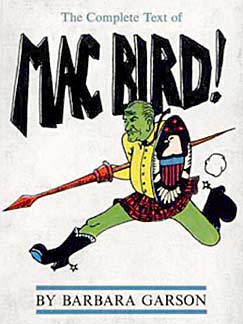
By the way, speaking of MacBeth and LBJ, they made a play back then: MacBird!


The playwright, Barbara Garson said:
"People used to ask me then, 'Do you really think Johnson killed Kennedy?'... I never took that seriously. I used to say to people, 'If he did, it's the least of his crimes.' It was not what the play was about. The plot was a given."

Wednesday, May 9, 2012

"A clear example of an architectural hairstyle was the Five Point Geometric Cut, created by Sassoon in 1964 on a young model named Grace Coddington..."

"...who later on became the Fashion Editor of British Vogue. The cut remained unequalled for its absolute geometry and it helped the hairdresser becoming famous all over the world."
In 1965 Sassoon developed a geometric cut to mark the opening of his first salon in America and began experimenting with asymmetries that followed the natural hair growth at the nape.

He created asymmetrical cuts to complement an Emmanuel Ungaro collection or long styles – with hair cut short at the nape and long at the sides with a line that encouraged hair to swing freely but also to fall perfectly into shape for their precise cut – for a Mila Schön catwalk show.
I've seen a lot of hairstyles come and go in my life. (I'm 61.) But I've got to say, there was ONE hairstylist who — as far as I can tell — invented something precisely new and distinctively his. Everyone knew was a Sassoon haircut was.


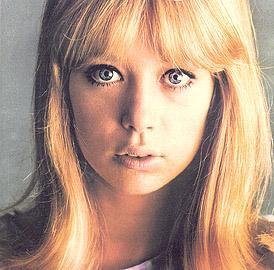
I wish I could find a perfect photograph of the way the cut made a "W" at the nape. It was so sharp and modern. It was mod, and we all wanted the mod look. It was easy to grow long hair and thick bangs, Patti Boyd style. But the alternative, the 5 points... how could you find anyone in your hometown who could cut hair like that? So glossily brilliant. The best idea for a hairstyle or at least nobody else ever came up with a better one.

Goodbye to Vidal Sassoon. He was 84.

Saturday, May 5, 2012

"It didn't take much money to live... You could live poor, you could have a lot of fun."

"People didn't need a lot of stuff. And when rents were cheap, all kinds of creative forces ended up here."

NYC, in the 1960s...

"The main thing about the scene back then was that there was this amazing feeling that something wonderful and amazing was going to happen inevitably"...

Nothing feels like that anymore.

Friday, May 4, 2012

"I always thought that a well-embedded Norm was the guy at the end of the bar in Cheers."

Dr. C is puzzled by my statement that affirmative action is "a well-embedded norm."

ADDED: Back in the 1960s, there was an opportunity, as a culture, to adopt the mental discipline that is color-blindness. All the decent people and the people who aspired to decency had awakened to the stark and obvious reality that discriminating against black people was terribly wrong. But some people — including Democrats and Republicans — believed it was important to take account of race in order to overcome all the deeply embedded discrimination and the effects of that discrimination.

Back then, we were at a fork in the road, and we don't know how things would have worked out if we'd taken the try-to-be-color-blind road. We went down the affirmative action road. We are very far down that road. To say let's start being color blind now feels completely different. Many, many people who think of themselves as good people, certainly decent people, think they've been doing the right thing and worry that those who are pushing for color blindness are not the good people. It's at least terribly complex. The let's-be-color-blind feat is not what it was back when we were at that fork in the road in the 1960s!

Thursday, April 12, 2012

"Politicians love mellencamp. Jack and diane."

I wrote that in my iPhone notes on April 1, when I was waiting in the overflow room at the Romney rally. I looked that up this morning after writing about Mellencamp supposedly being "not amused" that they're playing his song "Small Town" at Scott Walker rallies. That post also notes that Mellencamp once performed "Small Town" at an Obama rally. Neither Walker nor Obama were born in a small town or stayed put in a small town with "little opportunity" — as the song goes — but the song somehow still sounds right.

But "Jack and Diane" — is that a good song for a politician, if you start listening to the words?
Suckin' on chili dogs outside the Tastee Freez
Diane's sittin' on Jackie's lap, he's got his hand between her knees
Jackie say "Hey, Diane let's run off behind a shady tree"
Dribble off those Bobbie Brooks slacks, let me do what I please
I'm sitting there in the overflow room, thinking about how Mitt wooed Ann back in Bloomfield Hills, Michigan in the 1960s. Bobbie Brooks was a brand of clothes that teenage girls were proud to wear — not cheap, but if you babysat a little, you could buy them. In 1968, you were hoping to look like this:

Colleen Corby bobbie brooks

Maybe that helps you picture young Ann and Mitt at the Tastee Freez.

Thursday, March 29, 2012

Goodbye to Adrienne Rich and Earl Scruggs.

She was 82. He was 88. Famous people die in 3s — it has been noted — but who could complete the triad that begins with Rich and Scruggs?

He was the ultimate banjo player...
... best known for performing alongside the guitar-playing Lester Flatt with the Foggy Mountain Boys. Among their signature songs were “Foggy Mountain Breakdown,” which was used as the getaway music in the 1967 film “Bonnie and Clyde,” and “The Ballad of Jed Clampett,” the theme song of the 1960s television sitcom “The Beverly Hillbillies.”
For TV and movie watchers of the 60s, this was the sound of freedom — Jed moves away from there, there being wherever it was that the poor mountaineer "lived," and Bonnie, she follows Clyde, who said to her:
You're different.... You know, you're like me. You want different things. You got somethin' better than bein' a waitress. You and me travelin' together, we could cut a path clean across this state and Kansas and Missouri and Oklahoma and everybody'd know about it. You listen to me, Miss Bonnie Parker. You listen to me.
And later, she says: "You know what, when we started out, I thought we was really goin' somewhere. This is it. We're just goin', huh?"

That's what poured into our ears back in the 60s, lubricated by banjo music. Adrienne Rich got her cultural foothold in the 60s:
Once mastered, poetry’s formalist rigors gave Ms. Rich something to rebel against, and by her third collection, “Snapshots of a Daughter-in-Law,” published by Harper & Row, she had pretty well exploded them. That volume appeared in 1963, a watershed moment in women’s letters: “The Feminine Mystique” was also published that year.
In the collection’s title poem, Ms. Rich chronicles the pulverizing onus of traditional married life.....
I'm going to pulverize your onus, baby. The funny thing though: Rich was a lesbian. And yet she married a man:
In 1953 Ms. Rich had married a Harvard economist, Alfred Haskell Conrad, and by the time she was 30 she was the mother of three small boys....

By 1970, partly because she had begun, inwardly, to acknowledge her erotic love of women, Ms. Rich and her husband had grown estranged. That autumn, he died of a gunshot wound to the head; the death was ruled a suicide. To the end of her life, Ms. Rich rarely spoke of it.
I think I once bought one of her books. It seemed like something in the spirit of the times that one should partake of, but I never read it. I find most poetry annoying, and hers was no exception. I did read that essay "Compulsory Heterosexuality and Lesbian Existence," which all the radical feminists were taking terribly seriously circa 1990. It was the assigned text in one of the law school radical feminist reading groups I participated back in those days. There were all these earnest, intelligent, heterosexual women who studied that text and gabbed about it until they genuinely got their minds around the amazing realization that they should not be heterosexual. Not that they should be having sex with women, but in some other, conceptual way. I'd tell you what the concept was but my mind is not longer around that particular realization, and I don't have the time right now to redo all that hard intellectual work that I did amongst the feminists in 1990/1991.

I'm sure it was all about freedom, but I'm free of that now. Since I'm quoting Bob Dylan today:
A self-ordained professor’s tongue
Too serious to fool
Spouted out that liberty
Is just equality in school
“Equality,” I spoke the word
As if a wedding vow
Ah, but I was so much older then
I’m younger than that now

Monday, March 19, 2012

It was 50 years ago today...

... Bob Dylan taught the band to play.

I love Bob, but I never cared about the first album. In fact, someone gave me a copy of it as a gift, in about 1968, because she knew it was the only Bob Dylan album I didn't have, and I returned it. Come on, Bob, write your own songs!

As long as I'm doing "Young Althouse" material... The first Bob Dylan album I bought was "Bringing It All Back Home," which was the newest Bob Dylan album at the time when I started buying Bob Dylan albums. (Albums were expensive then, and as a teenager, I put a lot of thought into the decision to add each one to my possessions.)

Saturday, February 25, 2012

"The fervor of the sixties penetrated law schools quite passionately."

Strikingly sexual imagery from a 2005 article called "Introduction to Clinical Legal Education" (which I'm reading in connection with my law school's "self-study" of its clinical program). (PDF.) Here's the quote in context:
During the second wave of clinical legal education - a period spanning from the 1960's through the late 1990's - clinical legal education solidified and expanded its foothold in the academy. The factors that contributed to this transformation included demands for social relevance in law school, the development of clinical teaching methodology, the emergence of external funding to start and expand clinical programs, and an increase in the number of faculty capable of and interested in teaching clinical courses. Perhaps the most powerful of these factors was the zeitgeist of the 60's, which produced "student demands for relevance." In reflecting on the growth and direction of clinical legal education, Professor Dean Hill Rivkin has noted: "It was the societal legacy of the sixties . . . that most shaped clinical legal education. The fervor of the sixties penetrated law schools quite passionately."
ADDED: Speaking of passionate fervor, I love Wikipedia. It has an article titled "Relevance." Excerpt:
During the 1960s, relevance became a fashionable buzzword, meaning roughly 'relevance to social concerns', such as racial equality, poverty, social justice, world hunger, world economic development, and so on. The implication was that some subjects, e.g., the study of medieval poetry and the practice of corporate law, were not worthwhile because they did not address pressing social issues.[citation needed]
Of course, that passage contains many links to other Wikipedia articles, including this one called "Social justice." Excerpt:
The term and modern concept of "social justice" was coined by the Jesuit Luigi Taparelli in 1840 based on the teachings of St. Thomas Aquinas and given further exposure in 1848 by Antonio Rosmini-Serbati.... It is a part of Catholic social teaching, the Episcopalians' Social Gospel, and is one of the Four Pillars of the Green Party upheld by green parties worldwide. Social justice as a secular concept, distinct from religious teachings, emerged mainly in the late twentieth century, influenced primarily by philosopher John Rawls. Some tenets of social justice have been adopted by those on the left of the political spectrum....
Ah! Religious roots. I note the resonance with Rick Santorum's observation that President Obama believes in "some phony theology." Sorry. The 60s penetrated me too passionately, and I've still got the fervor for relevance.