Pages

Labels

Showing posts with label LBJ. Show all posts

Monday, December 17, 2012

"What a liar" — famously muttered into an open mike.

It's the one thing I've always remembered about Daniel K. Inouye.

Dead now, at age 88.

Inouye was a World War II hero and Medal of Honor winner who lost an arm to a German hand grenade during a battle in Italy. He became the first Japanese-American to serve in Congress, when he was elected to the House in 1959, the year Hawaii became a state. He won election to the Senate three years later and served there longer than anyone in American history except Robert Byrd of West Virginia, who died in 2010 after 51 years in the Senate....

In 1968, President Lyndon Johnson urged Vice President Hubert Humphrey, who had won the Democratic nomination for president, to select Inouye as his running mate. Johnson told Humphrey that Inouye's World War II injuries would silence Humphrey's critics on the Vietnam War.

"He answers Vietnam with that empty sleeve. He answers your problems with (Republican presidential candidate Richard) Nixon with that empty sleeve," Johnson said.

But Inouye was not interested.

Monday, November 19, 2012

4 reasons why Republicans don't need to feel that bad.

Chris Cillizza link-grabbingly scrounges up some hope for the seemingly hopeless:
1. The party’s superstars are coming of age.... Sen. Marco Rubio (Fla.), New Jersey Gov. Chris Christie, Louisiana Gov. Bobby Jindal and Rep. Paul Ryan (Wis.) — all of whom have significantly more star power than Romney....

2. There are a historic number of GOP governors.... [including 2 Hispanics]...

3. The electoral map is bad, but not that bad....

4. History is on their side. Presidential politics in the post-World War II era tend to be defined by the pendulum effect....
On #4, I still remember the Newsweek cover that followed the 1964 election: a sick/dying/beaten-up elephant in bed. Having supported Goldwater and grasped something of the value of conservatism, I found the image truly disturbing. And I was old enough to think somewhat deeply about it. Conservatism would never get its message across now. LBJ would distribute endless gifts and the people would never be willing to hand them back. And yet, 4 years later, Richard Nixon, the loser from 4 years earlier, would arrive — the "new Nixon" — and he seemed fresh, a source of hope.

Just my luck, though, I'd leaped leftward by then. Not that I could vote. On Election Day, I was 2 months shy of my 18th birthday, which wasn't as intensely frustrating as it sounds. In those days, you had to be 21 to vote. In an amazing run of bad luck, beginning in 1972 — when, irritatingly, all the 18-to-20-year-olds got in on voting too — I voted for 5 losing presidential candidates before my choice won. There have been 5 presidential election since that one, and I've supported the winner in 3 of them. In all of those 11 elections, there was only one man who won twice with me voting for him both times. That is, I've only voted for one 2-term President and stuck with him for the reelection.

Monday, May 21, 2012

"Friends, Romans, countrymen..."

This amused me. Cowboy style. I ran across it because I was looking for the text to the famous Mark Antony speech, which I'd been forced to memorize in junior high school, many decades ago. (Here's Marlon Brando doing it, not amusingly.) And what got me testing my own memory was something I'd just read about Barack Obama, which someone had emailed me, a propos of the recent "born in Kenya" dustup. It's a GQ article from November 2009 called "Barack Obama's Work in Progress."
Over the past few years, we’ve gotten to know our president as a lot of different things: campaigner, lawyer, father, basketballer. But what if Obama’s first and truest calling—his desire to write—explains more about him than anything else? Robert Draper recounts the untold story of the first man since Teddy Roosevelt to serve as author in chief.
I haven't combed through that whole article looking for the Kenya connections, but I noticed this bit about Shakespeare:
Sometime in 2002, the young state senator pays a daytime visit to the Chicago Shakespeare Theater. The artistic director, Barbara Gaines, is happy to show the politician around. Watching the carpenters erect the set, he asks Gaines which play is about to be performed. “Julius Caesar,” she tells him.

At first, Obama doesn’t say anything. Then, in a very soft voice, he begins to recite some twenty lines from the play. As he does so, he places his hand on his heart, as if stricken by the words’ transcendent beauty.

The director is agog. She has never heard an elected official quote Shakespeare in such a way.
Now, wait a minute. Who, upon mention of "Julius Caesar," doesn't start going "Friends, Romans, countrymen, lend me you ears..."? If it was some other 20 lines from the play, I might be impressed. The fact that he went on for 20 lines is sort of cool as a demonstration of memory. It's more than I can do without missing some words, but then, I learned it during the LBJ administration. But who goes on for 20 lines, putting on a memory show? Maybe you would if you saw that you were getting the director of the Chicago Shakespeare Theater agog.

And would you put your hand on your heart? (Cf., Obama not putting his hand over his heart during the National Anthem.)

Back to GQ:
Later, she tells a co-worker, “I just had the most amazing experience. I met the first politician to have the soul of a poet.” (The first, she means, since Abe Lincoln, who quoted lines from Macbeth less than a week before his assassination: I think our country sinks beneath the yoke…)
The soul of a poet. Doesn't anyone remember Eugene McCarthy?


Many women loved this Senator from Minnesota, who challenged LBJ in 1968, and the poetry was part of it. My maternal grandmother loved him because he was a poet. 1968 — there was a year. Bobby Kennedy pushes Senator McCarthy — the good Senator McCarthy — aside, LBJ declines to run, Martin Luther King is shot down, 2 months later Bobby follows him, and Nixon becomes inevitable.

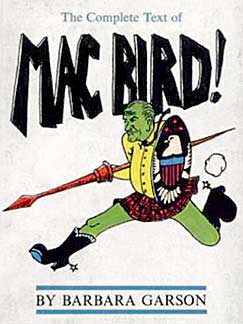
By the way, speaking of MacBeth and LBJ, they made a play back then: MacBird!


The playwright, Barbara Garson said:
"People used to ask me then, 'Do you really think Johnson killed Kennedy?'... I never took that seriously. I used to say to people, 'If he did, it's the least of his crimes.' It was not what the play was about. The plot was a given."

Wednesday, May 9, 2012

"Katzenbach finally interrupted and said he knew about the Constitution, but a man could be a damn fool and be constitutional."

From David Halberstam's "The Best and the Brightest" (p. 345), reporting what the Attorney General Nicholas Katzenbach said when Secretary of State Dean Rusk, not wanting to pressure LBJ about Vietnam, "gave Katzenbach a long dissertation on the constitutional prerogatives of the President."

Nicholas Katzenbach died yesterday. He was 90.

There was speculation that Mr. Katzenbach left as attorney general [in 1966] in part to make way for Ramsey Clark, an assistant attorney general. President Johnson, it was said, wanted to make a historic appointment to the Supreme Court, choosing Thurgood Marshall to become the first black justice. Appointing Mr. Clark would prod his father, Justice Tom C. Clark, to resign from the bench to avoid a conflict of interest with his son. Ramsey Clark was appointed, Justice Clark did resign and Justice Marshall did succeed him.

As the No. 2 official at State, Mr. Katzenbach defended the legality of United States involvement in Vietnam, appearing before the Senate Foreign Relations Committee in August 1967 to argue that the Tonkin Gulf resolution, passed by Congress in 1964, had given the president the authority to widen the war.

Opponents of the war had hoped that he would follow in [the footsteps of the man he replaced, George W. Ball,] and challenge the administration’s policies from within. Mr. Katzenbach took a quieter tack, setting up a secret working group — “the Non-group,” he called it — to pursue ways to end the war. Mr. Katzenbach later said the group had added shades of gray to policy discussions and had contributed to bombing halts.
Another passage from "The Best and the Brightest" (pp. 420-421):
For Lyndon Johnson, the Tonkin Gulf Resolution was a victory, but like so many things he was to do in the coming year, it produced short-range gains with far more serious long-range problems. (However, ironically, the lack of legal authority for the war continued to bother not just the critics of the war but the President as well, and in 1965, as the escalation mounted, he turned to Nicholas Katzenbach, the Attorney General, and asked, “Don’t I need more authority for what I’m doing?” Katzenbach assured him that he did not, that on a legal basis he had all the authority he needed with the Tonkin Resolution. But Johnson was still bothered by the idea, and he raised the same point with his congressional liaison people and his friends on the Hill, and they told him not to go for more legal justification, that he would get hit from two sides: by the people who opposed him on the war, and by those who supported him but thought they had given him enough authority already.)

Wednesday, May 2, 2012

"Football spiked: Obama to address nation on Bin Laden anniversary live from Afghanistan."

"The official reason for the trip is to sign the new strategic partnership agreement with Karzai, but of course that doesn’t require his physical presence in Afghanistan. We all know why he’s there and why he chose today to visit. One word: Scoreboard."

***

I must be the last blogger in the world to notice that Obama went to Afghanistan. The linked story was posted yesterday at 3:35 pm, just as I was in the final rush preparing my last Conlaw class of the semester. After class, we played with puppies. That took a while. When we got home — because these were not our puppies — we sat around eating and watching a movie — "Bridesmaids" (HBO on Demand) — and got about halfway through before I sensed that the baseball game in San Diego must be on (because Meade was consulting his iPad), and that presented the perfect opportunity to cave in to sleepiness (I'd been up since 5) and appear attractively magnanimous. I switched to the game and switched off my personal consciousness. I really don't monitor the news constantly.

***

But, so Obama traveled to Afghanistan to "speak[] to an American television audience on Tuesday night from Bagram Air Base, [and] declare[] that he had traveled here to herald a new era in the relationship between the United States and Afghanistan, 'a future in which war ends, and a new chapter begins.'" The quote is from the first sentence of the article in the very Obama-friendly New York Times, and it's not very flattering, is it? He went all the way to Afghanistan to do a TV show aimed back at us here at home. He went there for a showy backdrop for the show. And he traveled there to "declare[] that he had traveled here to herald a new era." Herald... new era... I hear sarcasm. If the NYT didn't mean sarcasm, then they're so Obama-friendly that they don't hear how PR language like that sounds to a person who is just trying to read what he believes is supposed to be a newspaper.
"My fellow Americans,” he said, speaking against a backdrop of armored military vehicles and an American flag...
The NYT notes the showy backdrop. (By the way, the intro "My fellow Americans" will always, for me, call to mind LBJ.)
... “we’ve traveled through more than a decade under the dark cloud of war. Yet here, in the pre-dawn darkness of Afghanistan, we can see the light of new day on the horizon."
Oh, brother. Dark... pre-dawn darkness... light... new day... Not only is light and darkness a hackneyed metaphor, applied clumsily, but it's the very metaphor LBJ used over and over in his effort to manipulate our emotions about the Vietnam war.

Saturday, April 28, 2012

What do Bob Dylan, Toni Morrison, John Glenn, and Madeleine Albright have in common?

Obama is giving them all a medal — the Presidential Medal of Freedom.

Speaking for freedom, Bob's got an old song called "I Shall Be Free." It says:
Well, my telephone rang it would not stop
It’s President Kennedy callin’ me up
He said, “My friend, Bob, what do we need to make the country grow?”
I said, “My friend, John, Brigitte Bardot
Anita Ekberg
Sophia Loren”
(Put ’em all in the same room with Ernest Borgnine!)
It's not a slow jam, but like that Obama's slow jam the other day, it got that idea that sexual stimulation is what the country needs. (Speaking of old, there's that old Woody Allen joke: "I ... interestingly had, uh, dated ... a woman in the Eisenhower Administration ... briefly ... and, uh, it was ironic to me 'cause, uh . . . 'cause I was trying to, u-u-uh, do to her what Eisenhower has been doing to the country for the last eight years.)

Bob's most famous reference to the President is in "It's Alright, Ma (I'm Only Bleeding)":
While preachers preach of evil fates
Teachers teach that knowledge waits
Can lead to hundred-dollar plates
Goodness hides behind its gates
But even the president of the United States
Sometimes must have to stand naked
Lest you think that was sexy-naked, the year was 1965, and the President was LBJ.


Finally, back to the subject of freedom, here's one of my favorite obscure Bob Dylan songs, from the album we listened to all the time in college, "New Morning":
If dogs run free, then why not we
Across the swooping plain?
My ears hear a symphony
Of two mules, trains and rain
The best is always yet to come
That’s what they explain to me
Just do your thing, you’ll be king
If dogs run free
Run, dogs, run!

Sunday, August 7, 2011

The Jackie Tapes: LBJ was behind the JFK assassination.

She spoke with historian Arthur Schlesinger Jr. shortly after the assassination on tape recordings that Caroline Kennedy has decided to release early, supposedly "in exchange for ABC dropping its £10 million drama series about the family."

Also on the tapes: Jackie's belief that JFK was "having an affair with a 19-year-old White House intern," that she had affairs with movie star William Holden and Fiat founder Gianni Agnelli, and that "weeks before Mr Kennedy’s assassination, the couple had turned a corner in their relationship and were planning to have more children."

Wednesday, July 27, 2011

"Being rich changes surprisingly little... You still have to have an absorbing interest in life, something to do to make you feel alive."

Said G.D. Spradlin, who "made a fortune, retired in 1960 and spent a year and a half sailing in the Bahamas with his family," before deciding to become an actor. After a 30-year career playing many roles in movies and on TV, he has died at the age of 90. 

On TV, he played, on different occasions, 2 Presidents: Andrew Jackson and Lyndon Johnson:
Newsweek lauded his “sheer orneriness” in portraying Johnson, especially when putting down Kennedy. “That boy,” he growls to an aide, “is all hat and no cattle.”
In real life, he ran Senator John F. Kennedy’s presidential campaign in Oklahoma.

Thursday, December 25, 2008

"Santa, baby...."


Eartha Kitt, died on Christmas... in 2008, at the age of 81. She was famous for singing that song about Santa Claus. But she was also famous as Cat Woman on TV's "Batman" ...


... "She may be evil, but she is attractive"....

... and for telling Lyndon Johnson that he should end the Vietnam War. And, as I've said before, I'll never forget the monkey fur dress she wore in the 60s.

Wednesday, September 17, 2008

5 old presidential campaign ads.

For LBJ, Ford, Ike, JFK, and Dukakis. I love the variation in style, which, in each case, belongs so clearly to its decade.


I don't agree with John Dickerson that these are all great ads. I didn't remember that Dukakis put out that "heartbeat away" ad. Man, that was in poor taste. The Ford one was poignantly pathetic. The JFK ad was incredibly boring. The Ike ad was similarly boring but fascinating to us today because of the very old-fashioned presentation of the woman's role. That leaves Johnson's anti-Goldwater ad. I loved that one.

Sunday, April 20, 2008

"Historians are generally ambivalent over whether hot-tempered leaders have fared any worse than the placid."

Writes WaPo's Michael Leahy in a long article about McCain's reputed hotheadedness:
Harry S. Truman once threatened bodily harm in a letter to a reviewer who wrote disparagingly about the musical talents of his daughter. Richard M. Nixon ranted, and so did Bill Clinton. George Stephanopoulos once described Clinton's "purple rages," which left Stephanopoulos, often the subject of Clinton's private lashings, so shaken that he broke out in hives, sunk into depression and began taking an antidepressant.
Wait, who cares about Stephanopoulos's emotional problems? Who reacts to anger with hives?
"Clinton could flare up," remembers John D. Podesta, a former Clinton chief of staff. "You might have to endure five minutes of him yelling. But you could challenge him. . . . He would sometimes get mad when [aides] pushed back -- but it was a passing moment; tomorrow would be fine. You didn't get in the doghouse for pushing back."

"Temper can sometimes be a political instrument," said James A. Thurber, director of the Center for Congressional and Presidential Studies at American University. "There are sometimes calculated displays of temper, which is what Lyndon Johnson used to persuade people. . . .

"But sometimes somebody's temperament can get in the way of aides telling him the truth, which happened [during the Vietnam War] with LBJ. His temper scared some [aides] away, which was not good for anyone. . . . That's always part of the risk with a strong temper . . . and so it's always relevant."
Get less wimpy aides.

It sounds as though Stephanopoulos wasn't up for it. Nothing wrong with that. Reposition yourself in media and snipe from a distance. It's my preference too.

But enough about Stephanopoulos. My real question here is: How much emotional volatility is good for a President? We will — in all likelihood — face a choice between a candidate who's too hot — McCain — and a candidate who's too cool — Obama. But it's not too late — superdelegates take note! — Hillary Clinton may be just right.

She's the baby bear's porridge on the table of presidential politics.

IN THE COMMENTS: The inimitable Trooper York:
Everyone thought that Boo Boo Bear was a cute little bear like the ones you heard about in stories. But actually he was a freak. He was really into drugs and was a total enabler. Yogi threw him out of Jellystone after he got caught robbing picinic baskets to snort the condiments when he couldn’t get any drugs. He hung out in Gentle Bens guest house until the night he killed his wife and her waiter friend. He was homeless for a while which wasn’t so bad because he was used to eating out of garbage cans. He hit bottom when he was arrested with a sex toy in his fur, meth in his pocket and a rope tied around his penis. When asked what the hell he was doing with the rope, Boo Boo said “Some people thought it was too small, some people thought it was too big, but with a rope it’s just right.”

(Ricou Browning & John Florea, Gentle Ben, The E True Hollywood Story)

Friday, February 29, 2008

Let's watch the YouTubed Hillary ad that the NYT has frontpaged right now.


A commenter at the NYT blog post (where a click on the front page picture takes you) compares this ad to the famous 1964 ad for LBJ:


The Clinton ad is much mellower, lacking the drama of the child's daisy petal counting becoming a nuclear countdown and explosion, but it makes the same connections between our love for children, our desire for security, and a purportedly reliable candidate. I thought Clinton's ad was quite effective, even though I knew I was watching a Clinton ad, and it's the kind of ad that is supposed to work by drawing you in and only at length revealing what is being promoted. I am entirely jaded and not susceptible to believing what the ad is trying to tell me, but I still experienced the emotional impact. When the candidate was shown in the end, looking earnest answering the phone at night, I cried a real sob, for a tiny fraction of a second (before laughing at myself).

ADDED: And score one point for feminism if you didn't have a sexist reaction in the end when you saw Hillary Clinton on the phone. In fact, I'm impressed that this image wasn't nixed on the ground that too many people will see a woman on the phone and think: Women! Always yakking on the phone!

AND: The Hillary campaign deserves credit for getting everyone talking about this. And from our own comments here, Palladian:
Amazing, the last image of Hillary on the phone produced in me a quick pang of positive feelings for her. A moment of love for her. Notice how the whole commercial up to that point is colored in blues, almost monochromatic. Then Hillary pops onto the screen, all warm tones, lit by a warm yellowish light. We connect with the only other warm tones in the commercial, those of the lights on the outside of the home that begin the commercial, the warm windows and porch lights of home. Hillary is a beacon in a shadowy world of blue, just like home.

And she's damn well put together at 3 o'clock in the morning, isn't she?!

AND: A lot of you are noting that she's wearing glasses, but this is a nice touch of realism. Hillary wears contact lenses, and at 3 AM, she'd probably have taken them out for sleeping and would quickly put on glasses. Now, that doesn't explain the perfect suit jacket, gold necklace, and neat coiffure, but wouldn't it be hilarious if they showed her wearing a granny nightgown and sitting on the edge of the bed to take that phone call?

Saturday, February 16, 2008

Brown shoes do make it.

The NYT says it's a fashion trend for men to wear brown shoes:
BROWN men’s shoes, popular with the aristocracy in the 1930s, when they were championed by the Prince of Wales and Hollywood movie royalty, are being revived in Manhattan. After World War II, the conventional black shoe returned, except among upper-class European men, who continued to wear brown suede wingtip styles with their business suits.
But why did men stop wearing brown shoes? I think everyone got the memo sent out in song form by Frank Zappa, but why did he pick on brown shoes specifically?
The title was inspired by an event covered by Time Magazine reporter Hugh Sidey in 1966. The reporter correctly guessed that something was up when the fastidiously dressed President Lyndon B. Johnson made the fashion faux pas of wearing brown shoes with a gray suit. LBJ flew to Vietnam for a surprise public relations visit later that day.
(Tiny video clip.)

In the slideshow at the first link, you'll see lots of fashionable guys wearing brown shoes with gray suits. So don't think you need a brown suit to wear brown shoes, at least not if you plan to traipse about midtown Manhattan for the fashion photographers.

Friday, February 15, 2008

"Andrew, people my age are too young to remember Bill Clinton. All we have is George W. Bush. The office of the President to us is a mockery."

From from an email Andrew Sullivan published today. I hope the 21-year-old emailer has his hopes 'n' dreams fulfilled. Barack Obama is making him feel that the time is near when he will feel proud of his President, and: "Most people my age have never felt proud of our President." But I had to laugh at the idea that mocking the President began in the year 2001. Bill Clinton was not a figure of fun? The first Bush? Reagan? Carter? Ford? Nixon? LBJ? JFK? Eisenhower? That's as far back as I personally can remember. I won't say most people my age have never felt proud of our President. But I never have. And I don't think that's so terrible. Don't worship leaders. Let the mockery flow on. Even if a guy you like who seems pretty good makes it to the White House.

Thursday, October 11, 2007

"And another thing - the crotch, down where your nuts hang - is always a little too tight..."

"... so when you make them up, give me an inch that I can let out there, uh because they cut me, it's just like riding a wire fence. These are almost, these are the best I've had anywhere in the United States..."

Oh, my Lord! It's LBJ, on the phone, ordering pants!
But, uh when I gain a little weight they cut me under there. So, leave me , you never do have much of margin there. See if you can't leave me an inch from where the zipper (burps) ends, round, under my, back to my bunghole, so I can let it out there if I need to.
When you're done laughing, listen to the audio version, and re-experience the mirth.

ADDED: This is hilarious, but when you finally get past the laughter, you may notice the serious side of it. What is Lyndon Johnson doing here — besides ordering pants? Why is the President of the United States getting his clothing this way, with a phone call, describing what he wants in this kind of detail, but without any measurements? Does he even want the pants, which he extols as the best pants ever but seems also to hate for numerous reasons? Why is he going on about his body parts and burping loudly without excusing himself? He's humiliating the man on the other end of the line who is forced to respond in the most servile way. I think this is a species of phone sex — perverted phone sex.

Wednesday, July 11, 2007

About the war, she said to her President husband: "How much can they tear us down? And what effect might it have on the way we appear in history?"

Lady Bird Johnson, dead at 94.
[T]he unpretentious woman from Texas found herself first lady of the United States....

Her White House years ... were filled with the turbulence of the Vietnam War era....

She quoted her husband as saying: "I can't get out. And I can't finish it with what I have got. And I don't know what the hell to do."
All I remember of Lady Bird is her work on highway beautification. Comedians made fun of her by saying "Beautify! Beautify!" Was it absurd to care that the highways were lined with billboards? Things really did look different then.
She raised hundreds of thousands of dollars to beautify Washington. The $320 million Highway Beautification Bill, passed in 1965, was known as "The Lady Bird Bill," and she made speeches and lobbied Congress to win its passage.

"Had it not been for her, I think that the whole subject of the environment might not have been introduced to the public stage in just the way it was and just the time it was. So she figures mightily, I think, in the history of the country if for no other reason than that alone," Harry Middleton, retired director of the LBJ Library and Museum, once said.
I didn't get the concern about beauty when there were so many troubles in the world, but it was a good cause, and beauty matters. She picked a good First Lady issue. There's a limit to what political spouses should do.

I visited the LBJ Library last March, and my post about it says nothing about Lady Bird. I'm sorry to see that. It's mostly because I didn't like any of the photos I took in the exhibit devoted to her. There were some dresses and china and handwritten notes. The dresses were tiny, as dresses worn by famous women so often are. So her profile was a bit small, but she did some good, and she lived a long time.

Goodbye, Claudia Alta Taylor.

Saturday, April 7, 2007

At the LBJ Library.

At the LBJ Library, the floors of archives are on beautiful, grand display:

DSC02247.JPG

And there are three floors of exhibits, which pull you through the history and culture of the 1960s, the time when I was a teenager. Did so much more happen then, or does it only seem so to me? Much of what was on display had no real connection to LBJ but intense significance to me as I walked through the depiction of the past:

DSC02253.JPG

The piped in music is The Doors, The Jefferson Airplane -- all counterculture, evocative of hating LBJ. "Did people hate him more than George Bush?" Chris asks. "Yes," I say without hesitation. Remember, there was a draft, and many more people were dying in Vietnam. I watch a little video that quickly documents what happened year by year from 1963 to 1968. So many impressive achievements I counted for little at the time, because of the war. So many sad things -- riots, assassinations. I cry at the one thing that always breaks through my public stoicism: the killing of Bobby Kennedy.

I remember where I was -- standing in the kitchen in our house in Wayne, New Jersey -- when I heard these words:

DSC02255.JPG

I was watching a little black and white TV on the counter and thinking how much I hated that ugly, old man with his ugly, endless war. I hadn't a shred of pity for him, but when he said those unexpected words, I broke down and cried. That poor man. How strange to suddenly see him as human.

Deeply affecting too were the handwritten edits on the short speech he gave on the day of President Kennedy's assassination:

DSC02252.JPG

We saw the many gifts, given by heads of state, most of them perplexingly bad. Only one stood out as truly worthy, from the Shah of Iran:

DSC02248.JPG

That is a terra cotta effigy urn, from 1000 B.C.

There's a replica of the Oval Office:

DSC02243.JPG

And I'm surprised how small and uninspiring it is.

I love all the old buttons:

DSC02235.JPG

Some so mindbogglingly inappropriate as a political statement:

DSC02237.JPG

But the perfect expression of the 1960s.

And don't miss the animatronic, joke-telling LBJ!

Friday, December 8, 2006

Why Bush (the Elder) cried.

Peggy Noonan says:
[N]o one who knows George H.W. Bush thinks that moment was only about Jeb....

Surely Mr. Bush knew--surely he was first on James Baker's call list--that the report would not, could not, offer a way out of a national calamity, but only suggestions, hopes, on ways through it. To know his son George had (with the best of intentions!) been wrong in the great decision of his presidency--stop at Afghanistan or move on to Iraq?--and was now suffering a defeat made clear by the report; to love that son, and love your country, to hold these thoughts, to have them collide and come together--this would bring not only tears, but more than tears.
She goes on to speculate about the younger Bush's feelings:
He has been shorn of much--his place in the winner's circle, old advisers. A man who worked for Richard Nixon reminded me the other night that when Nixon fired Haldeman and Ehrlichman, "he lost his asbestos suit." He lost his primary protectors and loyalists. President Bush is now without a similar layer. Old staffers gone, Rumsfeld gone, Cheney marginalized, Condi and Karen off representing. And the ISG. And the loss of Congress.

And yet the president presents himself each day in his chesty way, with what seems a jarring peppiness.
Why hasn't the ordeal registered on George W. Bush's face? His foes would, I think, say it's a sign of his idiocy. He's too shallow and witless to have processed the information. His fans must think it's depth of character (if not divine inspiration). Peggy says:
It is part of the Bush conundrum--a supernal serenity or a confidence born of cluelessness? You decide. Where you stand on the war will likely determine your answer. But I'll tell you, I wonder about it and do not understand it, either what it is or what it means. I'd ask someone in the White House, but they're still stuck in Rote Talking Point Land: The president of course has moments of weariness but is sustained by his knowledge of the ultimate rightness of his course . . .

If he suffers, they might tell us; it would make him seem more normal, which is always a heartening thing to see in a president.

But maybe there is no suffering.

Maybe he outsources suffering. Maybe he leaves it to his father.
I haven't heard an "outsourcing" joke in a while. Not that that's really a joke. It's nothing all that special for parents to suffer for their children. Once our children are not babies anymore, we have to release them into the world and see what happens. It's a dangerous thing about having children. It's like having a second body that can experience pain, but you can't control what that body does. You can't avoid that pain. But your suffering as a consequence of what happens to them doesn't save them from pain. It may make it worse. Didn't you refrain from telling your parents things that would only make them feel bad? If your parents are deceased and something bad happens to you, don't you think about how they didn't have to suffer the pain of knowing that? So it's a joke-like end to a column that raises a serious question: Why hasn't wartime presidency ravaged GWB the way it ravaged Lincoln, LBJ, and Nixon?

IN THE COMMENTS: Some excellent answers to that last question. Sean says:
Repeating what others have said, George Bush is a child of privilege. People like that (I am one) never worry, because we are Fortune's children. Roosevelt wasn't ravaged by WWII.

And Ed serves up the red meat for the conspiracy theorists.