"Host Seth MacFarlane has been leaning on sexist punchlines all night, and people are noticing. Here are the transcripts, so you can calibrate your outrage and/or eye rolls accordingly...."
That's Maureen O'Connor at The Atlantic. Maybe she's just looking for traffic or a neat framework for presenting some of the jokes from last night's big show, but how can you judge how sexist the jokes are when only the jokes about women are taken out of context? What was said about men?
I know there was a big song-and-dance number naming lots of actresses and the movies where they bared their breasts, but what was said about male nakedness? All of those women chose to display their boobs — to use the word in the song lyrics (which you can read at the link above (video here)) — and they got whatever admiration or career advancement they got. Having taken the advantages offered — perhaps including ousting some other actress with more modesty or less impressive attributes — they're not immune from jokes at their expense.
We make fun of men all the time. It would be sexist to have a rule that you can only make fun of men. So, were there jokes about male genitalia? But male actors don't normally go waggling their willies around in big Hollywood pictures, so it's hard to say what the parallelism would be for "I Saw Your Boobs." (It looks funny to write "male actors," but "actors" is used these days for both sexes. Maybe we could use "mactors" or — I know, it's taken — "malefactors.")
Now, it might have been impolite or in bad taste to call out the names of actresses who were there, proudly seated at this ritual of self-celebration, and to sing out "I saw your boobs" at particular individuals, right when they wanted everyone to think they were such goddesses, in their lovely ball gowns, which were quite possibly designed to make a special show of the very boobage that the song was about.
But that's not the topic of sexism. That's the topic of whether you want the Oscars host to display respect and reverence to the assembled dignitaries or would you rather have some broad comedy that might appeal to the big TV audience? It's a question of taste and a desire to maximize the size of the audience, which was the same question that led to the baring of the boobs in the first place.
ADDED: I don't really think Maureen O'Connor cares about sexism one way or the other. If she really thought McFarlane's jokes deserved condemnation, she wouldn't have written "are we spoiled by Tina Fey and Amy Poehler's Golden Globes?" — which is also a joke about boobs. I'd condemn that joke for being so stale.
Who was the first person to equate "Golden Globes" and actresses' breasts? The Golden Globes were first presented in January 1944, so I'm betting the joke goes back to 1943. We needed some sexy laughs back in 1943. I'll bet just about anything you might say about breasts was either sexy or funny or both back in 1943. But today? It's hard to say something new. Maureen O'Connor doesn't seem to know how to say something new. McFarlane did. Gasping about how that might have been sexist is really incredibly dull. One thing that actually makes some people sexist is the unwillingness of (some!) women to laugh at themselves. Come on. Laugh at women. Laugh at men. We all deserve it.
Showing posts with label etiquette. Show all posts
Showing posts with label etiquette. Show all posts
Monday, February 25, 2013

Sunday, February 17, 2013
"I never thought I would go to college. Never! I’m a voracious reader, but I hated school."
"I was waiting to get out of school so my life could start. I spent my childhood backstage and on movie sets, and knew I wanted to spend my life there. Any second longer I had to spend in a classroom — f--k that!"
From an interview with the actress Zosia Mamet (daughter of David Mamet, who is, by the way, "a great man and a very good dad"). A glimpse of opinion:
From an interview with the actress Zosia Mamet (daughter of David Mamet, who is, by the way, "a great man and a very good dad"). A glimpse of opinion:
[My father] told me I needed to clean up my mouth or I’d never find a man. What’s very important to him is manners. Show up on time. Always send thank-you letters. He is one of the more thoughtful humans I’ve ever met.
A year ago you spoke about how you hated dating — that you’d rather read a good book.
There are some really damn good books out there, you know? I think feminism’s a bit misinterpreted. It was about casting off all gender roles. There’s nothing wrong with a man holding a door open for a girl. But we sort of threw away all the rules, so everybody’s confused. And dating becomes a sloppy, uncomfortable, unpleasant thing.
Friday, February 15, 2013
"Oscar Pistorius held his head in his hands and wept openly in court Friday as prosecutors said they would pursue a charge of premeditated murder..."
"Chief Magistrate Desmond Nasir delayed Pistorius' bail hearing until next Tuesday and Wednesday and ruled that the 26-year-old Pistorius would be held at a police station in Pretoria until then. Police have said they oppose the granting of bail."
Is it okay to make politically incorrect jokes about whether he's a flee risk? Are we now released from all the old restrictions of etiquette?
Too bad John Callahan isn't still around to make he won't get far on foot jokes.

Meanwhile, Nike's "I Am The Bullet In The Chamber" ad is shot to hell.
Is it okay to make politically incorrect jokes about whether he's a flee risk? Are we now released from all the old restrictions of etiquette?
Too bad John Callahan isn't still around to make he won't get far on foot jokes.

Meanwhile, Nike's "I Am The Bullet In The Chamber" ad is shot to hell.
Wednesday, February 13, 2013
Yes, but there's a right way and a wrong way, and George Bush and Nancy Pelosi demonstrate the right way.
"What's the Big Deal? Everyone Gets Thirsty/Rubio Is Not Alone"... A photo-gallery of 10 politicians drinking water.
Sunday, February 10, 2013
The editors of the Wall Street Journal: "Ben Carson for President."
Another egregious example of GOP types who gush with embarrassing enthusiasm in the presence of a black person who says some conservative things.
I have 2 problems with Ben Carson:
1. He had the opportunity to speak at a prayer breakfast with President Obama alongside him on the dais, and he used it to deliver a political lecture. I don't think that's right. Whatever your opinion of Obama's politics or the process by which he became President — which included plenty of embarrassing enthusiasm in the presence of a black person— he is the President, and — especially at a formal occasion like this — he deserves the respect embodied in the office of the President.
2. Ben Carson read a speech. It was a good speech — though, as noted above, it was not appropriate for the occasion — but it was a written speech. Carson is a pediatric neurosurgeon, not an economist or a health care policy wonk or a speechwriter. We don't know what contribution he made to the writing of the speech. I don't know how that speech got into his hands, but once he had that position on the dais at the prayer breakfast, those hands were very valuable hands in which to put a speech. Who is the speechwriter? If it was Carson himself, alone, I'd be extremely impressed. And extremely surprised.
I have 2 problems with Ben Carson:
1. He had the opportunity to speak at a prayer breakfast with President Obama alongside him on the dais, and he used it to deliver a political lecture. I don't think that's right. Whatever your opinion of Obama's politics or the process by which he became President — which included plenty of embarrassing enthusiasm in the presence of a black person— he is the President, and — especially at a formal occasion like this — he deserves the respect embodied in the office of the President.
2. Ben Carson read a speech. It was a good speech — though, as noted above, it was not appropriate for the occasion — but it was a written speech. Carson is a pediatric neurosurgeon, not an economist or a health care policy wonk or a speechwriter. We don't know what contribution he made to the writing of the speech. I don't know how that speech got into his hands, but once he had that position on the dais at the prayer breakfast, those hands were very valuable hands in which to put a speech. Who is the speechwriter? If it was Carson himself, alone, I'd be extremely impressed. And extremely surprised.
Tuesday, February 5, 2013
BBC tries to get its mind around the way it seems to be okay in the United States to say...
... kick ass.

Nowhere is this better demonstrated than in Kentucky, where a high-profile campaign has been launched to change the state's official slogan from "Unbridled Spirit" to "Kentucky Kicks Ass."...
According to Griffin VanMeter, one of the marketing professionals behind the rebranding push, the slogan was chosen to encapsulate the area's unpretentious dynamism.
"What it means to us is that instead of physically kicking someone's ass, it's evolved into a rallying cry that people can get behind," he says. "It's also a little risque which makes it that much better."

"Michelle Obama's posterior again the subject of a public rant."
That's an actual headline at The Washington Post. The article informs us of an incident involving something that was said by a previously unfamous high school football coach. The erstwhile nonentity, Bob Grisham, said:
Now, the obvious answer would seem to be that she's made childhood obesity her issue, so that's somehow asking for comment on the subject of whether she herself is at all fat. (I disagree with that sort of critique, by the way. She's made the subject obesity and how it affects health, not mere fatness and how it affects beauty. For her issue, it's fine that she doesn't come across as thin. She looks robust and not health-impaired. If she looked thin, people would say she's pushing vanity-based dieting and insufficiently concerned with the scourge of anorexia.)
The WaPo article ignores that obvious answer but does not eschew obviousness. It goes racial.
"Fat butt Michelle Obama.... Look at her. She looks like she weighs 185 or 190. She’s overweight."For his sins, Grisham was suspended from his job, but that's clearly not enough punishment. He must be further humiliated. As if this is enforcing good taste in talking about the First Lady! The Washington Post published an article about her ass! Halfway through it gets to the provocative question:
But what is it with Michelle Obama’s critics and the fixation with her derriere?Does using words like "posterior" and "derriere" make this okay? The Washington Post asked the question — I'll put it in plain English: Why are so many people talking about Michelle Obama's ass?
Now, the obvious answer would seem to be that she's made childhood obesity her issue, so that's somehow asking for comment on the subject of whether she herself is at all fat. (I disagree with that sort of critique, by the way. She's made the subject obesity and how it affects health, not mere fatness and how it affects beauty. For her issue, it's fine that she doesn't come across as thin. She looks robust and not health-impaired. If she looked thin, people would say she's pushing vanity-based dieting and insufficiently concerned with the scourge of anorexia.)
The WaPo article ignores that obvious answer but does not eschew obviousness. It goes racial.
The first lady’s critics “are reacting to the culture in which they’ve grown up or they are using it as a code to racialize Michelle Obama and remind people that she’s black,” says Andra Gillespie, an associate professor of political science at Emory University.
Sunday, February 3, 2013
"He literally glowed; without a word or a gesture of exultation a new well-being radiated from him and filled the little room."
There's today's sentence from "The Great Gatsby," in the long-running Althouse blog show called The "Gatsby" Project.
Where do we go with this one? Must we dither over the old hobby-horse "literally"? Did Gatsby literally glow? Was he heated to the point of incandescence? I'd say that F. Scott Fitzgerald continually uses metaphor, asserting that things are other than what they are, without the prissy distance of clutter words like like and as if, so what does it matter if he intensifies one of these assertions with literally?
He glowed. And he radiated. It filled the room. He's an incandescent light-bulb. There are, I assure you, no fluorescent bulbs in "Gatsby." There are a few candles, including 4 that Daisy snaps out with her fingers. There's particularity about lighting in this book. Daisy prefers the sun. Literally.
I've said before that one thing I've learned, reading "Gatsby" sentences, is that if you're having trouble finding a way in: Look for the light. Today, the light source is obvious: It's the man himself, Gatsby.
But, the truth is, I'm not having trouble finding a way into this sentence. It jumped out at me because of the word "exultation," which is there in the negative: There isn't any exultation, not in word or gesture. It's a situation where Gatsby might have exulted, and the glowing/radiation came right out of his skin.
We were just talking about exulting. We were mock exulting at a minor tribulation that afflicted someone we sometimes slightly pretend we don't like, and then we were mock chiding each other for inappropriate exultation. It was nothing, really. Just some passing amusement at the idea of the flimsy sin of exultation.
The original meaning — OED — of exult, now obsolete, is "To spring or leap up; to leap for joy." That physical image is lost now, and it means — literally, now — "To rejoice exceedingly, be elated or glad; to triumph."
Where do we go with this one? Must we dither over the old hobby-horse "literally"? Did Gatsby literally glow? Was he heated to the point of incandescence? I'd say that F. Scott Fitzgerald continually uses metaphor, asserting that things are other than what they are, without the prissy distance of clutter words like like and as if, so what does it matter if he intensifies one of these assertions with literally?
He glowed. And he radiated. It filled the room. He's an incandescent light-bulb. There are, I assure you, no fluorescent bulbs in "Gatsby." There are a few candles, including 4 that Daisy snaps out with her fingers. There's particularity about lighting in this book. Daisy prefers the sun. Literally.
I've said before that one thing I've learned, reading "Gatsby" sentences, is that if you're having trouble finding a way in: Look for the light. Today, the light source is obvious: It's the man himself, Gatsby.
But, the truth is, I'm not having trouble finding a way into this sentence. It jumped out at me because of the word "exultation," which is there in the negative: There isn't any exultation, not in word or gesture. It's a situation where Gatsby might have exulted, and the glowing/radiation came right out of his skin.
We were just talking about exulting. We were mock exulting at a minor tribulation that afflicted someone we sometimes slightly pretend we don't like, and then we were mock chiding each other for inappropriate exultation. It was nothing, really. Just some passing amusement at the idea of the flimsy sin of exultation.
The original meaning — OED — of exult, now obsolete, is "To spring or leap up; to leap for joy." That physical image is lost now, and it means — literally, now — "To rejoice exceedingly, be elated or glad; to triumph."
1856 E. K. Kane Arctic Explor. II. viii. 90 We..exult to think we need no catering for the morrow.Don't confuse exult with exalt, which means "to raise up... to lift up" and "to praise, extol, magnify." The elevation-related physical image survives:
1865 A. C. Swinburne Satire to C. in Poems & Ballads 50 As plague in a poisonous city Insults and exults on her dead.
1823 C. Lamb Mod. Gallantry in Elia 184 Exalting his umbrella over her poor basket of fruit.And the metaphorical meaning works too:
1832 Blackwood's Edinb. Mag. Feb. 287 Let the rogues swing, And thus be exalted.
1611 Bible (A.V.) Psalms xxxiv. 3 O magnifie the Lord with me, and let vs exalt his name together.There's one other appearance of exult in "The Great Gatsby." It's not the absence of exultation, and it's not Gatsby, it's Tom. He's talking "incessantly, exulting and laughing." Much better to silently incandesce. Exalt appears once:
I stayed late that night, Gatsby asked me to wait until he was free, and I lingered in the garden until the inevitable swimming party had run up, chilled and exalted, from the black beach, until the lights were extinguished in the guest-rooms overhead.Ah, but that's a whole other fat, juicy sentence. We've had our "Gatsby" sentence today, and it's time to snap out the lights on this post. Figuratively.
Wednesday, January 30, 2013
Sunday, January 27, 2013
Another risk of fatness: health-care professional who too readily attribute any health problem to fatness.
UCLA sociology professor Abigail Saguy explains :
Finally, there's the health issue of stress, which can grow out of the problem of being overweight. Prof. Saguy seems to say that any message to fat people about the problem of fatness might only make matters worse. Elsewhere, I've seen commentary suggesting that it's the other way around. Lessening the social pressure leads more people to get and stay fat. Who knows where the greatest health risks lie? And should our decisions about how to talk to fat people be based on what's best for their health? Maybe not!
Scores of studies have shown that medical providers typically regard fat patients as lazy, self-indulgent and noncompliant. As a result, heavy patients don’t always receive the health care they deserve....So there may be mistakes in treating fat people. That's plainly wrong and easy to condemn. It's harder to know how to react to criticisms like this:
Many heavy women told me that doctors routinely blamed any ailment, from a fall to a sore throat, on their weight....
One woman I talked to visited a new gynecologist, who, during her annual exam, began lecturing her about her weight. When the patient said she did not want to discuss weight loss, the doctor backed off. She resumed her lecture, however, during the pelvic exam, when the patient had her feet in stirrups and a speculum inside her. She told me she felt as if she were mentally “going somewhere else” — not unlike how many women feel while being sexually abused.This is close to an etiquette consideration: What can you say to a woman while penetrating her vagina? From the patient's perspective, it's hard to know how tolerant or outraged to be. I think some doctors are obtuse about what they can say while they're probing a woman's intimate parts. They might think it's a good time for casual conversation, precisely to demonstrate how nonsexual what they are doing is. The woman might endure the situation, then feel bad about it afterwards. But I don't see much connection to that problem and the fact that one of the casual conversation topics the doctor might introduce is the way you need to lose weight. It's not a good time to try to take advantage of your close connection to the patient!
Finally, there's the health issue of stress, which can grow out of the problem of being overweight. Prof. Saguy seems to say that any message to fat people about the problem of fatness might only make matters worse. Elsewhere, I've seen commentary suggesting that it's the other way around. Lessening the social pressure leads more people to get and stay fat. Who knows where the greatest health risks lie? And should our decisions about how to talk to fat people be based on what's best for their health? Maybe not!
Saturday, January 26, 2013
Lip reader figures out what John Boehner said that made Michelle Obama roll her eyes.
In the conversation, with Obama and Boehner leaning back to converse behind Michelle's head: "Boehner asked President Obama — a longtime smoker who claims to have kicked the habit — if he’d had a chance to have a cigarette before the luncheon. The speaker, a chain smoker, then quipped, 'Somebody [Michelle] won’t let you do it.'"
Saturday, January 19, 2013
"I don’t think we should talk about Lincoln’s underwear..."
"It’s not appropriate for someone so iconic. Even in the bedroom, Lincoln is never shown in his pajamas. He’s in his shirt and pants."
Joanna Johnston, movie costume designer.
"But even the President of the United States/Sometimes must have to stand naked."
Bob Dylan.
"How many Bob Dylan songs have the word 'naked' and how many of them can you name?" I challenge Meade with a Bob Dylan test, as I tend to do when I've done a search at bobdylan.com (as I did for the "It's Alright Ma" quote, above).
Meade immediately says "even the President of the United States sometimes must have to stand naked," then none of the others — not even "You see somebody naked and you say who is that man?" — and makes 2 wrong guesses:

Beards. Fidel Castro made a beard as off limits to an American president — in spite of Lincoln — as Hitler made the mustache. And here I want to go back to that "Becoming Adolf" article by Rich Cohen that were were talking about a couple days ago:
Pick one:


Joanna Johnston, movie costume designer.
***
"But even the President of the United States/Sometimes must have to stand naked."
Bob Dylan.
***
"How many Bob Dylan songs have the word 'naked' and how many of them can you name?" I challenge Meade with a Bob Dylan test, as I tend to do when I've done a search at bobdylan.com (as I did for the "It's Alright Ma" quote, above).
Meade immediately says "even the President of the United States sometimes must have to stand naked," then none of the others — not even "You see somebody naked and you say who is that man?" — and makes 2 wrong guesses:
MEADE: "'Mr. Tambourine Man'... just to dance beneath the naked sky..."In "Motorpsycho Nightmare," Bob Dylan is just trying to get some sleep — no sign that he's sleeping naked — when Rita — "Lookin’ just like Tony Perkins" (i.e., the murderer in "Psycho") importunes him to take a shower. He's freaked out: "Oh, no! no! I’ve been through this [movie] before." Afraid of getting knifed to death, but unwilling to run off unless her father (the farmer) throws him out (because he promised the farmer he'd milk the cows in the morning), his sees his only option as saying "something to strike him very weird." What he says is: "I like Fidel Castro and his beard."
ME: "That's 'diamond sky.'"
MEADE: "The one where the farmer is chasing him out of his house."
ME: "'Motorpsycho Nightmare?' No."
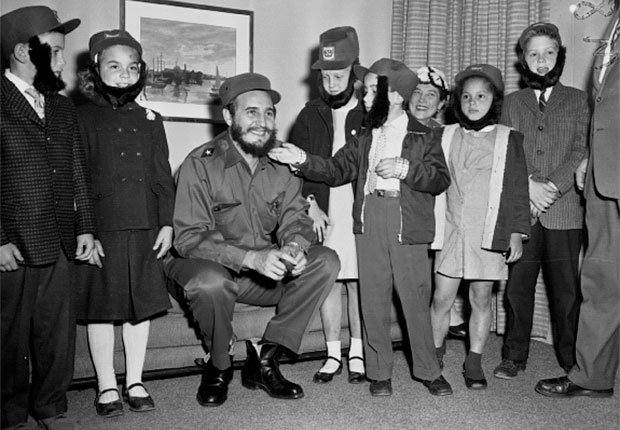
Beards. Fidel Castro made a beard as off limits to an American president — in spite of Lincoln — as Hitler made the mustache. And here I want to go back to that "Becoming Adolf" article by Rich Cohen that were were talking about a couple days ago:
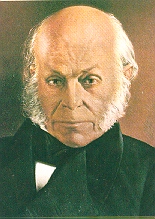
[Y]ou could not wear any kind of mustache after [WWII], because, running from Hitler, you might run into Stalin. Hitler plus Stalin ended the career of the mustache in Western political life. Before the war, all kinds of American presidents wore a mustache and/or beard. You had John Quincy Adams, with his muttonchops...Are we going to decide who deserves out trust based on they look? Come on, Abe. Lose the beard. Okay.
You had Abe Lincoln, whose facial hair...
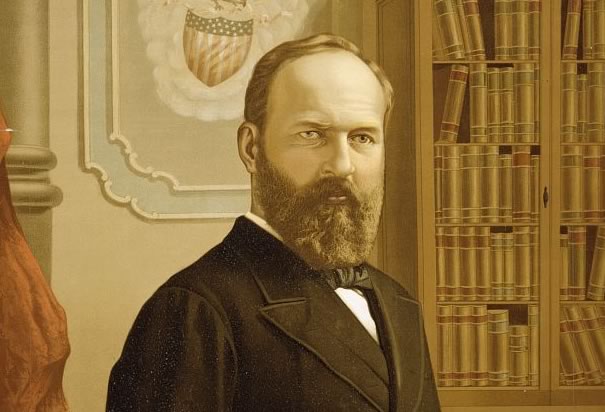
... like his politics, was the opposite of Hitler's: beard full, lip bare. You had James Garfield, who had the sort of vast rabbinical beard into which whole pages of legislation could vanish.
You had Rutherford B. Hayes...
Grover Cleveland...
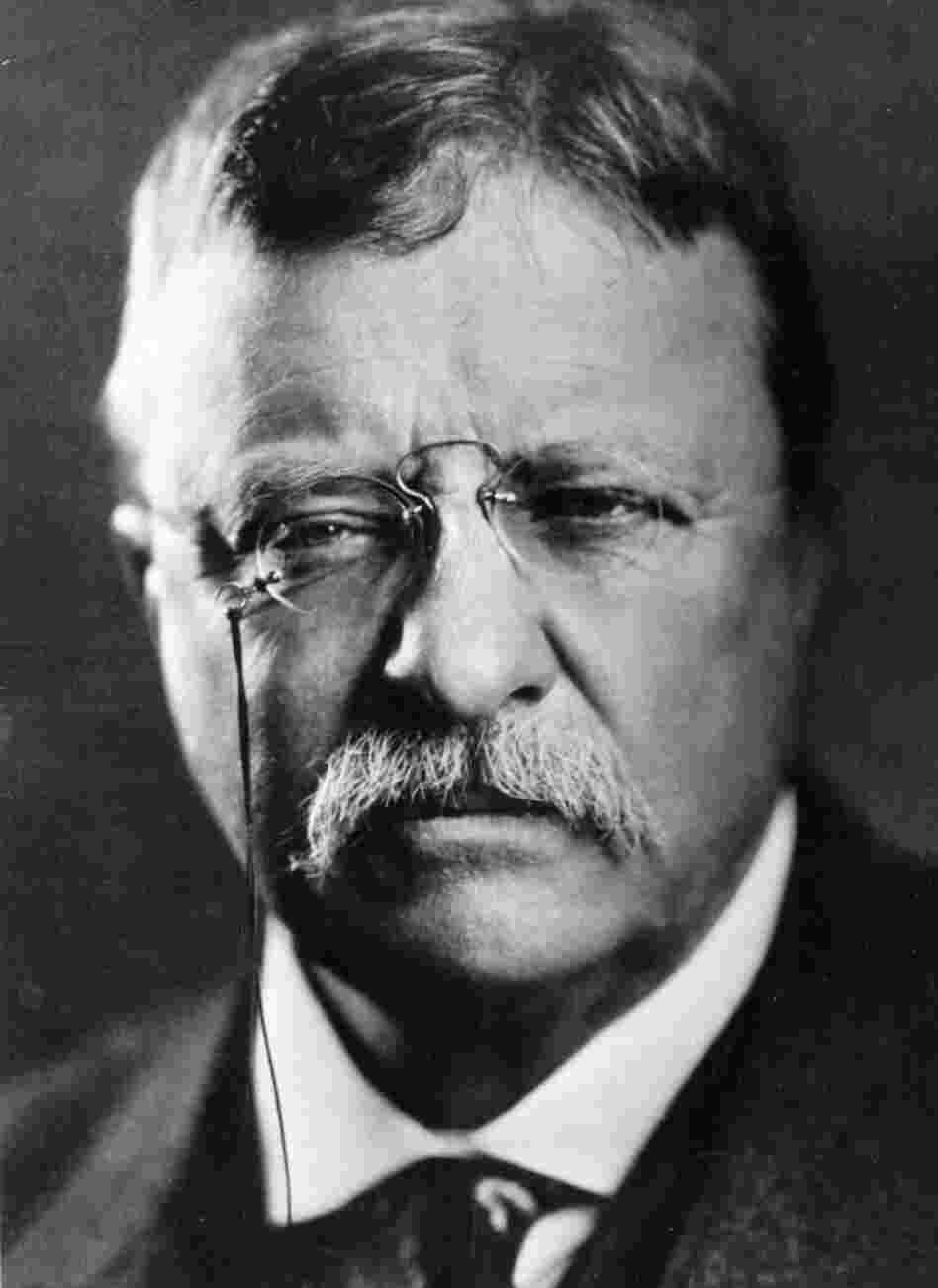
... and Teddy Roosevelt, whose asthma and elephant gun were just a frame for his mustache.
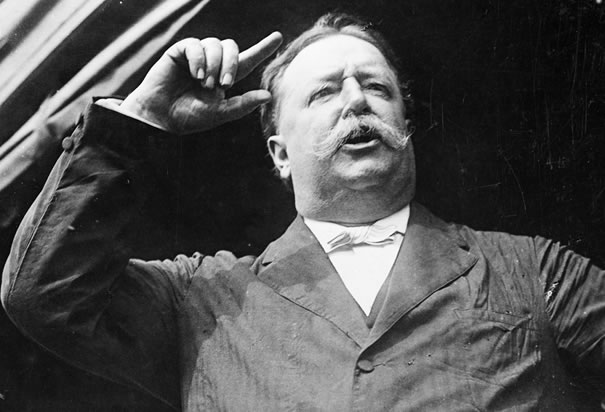
You had William Howard Taft — the man wore a Walrus!
After the war, the few American politicians who still wore a mustache were those who had made their name before Hitler and so had been grandfathered in. Like Thomas Dewey.
Dewey was Eliot Spitzer. He was a prosecutor in New York in the 1930s (and later governor), the only guy with the guts to take on the Mob. For Dewey, the rise of Hitler was a fashion disaster. Because Dewey wore a neat little mustache. Dewey ran for president twice — losing to F.D.R., losing to Truman. In my opinion, without the mustache, the headline in the Chicago Daily Tribune (Dewey Defeats Truman) turns true. One of the few prominent American politicians to wear facial hair in recent memory is Al Gore, who grew a Grizzly Adams beard after he lost to George Bush, in 2000. The appearance of this beard was taken to mean either (1) Gore would never again run for office, or (2) Gore had gone completely mental.
The decision to grow a mustache or a beard is all by itself reason to keep a man away from the nuclear trigger.





Pick one:


Monday, December 24, 2012
"Middle seat gets both armrests. This way, everybody gets at least one armrest, and it best equalizes everybody's space."
"If you think that the shared armrests are for whoever first claims them — a rule that frequently would leave the middle-seater wedged between two elbowy people — you have entitlement issues."
#8 on a list of 12 rules for airports and airplanes.
And this post is following a rule for blogging that I just noticed: If you find something to blog about via a blog that deserves a "via" (or "hat tip") link, you can better fulfill your obligation by finding something else on the hat-tippable blog and doing a separate post about that. This post represents the something else, and the next post will be the thing I found via this blog, and I'm not going to put a "via" link on the next post.
The idea is that the blog I'm linking to here will get far more click-through readers from this post than from a "via" link that telegraphs its obligatory quality. I'm going to follow this rule in the future — and by the way, I think Instapundit follows it — but I'm not going to keep pointing out that I follow it. And I won't follow it unless I genuinely would have chosen to blog the something else, in accordance with the longstanding Althouse Principles of the Bloggable.
#8 on a list of 12 rules for airports and airplanes.
And this post is following a rule for blogging that I just noticed: If you find something to blog about via a blog that deserves a "via" (or "hat tip") link, you can better fulfill your obligation by finding something else on the hat-tippable blog and doing a separate post about that. This post represents the something else, and the next post will be the thing I found via this blog, and I'm not going to put a "via" link on the next post.
The idea is that the blog I'm linking to here will get far more click-through readers from this post than from a "via" link that telegraphs its obligatory quality. I'm going to follow this rule in the future — and by the way, I think Instapundit follows it — but I'm not going to keep pointing out that I follow it. And I won't follow it unless I genuinely would have chosen to blog the something else, in accordance with the longstanding Althouse Principles of the Bloggable.
Sunday, December 23, 2012
Did President Obama violate the precepts of etiquette and display raging narcissism at the funeral of Daniel Inouye?
It's pretty much what everyone is saying, notably Emily Yoffe at Slate (where one ordinarily expects support for the Prez). When I encounter a controversy at this late stage of one-sidedness, my instinct is to develop the other side. Law school class is like that, you know. If there's a case that everyone just somehow knows is rightly decided, the way to have a discussion about it isn't to remark upon its obviousness, but to figure out how someone — someone intelligent, educated, and sane — could think it wasn't right. That's what I do.
Read Yoffe's description of Obama's eulogy, which dwells on Obama's own life, growing up in Hawaii, the state Inouye represented in the Senate. Obama talks about his family vacations, where they stayed in motels, and the motel rooms had TVs, and — "as the people must have been twitching in the pews wondering where this was all going" — the Watergate hearings were on TV, and so he saw Inouye, and because Inouye did not have that typical white person look, the young mixed-race Obama was inspired to imagine "what might be possible in my own life."
A funeral for a very old person — Inouye was 88 — is not an occasion for deep mourning or soothing profound shock. It can be an occasion to look back on the era, to indulge one's own personal connections to the time and the man who has passed on. And if the President of the United States speaks at the funeral, that in itself is a phenomenal honor for the deceased. The President should not read a typical eulogy, a conventional account of the dead man's achievements and wonderful personal traits. This is something different. And when the President is specifically noted for his oratory, something special is anticipated.
No one — I submit — was "twitching in the pews wondering where this was all going." They were rapt, experiencing the gift of a unique presentation, The Story of a Boy — that boy! — and how his individual history merged with The Story of America — A Story of Race. They knew, as they surrendered themselves into the hands of our storyteller-in-chief, that they would be cared for and rewarded. The threads would come together, the yarns would be knitted into a beautiful eulogy blanket, under which Daniel Inouye could be laid to rest and all would be comforted.
How dare you snatch that comfort away by counting the "I"s and "me"s in that speech?!
Read Yoffe's description of Obama's eulogy, which dwells on Obama's own life, growing up in Hawaii, the state Inouye represented in the Senate. Obama talks about his family vacations, where they stayed in motels, and the motel rooms had TVs, and — "as the people must have been twitching in the pews wondering where this was all going" — the Watergate hearings were on TV, and so he saw Inouye, and because Inouye did not have that typical white person look, the young mixed-race Obama was inspired to imagine "what might be possible in my own life."
A funeral for a very old person — Inouye was 88 — is not an occasion for deep mourning or soothing profound shock. It can be an occasion to look back on the era, to indulge one's own personal connections to the time and the man who has passed on. And if the President of the United States speaks at the funeral, that in itself is a phenomenal honor for the deceased. The President should not read a typical eulogy, a conventional account of the dead man's achievements and wonderful personal traits. This is something different. And when the President is specifically noted for his oratory, something special is anticipated.
No one — I submit — was "twitching in the pews wondering where this was all going." They were rapt, experiencing the gift of a unique presentation, The Story of a Boy — that boy! — and how his individual history merged with The Story of America — A Story of Race. They knew, as they surrendered themselves into the hands of our storyteller-in-chief, that they would be cared for and rewarded. The threads would come together, the yarns would be knitted into a beautiful eulogy blanket, under which Daniel Inouye could be laid to rest and all would be comforted.
How dare you snatch that comfort away by counting the "I"s and "me"s in that speech?!
Saturday, December 22, 2012
"Lady Jerks of 2012: A Year in Review."
Today seems to be my day for finding screwy ideas in Slate. This one seems to be a twist on the old feminist bumper sticker "Well-behaved women rarely make history." I can't quite tell whether Amanda Hess is trying to encourage/facilitate female jerkiness or what. Yeah, there's the ancient problem of wanting to be liked, which is really only a problem if you want it too much and want it above other, better goals. It's perfectly idiotic to think that the solution to the excessive desire to be liked is to be unlikeable.
But, whatever... the women Hess recognizes as the "Lady Jerks of 2012" are: the CIA agent who complained that she shouldn't have had to share the Distinguished Intelligence Medal for finding bin Laden; Anne Hathaway, the actress who talked back haughtily when asked about the photographs that paparazzi somehow were able to take of the body part Hess refers to as "her vagina"; Julia Gillard, the prime minister of Australia who called some political opponent a misogynist; Taylor Swift, the pretty young singer who crashed a Kennedy wedding with her Kennedy boyfriend; and Susan Rice, who, as Hess would have it, lost out on getting to be the next Secretary of State because people thought she was “prickly,” “hard-headed,” “temperamentally unfit,” and “always right on the edge of a screech.” Hess writes: "The personality police eventually moved Rice to withdraw her name from the running." That's not what I heard!
But, whatever... the women Hess recognizes as the "Lady Jerks of 2012" are: the CIA agent who complained that she shouldn't have had to share the Distinguished Intelligence Medal for finding bin Laden; Anne Hathaway, the actress who talked back haughtily when asked about the photographs that paparazzi somehow were able to take of the body part Hess refers to as "her vagina"; Julia Gillard, the prime minister of Australia who called some political opponent a misogynist; Taylor Swift, the pretty young singer who crashed a Kennedy wedding with her Kennedy boyfriend; and Susan Rice, who, as Hess would have it, lost out on getting to be the next Secretary of State because people thought she was “prickly,” “hard-headed,” “temperamentally unfit,” and “always right on the edge of a screech.” Hess writes: "The personality police eventually moved Rice to withdraw her name from the running." That's not what I heard!
Friday, December 14, 2012
"Top 10 Emotional Intelligence Moments of 2012."
Some are high EQ and some are low. #6 is a fascinating low: a restaurant owner at a Romney campaign stop who suddenly wipes Romney's face — vigorously, with a napkin — just trying to help). #4 is a wonderful low, an inert man in a nursing home, revived by music. I love the part where the interviewer needs to be told to ask a yes-or-no question, and the man is able to respond, going far beyond yes/no. And then he's asked "What does music do to you?" and he says springs to life, saying:
It gives me the feeling of love — romance! I figure right now the world needs to come into music, singing — you've got beautiful music here.Romance... that made me want to rethink the previous post about Egypt banning "romantic" songs on state TV and radio.
Tuesday, December 11, 2012
The real-life heroine depicted in "Zero Dark Thirty."
WaPo presents a different image:
The operative, who remains undercover... has sparred with CIA colleagues over credit for the bin Laden mission. After being given a prestigious award for her work... “She hit ‘reply all’ ” to an e-mail announcement of the awards, a ... former CIA official said. The thrust of her message, the former official said, was: “You guys tried to obstruct me. You fought me. Only I deserve the award.”
Over the past year, she was denied a promotion that would have raised her civil service rank from GS-13 to GS-14, bringing an additional $16,000 in annual pay.... The move stunned the woman’s former associates, despite her reputation for clashing with colleagues.
“Do you know how many CIA officers are jerks?” the former official said. “If that was a disqualifier, the whole National Clandestine Service would be gone.”
Thursday, November 1, 2012
"In South Beach, Staten Island, resident Grace Johnson clenched her fists and waved her arms in the air..."
"... as she ran toward a college student from Queens who had come to see the damage and stood across the street taking photos."
"Jesus Christ, will you stop please," she shouted, her eyes welling and voice cracking with emotion. "Why don't you come over here and help sweep… instead of just looking at us."
Wednesday, October 31, 2012
Subscribe to:
Posts (Atom)
 :.
:.
