Showing posts with label brain. Show all posts
Showing posts with label brain. Show all posts
Friday, February 8, 2013
"It is remarkable that it is so common for cells from one individual to integrate into the tissues of another distinct person."
"We are accustomed to thinking of ourselves as singular autonomous individuals, and these foreign cells seem to belie that notion, and suggest that most people carry remnants of other individuals. As remarkable as this may be, stunning results from a new study show that cells from other individuals are also found in the brain. In this study, male cells were found in the brains of women and had been living there, in some cases, for several decades. What impact they may have had is now only a guess, but this study revealed that these cells were less common in the brains of women who had Alzheimer’s disease, suggesting they may be related to the health of the brain."

Saturday, February 2, 2013
"Am I going to die today? Just give me a percentage."
Senator Mark Kirk tells about his stroke. (The percentage the doctor gave him — in the ambulance — was 98% in favor of not dying.)

Am I going to die today? Just give me a percentage.
I was in my hospital bed when the waves came and I began to lose control of my body and mind. Unbelievable, I thought. I’m only 52. I didn’t even know anyone who’d had a stroke.Later:
More than a week later, I regained a confused consciousness in the intensive care unit. I knew I was lying in a bed. I thought someone was sharing the bed with me, but it was my own leg. I vaguely remember a party the ICU staff had for the Super Bowl and the smell of the food they brought.
I regarded my left leg as a lifeless appendage. Mike kept insisting that it would bear weight. The moment I realized that it would, and that I could swing it from my hip and propel myself forward, was the breakthrough revelation of my rehabilitation.IN THE COMMENTS: Someone snarks: "Show me when this paper has done a similar story for a Republican. *crickets*" — only to be told that Kirk is a Republican. I blogged this item without remembering Kirk's party affiliation or caring enough to check. But when the subject came up in the comments, I did check, went to Kirk's website, and saw his statement, released yesterday, rejecting Chuck Hagel as Secretary of Defense:
During yesterday's confirmation hearing, Senator Hagel instinctively called the Iranian government both elected and legitimate. He initially offered strong support for containment of Iran, rather than President Obama's stated policy of preventing an Iranian nuclear breakout. He could not clearly explain his past opposition to unilateral sanctions against Iran – opposition as recent as 2008. And at no time did he state his position on whether the European Union should formally designate Iran's terror proxy, Hezbollah, as a terrorist organization – a critical step to cut off the flow of funds to a group responsible for the murders of some 280 American citizens.The statement is illustrated with the chilling photograph of "Neda Agha-Soltan who was killed during 2009 Iranian election protests."

Am I going to die today? Just give me a percentage.
Friday, February 1, 2013
"Confusion over sources or indifference to them can be a paradoxical strength..."
"... if we could tag the sources of all our knowledge, we would be overwhelmed with often irrelevant information," writes Oliver Sacks in an essay about memory.
Indifference to source allows us to assimilate what we read, what we are told, what others say and think and write and paint, as intensely and richly as if they were primary experiences. It allows us to see and hear with other eyes and ears, to enter into other minds, to assimilate the art and science and religion of the whole culture, to enter into and contribute to the common mind, the general commonwealth of knowledge. This sort of sharing and participation, this communion, would not be possible if all our knowledge, our memories, were tagged and identified, seen as private, exclusively ours. Memory is dialogic and arises not only from direct experience but from the intercourse of many minds.
Sunday, January 27, 2013
Gabby Giffords, ever smiling, struggles through an interview with Diane Sawyer.
Giffords can only get a few words out — "so slowly" — and Diane Sawyer has no compunction about supplying words all around Giffords's words, most notably at the end of the interview — you have to watch the video — when she turns Giffords into a puppet who voices the last word to a long sentence yammered out by Sawyer. Sawyer repeatedly assures us that Giffords understands everything and is able to think well, that her only intellectual deficit is in speaking. We're told how effective Giffords will be in pressuring Congress to enact gun control. She will be taken around to the members of Congress so they will be subjected to the ordeal — if they want to say "no" — of saying "no" to her face.
This is how it's done. At what point do you say "no"... enough?
ADDED: The most poignantly telling moment in the interview is when Giffords is invited to say what matters most to her. She says: "family."
This is how it's done. At what point do you say "no"... enough?
ADDED: The most poignantly telling moment in the interview is when Giffords is invited to say what matters most to her. She says: "family."
Tuesday, January 8, 2013
"More intelligence and fewer offspring?"
"Perhaps Idiocracy was stating a more general rule...."
But another thing...
ADDED: Idiocracy primer:
But another thing...
When it comes to humans, for example, though our brains are only 2% of our bodies, they take up a whopping 20% of our energy requirements.If that's really true, it could be the key to why one person can eat heartily and never gain weight while the next person, eating the same thing, gets fat. Maybe it's a big brain/small brain distinction. Also, is it possible that instead of going to the gym or getting on a bicycle when we hope to lose weight, what we really should be doing is studying calculus or reading philosophy?
ADDED: Idiocracy primer:
Friday, January 4, 2013
Sunday, December 23, 2012
Wednesday, December 12, 2012
"It's a free market, Dave. Plenty of schools don't have sports. Go to one of those schools."
Over at Isthmus, the Madison "alternative" newspaper, Meade takes on former mayor/current columnist Dave Cieslewicz who's fretting about all the money spent on college football and the unpaid athletes and their incipient brain damage.
AND: If you've got a craving for any old-time kids' games, please use the Althouse portal to Amazon. And I recommend Candy Land. Because they don't want you to eat candy.
As far as brain injuries, what else are you going to ban - riding in cars? bicycling? taking showers? drinking alcohol?Pushing back is local politico Stu Levitan, misspelling Meade's first name and gratuitously insulting him:
Lawrence, are you really asserting that the number of brain injuries from showering equals the number of brain injuries from football? My, you are a silly little fellow!Meade is all:
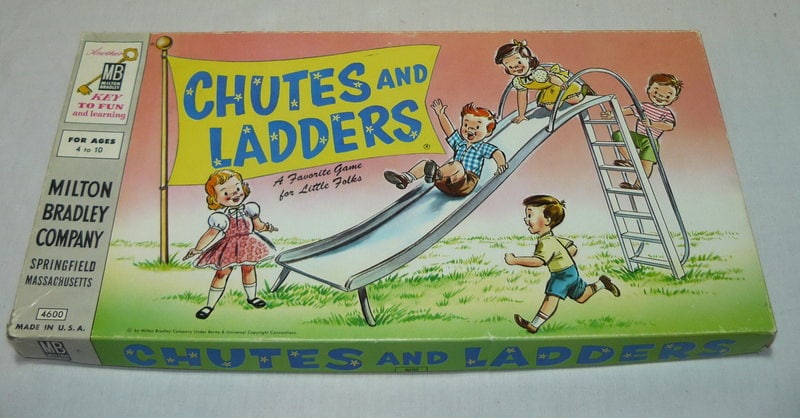
Stw, what I am asserting is that football is only one of many activities which can lead to traumatic brain injury. Your question reflects poor reading comprehension. Is it possible that you bumped your head while playing Chutes and Ladders when you were a child?This is what it's like in a clash of who-knows-how-damaged male brains of Madison.
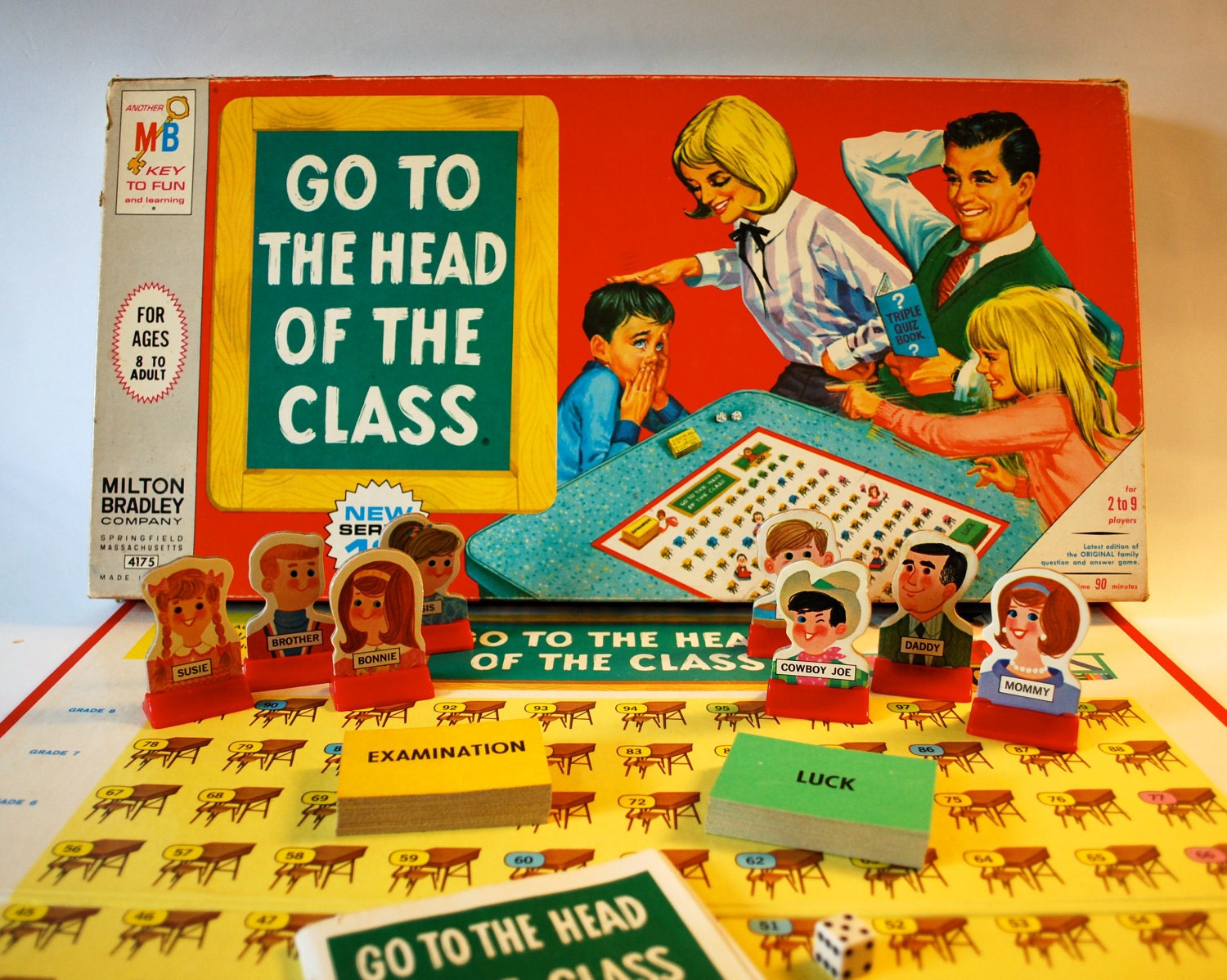
Or maybe you didn't play that game. Maybe you, Cowboy Stu, and your family played Go To The Head Of The Class. You probably should've worn a helmet.
Like Dave!
AND: If you've got a craving for any old-time kids' games, please use the Althouse portal to Amazon. And I recommend Candy Land. Because they don't want you to eat candy.
Sunday, December 2, 2012
Football is by far Americas favorite spectator sport.
Rasmussen Reports that 53% say football.
Only 16% for baseball, 11% for basketball, and 6% for hockey. Nothing else gets as much as 5%.
And, despite all the liberal hand-wringing over the violence of football — with all that brain-damage and post-Super-Bowl wife-beating — the preference for football is greater in women than in men. (57% and 50%.)
Only 16% for baseball, 11% for basketball, and 6% for hockey. Nothing else gets as much as 5%.
And, despite all the liberal hand-wringing over the violence of football — with all that brain-damage and post-Super-Bowl wife-beating — the preference for football is greater in women than in men. (57% and 50%.)
Saturday, December 1, 2012
"Officials said [Jovan] Belcher, 25, shot and killed his girlfriend and then drove to the practice facility, where he shot and killed himself."
"Belcher approached Chiefs general manager Scott Pioli and head coach Romeo Crennel outside of the practice facility, thanked them for all they had done for him and shot himself in the head as police arrived."
Well, that answers the question I had when I read earlier reports: Why did he relocate? He wanted to thank them.
ADDED: If no one has said this yet, they will: It's a shame that Belcher shot himself in the head, because now they can't study his brain to see if football caused damage that led him to murder and suicide.
Well, that answers the question I had when I read earlier reports: Why did he relocate? He wanted to thank them.
ADDED: If no one has said this yet, they will: It's a shame that Belcher shot himself in the head, because now they can't study his brain to see if football caused damage that led him to murder and suicide.
Monday, November 26, 2012
"Smoking 'rots' brain, says King's College study."
Says the BBC, and maybe my brain is rotted, but I can't find the scientific concept of brain "rot" in the article or any justification for using it here. It seems like goofball sensationalism to me. Smoking has well-known health risks that are "significantly associated with cognitive decline." Okay, but is the brain rotting?
Maybe I'm just not getting the British. I know these characters use the noun "rot" to mean bullshit. Here's the Oxford English dictionary definition #5:
Maybe I'm just not getting the British. I know these characters use the noun "rot" to mean bullshit. Here's the Oxford English dictionary definition #5:
slang. Ridiculous or nonsensical talk or ideas; nonsense, rubbish. Also: pointless or fatuous activity. Also as int. Cf. tommy-rot n. at Tommy n.1 Compounds 2.‘Rot!’ say I scornfully. It's the mark of bad writing to bolster your saids with adverbs, I say scornfully, brain-rottedly. Now, where are my cigarettes?
1846 Punch 10 136/2 Peel and Potato-blight defy To make him hold his tongue, or try To talk aught else but ‘rot’!
1857 T. Hughes Tom Brown's School Days i. vi. 138 Let's stick to him, and talk no more rot.
1879 M. E. Braddon Cloven Foot iv. 96, I thought he despised ballet-dancing. Yet this is the third time I have seen him looking on at this rot.
1889 tr. R. Shilleto New Triposes in C. Whibley In Cap & Gown 228 Your Natural-rot, your Moral-bosh.
1894 G. Moore Esther Waters xxxix. 302 All bloody rot; who says I'm drunk?
1914 G. B. Shaw Fanny's First Play 158, I quite agree that harlequinades are rot.
a1953 E. O'Neill Long Day's Journey (1956) i. 35 It's damned rot! I'd like to see anyone influence Edmund more than he wants to be.
1977 C. McCullough Thorn Birds ii. 36 ‘What if it isn't the Eyetie girl?’.. ‘Rot!’ said Paddy scornfully.
1990 R. Clay Only Angels Forget vi. 78, I insisted on a church wedding. Mother said, ‘What rot, Isobel, you don't believe in any of that’, which was true but irrelevant.
2004 A. Hollinghurst Line of Beauty iii. 78 He talked a lot of rot at dinner on... the coloured question.
Tuesday, November 13, 2012
"A Canadian man who was believed to have been in a vegetative state for more than a decade, has been able to tell scientists that he is not in any pain."
"It's the first time an uncommunicative, severely brain-injured patient has been able to give answers clinically relevant to their care."
"Scott has been able to show he has a conscious, thinking mind. We have scanned him several times and his pattern of brain activity shows he is clearly choosing to answer our questions. We believe he knows who and where he is...."
"Asking a patient something important to them has been our aim for many years. In future we could ask what we could do to improve their quality of life. It could be simple things like the entertainment we provide or the times of day they are washed and fed."
Monday, November 12, 2012
"Attention is not some monolithic brain process. There are different types of attention..."
"... and they use different parts of the brain. The sudden loud noise that makes you jump activates the simplest type: the startle. A chain of five neurons from your ears to your spine takes that noise and converts it into a defensive response in a mere tenth of a second — elevating your heart rate, hunching your shoulders and making you cast around to see if whatever you heard is going to pounce and eat you. This simplest form of attention requires almost no brains at all and has been observed in every studied vertebrate."
Excerpt from "Why Listening Is So Much More Than Hearing."
That passage calls to mind the subject of "incitement" in the constitutional law of free speech. Here's Justice Brandeis in 1927:
I Googled "incitement and free speech" to get a nice clear link to insert in the sentence between the 2 links above. Virtually everything that came up on the first page of results had to do with the "Innocence of Muslims" video/Muhammad cartoons.
Excerpt from "Why Listening Is So Much More Than Hearing."
That passage calls to mind the subject of "incitement" in the constitutional law of free speech. Here's Justice Brandeis in 1927:
Those who won our independence by revolution were not cowards. They did not fear political change. They did not exalt order at the cost of liberty. To courageous, self-reliant men, with confidence in the power of free and fearless reasoning applied through the processes of popular government, no danger flowing from speech can be deemed clear and present unless the incidence of the evil apprehended is so imminent that it may befall before there is opportunity for full discussion. If there be time to expose through discussion the falsehood and fallacies, to avert the evil by the processes of education, the remedy to be applied is more speech, not enforced silence. Only an emergency can justify repression. Such must be the rule if authority is to be reconciled with freedom. Such, in my opinion, is the command of the Constitution. It is therefore always open to Americans to challenge a law abridging free speech and assembly by showing that there was no emergency justifying it.There's a distinction between what is heard and what is listened to.
***
I Googled "incitement and free speech" to get a nice clear link to insert in the sentence between the 2 links above. Virtually everything that came up on the first page of results had to do with the "Innocence of Muslims" video/Muhammad cartoons.
Friday, November 9, 2012
"I had been reading about the color indigo, how it had been introduced into the spectrum by [Isaac] Newton rather late..."
"... and it seemed no two people quite agreed as to what indigo was, and I thought I would like to have an experience of indigo. And I built up a sort of pharmacological launchpad with amphetamines and LSD, and a little cannabis on top of that, and when I was really stoned I said, 'I want to see indigo now.' And as if thrown by a paintbrush, a huge pear-shaped blob of the purest indigo appeared on the wall. Again it had this luminous, numinous quality; I leaped toward it in a sort of ecstasy. I thought, 'This is the color of heaven.' ... I thought maybe this is not a color which actually exists on the Earth, or maybe it used to exist or no longer exists. All this went through my mind in 4 or 5 seconds, and then the blob disappeared, giving me a strong sense of loss and heartbrokenness, and I was haunted a little bit when I came down, wondering whether indigo did exist in the real world."
Oliver Sacks, in his new book "Hallucinations," discussed in a nice interview on NPR today.
Oliver Sacks, in his new book "Hallucinations," discussed in a nice interview on NPR today.
Thursday, November 8, 2012
"Via a psychedelic music aficionado acquaintance - Is this something you've heard of?"
A reader [ADDED: Hazy Dave] sends me this link and says:
This reminds me a bit of Glenn Gould's "The Idea of North" and my own practice of falling asleep and sleeping playing an audiobook, a book read by a man with a gentle voice (almost always Bill Bryson, David Rakoff, or David Foster Wallace).
At the first link:
As an old Audible Althouse listener, I can understand the appeal of having a friendly well-modulated voice in your ears (though I usually can't get through entire an podcast and I'm too impatient to listen to books, even while driving). But I guess I listen to music for the occasional goose-bumps or “bubbles in your head” experience. Listening to a young blonde whisper in your ear seems like cheating, if not outright pr0n... I may need to try this out with earbuds later, just to see if I get weirded out, or if it just seems funny, or what. "Unsettling" seems like a reasonable starting point, even (very quietly) through tinny office computer speakers.Wow! I watched some of those ASMR videos, then went back to some Audible Althouse — my 2005-2006 podcast project— they're all here [ADDED: or maybe not.] It really does seem like that ASMR stuff. Truly strange from that perspective!
This reminds me a bit of Glenn Gould's "The Idea of North" and my own practice of falling asleep and sleeping playing an audiobook, a book read by a man with a gentle voice (almost always Bill Bryson, David Rakoff, or David Foster Wallace).
At the first link:
If... you’re one of the people the video was made for—one of those people who experience Autonomous Sensory Meridian Response—you’ll probably find all six minutes incredibly satisfying, the video equivalent of a really nice, mellow kind of drug that leaves no aftertaste....
ASMR is a tricky feeling to describe, and I can only talk about it secondhand. From what I understand from conversations with ASMRers, it’s a tingle in your brain, a kind of pleasurable headache that can creep down your spine....
Tuesday, October 30, 2012
"For neuroscientific findings of fetal pain to serve as a basis for permitting states to prohibit abortion prior to viability..."
".... they must tell us something about the nature of a fetus that makes the state’s interest in protecting it more compelling than its interest in protecting a woman’s right to make basic decisions about her own body. As pain sentience does not serve as a basis for legal prohibitions in general (or else mousetraps and deer hunting would be prohibited), the statutes’ real purpose is to use potential evidence of pain sentience in fetuses to indicate the presence of something far more compelling — namely, personhood."
From a NYT philosophy blog item written by William Egginton, a Humanities Professor the Johns Hopkins University.
The states are already allowed to prohibit abortion after viability (with exceptions for the life and health of the mother), but not because viability establishes that the fetus has turned into a person. In fact, the Supreme Court has never made much sense over why viability is the line. (I've taught the abortion cases many times, and the best I can say is that viability was chosen for the line because the Court wanted a place to draw a line and viability was a concept that existed within medicine.) The question of when the unborn is considered a "person" is reserved for the woman to answer for herself. That's the heart of the right that the Court has articulated. It was clearly stated in terms of autonomy to define life in Planned Parenthood v. Casey, when the Court revised Roe in the process of deciding not to overrule it:
From a NYT philosophy blog item written by William Egginton, a Humanities Professor the Johns Hopkins University.
The states are already allowed to prohibit abortion after viability (with exceptions for the life and health of the mother), but not because viability establishes that the fetus has turned into a person. In fact, the Supreme Court has never made much sense over why viability is the line. (I've taught the abortion cases many times, and the best I can say is that viability was chosen for the line because the Court wanted a place to draw a line and viability was a concept that existed within medicine.) The question of when the unborn is considered a "person" is reserved for the woman to answer for herself. That's the heart of the right that the Court has articulated. It was clearly stated in terms of autonomy to define life in Planned Parenthood v. Casey, when the Court revised Roe in the process of deciding not to overrule it:
At the heart of liberty is the right to define one's own concept of existence, of meaning, of the universe, and of the mystery of human life. Beliefs about these matters could not define the attributes of personhood were they formed under compulsion of the State.It's interesting for Egginton to offer some philosophical analysis (and for neuroscientists to provide the information they have), but under Roe/Casey, it's for the individual pregnant woman to use that material as she sees fit in arriving at her own answer to the mystery of the value of the unborn entity. Pre-viability, anyway.
Thursday, October 25, 2012
"I have to suspend my brain and mingle the subtle essence of my mind with this air..."
"... which is of the like nature, in order clearly to penetrate the things of heaven. I should have discovered nothing, had I remained on the ground to consider from below the things that are above; for the earth by its force attracts the sap of the mind to itself. It's just the same with the watercress."
Socrates, in "The Clouds," by Aristophanes.
Socrates, in "The Clouds," by Aristophanes.
Wednesday, October 17, 2012
Dolphins can sleep in one brain hemisphere at a time...
... and thereby remain alert continuously.
[A]s the experiment wore on -- three, four, five days straight -- their performance waned only slightly. In fact, the female dolphin was tested for 15 days straight with no apparent effect on performance.
Subscribe to:
Posts (Atom)
 :.
:.