Jeremy Ryan, 24, of Madison is accused of hurling taunts and insults at journalists, including singing insulting songs about the death of a longtime journalist, Richard Wheeler. Wheeler died suddenly in November 2011, and the Capitol press room was named for him after his death.
Ryan also shouted derogatory names for news organizations, including the State Journal....
Monday, September 24, 2012
The crime of insulting journalists.
As the Wisconsin State Journal puts it:

The chameleon work
... of the illustrious Chip Ahoy, who explains his methodology for taking my photographs and perceiving the animal hiding therein. He found the chameleon in the hot peppers I displayed today:

It's that curled tail that gave it away! Chip points us back to the old poodle in the carpet:

The very well disguised elephant in the blue tile wall:

And my personal favorite, the giraffe in the woods:


It's that curled tail that gave it away! Chip points us back to the old poodle in the carpet:
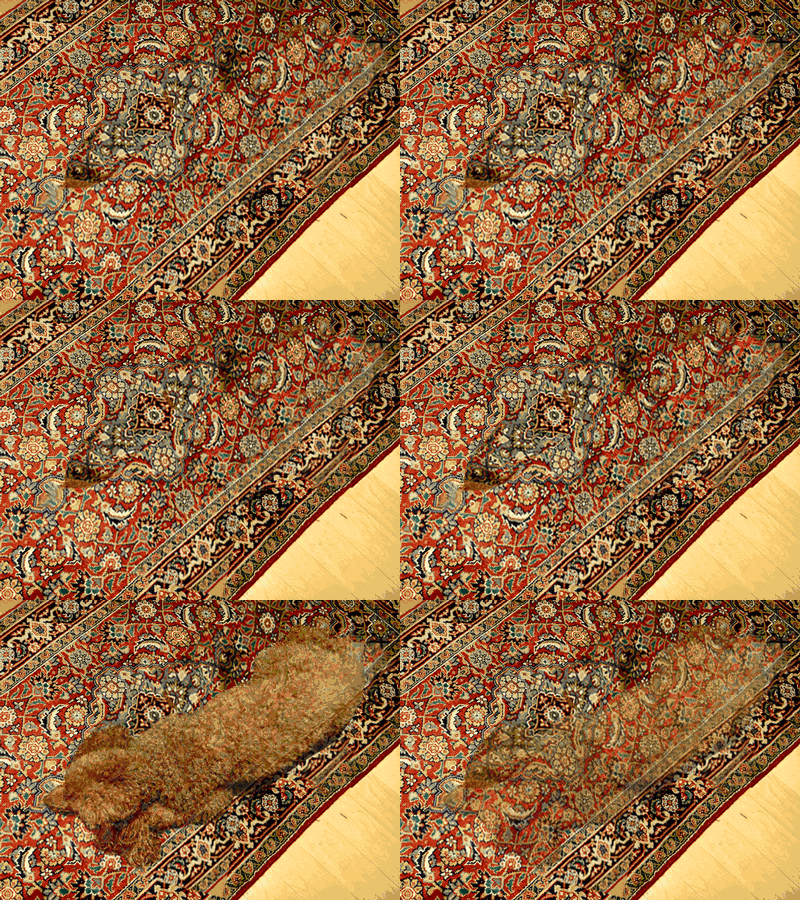
The very well disguised elephant in the blue tile wall:

And my personal favorite, the giraffe in the woods:

Let's not get too distracted by the State Department spokeman's saying "Fuck Off" and "Have a good life"...
... to that BuzzFeed reporter, Michael Hastings. There's so much more of immensely great importance in their email exchange about what that spokesman — Phillippe Reines — had been trying to get us to think about CNN's use of the Chris Stevens journal, found at the site of the murder in Benghazi, after our diplomatic personnel fled the scene.
Hastings emailed an excellent set of questions:
Hastings emailed an excellent set of questions:
Why didn't the State Department search the consulate and find AMB Steven's diary first? What other potential valuable intelligence was left behind that could have been picked up by apparently anyone searching the grounds? Was any classified or top secret material also left? Do you still feel that there was adequate security at the compound, considering it was not only overrun but sensitive personal effects and possibly other intelligence remained out for anyone passing through to pick up? Your statement on CNN sounded pretty defensive--do you think it's the media's responsibility to help secure State Department assets overseas after they've been attacked?And Reines couldn't or wouldn't answer these questions. He continued those pretty defensive efforts to shift the focus to CNN. When Hastings pressed him, Reines resorted to "Fuck Off" and "Have a good life." Those nasty comebacks shouldn't be the story. They should direct us to the set of questions. Those are great questions, and the State Department will not answer them. Without answers, they feel like questions that answer themselves.
I've been thinking a lot today about about the verb "to like."
First, I was struck by the Democratic pollster who said, about Romney, "Ultimately, people don’t like this guy. If they don’t like someone, it’s hard to get people to vote for him — particularly to fire someone they do like."
And then later today, I overheard a professor — I won't say who — telling students they will be meeting representatives of 2 groups, one conservative and one liberal, and that they "would like" the liberals. These particular conservatives, he said, were more effective pursuing their aims — some field of policy that I won't identify — but the liberals, you will like.
And it got me thinking about this word "like." What is this liking that we do — or are told to do or assert that we do — these days? You can "like" somebody on Facebook. It's a social thing. Politically, it's about liberals. Liberals are likeable. Barack Obama is — it's drummed into our heads — likeable. He's so likeable. He got ahead of Hillary Clinton for being so darned likeable, and he famously said "You're likeable enough" to her on his way to beating her to the nomination.
It occurred to me that that liberals have quite effectively insinuated the message into our brains that they are likeable, and, in particular, Barack Obama is likeable. And that doesn't just mean that any given individual likes him, subjectively. He is likeable, objectively. If you don't like him, what's wrong with you? You don't seem likeable. You'd better like him or no one will like you. All the likeable people are liberal, so you'd better be liberal or no one will like you.
That sounds very schoolyard, or like a shallow adult. Maybe if you're old like me, you remember the Arthur Miller play "Death of a Salesman," in which a pathetic man was way too concerned about whether he was well liked. Years ago, when we Baby Boomers were young, it seemed pathetic to dwell on being liked. It was a distraction for small minds, for conventional people.
Consider the etymology of the verb "to like":
I'm reading the long Oxford English Dictionary entry for "like" — sorry, it's not linkable — and I run across the line in "Uncle Tom's Cabin": "I may like him well enough; but you don't love your servants." I can link to the full context:
But only like. You don't love....
Love... it's so old fashioned and retrograde. It's what the Baby Boomers talked about, back when they were hippies.
And then later today, I overheard a professor — I won't say who — telling students they will be meeting representatives of 2 groups, one conservative and one liberal, and that they "would like" the liberals. These particular conservatives, he said, were more effective pursuing their aims — some field of policy that I won't identify — but the liberals, you will like.
And it got me thinking about this word "like." What is this liking that we do — or are told to do or assert that we do — these days? You can "like" somebody on Facebook. It's a social thing. Politically, it's about liberals. Liberals are likeable. Barack Obama is — it's drummed into our heads — likeable. He's so likeable. He got ahead of Hillary Clinton for being so darned likeable, and he famously said "You're likeable enough" to her on his way to beating her to the nomination.
It occurred to me that that liberals have quite effectively insinuated the message into our brains that they are likeable, and, in particular, Barack Obama is likeable. And that doesn't just mean that any given individual likes him, subjectively. He is likeable, objectively. If you don't like him, what's wrong with you? You don't seem likeable. You'd better like him or no one will like you. All the likeable people are liberal, so you'd better be liberal or no one will like you.
That sounds very schoolyard, or like a shallow adult. Maybe if you're old like me, you remember the Arthur Miller play "Death of a Salesman," in which a pathetic man was way too concerned about whether he was well liked. Years ago, when we Baby Boomers were young, it seemed pathetic to dwell on being liked. It was a distraction for small minds, for conventional people.
Consider the etymology of the verb "to like":
O.E. lician "to please, be sufficient," from P.Gmc. *likjan (cf. O.N. lika, O.Fris. likia, O.H.G. lihhen, Goth. leikan "to please"), from *lik- "body, form; like, same." The basic meaning seems to be "to be like" (see like (adj.)), thus, "to be suitable." Like (and dislike) originally flowed the other way: It likes me, where we would say I like it. The modern flow began to appear late 14c.The modern flow! I like Obama would pre-14c be expressed: Obama likes me. He pleases me. And why? Because he's like me? I see myself in him? Is that what we are doing? Looking in a mirror? If it feels as though we are looking in a mirror, we like him?
I'm reading the long Oxford English Dictionary entry for "like" — sorry, it's not linkable — and I run across the line in "Uncle Tom's Cabin": "I may like him well enough; but you don't love your servants." I can link to the full context:
"Would you think you were well off, if there were not one creature in the world near you to love you?"
"I?—Well, of course not."
"And you have taken Dodo away from all the friends he ever had, and now he has not a creature to love him;—nobody can be good that way."
"Well, I can't help it, as I know of. I can't get his mother and I can't love him myself, nor anybody else, as I know of "
"Why can't you?" said Eva.
"Love Dodo! Why, Eva, you wouldn't have me! I may like him well enough; but you don't love your servants."
"I do, indeed."
"How odd!"
"Don't the Bible say we must love everybody?"
"O, the Bible! To be sure, it says a great many such things; but, then, nobody ever thinks of doing them,—you know, Eva, nobody does."
Eva did not speak; her eyes were fixed and thoughtful for a few moments.Now, I certainly don't think we ought to love our political leaders. "He loved Big Brother" is the last line of George Orwell's "1984":
He gazed up at the enormous face. Forty years it had taken him to learn what kind of smile was hidden beneath the dark moustache. O cruel, needless misunderstanding! O stubborn, self-willed exile from the loving breast! Two gin-scented tears trickled down the sides of his nose. But it was all right, everything was all right, the struggle was finished. He had won the victory over himself. He loved Big Brother.Horrifying. But this liking of Obama — not loving, liking — what is it? Is it racist? You like him. You really, really like him. Or something's wrong with you. Do you twinge with anxiety that you might be racist if you don't like him? Better like him. Why suffer the cruel, needless misunderstanding, the stubborn, self-willed exile from the likeable breast! Everything can be all right. The struggle can be finished. Surrender to the victory over yourself. You like Barack Obama.
But only like. You don't love....
Love... it's so old fashioned and retrograde. It's what the Baby Boomers talked about, back when they were hippies.
It's so fine, It's sunshineNot anymore. Now, the word is: LIKE.
It's the word, love
Everywhere I go I hear it said
In the good and the bad books that I have read

Grand gesticulations over things small and large.
At Drudge just now now (click to enlarge):

In the right column, we've got Billie Joe Armstrong of Green Day swearing and gesticulating over his show time getting cut down to 1 minute.
In the middle column, it's Senate candidate/lawprof Elizabeth Warren:

... "Feds brace for historic stink bug outbreak..."

In the right column, we've got Billie Joe Armstrong of Green Day swearing and gesticulating over his show time getting cut down to 1 minute.
In the middle column, it's Senate candidate/lawprof Elizabeth Warren:
DOES ELIZABETH WARREN HAVE A LAW LICENSE PROBLEM?If you keep scrolling, beyond my screen grab, there's also:
... On defensive again over heritage claimAnd a picture of a stink bug...
... "Feds brace for historic stink bug outbreak..."
Subscribe to:
Posts (Atom)
 :.
